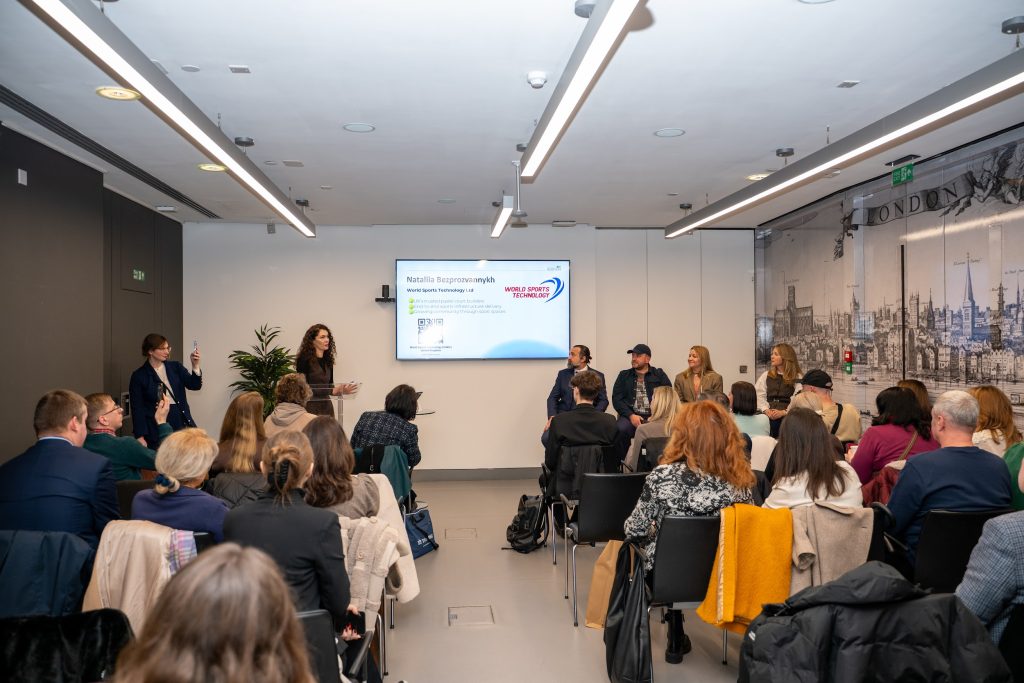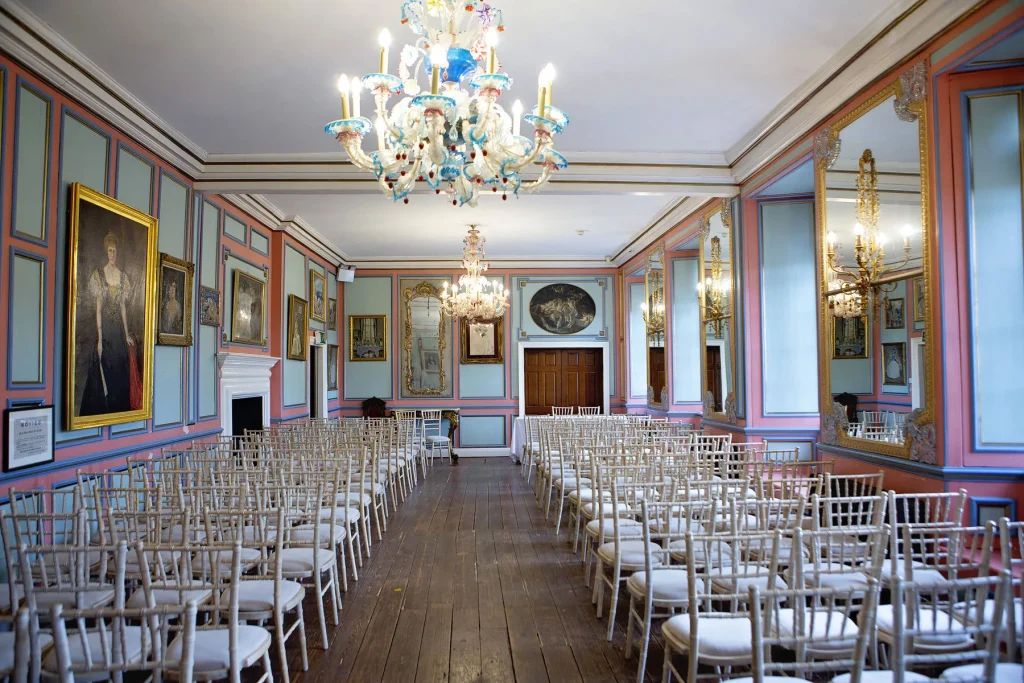
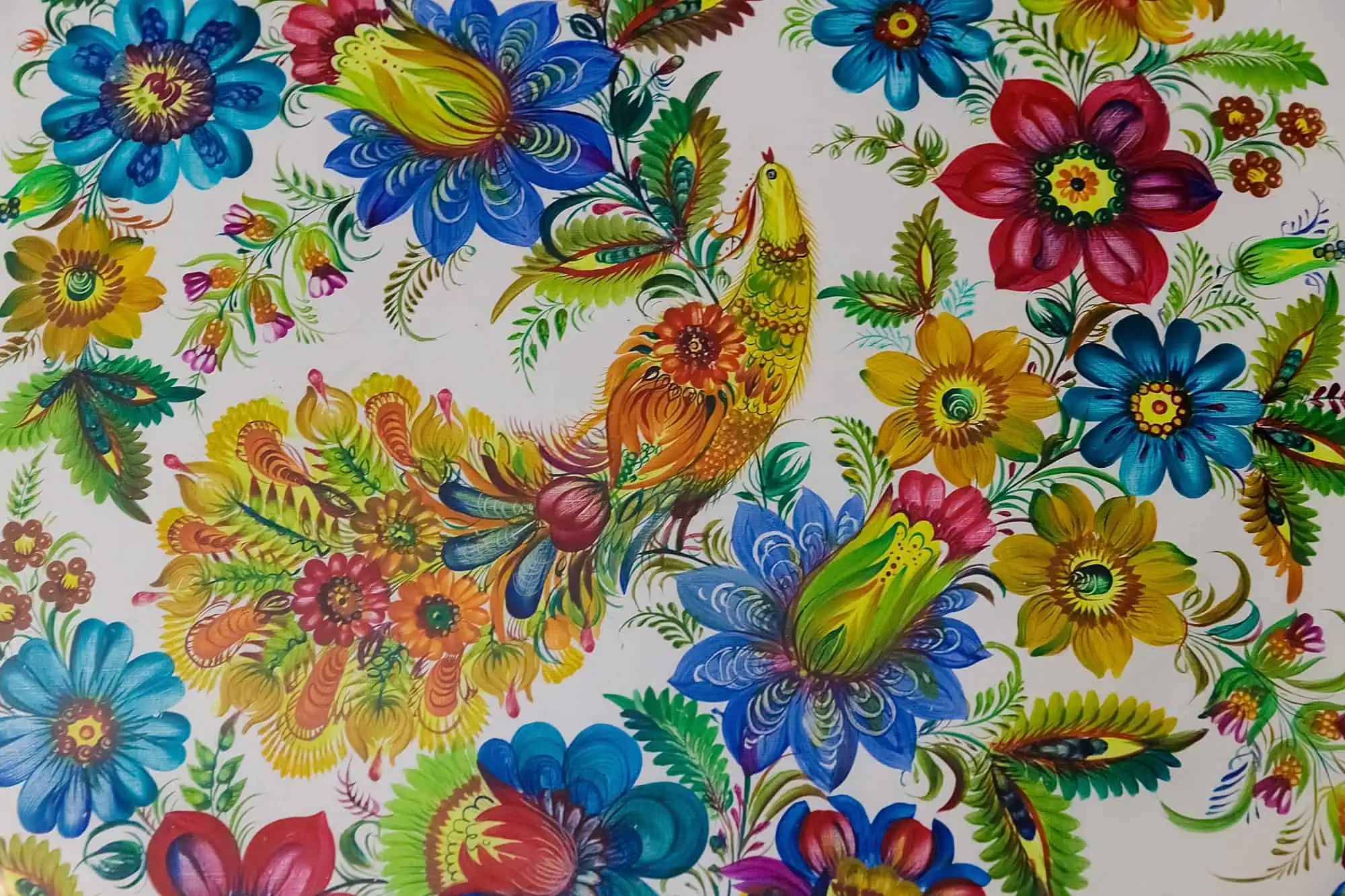
Today, the Petrykivka painting style is seen on mobile phone cases, cars, and even aeroplanes. Exhibitions showcasing these talented artists are held regularly around the globe. A large exhibition opened in April at the Higgins Museum in Bedford, UK.
In early March, Petrykivka artists Andriy and Maria Pikush, Valentina Karpets-Yermolaeva, and Natalia Rybak were awarded Ukraine’s highest award in the arts — the ‘Taras Shevchenko National Prize’. They received this prestigious award for their project, “Petrykivka Painting: Defending Identity,” which was recognised in the newly established ‘Decorative and Applied Arts’ category.
Journalist Yulianna Kokoshko and photojournalist Valery Kravchenko visited the village of Petrykivka and conversed with the artists. They discovered that while these masters strive to preserve and promote Ukrainian traditions through their art, they also require support for their endeavours.
The works of true masters are full of life.
The village of Petrykivka is about 50 kilometres from Dnipro and less than 200 kilometres from the front line in Ukraine. Despite the ongoing full-scale war, there has been no destruction in this area, allowing the village to maintain a relatively peaceful life. Afternoon and at night, like many regions in Ukraine, there are occasional drone flights. During the day, these are often replaced by the sounds of local men riding around on scooters.
Andriy Pikush meets us near the Petrykivka Folk Art Centre. He is a distinguished master of folk art in Ukraine, a folk artist, and the chairman of the centre’s council.
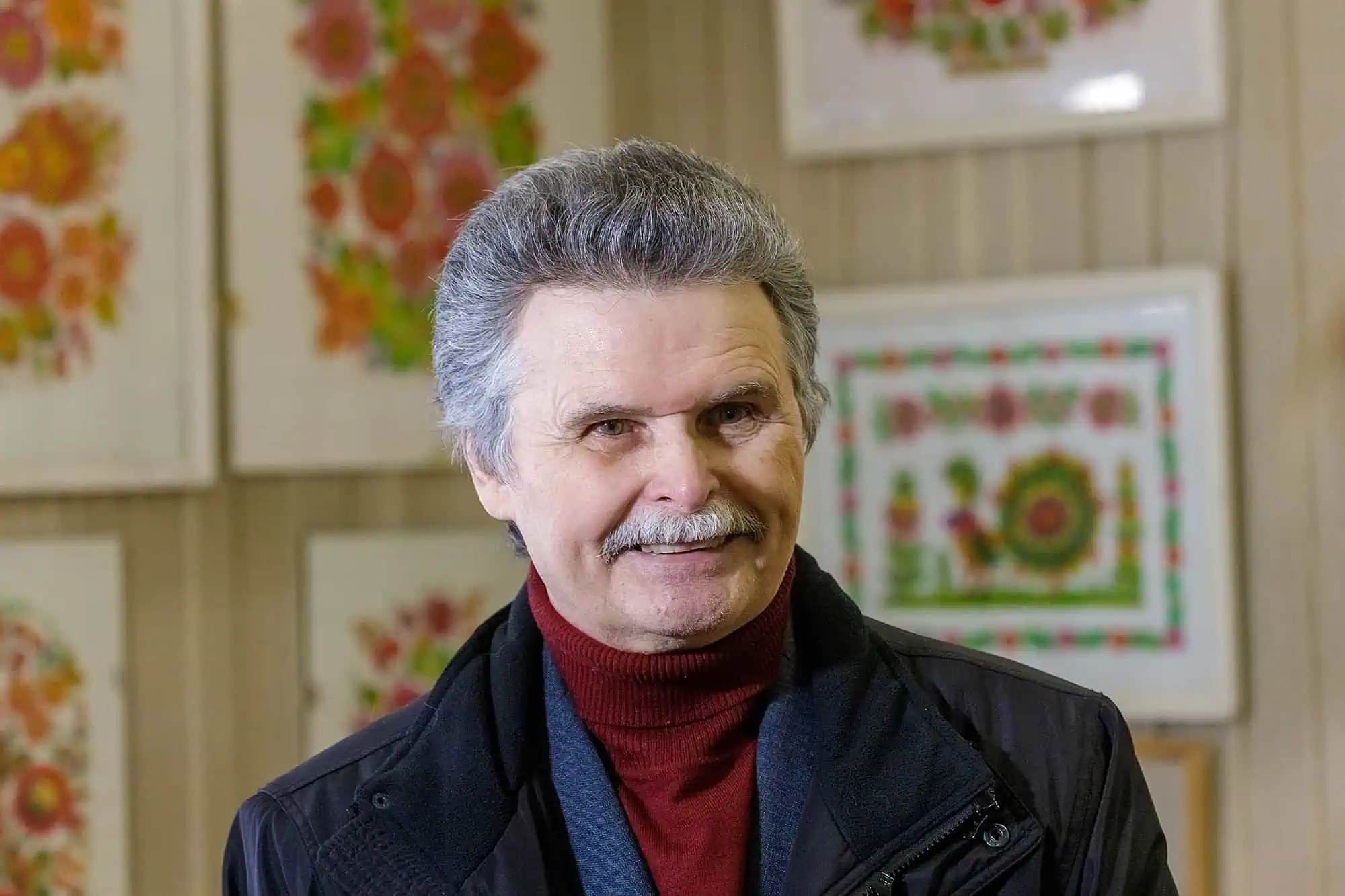
He takes note of my spring outfit with sympathy, almost as if to say, “I warned you that it’s very cold here.”
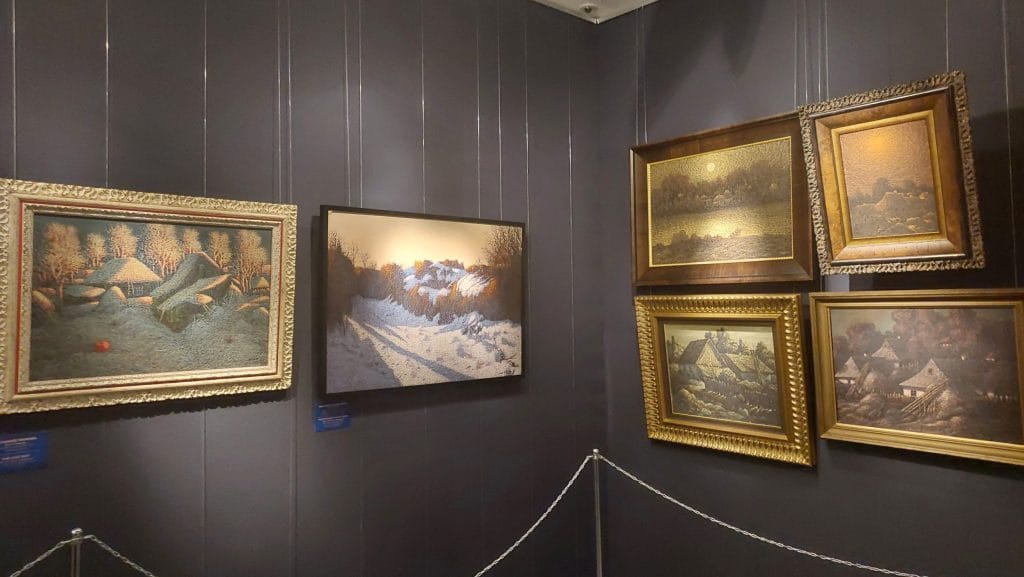
As we enter the building, we immediately feel a noticeable coolness. On the first floor, there’s a permanent exhibition showcasing the works of Petrykivka masters, including renowned figures such as Nadiya Bilokin, a Ukrainian master of folk decorative art; Tetiana Pata, a Ukrainian artist and teacher of Petrykivka painting; and Yaryna Pylypenko, who is also known as Orishka Pylypenchykha, an artist and master of Petrykivka painting.
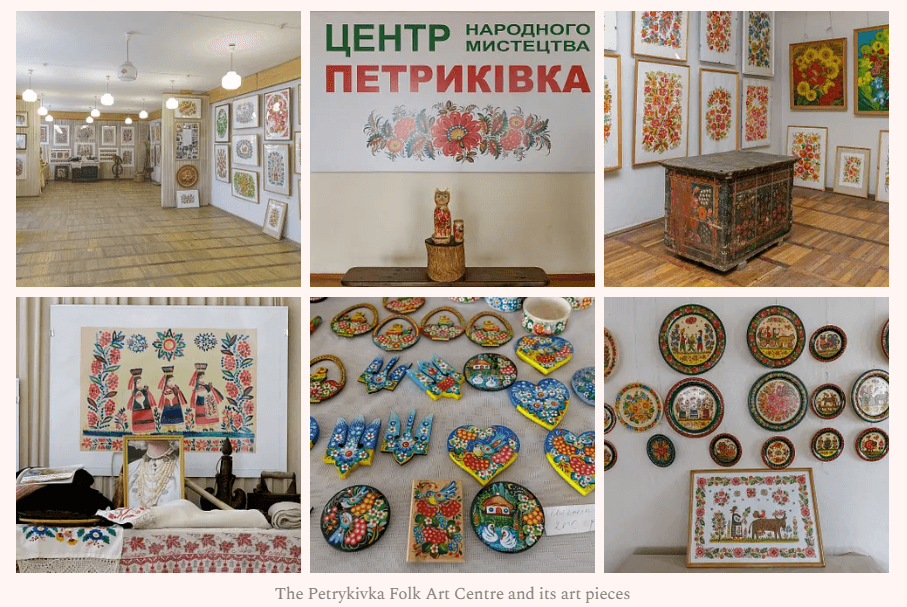
“Each master has a unique personality and individual style,” Andriy Pikush explains as he shows me around. “For example, Orishka Pylypenko’s work is monumental and highly abstract. Her paintings, with their white backgrounds, work in harmony with the elements of the art itself — they are organically connected. There often isn’t enough space in modern painting, especially among those who imitate Petrykivka patterns. They tend to throw together a jumble of elements like dumplings in a pot, mistakenly thinking that more is better. The result is a chaotic mess. However, there is a sense of space; everything is created based on profound laws of beauty and harmony. Some people view such drawings as primitive or childish; they fail to grasp the depth of the artist’s vision and abstraction. It’s important to note that this art does not elevate itself above humanity. Its essence flows from one heart to another, offering value through its spirituality, sincerity, and originality, much like the pure soul of a child.”
Andriy recalls that many years ago, Nadiya Bilokin had to sell her paintings to support her children after her husband was killed on the Eastern Front during World War II. Knowing that she could be arrested for selling her work at the market, she would discreetly stand by the path with her basket amongst the reeds. Under such conditions, the old masters managed to preserve their traditions. While there is likely still much research to be done on Petrykivka’s vitality as a historical centre, it’s already clear that today, many are engaged in painting. Petrykivka clubs operate nationwide, and numerous courses and private teachers offer online lessons. But it’s not that simple…
Once upon a time, the village was full of tourists.
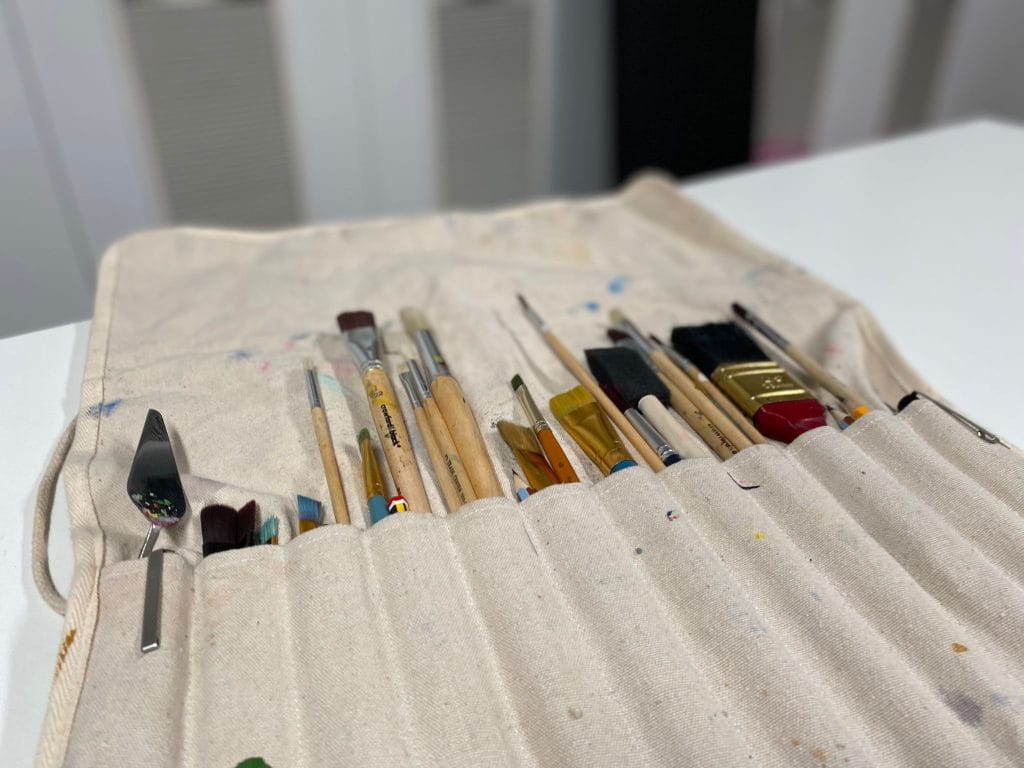
It has been half a century since Natalia Rybak first became fascinated with painting as a 16-year-old schoolgirl. Now, she is a distinguished master of folk art in Ukraine and has participated in numerous exhibitions worldwide. Recently, Natalia briefly visited the Petrykivka Folk Art Centre to share some secrets of her craft.
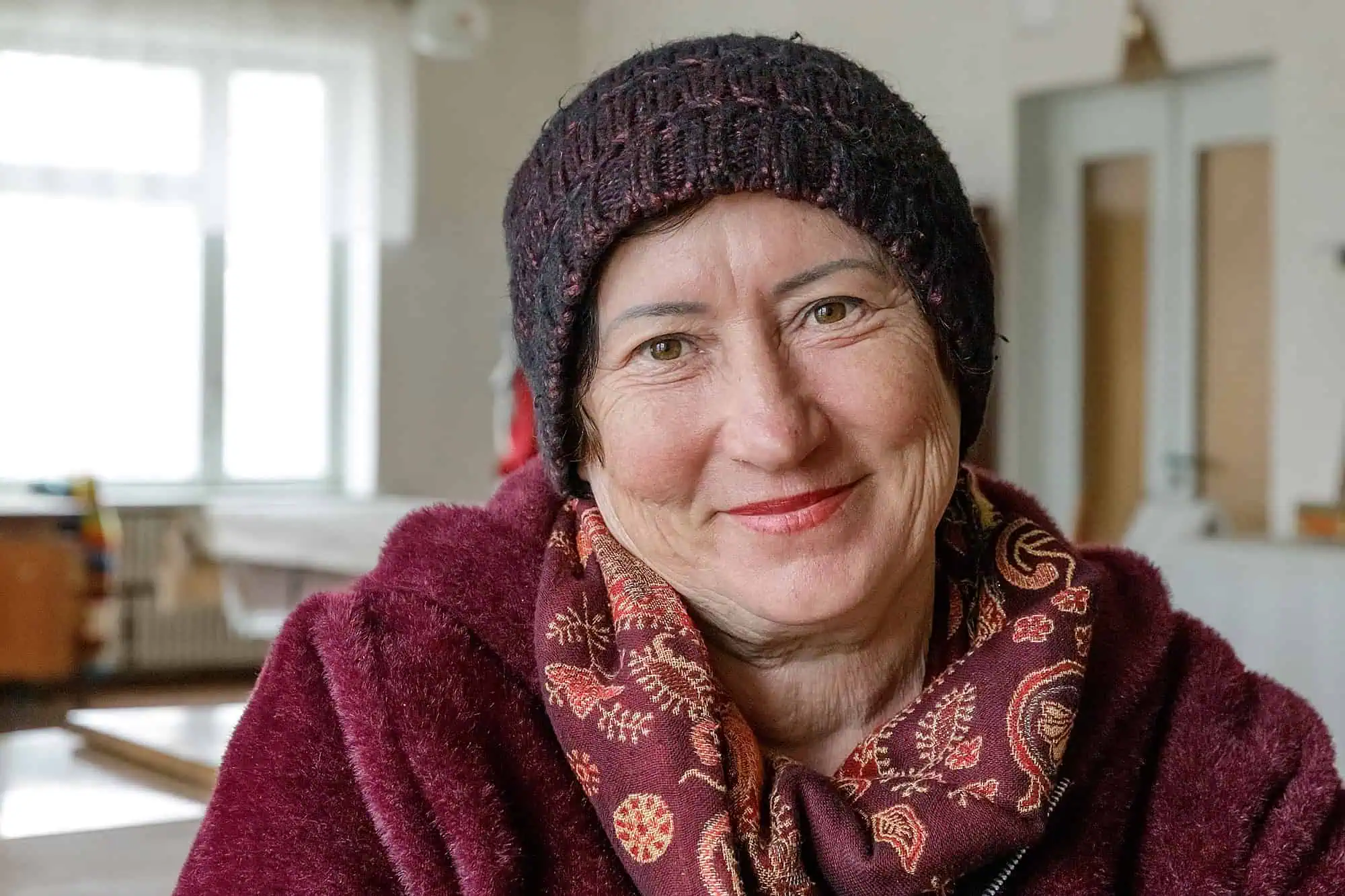
Unfortunately, her visit fell short because working without a heater on the second floor, where the workshops are located, is difficult. Like many other masters, she creates most of her works at home, where she lives with her large family. She usually comes to the centre only for excursions and master classes, which have significantly decreased due to the COVID-19 pandemic and the ongoing war.
“In the past, as soon as May began, 15 large buses filled with children would come for excursions in a single day,” recalls Natalia Rybak. “They would walk around, buy painted pipes, and make music — Petrykivka would be alive with sound. Now, only those who genuinely want to see us make the effort to visit. They know it’s cold here; in the winter, the water in a glass freezes overnight, but they still come. Why? To experience harmony — a nostalgia for peaceful living — and to learn genuine craftsmanship. If you take painting lessons online, you won’t reap the same benefits and will ultimately have to relearn everything. Petrykivka is a very interactive art form. You really need to communicate with the masters and learn in person. Additionally, Petrykivka is quite liberal — almost anything goes, which comes with its own advantages and disadvantages.”
Petrykivka brought together Andriy and Maria Pikush.
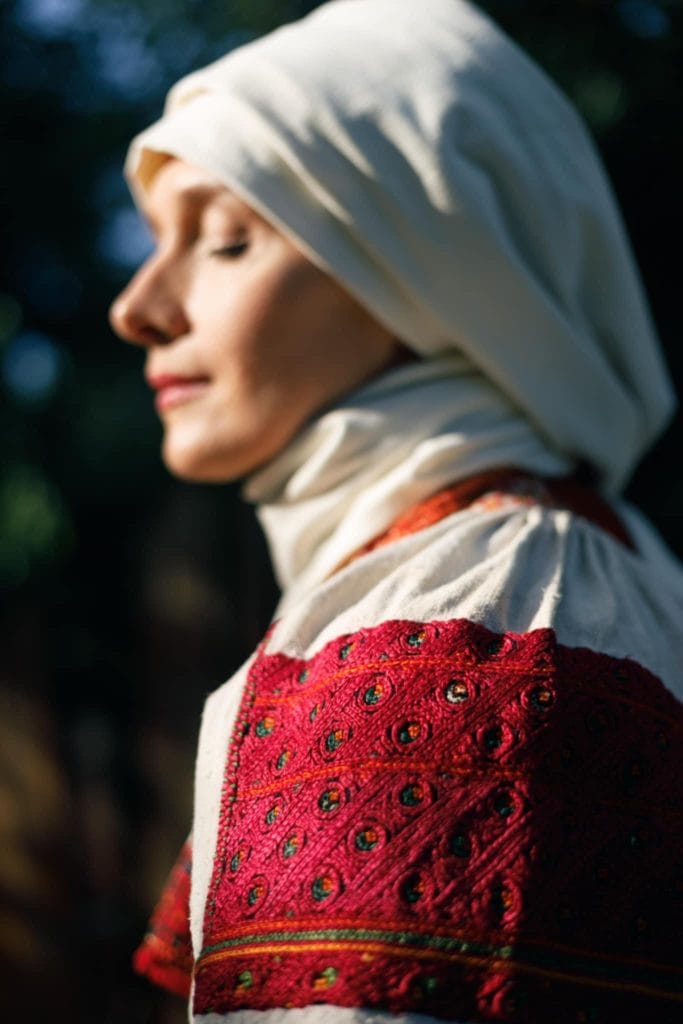
Today, Petrykivka painting is appreciated worldwide in various fields, such as clothing design, souvenir production, and modern interior decoration. This traditional art form can be found in wooden dishes, paintings, and glass and ceramic artworks. As it evolves, Petrykivka painting is making its way into modern textiles, jewelry, graphic design, and even digital art, allowing it to develop new life and relevance.
Andrii Pikush emphasises that a specific technique does not merely define true Petrykivka; it also embodies a distinct style and the artist’s individuality. Therefore, it is crucial to maintain a connection with its origins and the principles that have shaped this traditional painting over centuries. To ensure this continuity, an art school was established in Petrykivka that continues to operate today.
Andriy recalls, “Petrykivka brought us together.” He shares how he met his future wife, Maria, whose relatives lived there.
“After finishing the 10th grade, she came to Petrykivka with the dream of mastering Petrykivka painting and enrolled as an apprentice at the Druzhba art factory. I joined her there after graduating from Dnipropetrovsk Art College and serving in the army. In 1972, we got married and became soulmates. My wife is my best critic, and I am hers, of course. When deeply immersed in your work, it is essential to hear an objective opinion. This feedback helps both Maria and me grow and continue to progress in our craft. We have a very productive partnership.”
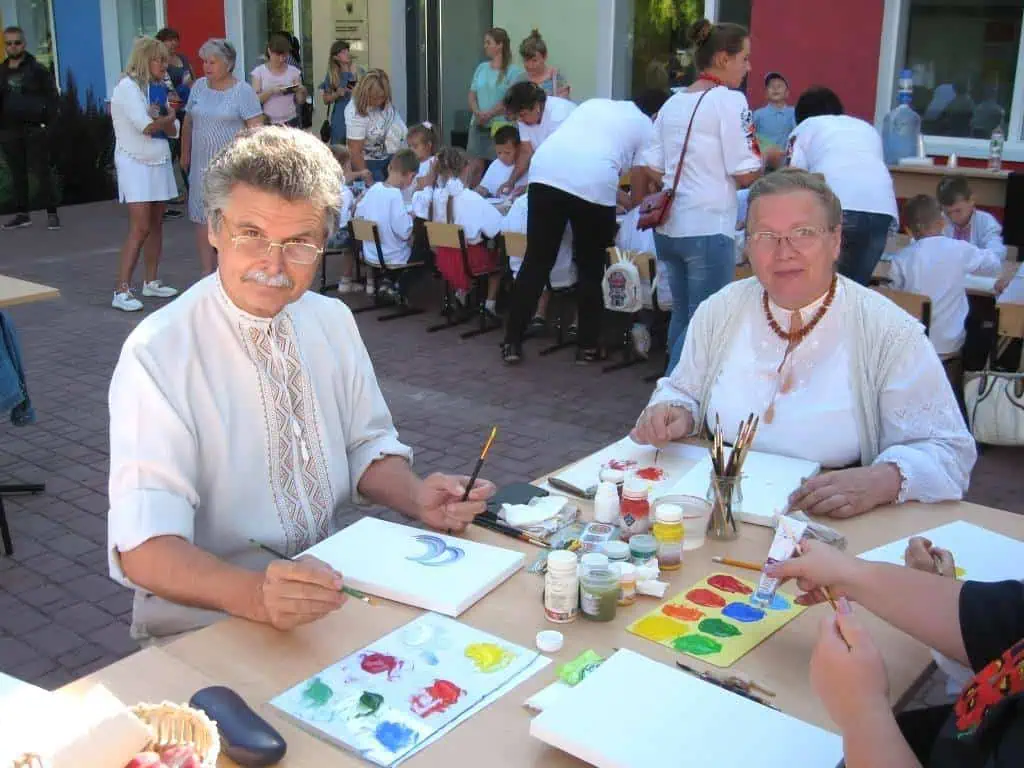
Ms. Maria teaches painting to young artists
Honoured Master of Folk Art of Ukraine, Maria Pikush has been teaching children at the Tetyana Pata Petrykivka Children’s Art School for over 30 years. Despite not having formal teaching qualifications, her honorary title permits her to teach. Andriy Pikush, at one time, also worked at the school and was involved in establishing the Centre for Folk Art. Before that, he worked diligently to secure premises for the art school by renovating an old, neglected building.
Maria took over the school’s management after successfully saving it from closure in the 90s. “Our school was founded in 1958 as a branch of Dnipro Art School No. 1,” she recalls. “However, in 1993, it was closed down. There were hopes for establishing a Petrykivka Art School initially, but the district authorities were hesitant. I had to travel to Dnipro and convince the regional authorities for the necessity of the institution. Eventually, they agreed, and the school resumed operations — again as a branch. It then received budget funding, and in 1995, it became an independent educational institution. I served as the director for twenty-five years. In 2017, after preparing a suitable replacement, I handed the school management over to the talented master Lyudmila Lukyanenko. Now, I am happy to continue my work at the school as a teacher. We are like family here, and the children are exceptionally talented! Many of my students have won national and international competitions, and many graduates go on to study at universities in Kyiv, Lviv, and Poltava. I am genuinely grateful for everything.
Of course, Maria Pikush also dedicates time to her own creativity. She often comes up with ideas for future art pieces while commuting to and from work, and she feels restless until she can begin to draw what inspires her.
Shevchenko Prize winner works as a cleaner
A little later, I spoke with another member of the quartet of Shevchenko Prize winners, Valentyna Karpets-Yermolaeva. A long time ago, Valentyna dreamed of a career in medicine and even started working in a hospital after finishing school. However, after a few months, she and a friend travelled to Petrykivka after learning that the local vocational school was recruiting for decorative painting classes. That was in 1986. Two years later, she received her diploma and worked at the Druzhba factory before deciding to study the basics of painting with Maria and Andriy Pikush and other masters. A year flew by, and since 1990, Valentyna has been working at the Petrykivka branch of the Combined Union of Ukrainian Artists.
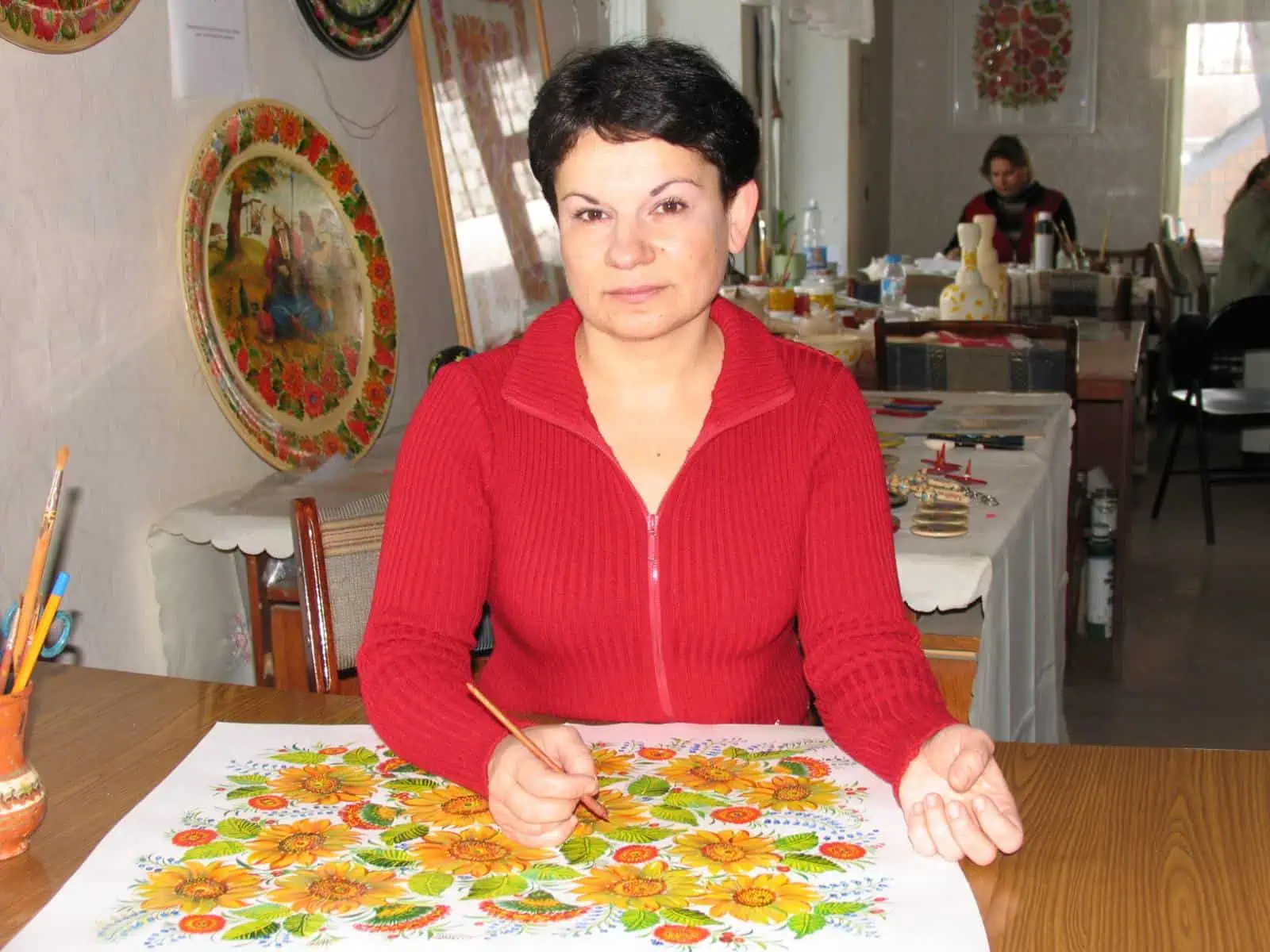
“Back then, there was still a high demand for painted wooden products,” recalls Valentyna. “Every year, wholesale fairs provided us with orders for the whole year ahead. But when the Soviet Union collapsed, everything fell apart. In the 90s, many craftsmen left the profession, and some moved abroad. I had children at that time, and life was difficult. I was involved in creative work, but it provided very little income. The situation changed by chance. One time, Natalia Rybak was invited to a symposium but couldn’t attend because she had another trip planned. She’s a remarkable woman who travels extensively in Ukraine and abroad. Unlike me, who never left Petrykivka back then. Natalia persuaded me to go to the symposium in the Cherkasy region. That was when my creative journey truly began. Before that, I did what was required of me in the workshop, but since then, I started to paint exactly what I wanted, and people liked it. My creativity began to flourish.”
Gradually, Valentyna gained recognition and has won numerous art awards, including the Shevchenko Prize. However, she still struggles to earn a decent living. She admits that her colleagues, who offer master classes online and export their products abroad, are better off. Valentyna only occasionally teaches at the Petrykivka Folk Art Centre and does not receive many commissions. To gain work experience for her future pension, she works as a cleaner at the Petrykivka Inclusive Resource Centre, where she currently works while pursuing her creative endeavours at home in her spare time.
The folk art centre is in need of renovation
In October 1991, an enterprise was established on the initiative of Andrii Pikush and with the support of the Artists’ Union; as a result, hired craftsmen gained ownership. This enterprise is now known as the Petrykivka Folk Art Centre. The founders included Volodymyr Hluschenko, Maria Pikush, Natalia Rybak, Hanna Samarska, Valentyna Karpets-Yermolaeva, and others.
I observe more than a hundred works on display in the Petrykivka exhibition hall, including pieces that have been showcased in Paris and other European cities. In 2013, Petrykivka was added to the UNESCO Representative List of the Intangible Cultural Heritage of Humanity.
I notice that the paper in some of the drawings has become wavy, which Andrii Pikush confirms is due to low temperatures and excessive humidity causing gradual deformation. Additionally, there are cracks in the walls in various places.
“Today, it is crucial for us to preserve the unique creative experience we have accumulated over the 34 years of the centre’s existence,” Andrii Andriyovych emphasises. “This experience is a testament to the continuity of the folk art traditions passed down from previous generations of Petrykivka masters. It is also important to maintain the collection of works, designs, and the beautiful premises built through the efforts of these masters. We have never wanted to burden anyone, but there is no budget funding here.”
The 1,000-square-meter building was constructed according to a special design for Petrykivka painting workshops, with the assistance of the Artists’ Union for the Petrykivka branch of the experimental workshop. Andriy recalls that during the most favourable period for creativity, a couple of years around the turn of the century, more than 40 masters worked here.
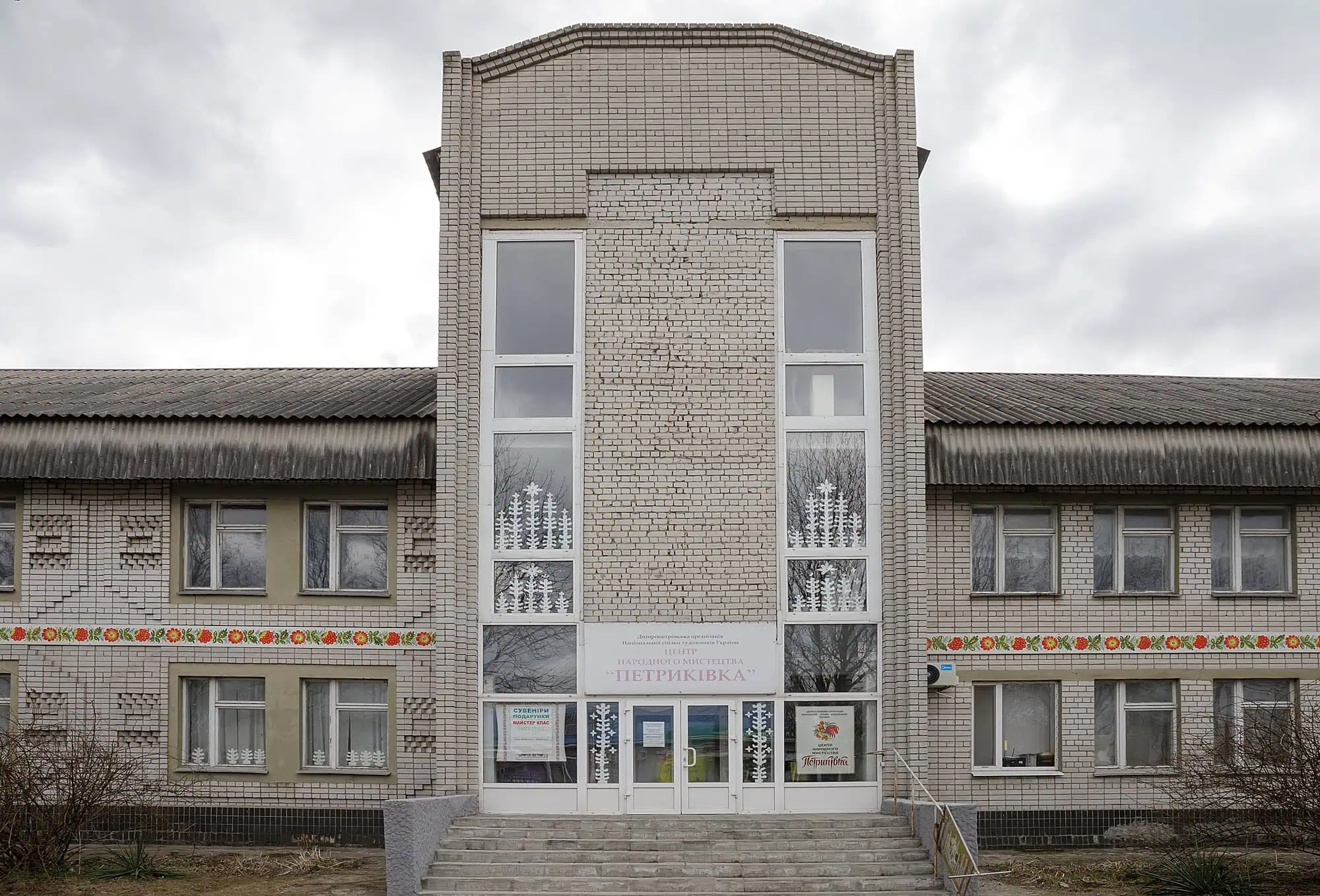
They aimed for the enterprise to be self-sufficient, but for that to happen, the country needed to prosper. Teachers, engineers, and farmers would need to be able to afford to purchase works by folk artists. Unfortunately, the economic situation doesn’t work well for us, leading to a decline in orders and a deterioration of the building’s condition.
Currently, proactive residents of Petrykivka believe that better times are ahead and are actively seeking grants to repair the centre. However, as long as the war continues, it is unlikely that any changes will occur.
Only ruins remain of the Druzhba factory
A few kilometres from the centre of Petrykivka lies a poignant local landmark: the remnants of a former factory. In 1936, a school of decorative painting was established in Petrykivka, which later led to the creation of the Druzhba art factory in the 50s. This factory was instrumental in popularising Petrykivka painting across the USSR and specialised in mass-producing souvenirs that featured underglaze paintings on a black background, utilising techniques from the Kyiv souvenir factory.
‘In the early 70s, I worked enthusiastically at the factory for two years, creating wooden products. I remember the large building of this factory well,’ recalls Andrii Pikush, as he gives a tour of the ruins. ‘There were several workshops, an exhibition hall, and many other rooms. After the collapse of the USSR, the enterprise began to decline. It eventually closed, and the property was gradually demolished. The building was literally torn down brick by brick, and the equipment was dismantled for scrap metal.’
Today, the massive industrial complex of the Druzhba factory, which later became synonymous with Petrykivka Painting, lies in complete ruins. Andriy Pikush and his colleagues are not only concerned about this destruction but also about the deteriorating state of the folk art centre.
‘Petrykivka needs support from international funds and philanthropists,’ he emphasises. Despite the ongoing war, Petrykivka’s artists are striving to continue their exhibitions. Recently, Andriy and Maria Pikush traveled to the Italian city of Foggia to participate in a cultural event. However, the Petrykivka Folk Art Centre is largely facing these challenges alone.
“We understand that everyone’s primary task during wartime is to defend Ukraine’s independence,” states Andriy Pikush. “At the same time, it is crucial to preserve our cultural heritage. We must develop a viable model for its preservation and support the protection of historical centres and creative collectives. It is difficult for individual artists to confront the challenges of our times alone. We require a vibrant and creative environment that fosters the growth of professional artists and the unique synergy that emerges within creative teams. Historical experience shows that centres where folk art enterprises did not form have struggled to survive. In contrast, those who did, such as Petrykivka, Reshetylivka, Opishnia, Krolevets, and Kosiv, have managed to endure. Still, they too, are now at risk of extinction and need support from the state, as well as from international funds and philanthropists. We truly hope to receive assistance in continuing the development of this unique art form.”
Author: Yulianna Kokoshko
Ukrainian editor: Anastasia Zanuzdanova
Translation into English: Rostyslava Martyniuk
English editor: Marc Kukh
Photos: Valery Kravchenko and from the Petrykivka archives.