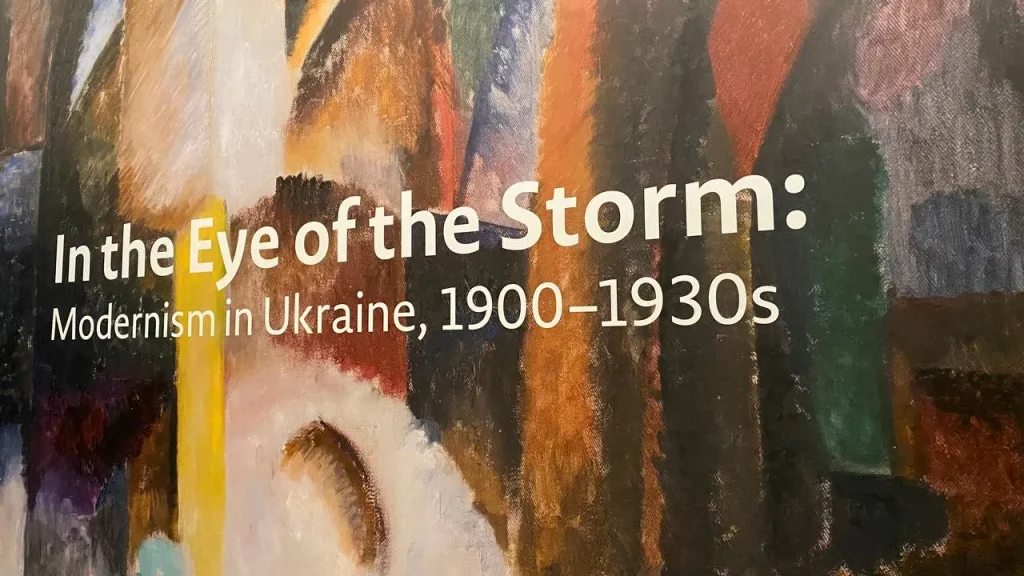
The phenomenon of Maria Prymachenko is when a small village in the Kyiv region becomes the centre of the Universe. When, without an academic education, without travelling abroad, and without ever leaving her own home, the artist creates paintings recognised in Paris, New York, and Tokyo.
“I bow before the artistic wonder of this brilliant Ukrainian Woman,” Pablo Picasso is said — according to legend — to have declared when he saw her fantastical beasts and flowers: images painted by a woman who had never left her native village.
Whether or not the story is true, there was undoubtedly an invisible field between these two artists — a place where talent meets talent — in which Maria Prymachenko’s fairytale beasts could roam freely among the canvases of great masters.
A childhood where dreams outshone illness
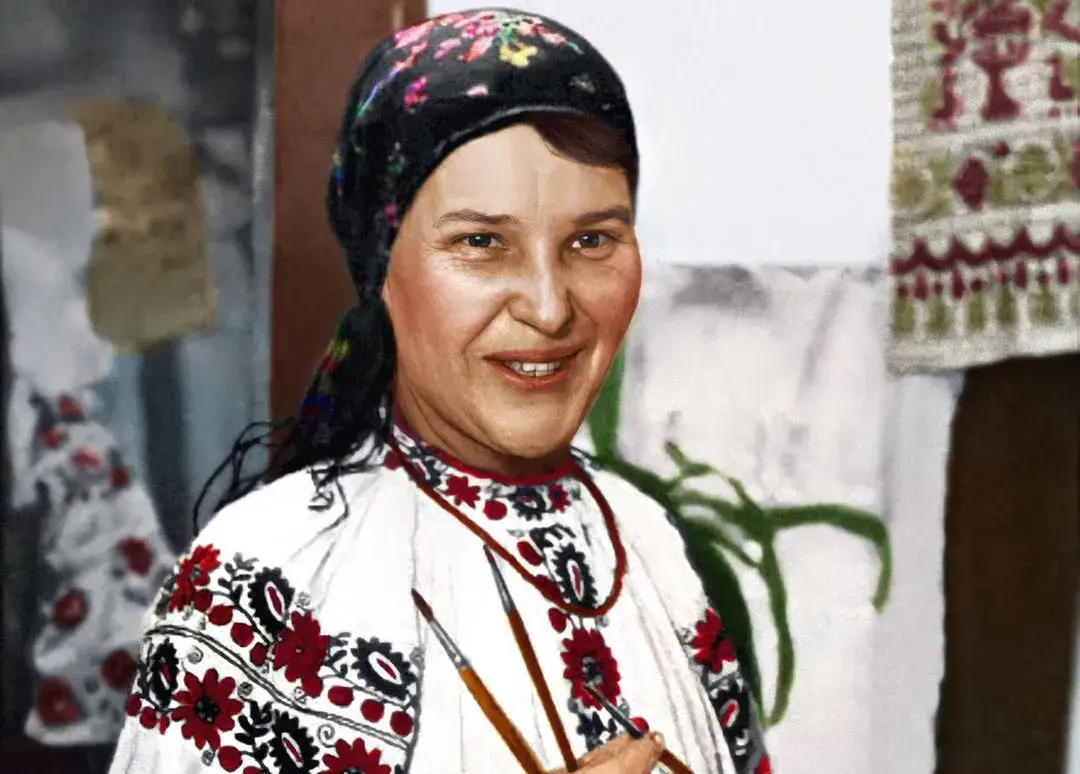
Maria was born on 12 January 1909 (30 December 1908 in the old style) in the small yet colourful village of Bolotnya in the Kyiv region. Her father was a carpenter and decorator — a man who could give wood a second life. Her mother created embroidery in which every stitch seemed to breathe love. Her grandmother painted pysanky (Easter eggs) so vividly, they looked like tiny universes.
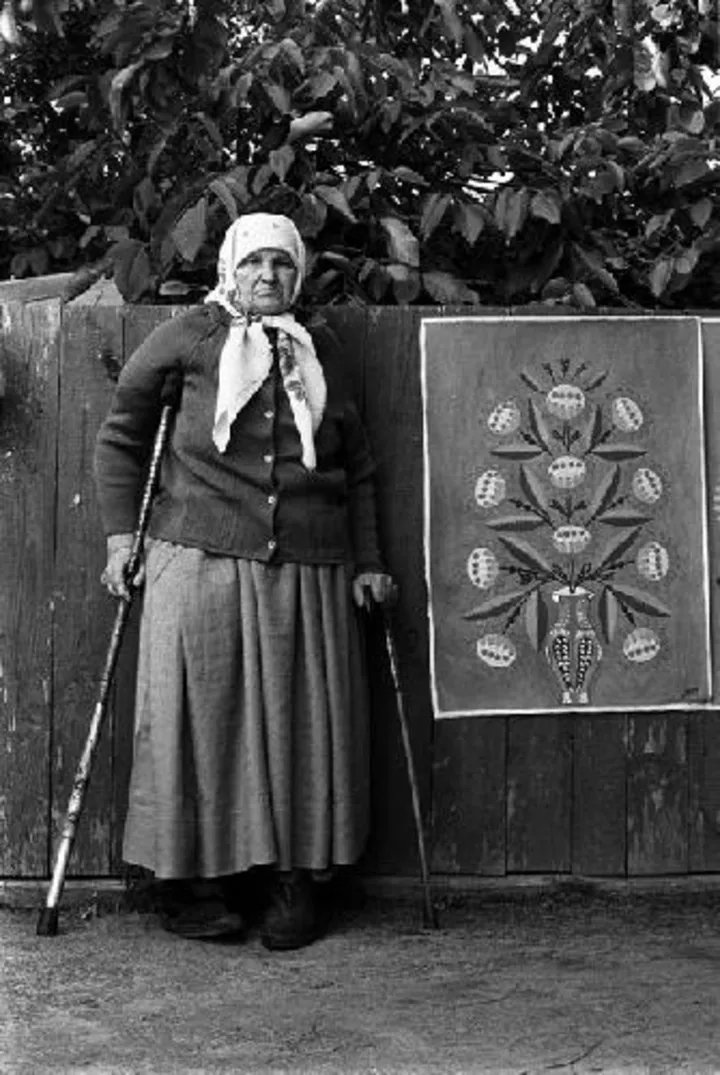
Maria’s childhood was not a fairytale but a stern reality: polio paralysed one of Maria’s legs, and from then on she walked with a stick and wore long skirts. But the illness never bound her imagination. The geese in the yard, the flowers in the garden, the embroidered towels in the house — all transformed into fantastic beasts and birds. She would first trace them with a stick in the sand, then paint them with natural dyes on the walls of her house.
“I paint so that the world will smile,” she would later say — words full of the stubbornness and tenderness of her childhood.
A world that “explodes” with colour
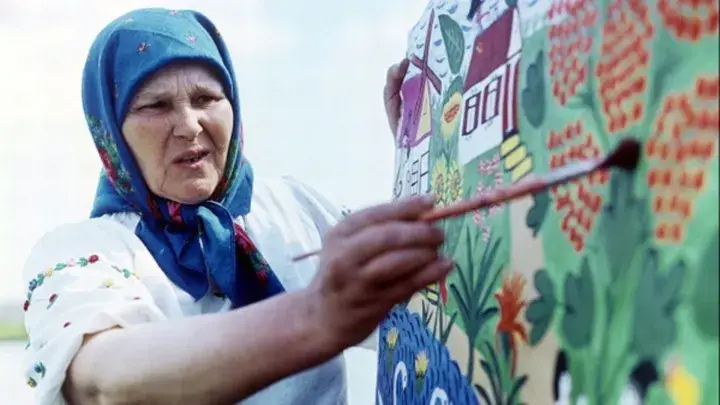
From the moment Maria began to paint, her work stood out for its daring originality: in her world, lions could have gentle human eyes, birds could grow tails of flower petals, and meadows could bloom with sunflowers, peonies, and imagined “sun roses” all at once.
Her style was naïve art — no rules of perspective, anatomy, or light and shade, only intuition and a sense of beauty. In Prymachenko’s paintings, reality blended with the fairytale: cows with sunflower-horned heads, lions with human eyes, flowers taller than trees, birds feeding fish.
She loved bright, “explosive” colours, symmetrical ornaments, and poetic titles — War is a Terrible Beast, The Magic Cockerel, Petryk Carries Wheat. Even her most frightening scenes became decorative, infused with a hidden hope for goodness.
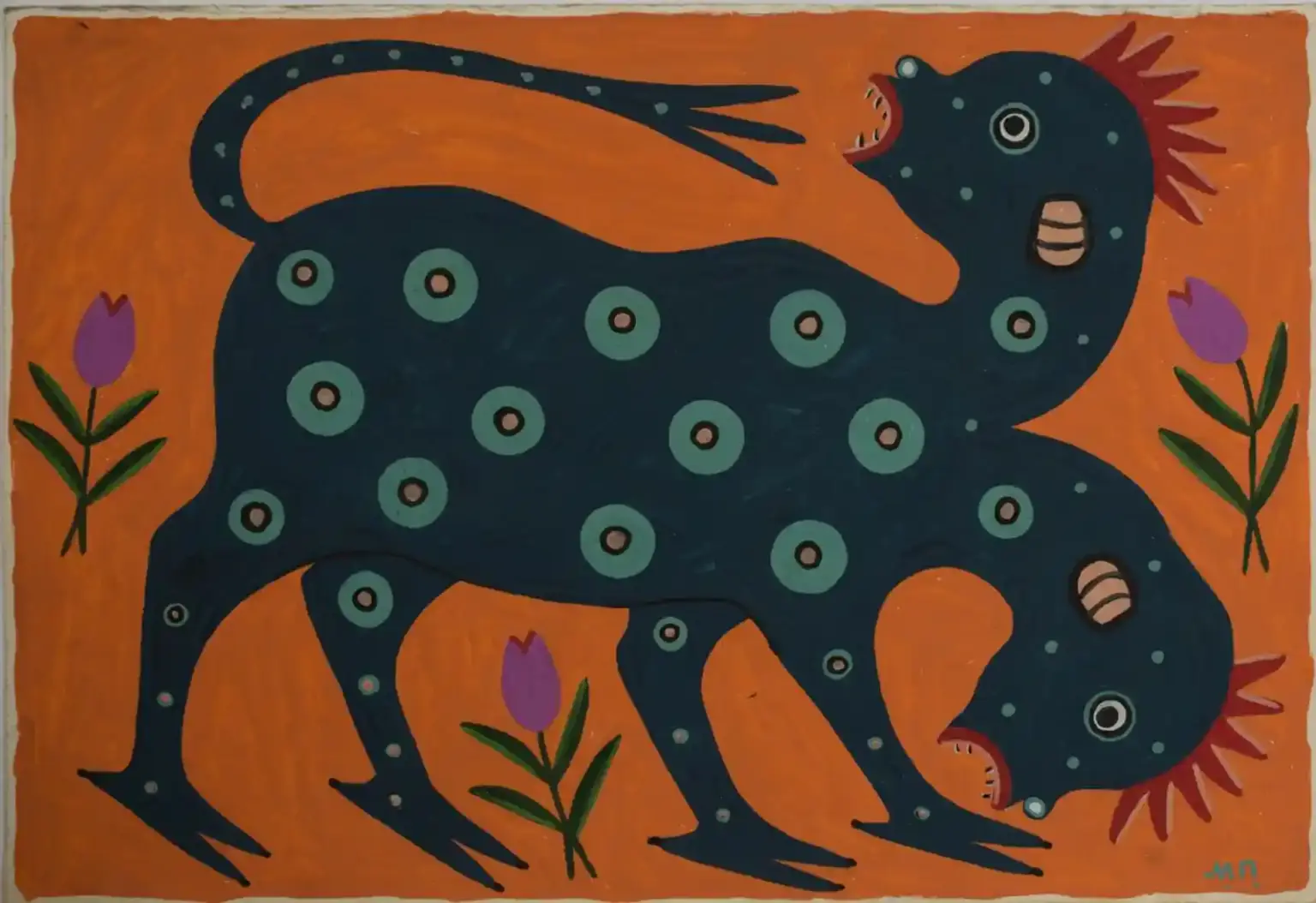
“In every creature of mine there is a little love,” Maria would say — and it was true: even War is a Terrible Beast in her hands retained colour and hope.
How a village craftswoman conquered Paris
In 1936, Maria’s works were noticed at an exhibition of folk art, and she was invited to the Central Experimental Workshops in Kyiv. The very next year, her paintings travelled to the World’s Fair in Paris. There, among the modernists and surrealists, her vivid, almost childlike beasts and flowers looked as though they had always belonged beside the canvases of Picasso or Matisse.
Over her lifetime she created more than 800 works — paintings, ceramics, embroidery, and illustrations. Maria herself never left her native village, but her paintings travelled the globe — to Warsaw, Sofia, Montreal, New York, Venice — venturing to places she herself never dared go.
Today, over 650 of her works are preserved in the National Museum of Ukrainian Folk Decorative Art.
She was awarded the Shevchenko Prize (1966), named an Honoured Artist of the Ukrainian SSR (1970), and made a People’s Artist (1988). In 2009, UNESCO declared it the “Year of Maria Prymachenko.”
“If people loved the world as I love flowers, there would be no war,” she would quietly repeat.
2022: When war reached her world
On 25 February 2022, a Russian shelling strike set fire to the Ivankiv Historical and Local History Museum, where around 25 of Maria Prymachenko’s paintings were held. The flames claimed many works, but a few brave souls, risking their lives, rescued 14 canvases — among them The Magic Cockerel and The Hunchbacked Horse Flies Around the World.
These saved works became the centrepiece of the exhibition “Maria Prymachenko. Rescued”, held in Kyiv in September 2022 — a symbol of the Ukrainian people’s resilience and the preservation of cultural heritage.
That same year, her paintings became a symbol of peace at the Venice Biennale. In 2023, for the first time, her works crossed the ocean — more than a hundred were exhibited at the Ukrainian Museum in New York.
The aesthetic tradition of Prymachenko’s imagery — like the floral compositions and fantastic birds of the Petrykivka style — does not simply continue to evolve; it has been absorbed into contemporary decorative and graphic art, design, and popular online culture.
Today, Prymachenko is more than an artist — she is a cultural code of the nation. Her fantastical images inspire contemporary creators, from interior designers (Yakusha Design) to digital artists (Stephan Ryabchenko). Elements from her paintings have even appeared in Alexei Ratmansky’s ballet Wartime Elegy.
Maria Prymachenko’s works continue to travel the world, and her anti-war themes feel more urgent than ever: War is a Terrible Beast now reads as a direct metaphor for our times.
Maria Prymachenko died on 18 August 1997, aged 88. She left us not merely paintings, but an entire universe — one in which good triumphs over evil, where beasts and flowers speak in the language of hope. A world full of love, where even the most fearsome creature can smile, offering hope for something better.
Author: Victoria Halimon