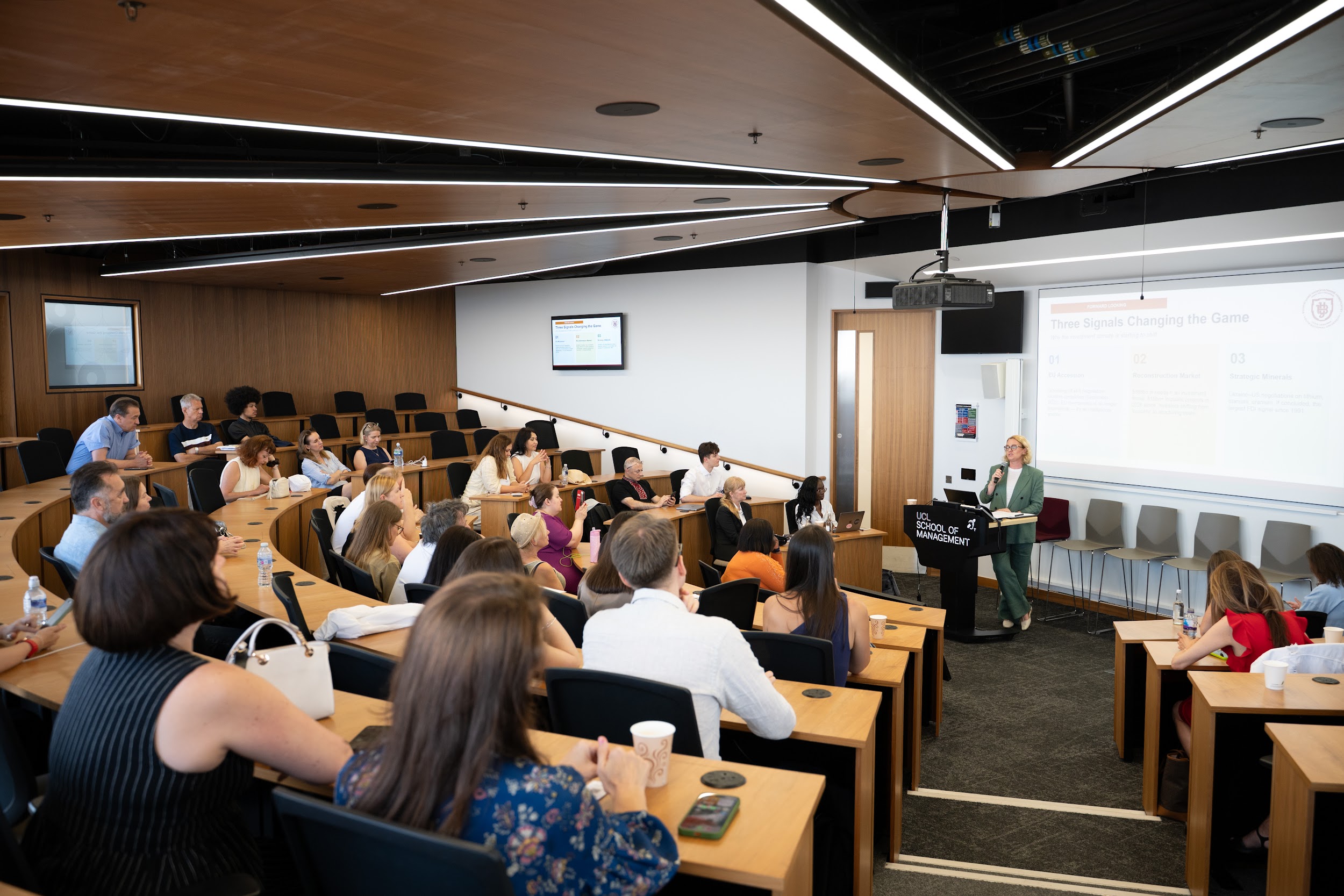
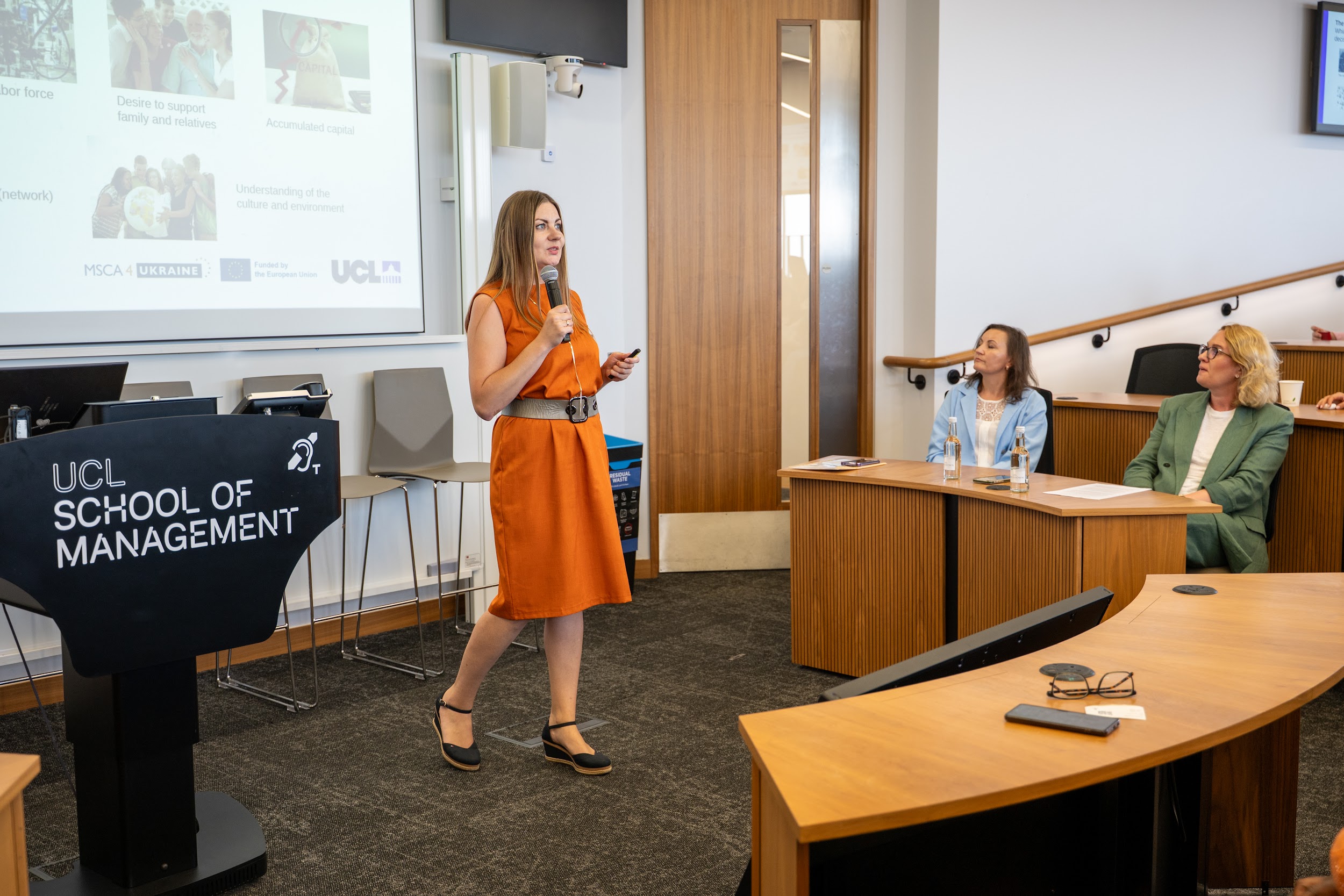
“Ukraine’s reconstruction may indeed require billions in investment. But before that, it requires trust. Trust grows through collaboration. And every collaboration begins with people,” says Natalia Hrytsiuk, a postdoctoral researcher in the MSCA4Ukraine programme at UCL School of Management, concluding her speech on 7 July in London.
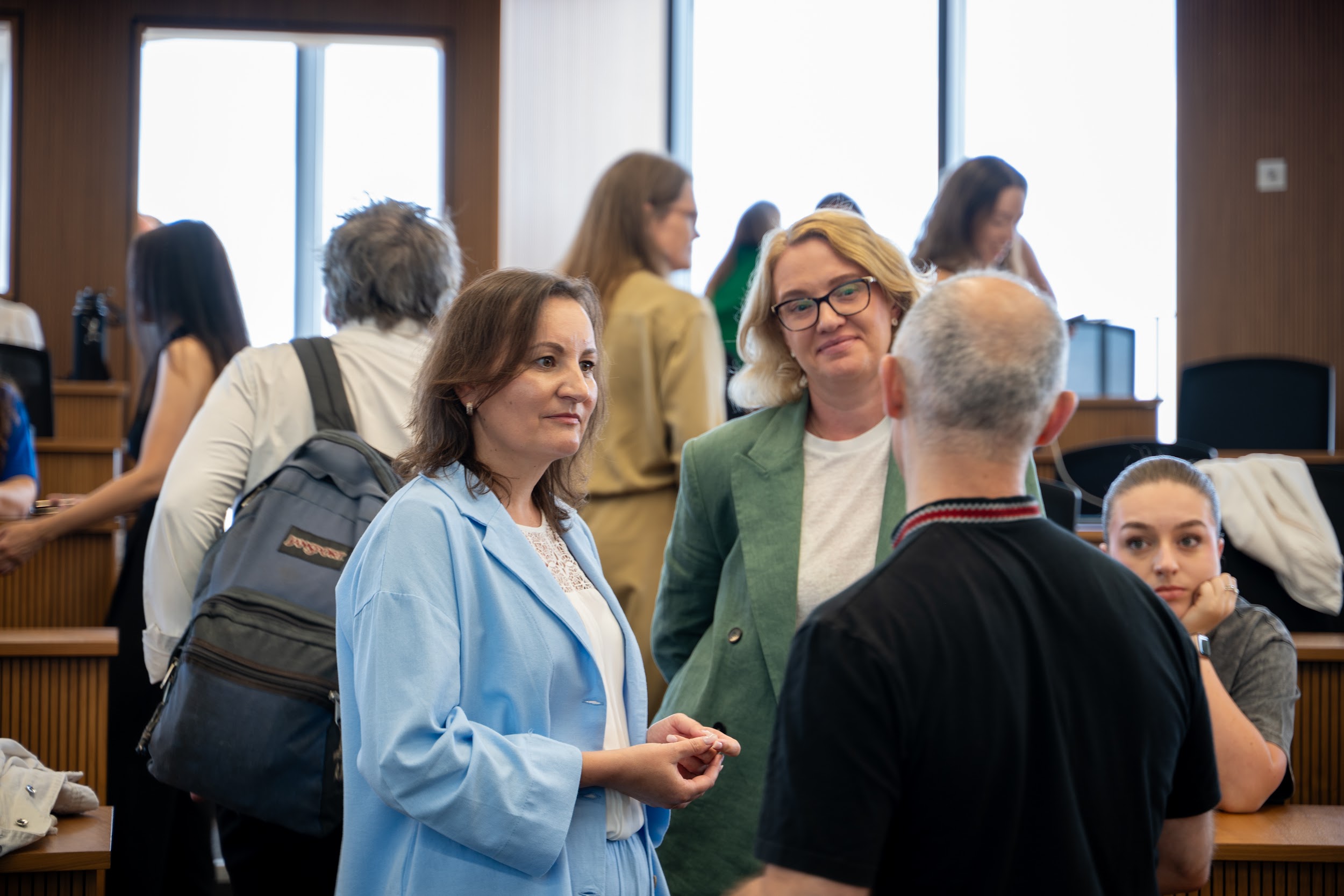
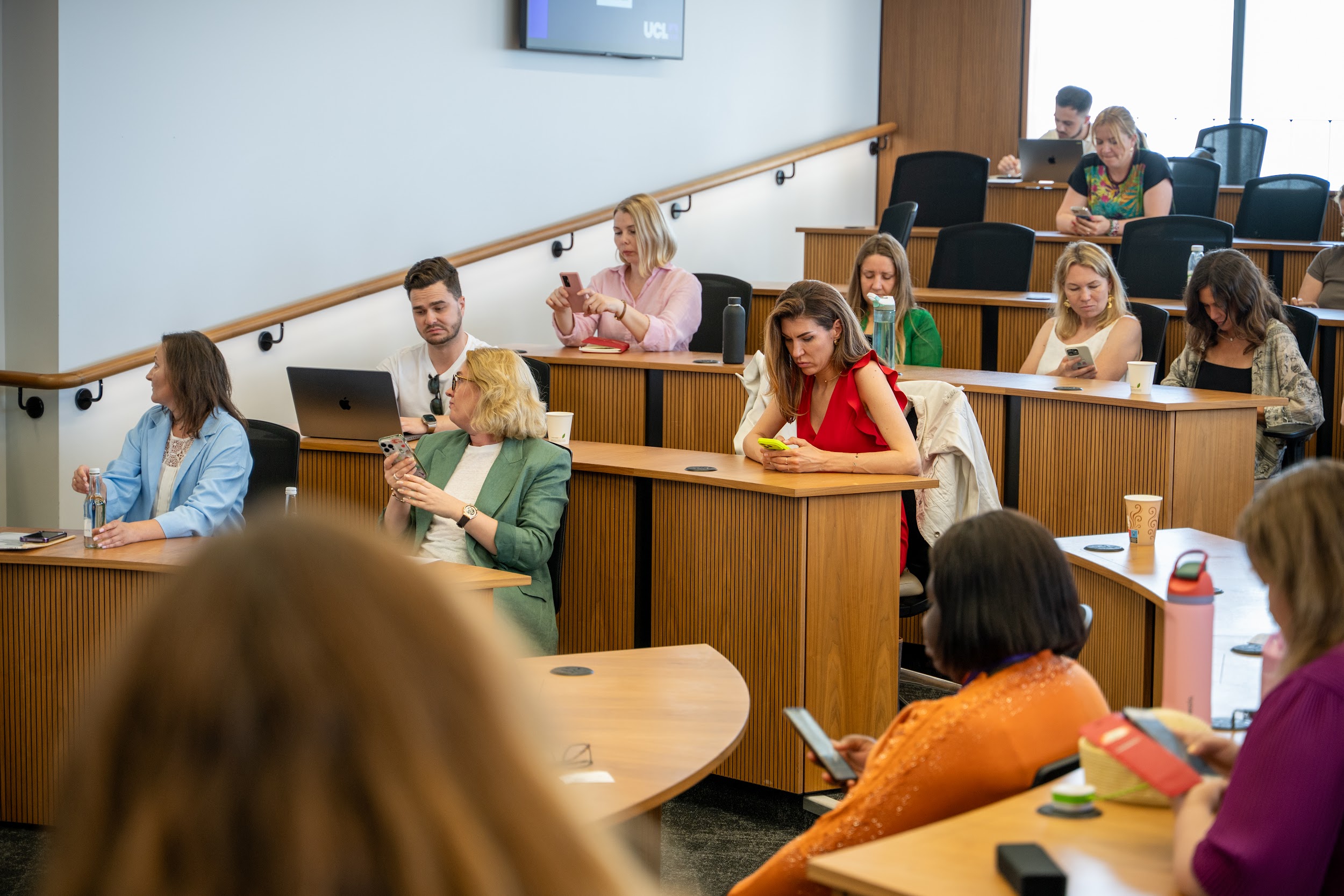
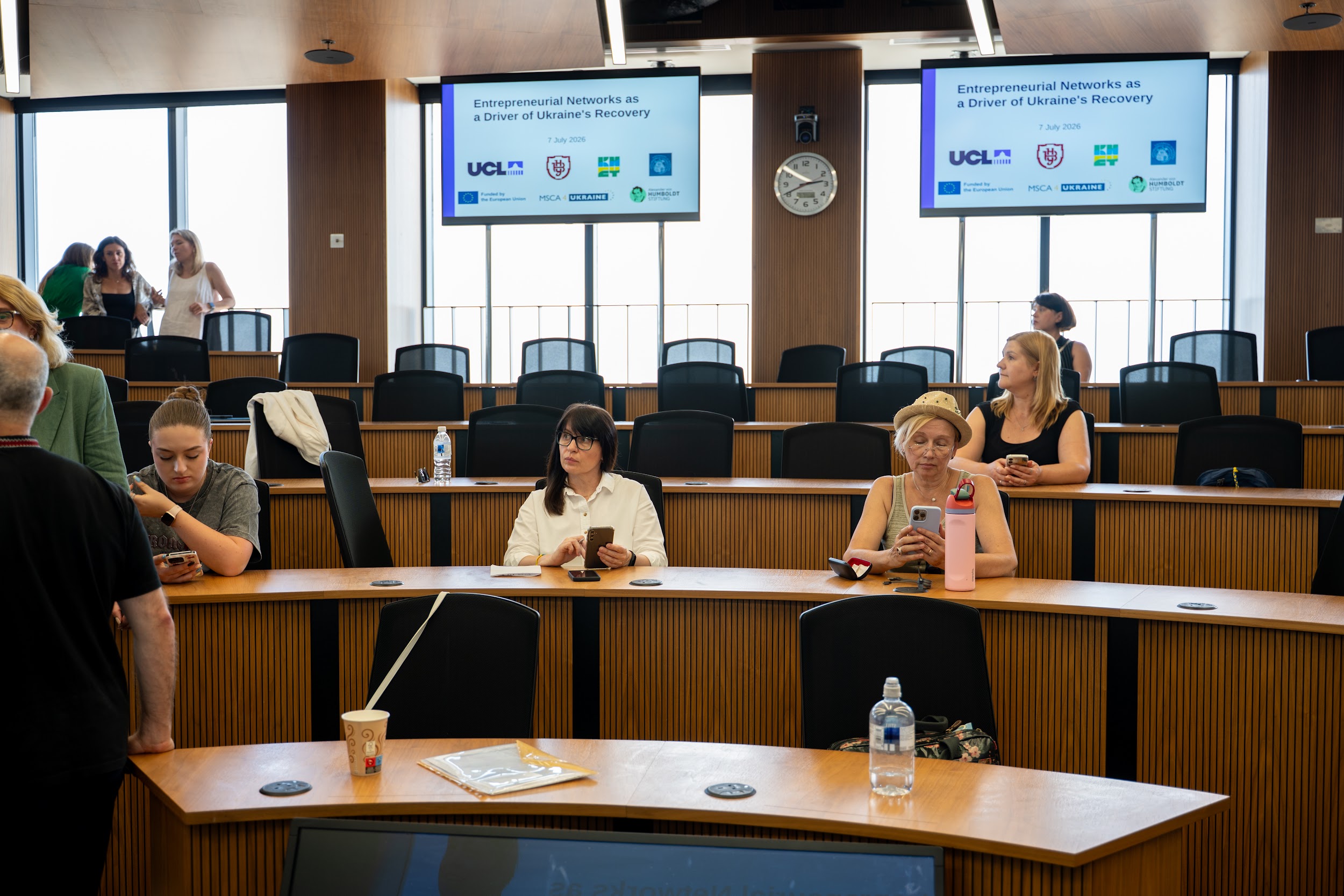
That day, researchers, entrepreneurs, representatives of innovation ecosystems, and members of the Ukrainian diaspora gathered at UCL School of Management from the United Kingdom, Ukraine, and Germany for the panel discussion “Entrepreneurial Networks as a Driver of Ukraine’s Recovery.” Formally, it was an academic event held as part of the Next Generation of Entrepreneurs for Ukraine project. In reality, the discussion centred on the relationship between people who had left Ukraine and the country they had never truly left behind.
Money Follows Trust, Not the Other Way Around
A common assumption is that entrepreneurs choose to work with Ukraine because it is financially attractive — tax incentives, government programmes, regulatory benefits. Natalia Hrytsiuk’s research, based on the experiences of Ukrainian entrepreneurs who established businesses in the United Kingdom after 2022, paints a different picture. The strongest factors influencing their decision to continue working with Ukraine are trust, professional relationships, and international entrepreneurial networks. These, rather than tax calculations, open the door to partners, markets, and new knowledge.
A survey of 210 Ukrainian migrant entrepreneurs in the UK supports this with clear evidence. Eighty-two per cent plan to expand their businesses, while their strongest motivation (scoring 86 out of 100) is not profit or market opportunities but family and their homeland. The desire to transfer the knowledge and experience they have gained back to Ukraine scored 83 points. At the same time, only 32 per cent rely on local management teams in Ukraine, while the majority manage their businesses remotely through technology or frequent travel. Business, therefore, is no longer built as an either-or choice between countries, but simultaneously across both.
The Diaspora Is Not a Consequence of War, but One of Ukraine’s Greatest Assets
The research’s main conclusion shifts the entire perspective. The usual question is whether entrepreneurs will return to Ukraine after victory. Natalia Hrytsiuk argues that their experience, networks, and expertise can already contribute to Ukraine’s future, regardless of where they live. From this perspective, the Ukrainian diaspora is no longer simply a temporary consequence of forced migration, but one of the country’s most valuable strategic resources for long-term development.
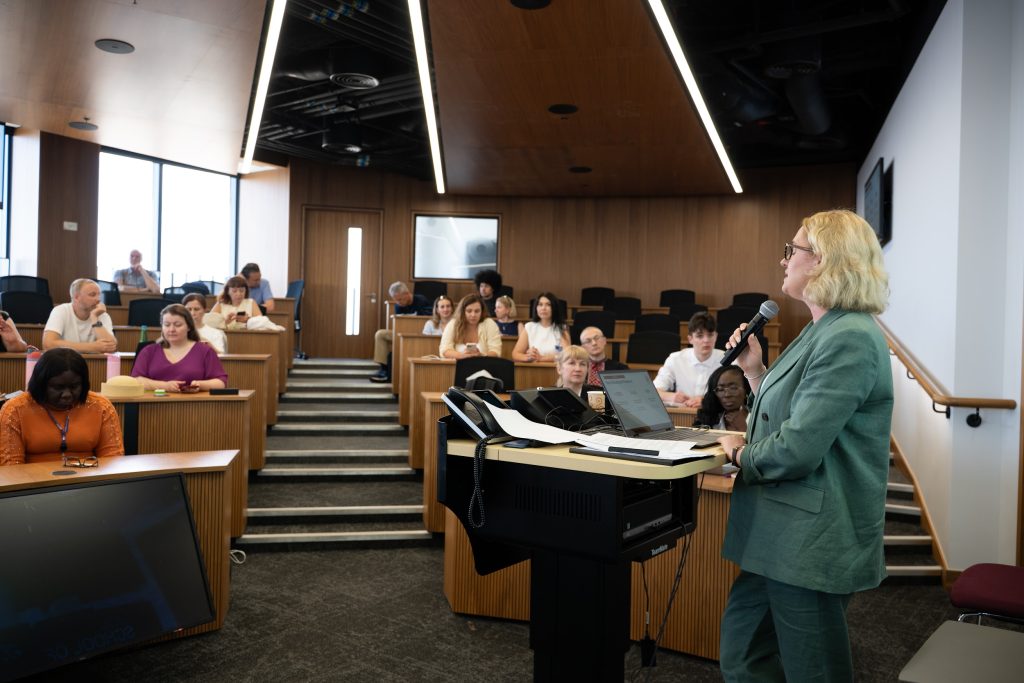
The figures on Ukraine’s economic transformation presented by Professor Olena Ivashko from Lesya Ukrainka Volyn National University illustrate why this role has become so significant. Ukraine’s economy contracted by 29 per cent in 2022 — its deepest decline since 1945. Yet in 2023, it rebounded with 5.5 per cent growth, driven primarily by agriculture and the IT sector. Forecasts for 2025–2026 predict a further 2 per cent growth despite the ongoing war. Ukraine’s IT industry now employs 346,000 specialists and generates a $1.2 billion outsourcing market, accounting for 10 per cent of the global total. The country’s startup ecosystem is valued at €28 billion, while in the first quarter of 2024 alone, 57,665 new sole proprietors registered through the government’s Diia digital platform.
Universities as Architects of Partnerships
One of the discussion’s central messages was that universities no longer exist solely to educate. They have become places where ideas emerge, ideas evolve into partnerships, partnerships develop into research, and research leads to practical solutions that ultimately create opportunities for an entire country.
This is precisely the thinking behind the collaboration between UCL and Lesya Ukrainka Volyn National University. It includes a week-long research visit to London by Professor Olena Ivashko and Dr Tetiana Sak, a public panel discussion, an analytical report for the UCL Ukraine Initiative and Volyn National University, a stakeholder map of diaspora entrepreneurial networks, and a draft framework agreement for long-term institutional cooperation between the two universities.

The Next Generation of Entrepreneurs for Ukraine project has now been expanded through funding from the UCL Grand Challenges & UK-Ukraine Research Bridge Amplification Grant. This marks the fourth cycle of collaboration. Previous editions brought together 128 participants across three cohorts, led to the creation of 50 startups, nine of which secured angel investment, while one has already been successfully acquired. In 2025, competition for places reached ten applications for every available place.
There is no shortage of energy, talent, or ambition within Ukraine’s entrepreneurial ecosystem. What remains scarce is venture capital, access to international markets, and institutional mechanisms capable of supporting growth. The diaspora offers something that cannot simply be bought — local knowledge and trust. Partnerships such as the one between UCL and Volyn National University transform that trust into institutional confidence: the bridge that allows investors to engage with Ukraine today.
The question that remained unanswered in London was this: will we manage to build strong relationships and lasting trust with the United Kingdom — and beyond — quickly enough to attract investment for Ukraine’s post-war reconstruction in a timely and professional way? Can we transform our social and human capital into entirely new infrastructure and industries unlike any that exist elsewhere in the world? After all, many Ukrainian businesses will be built from the ground up. And that means they can be modern, efficient, and innovative from the very beginning.
Text: Olena Onyshchenko
Photos: Nataliia Prykhodko
English text editor: Helen Lewis
Ukrainian text editor: Anastasiia Zanuzdanova