It is unlikely that anyone would argue that a conscious approach to waste management and sorting is an integral part of the modern world. At the same time, Ukraine is currently in a bloody war, and the main challenge for its residents is to survive. But it turned out that even in such a cruel time, some think about the future: making the planet cleaner, people more responsible, and women more beautiful. Surprisingly, there is a direct link between all these concepts. After all, it was during the terrible events when two projects were born in Dnipro: a local plastic recycling station and the world’s first circular fashion startup.
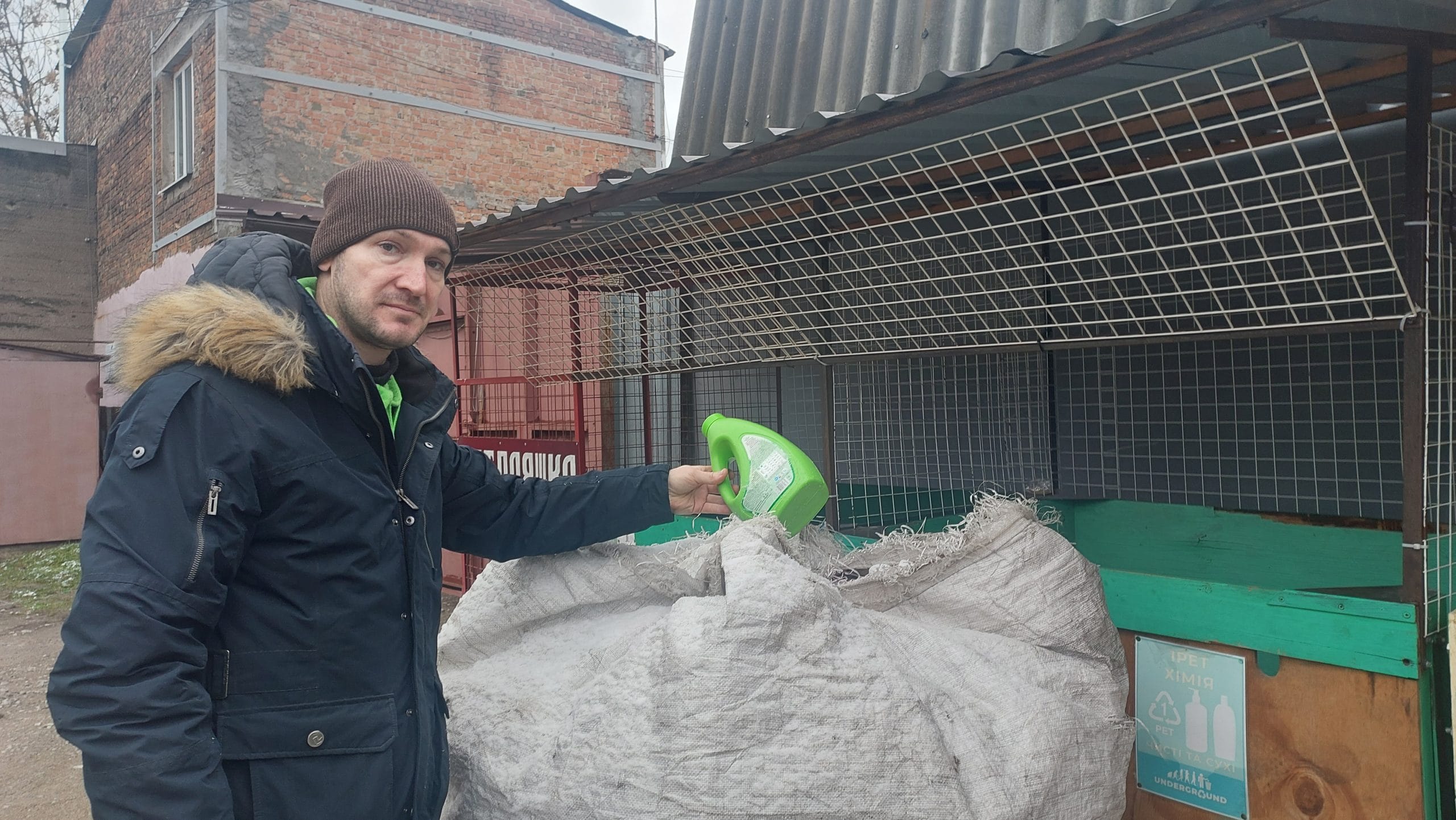
‘I cleaned the premises and installed waste sorting containers. My neighbours responded to an idea to collect and sort rubbish in the basement.
How did I come up with this idea? About ten years ago, I worked for a large networking company. At that time, I started thinking about the importance of recycling packaging.’
That’s how the dream of creating a large eco-hub — a fully-fledged sorting station — came about. Gradually, it became a reality. At the beginning of 2021, Oleksandr met a like-minded man, Andrii Polishchuk, who was already involved in plastic recycling. They found a convenient location and installed containers to sort the recycled materials. The opening of the eco-hub was planned for 24 February 2022.
‘Of course, there was no opening that day because the war started. Like most Ukrainian people, we were shocked for about a week. Then we started making trench candles (candles made from aluminium cans, melted wax, and paper are very popular homemade options for those without electricity or who need to hide in the basement during the bombing — Ed.). Furthermore, I gave volunteers recycled glass and foam to make Molotov cocktails, believing this would help defend against the Russian occupiers at the time. On 19 March, we finally opened the sorting station and started working.
The first bags were made in the kitchen.
Residents can bring their waste to the sorting station once a week, on Saturdays. Once the containers are filled to the roof, we start sorting them into the waste and recycling materials; then, trucks take all the waste away.
“Generally, there are not many raw materials, but the project is alive and enough for now. Representatives of “Underground Dnipro” bring plastic waste to be sorted by big Ukrainian companies such as SoftServe and Work.ua. We are about to sign a contract with UNICEF. That’s why we created an NGO called Smart Recycling.
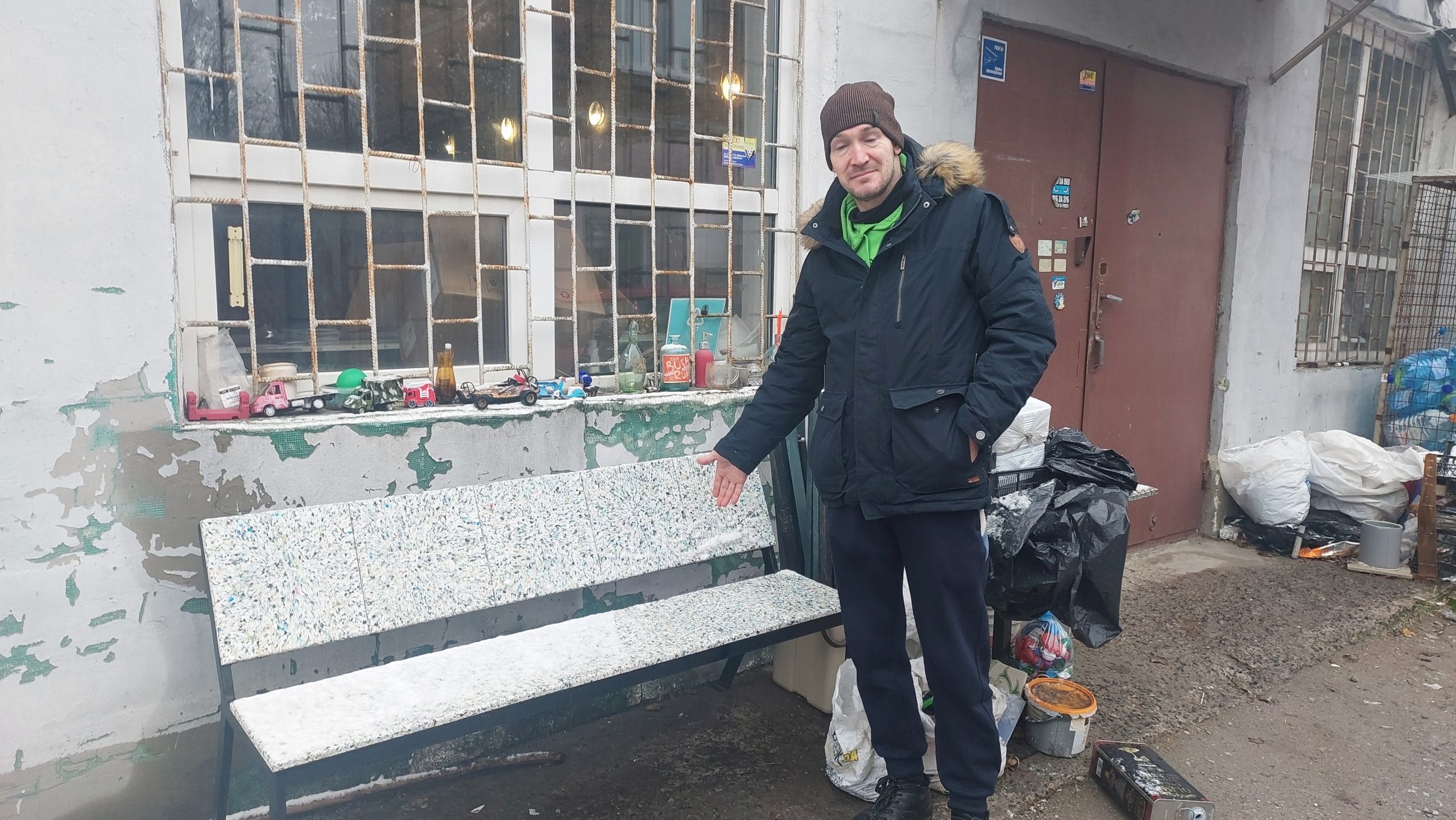
The sorting station sorts a lot of polystyrene and polypropylene, and several benches and tables are made of these materials on the site.
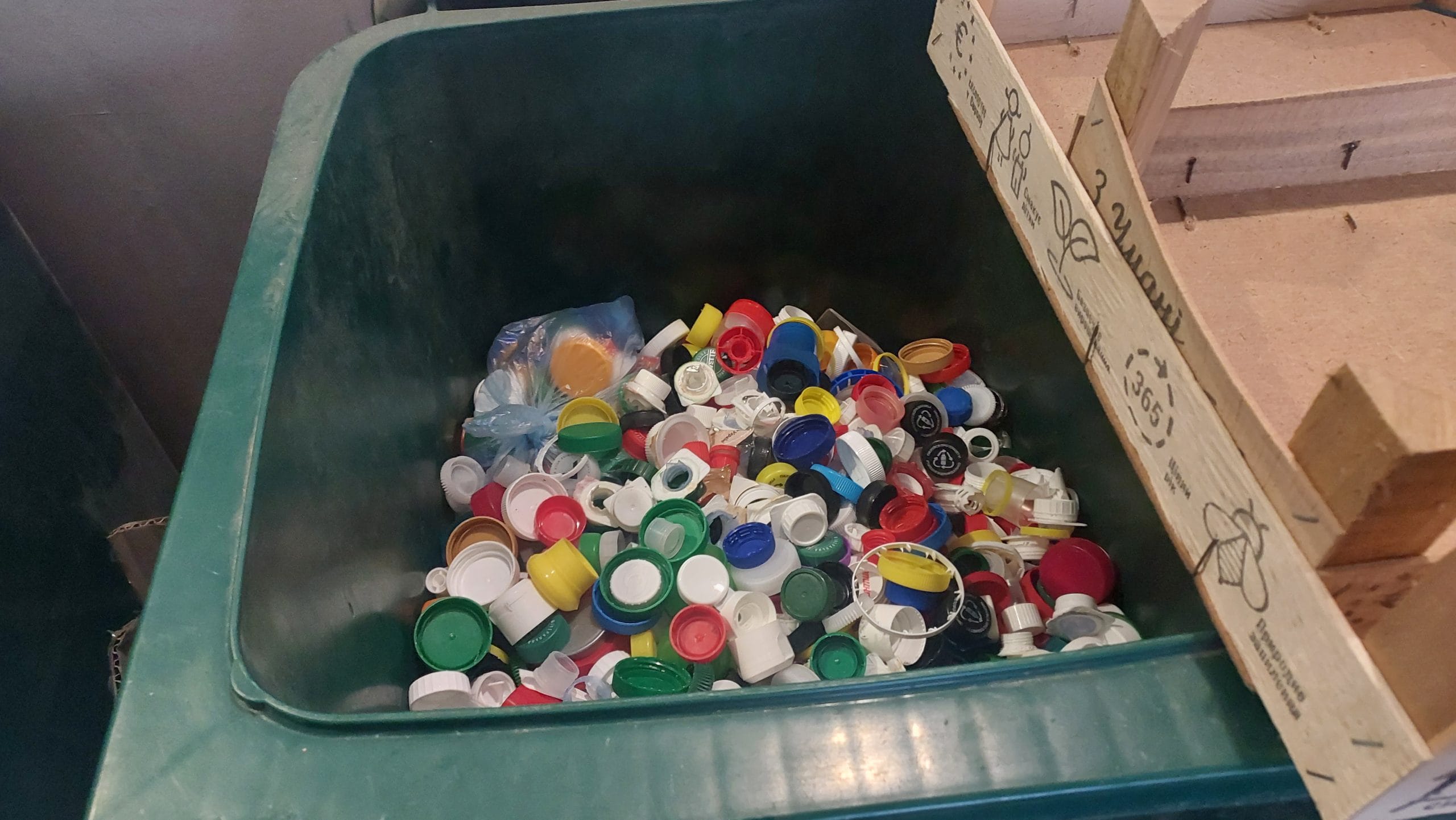
There are polyethylene beverage caps of different colours labelled HDPE in separate containers. This is high-density polyethylene, a versatile, durable plastic.
‘In June 2022, a resident of our city and future director of SPOGAD brand, which creates accessories from recycled plastic, Anastasia Kondratieva, visited us,’ recalls Oleksandr, ‘She asked what interesting things could be made from plastic. We had just made tiny circle beads for ourselves, experimenting with a new drilling press machine. Anastasia saw them and immediately had an idea. She suggested that we mix different colours of shredded plastic and see what would happen.’
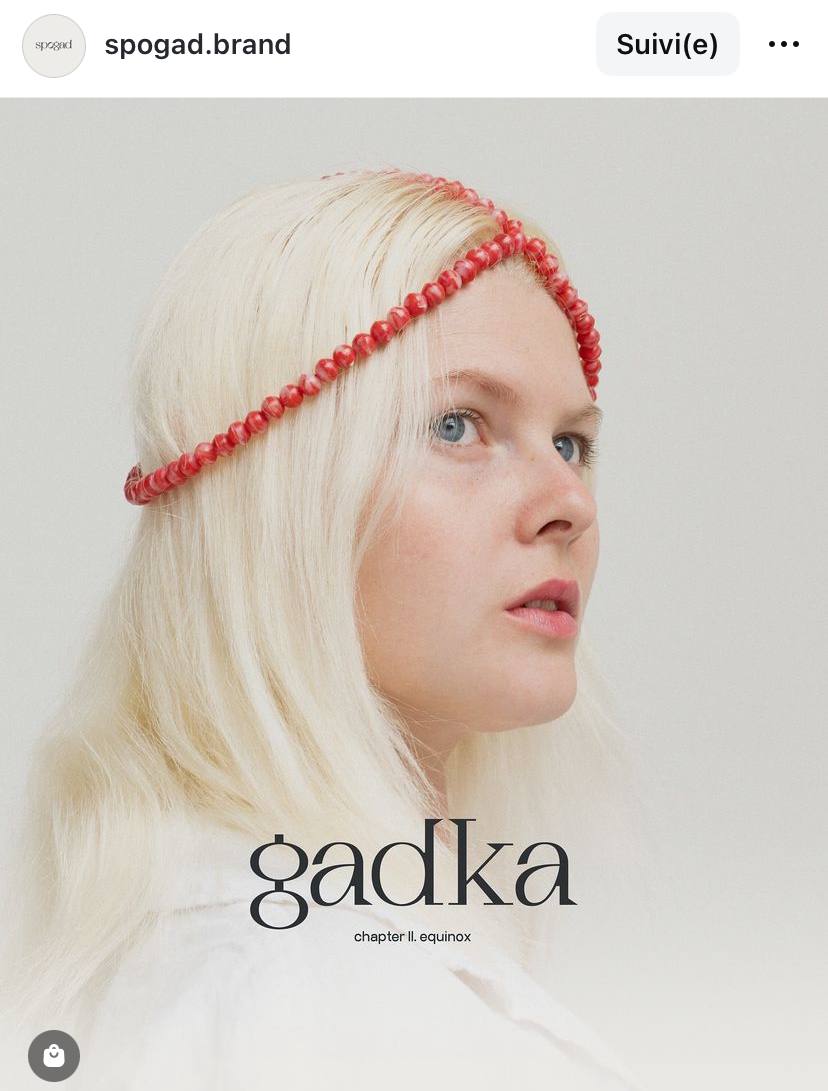
This is how the SPOGAD brand was born. Oleksandr processed plastic lids into coloured mass and made different mixtures. He manufactured the round beads from coloured plastic slabs, which became the basis for future products. Oleksandr’s daughter Angelina created the first bags from recycled plastic at home. Later, a local craftswoman, Taisiia Dubyna, joined the business and started making necklaces, bracelets, and knitted plastic bags. In addition to being a craftswoman, Taisia has become one of the faces of the SPOGAD brand, and designer of the headwear line.
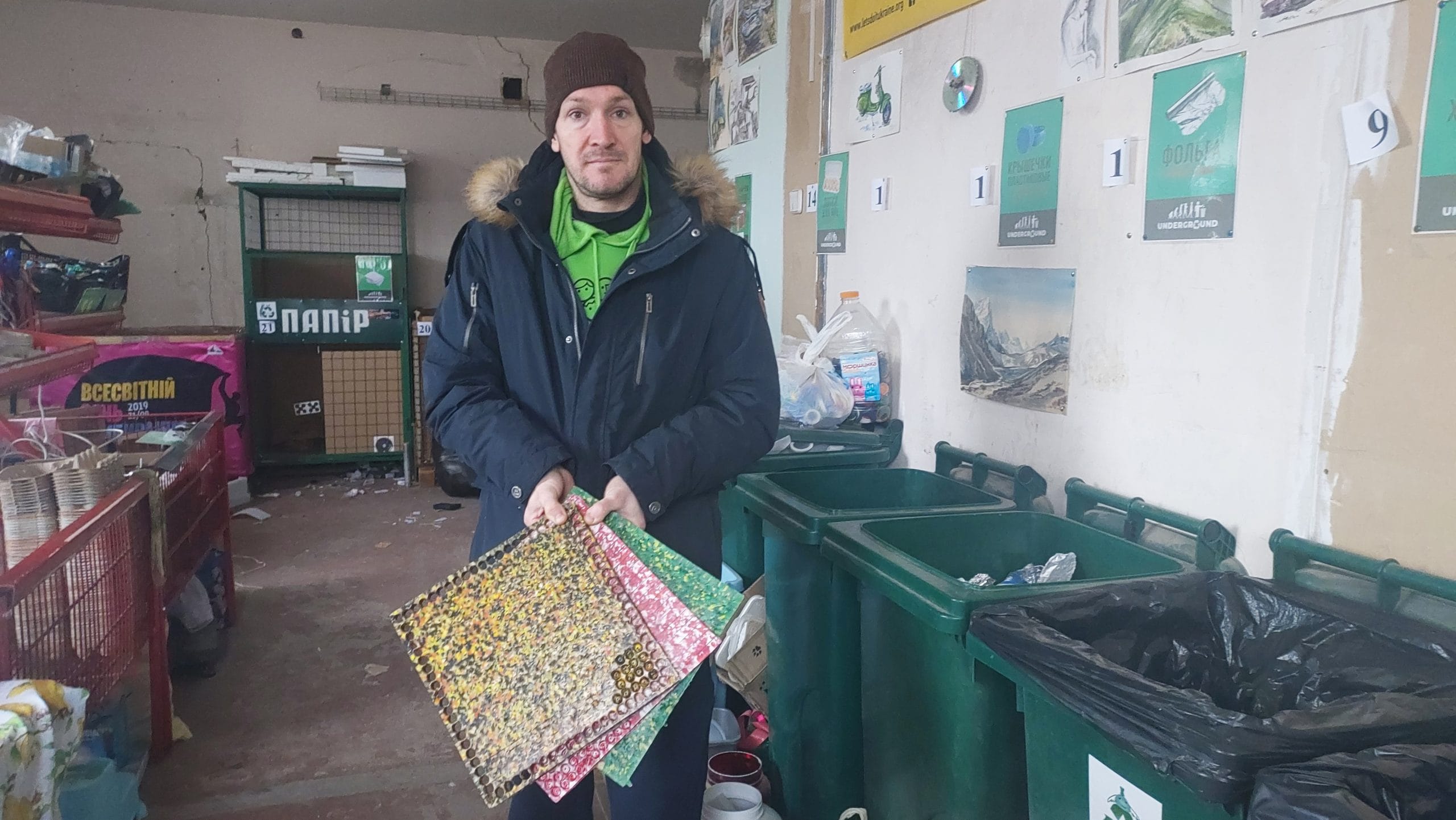
‘First, the plastic is shredded using special equipment,’ Oleksandr shares his production secrets, ’We have the equipment thanks to the donations and raw materials we collected from local residents. We put the shredded plastic into a mould and hold it under a special press with high heat. When the shredded and compressed plastic slab is ready, we use a drill to drill beads out of it. After that, the beads need to be polished. At this stage, we make the beads circular and smooth. One slab yields approximately 400 pieces. This process takes about four days. I have made more than 10 thousand beads since we started this project.’


Bold experiments combined with traditional techniques
‘You say it’s impossible? I’ll do it.’ These two sentences guide Anastasia Kondratieva, brand manager and creative director at SPOGAD, in her life.
‘Only a few people know that I am a former architect,’ Anastasia admits, ‘Architecture gave me something that will stay with me forever. It gives me an advantage in any project. To see in scale and volume. I can turn each of the brand items I see in my head into what we call a ‘sweep’ in architecture and patterns in fashion. Each of the materials is a reason for research. Each meaning is an abstract, the same genius loci I learned to transform into a form. Each project is an opportunity to ‘jump over’ myself and test my limits. Architecture and all the sleepless nights have taught me that only you decide whether you are ready to go further.’
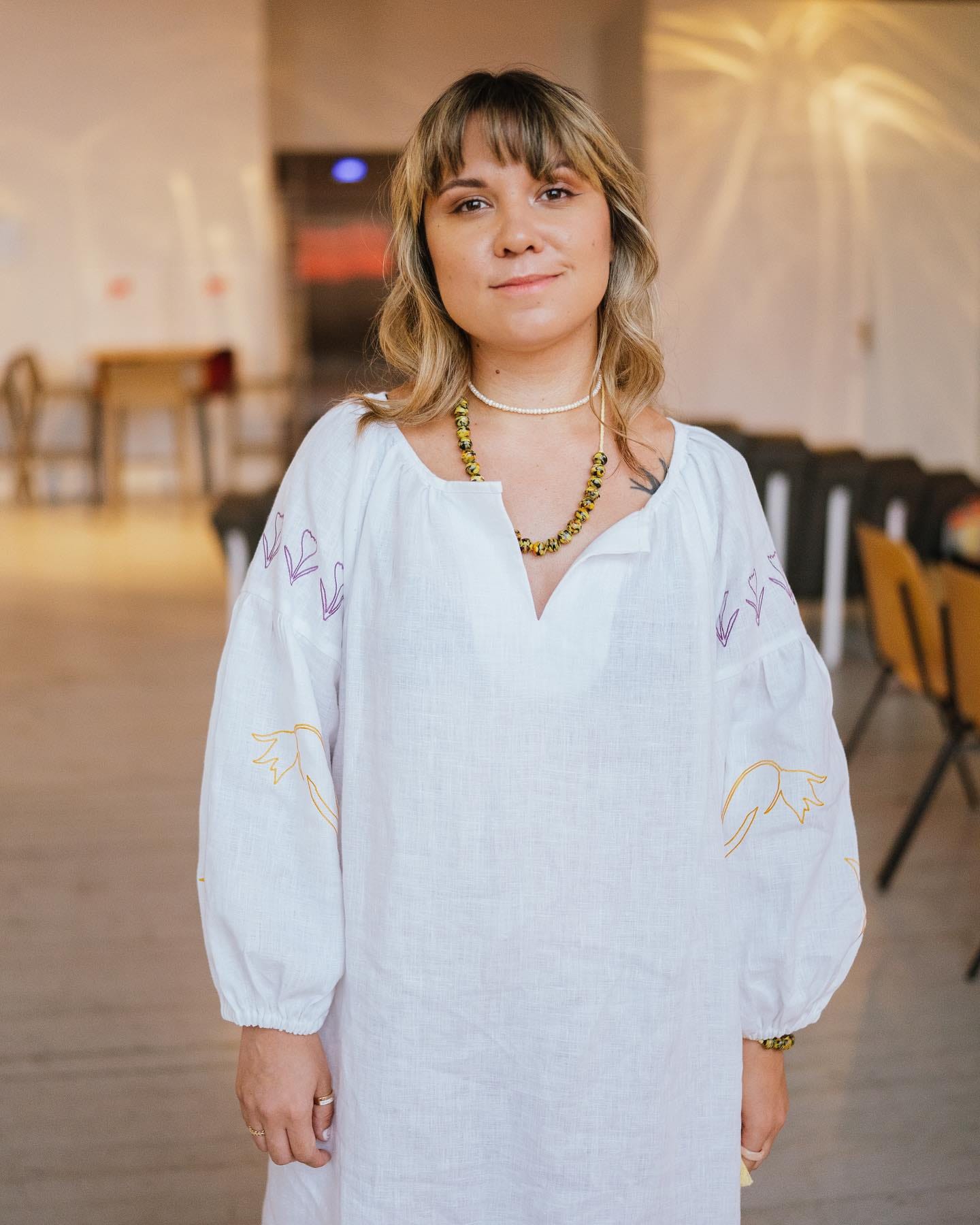
‘We weave plastic into memories’ is the slogan of SPOGAD. Today, it is the world’s first circular fashion accessories start-up that explores and introduces unique techniques such as thread and bead weaving. It creates iconic design objects from 100% locally recycled plastic. Anastasia Kondratieva now lives in France, so the startup has French-Ukrainian roots. It was founded during the Russian-Ukrainian War as a response to the physical and mental destruction of Ukrainian memorable places and our memories about the places.
‘I wanted to capture my dearest and most colourful memories of Ukraine: the Crimea, Christmas carols in the Carpathians, the taste of Kherson watermelons, and my grandmother’s weaving,’ says Anastasiia Kondratieva. ‘I wanted to allow the Dnipro region not only to defend itself, as it has since the Russian-Ukrainian war started nine years ago, but also to rebuild the region. That’s how SPOGAD got its mission; with it, there are many like-minded people with whom I dream of building the future together.’
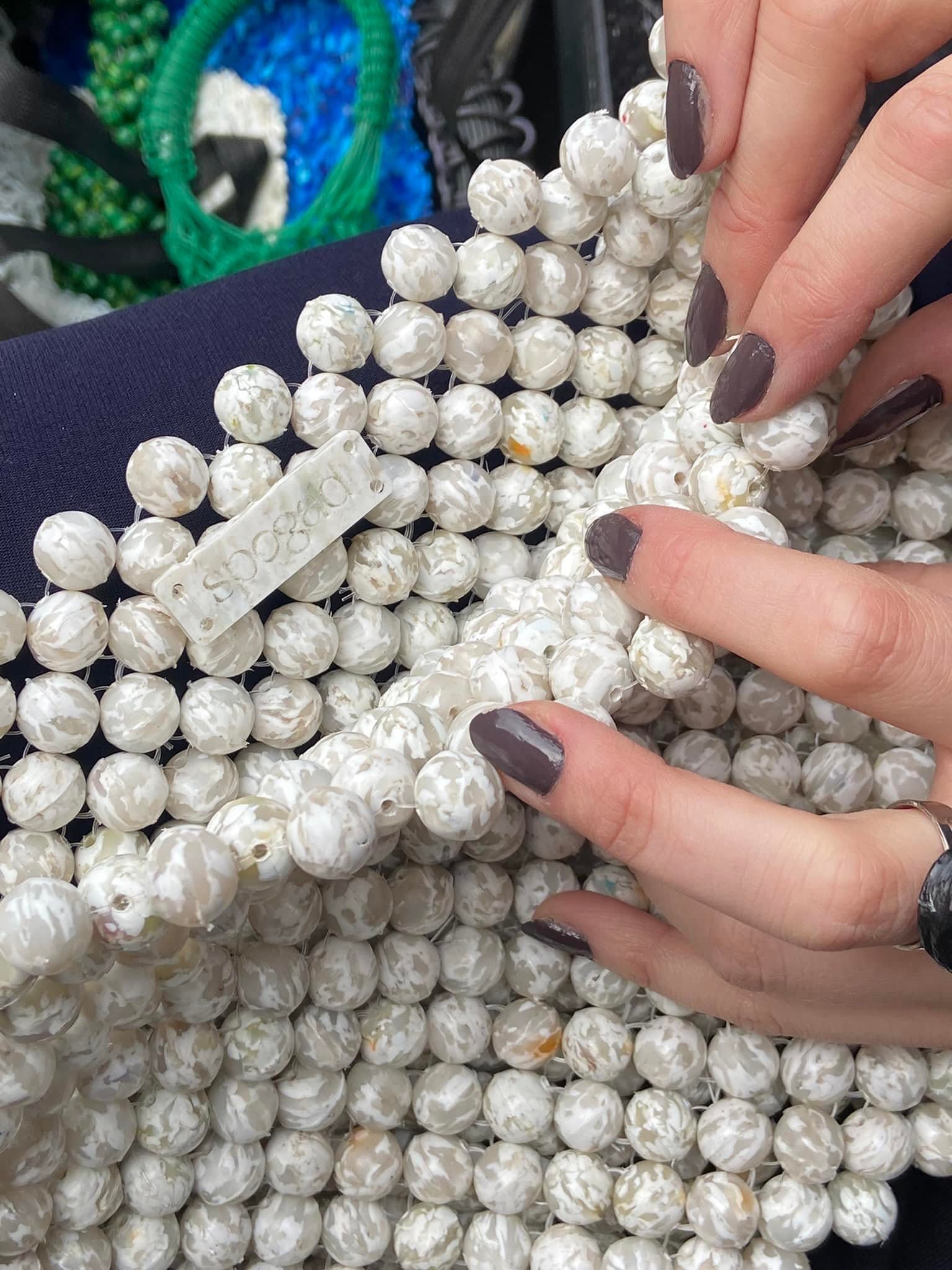

It is worth noting that a bead, or thread of beads, made of recycled plastic is an innovative and unpredictable element. In this way, the SPOGAD team invents its own schemes and techniques that have never existed before. According to Anastasiia, most brands that work with recycled plastic do not go beyond making recycled plastic slabs, and do not look for new forms and possibilities. At the same time, SPOGAD takes a step forward by using accessories and machines that are not designed for plastic at all.
The design begins with a special memory.
In May 2023, the brand’s team became a finalist in the women’s incubator, Empowering Ukrainian Women 2023, from the Estonian Refugee Council and received a UAH 100,000 grant equivalent to around two thousand pounds. SPOGAD is currently an official member of the Fashion Green Hub, a French association of fashion and textile companies that operate on sustainable and circular principles, such as resource recovery and recycling of materials. The brand was a finalist in the most significant global competition of green business ideas, ClimateLaunchpad 2024. According to Marie Claire Business, it was also included in the top 50 of the Face of Faith 2023 award. Today, SPOGAD uses two types of plastics — HDPE and LDPE — which are manually sorted and processed at the station in Dnipro. Then, the finished beads are shipped to France. The SPOGAD brand’s official website allows people to order jewellery anywhere in the world.
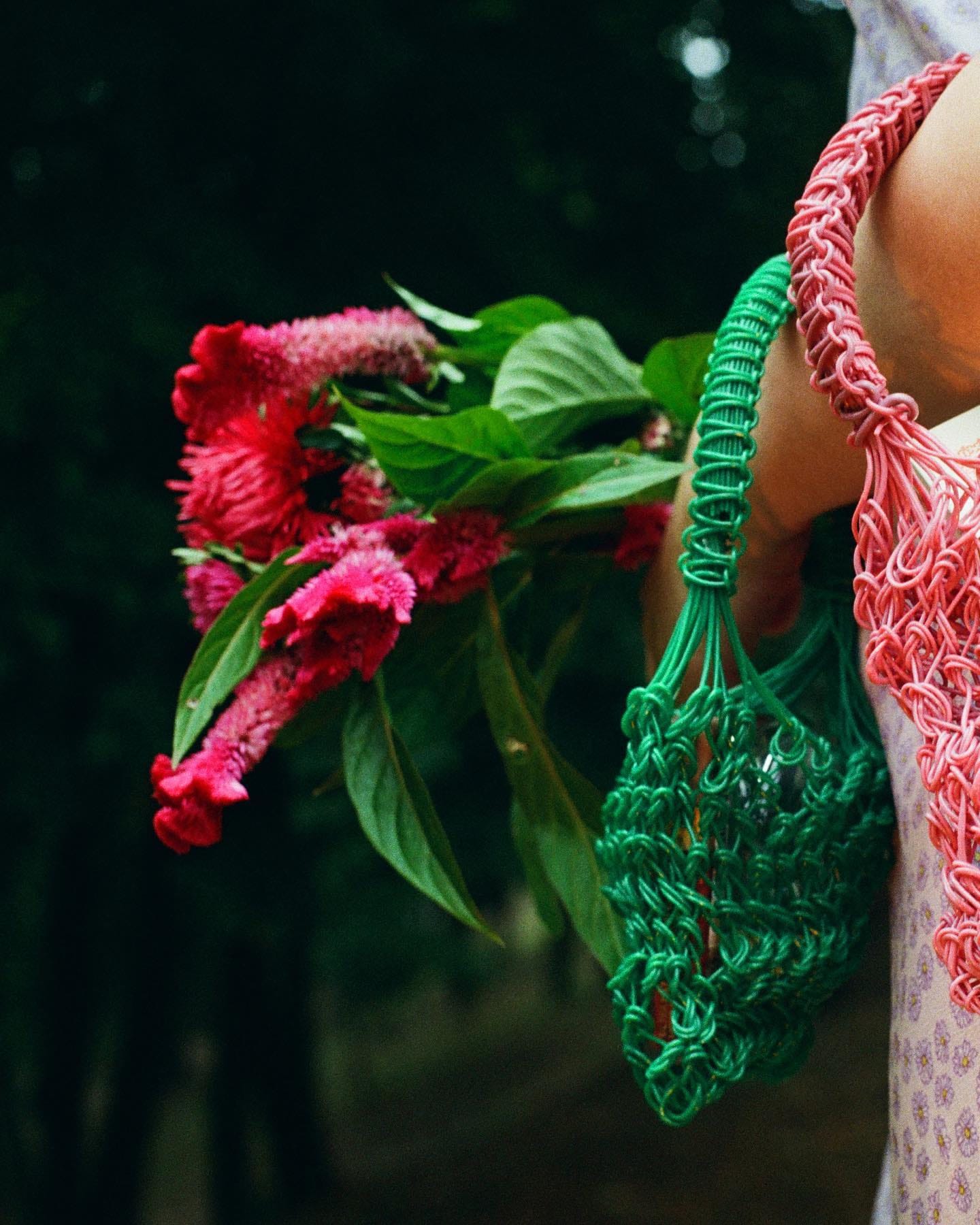
‘Each design object begins with a memory, which we transform into a specific set of colours,’ says Anastasiia Kondratieva. ‘Mixing shredded plastic in different colour proportions gives us the desired colour-memory. Since each bead is created by hand, there are no identical beads in the accessories, neither in colour ratio nor shape. The sorting station in Dnipro also creates threads from shredded plastic for us: the crushed plastic is loaded into an extruder, a machine for moulding plastic materials. The thread is ‘spun’ in the extruder, with its thickness and density manually controlled. Our craftswoman, Taisiia Dubyna, creates different design objects from beads and threads from recycled plastic. She is the first person in the world to do it. Furthermore, she relies on traditional Ukrainian weaving techniques: macramé patterns, crochet, knitting, woven and beading.
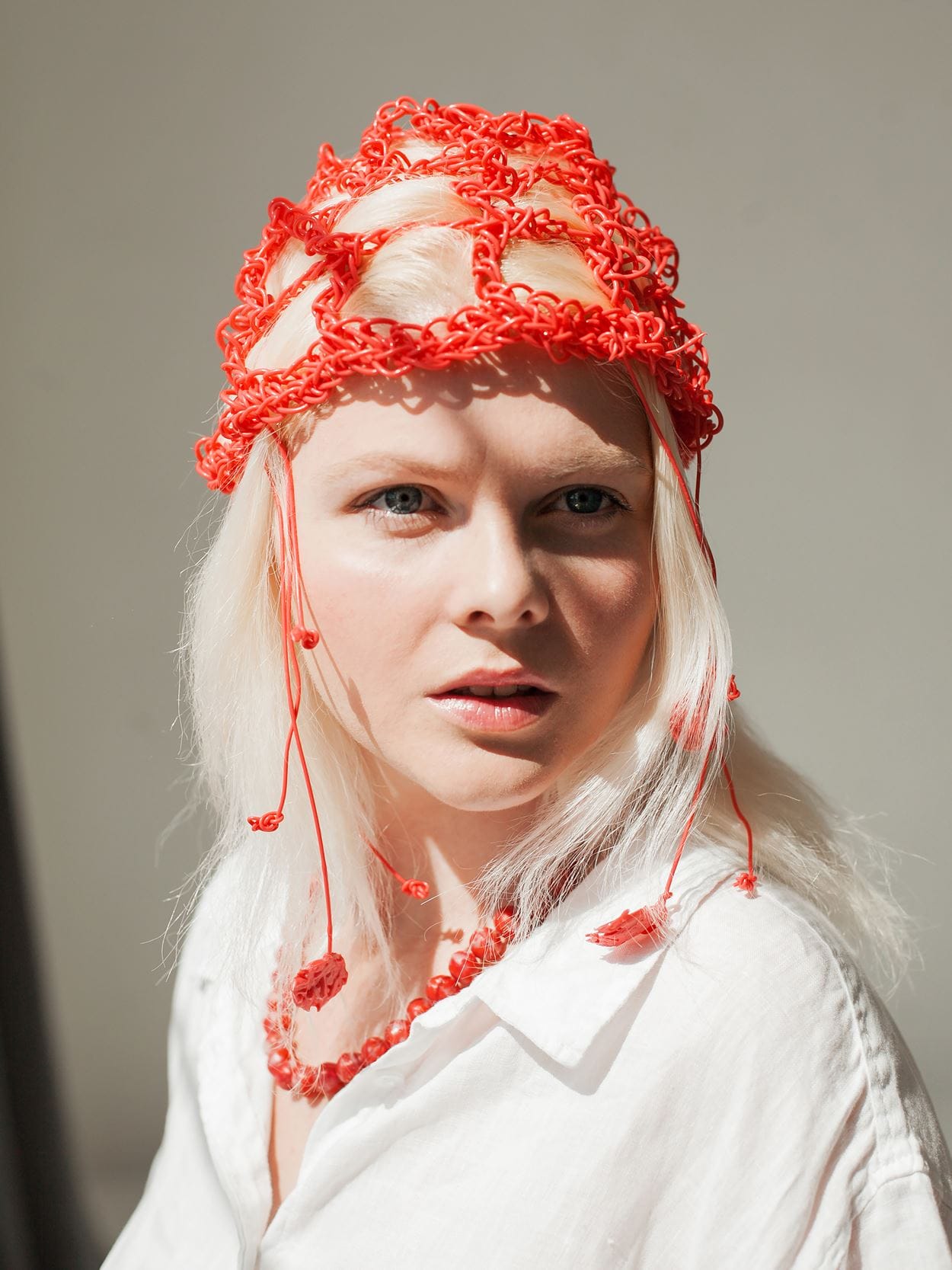
Currently, the brand offers products such as bags made of thread and beads, necklaces and bracelets, beaded jewellery and knitted plastic head-wear. The names of each design are fascinating, and no wonder. They aim to make each of their owners fall in love with Ukraine. They sound like a song and speak for themselves: ‘Dnipro Sunrise’, ‘Kherson Watermelon’, ‘Sunflower Field’, ‘Carpathian Forest’, ‘Vilnohirsk Sands’, ‘Lemurian Lake’.
Collaborations and the creation of a modern laboratory are ahead.
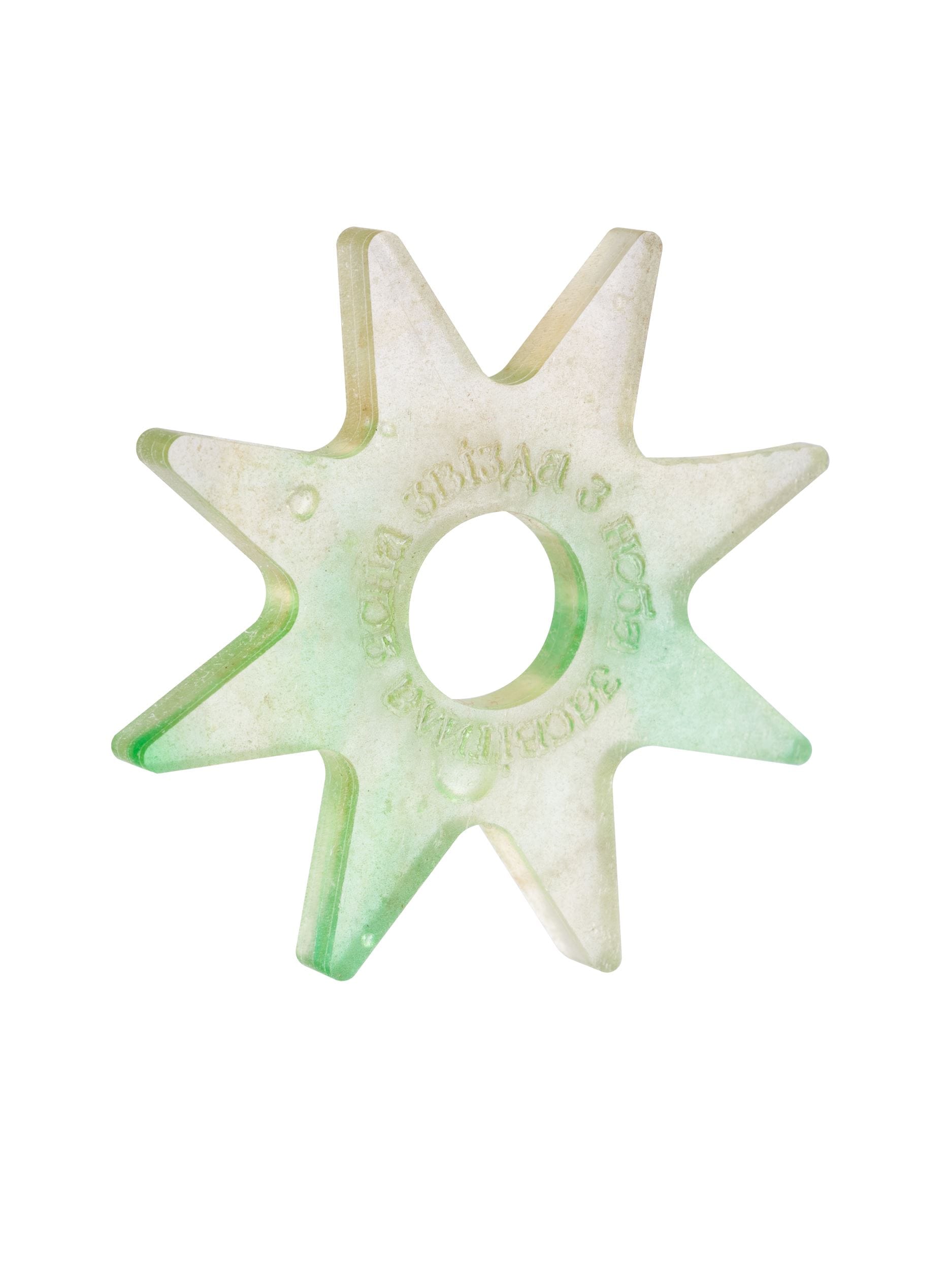
In December 2024, SPOGAD announced the launch of Zvizda (an ancient Ukrainian word which means “star” — Ed.), a new object at the intersection of fashion and industrial design. This is a memory of the Christmas carols of the Carpathians, of the stars in the stained-glass windows of ancient French cathedrals, of the darkness of winter blackouts and the first star in the sky. It is a tribute to the age-old traditions of star-gazing and, at the same time, an intimate reminder that light is always inside us. Zvida’s star-like quality is derived from the transparent sections of recycled CD covers.
‘After SPOGAD made it to the final of the Climate Startup Competition, we decided to continue on this path,’ Anastasiia Kondratieva shares her plans. ‘We were selected for an accelerator study for entrepreneurs, which is much longer and more intensive than other studies we participated in before, giving us the opportunity to devise a strategy for attracting more significant investments than small grants. I hope to attract European donors. We are currently working on entering the European market and replacing the B2C business model with a B2B one. We plan to collaborate with various fashion retailers in the French and UK markets, as sustainable fashion is actively developing there. Furthermore, we will also explore the Scandinavian market.’
Anastasiia and her team intend to expand the Dnipro production facility to the level of a large, modern laboratory, developing an innovation cluster involving active citizens.
‘I was born in Dnipro, and I believe this city deserves to become an innovative hub,’ says Anastasiia Kondratieva. ‘Our plans for 2025 also include cooperation with Ukrainian state cultural institutions. We have proposals to produce collections for them. The goal of SPOGAD, among other things, is cultural awareness, which brings information about our heritage and collective memory to the world and collaborates with Ukrainian and global brands. We are open to proposals to create cool and meaningful things.’
Author: Yulianna Kokoshko
Ukrainian language editor: Anastasiia Zanuzdanova
English language editor: Helen Lewis
The author and the SPOGAD project archive credited photos.