The Superhumans Centre is a modern clinic for prosthetics, rehabilitation, reconstructive surgery, and psychological support for those affected by the war in Ukraine. Among the ambassadors of the institution are world-famous rock star Sting and the famous adventurer, writer and presenter, Bear Grylls. Among the patients are the bravest and most courageous Ukrainians. Andrii Ishchyk, Superhumans’ public relations manager, tells us about their victories, challenges, and stories worthy of books and film adaptations.
How did the Superhumans’ journey begin?
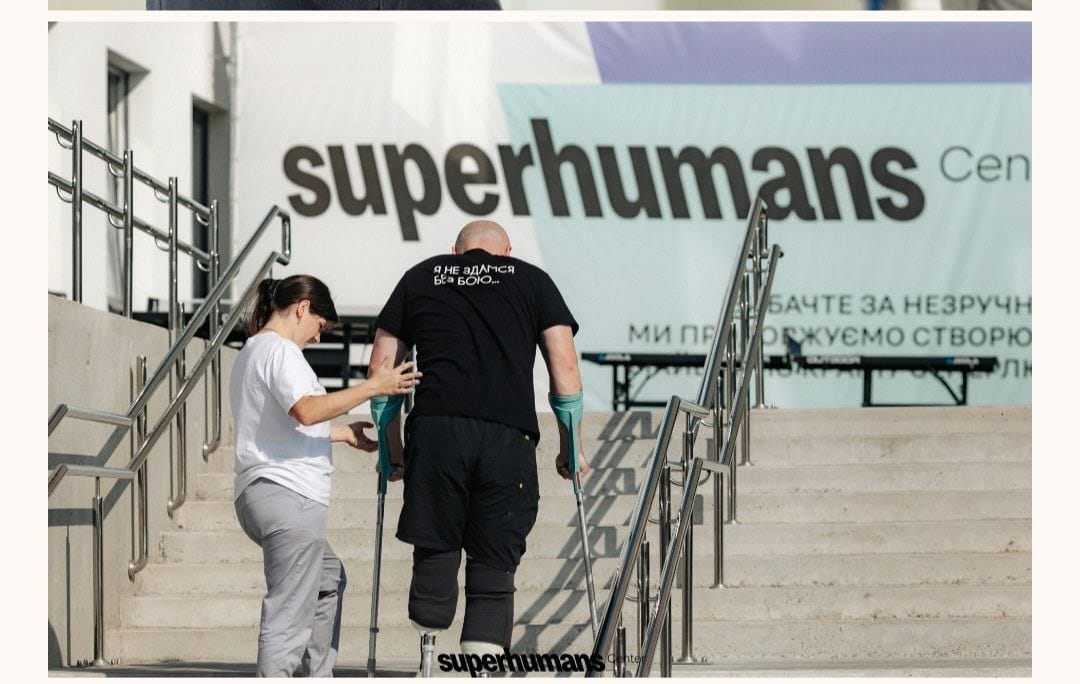
A potential Superhumans patient is a person who has suffered injuries as a result of war. The centre assists military personnel, Ukrainian civilians and foreigners. The main quality needed by a recipient of the service and/or prosthetic, is the desire and readiness for a challenging and often lengthy rehabilitation process. First, the patient has to fill out an online form on the website and attach a photograph of their injury or stump. This automatically puts them on the waiting list and they receive a call from the centre’s staff within a few days. After being invited to a consultation, the patient is examined by a team of multidisciplinary specialists, from psychologists to occupational therapists, and recommendations are made, depending on the person’s physical and mental condition. If necessary, the applicant may be advised to undergo a psychological rehabilitation course at one of the partner institutions, and only then return to prosthetics.
It is essential that the patient not only wants to get a new prosthetic limb but also wants to use it to the fullest. To support and motivate people with amputations, we created the Peer-to-Peer Department. It consists of five veterans who have undergone prosthetics and rehabilitation. The words ‘I understand you’ sound different from their mouths. These superhumans often visit other rehabilitation centres in Ukraine to communicate and inspire their fellow veterans.
‘The phrases ‘get well’ or ‘hold on’ won’t help,’ says Andriy Ishchyk, media centre manager. ’When people with amputations see the Superhuman guys and girls living, working, achieving their goals, they realise that anything is possible, and that life is worth fighting for. The mission of the Superhumans is to convey that getting a prosthesis is only half the battle; understanding why you need it is an entirely different story.’
How “Superhumans” differs from other rehabilitation centres
Having absorbed the experience of the best rehabilitation centres in Europe and elsewhere in the world, Superhumans has become a leading institution in Ukraine. According to Andrii, the key to success is flexibility, willingness to learn new things and openness to expert cooperation. This is a bilateral exchange, as the practical knowledge of Ukrainian specialists is as interesting to foreign colleagues as their technological innovations are to us.
The main difference between Superhumans and many other prosthetic centres is its practical orientation, where the ultimate goal is not to create a prosthesis but to support the patient to fully adopt it. Andriy Ishchyk recalls how surprised he was to see photos of some of the soldiers who had returned from prosthetics abroad: ‘They looked happy, they had modern prostheses, but for some reason they were not standing on them. I realised that they were not taught how to use the prosthesis properly. Yes, they were made of mechanical or electronic limbs, but were not taught how to walk or use their hands properly. Prosthetics without rehabilitation is like buying a car without going to a driving school. These two processes in our clinic are integrated from the beginning.”
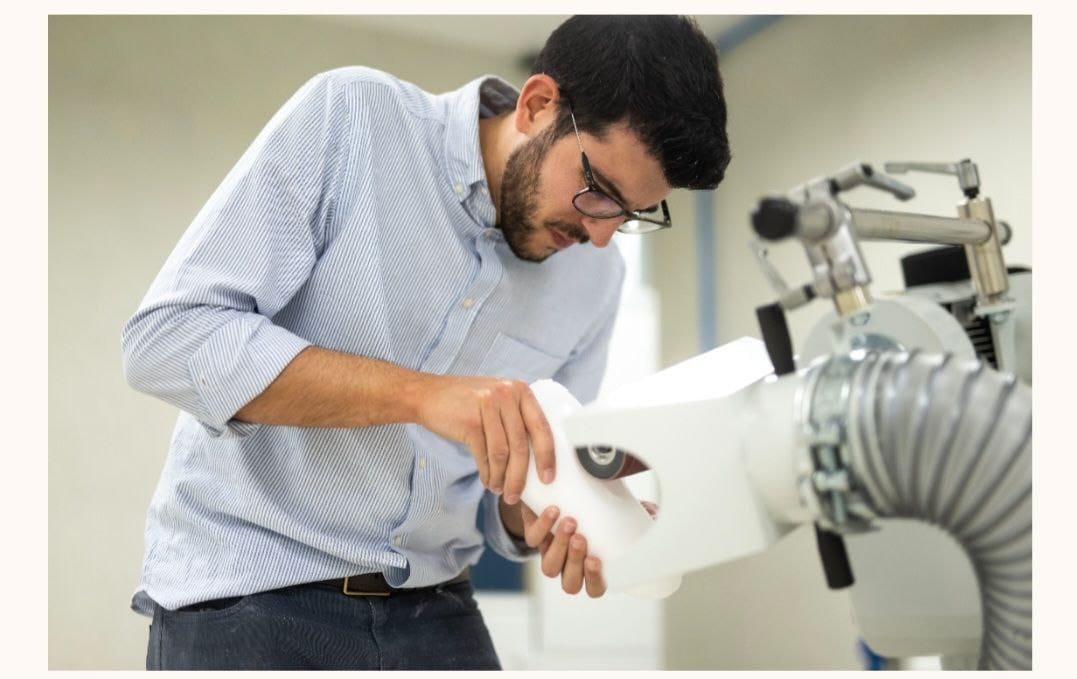
In addition, it is worth understanding that the prosthesis requires further maintenance. Even a slight change in the patient’s weight or lifestyle is a reason to adjust or replace specific components. ‘Every prosthesis has a socket, or a ‘stump receiver’. It serves as a connector between the body and the prosthesis. By gradually increasing physical activity, the patient gets in better shape, and his or her stump loses weight. Accordingly, the socket must be adjusted, a silicone liner-sealer must be installed, and so on. ‘That’s why it’s important to have prosthetics laboratories and specialists in your own country, not to rely on those abroad,’ explains Andriy. ’Even a carbon fibre socket that is meant to be permanent needs to be replaced over time. In general, ensuring a prosthetic is fully functional is a lifelong process. This is one more important reason why people choose Superhumans.”
Who does the Superhumans centre work with?
With the participation of leading surgeons from France, Superhumans performs complex reconstructive facial surgeries. ‘These high-tech interventions are performed directly in our operating surgeries, which are equipped with the appropriate facilities,’ says Andriy. “We involve French specialists because they are deemed currently the best in their field. Together with them, we have developed a five-year training programme, so that Ukrainian surgeons can perform such operations independently at home.’
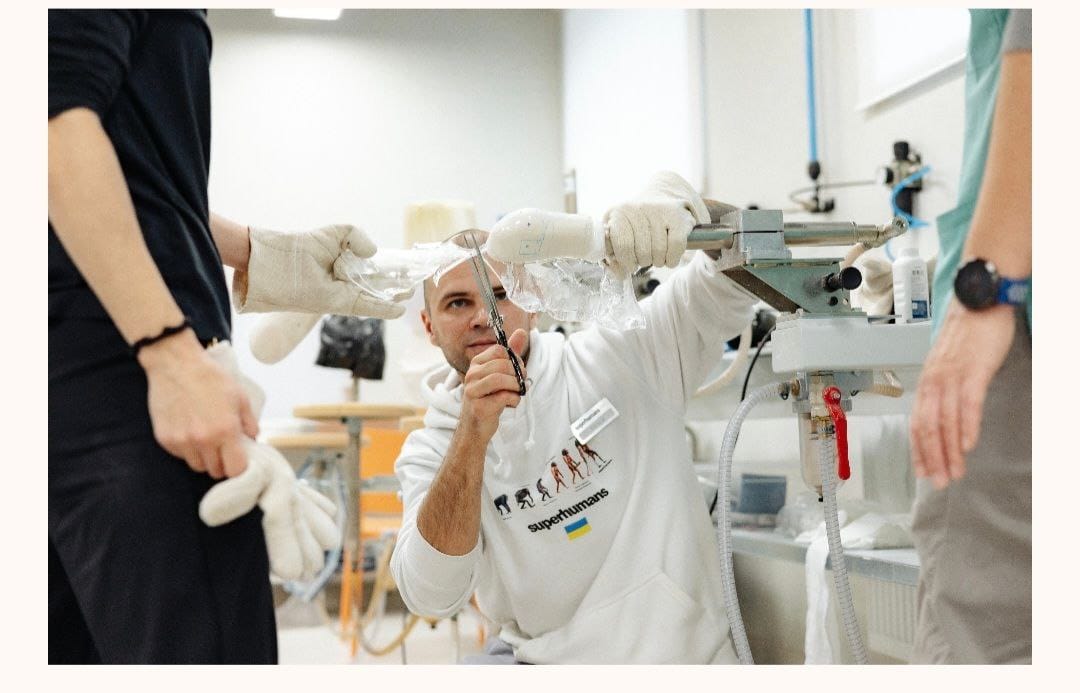
There have also been several American missions. Prosthetists from the United States helped to make arms and legs for Ukrainian heroes. ‘It was not just training, conferences or consultations, it was direct work here on the ground, side by side,’ adds Andriy.
Social reintegration
Equally important in the rehabilitation process is the social reintegration of the participants Superhumans has created a special department where patients can attend various courses, training and workshops to facilitate the return of prosthetics to their everyday lives. They also meet other Superhumans who are happy to share their success stories.
About a quarter of the Superheroes return to service, while others find a new purpose or decide to start their own business. One of these brave souls, Serhiy Zhukovsky, has become a well-known businessman. Thanks to the centre, Serhii and his wife opened a small enterprise producing craft beer jerky called (Sushena Radist) Dried Joy. ‘He used to take courses at Superhumans, and today he teaches other veterans the secrets of starting their own business: from creating a business plan to securing grants,’ says Andrii with a smile.
Scaling up Superhumans
The first Superhumans unit was opened on 14 April 2023 in Vynnyky, in the Lviv region. However, the team plans to open another centre soon in Dnipro. ‘Odessa is next on the list. We also considered Kharkiv, but the war and security situation made some changes,’ says Andrii. “The main criterion for choosing new locations is that our new and old patients can reach us quickly and conveniently.”
Changing public perception of disability
Changing public perceptions and breaking down stereotypes of people with disabilities is another of the important tasks of Superhumans. The centre is actively engaged in educational activities using a variety of platforms, from social media through to partnering with higher education institutions. ‘Our activities are aimed at raising awareness of the fact that many people have and, unfortunately, will continue to have prostheses due to the war. Society must understand that thanks to these people, we can live, work, relax and dream. However, this does not mean that when you meet a veteran, you should smother them with hugs, give them money, or cry. Neither does it mean that it is acceptable to turn away, point, or force them to cover their prosthesis. You should treat such a person like any other: with respect and without excessive emphasis on their features.’
Each target audience requires a fundamentally different approach. Children, for example, are invited directly to the centre, where they are invited to participate in interesting interactive activities, such as wheelchair races and testing prosthesis simulators. At the end of each meeting, the kids are presented with comic books about superheroes, not some fictional Marvel characters, but the real ones who have just given the children a guided tour of the centre.
Today, Superhumans is a highly modern centre for prosthetics, rehabilitation and reconstructive surgery, and employs 250 caring professionals.
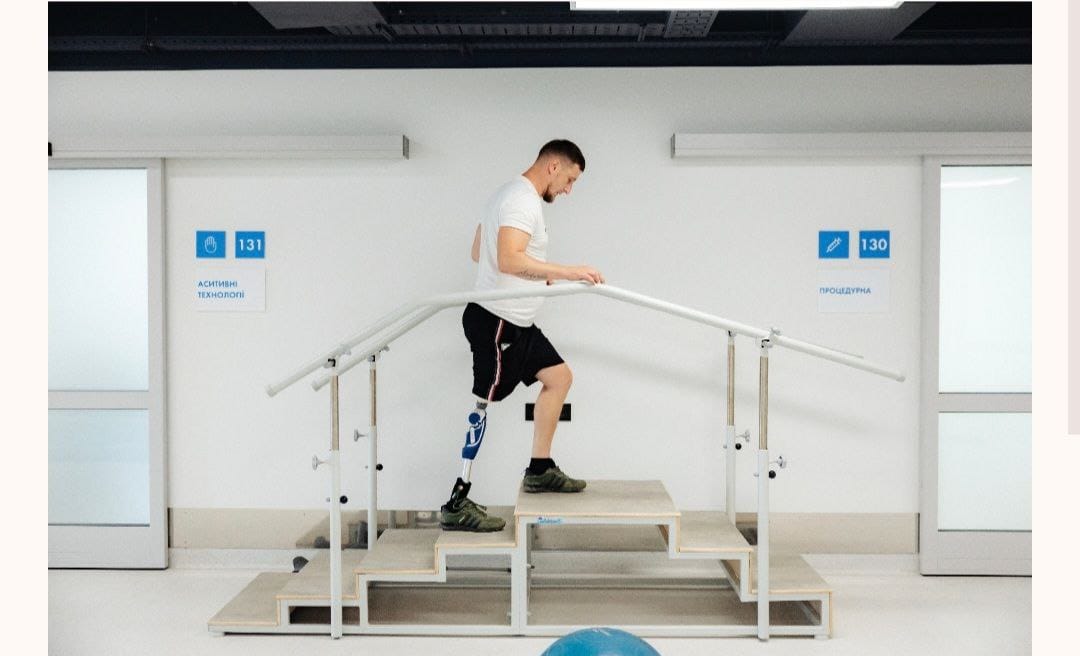
In addition to the lost limbs, the centre restores people’s hearing, appearance and self-confidence. Superhumans in the future is the answer to the challenges that lie ahead. ‘I think that in 5-10 years, the Superhumans complex will look futuristic, embodying the ideas of the films we all watched,’ Andriy jokes. ‘Honestly, I wish this centre had never existed. But, unfortunately, the war happened, and it has become a fantastic solution for one of the war’s major problems.’
Superhumans in Faces
The story of each Superhumans patient is remarkable and unique. Whether military or civilian, they have all come a long way, paying a heavy price for our ‘tomorrow’.
Andriy Ishchyk shares the story of one of the very first Superhumans patients, veteran Petro Buriak. When the hospital reconstruction in Lviv was still in progress, Petro and several other Superhumans received prostheses in the German city of Duderstadt, as part of the collaboration with Ottobock, a company considered the world market leader in the field of prosthetics and suppliers of orthotics and exoskeletons. ‘ At that time the centre opened before the lab inside was completed, our guys came to the centre’s opening wearing prostheses,’ says Andriy. ‘Petro’s injury was one of the most difficult: he lost both legs and two fingers and experienced five clinical deaths. But for him, it felt like his battle was far from over. First, he received and mastered a mechanical knee and later it was replaced by a Genium X3 electronic prosthesis, which is much more functional and comfortable. After his rehabilitation, Petro returned to his normal life, started the Invincible Warriors charity foundation, and began raising funds to support veterans and soldiers. He also got back behind the wheel. ‘One day, Petro appeared at the centre, and I asked him who he came with. He said he came alone. I asked again: ‘Did you install car hand control?’ Petro said: ‘Come on, you’ll see for yourself.’ He got behind the wheel and, with two prosthetic limbs, gently and super-professionally drove the car. I was very pleasantly surprised,’ Andriy says with a smile.
Petro also bought a minibus for his foundation, which he uses to travel abroad to buy and equip vehicles for our military. He drives them to the frontline himself. ‘Having gone through so many trials, this man continues to help. And this is not a recording of some motivational videos. This is real direct help,’ continues Andriy. ’Petro made eight trips to the frontline, covering about five thousand kilometres and not taking off his prostheses for more than 42 hours. For me, these are incredible results.’
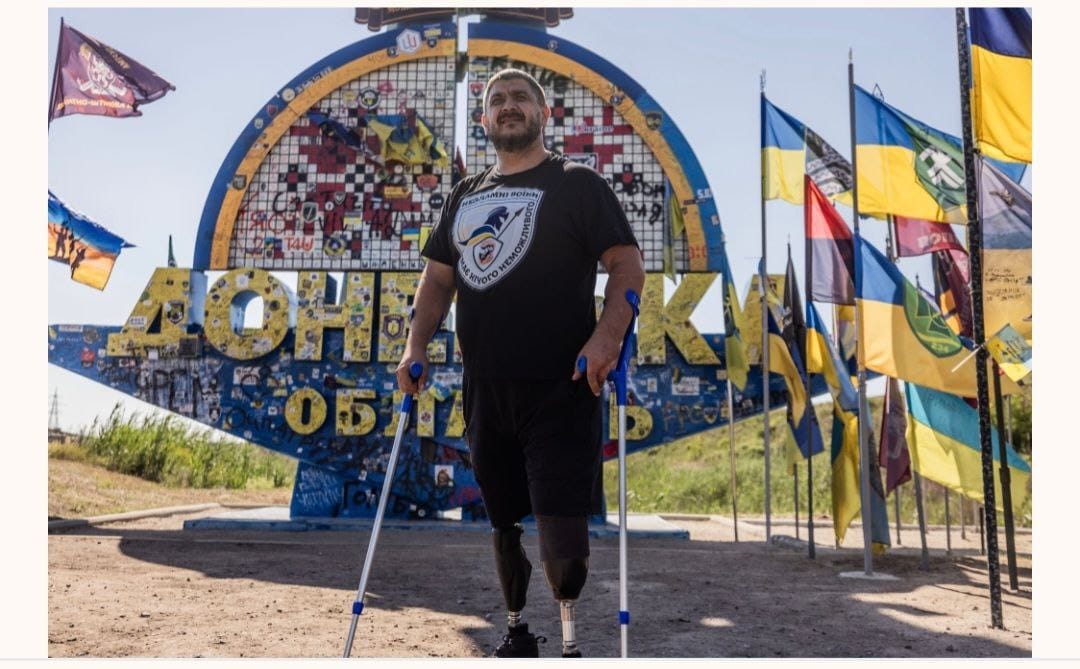
Andriy also admitted that he likes to start every tour of the centre with Petro’s photo and story: ‘I perceive him as a man who carries out the work of the equivalent of ten people. This helps to prevent me from viewing him as suffering or traumatised. On the contrary, no matter how paradoxical it may sound, he and many others give me constant inspiration, support and motivation. If they have not given up, then we certainly have no right to give up.’
The author: Anna Lysenko
Ukrainian language editor: Anastasia Zanuzdanova
English language editor: Helen Lewis
Photo credit: Superhuman Centre