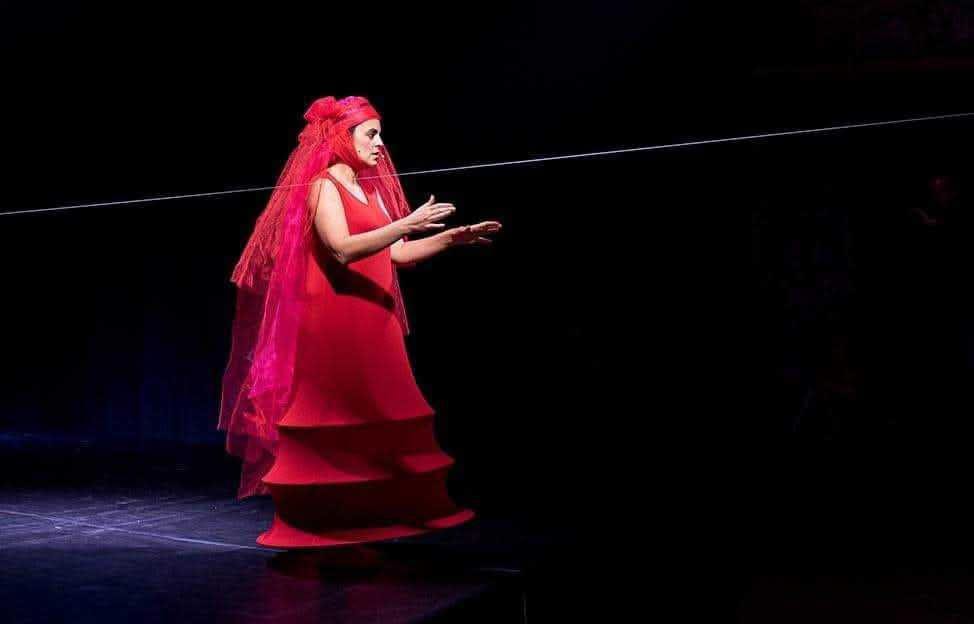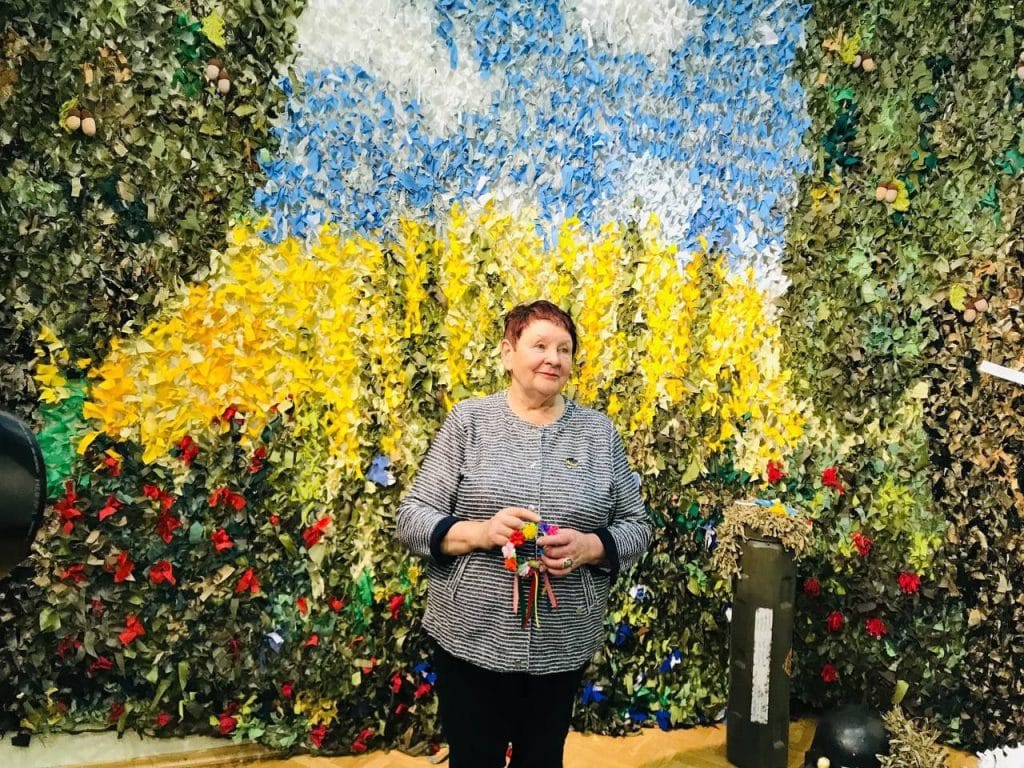
She is a well-known French artist working in a style often described as naïve or primitive art. He is a Ukrainian painter and an active serviceman in the Armed Forces of Ukraine. They first met online and spoke about art; after the full-scale invasion began, they unexpectedly grew closer — a connection that led to a joint song in French. Not long afterwards, they fell in love. Yet the war intervened: he chose to stay and defend Ukraine. Today, her works are on display in Lutsk; she is learning Ukrainian; and she believes her place is alongside Ukraine while he is at the frontline.
Her name is Caroline Dahyot. His name is Valerii Hubenin. This is a story of love seen through the lens of war, art and shared purpose.
An exhibition by the French artist titled Cat People has opened in Lutsk. Dahyot travelled to Ukraine not only for the exhibition, but also to support Valerii. It was there that journalist Liudmyla Pryimachuk met her.
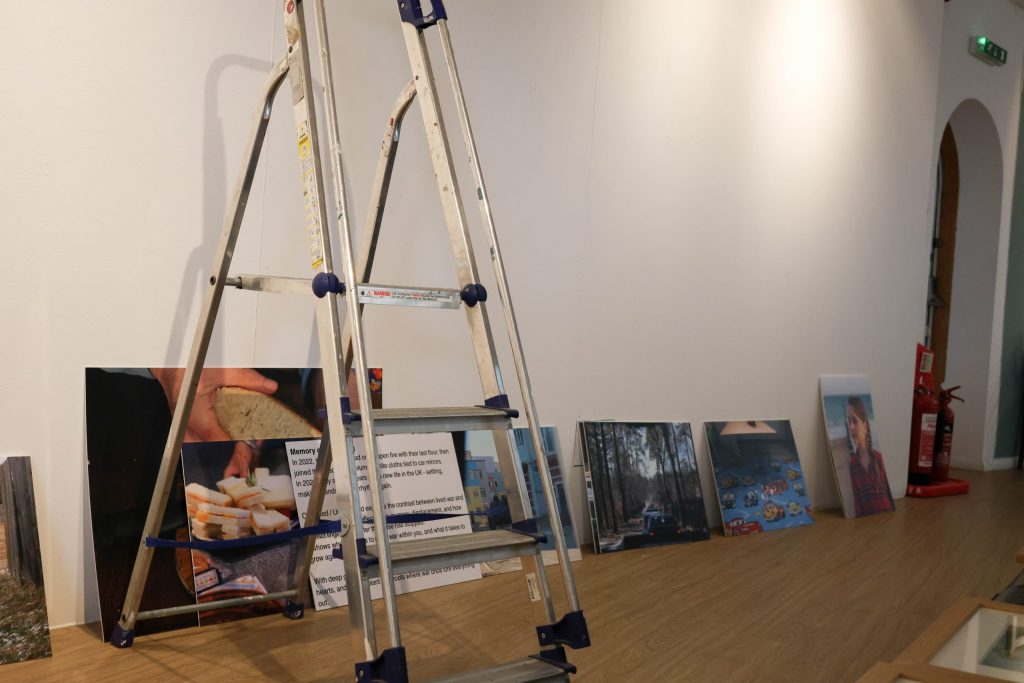
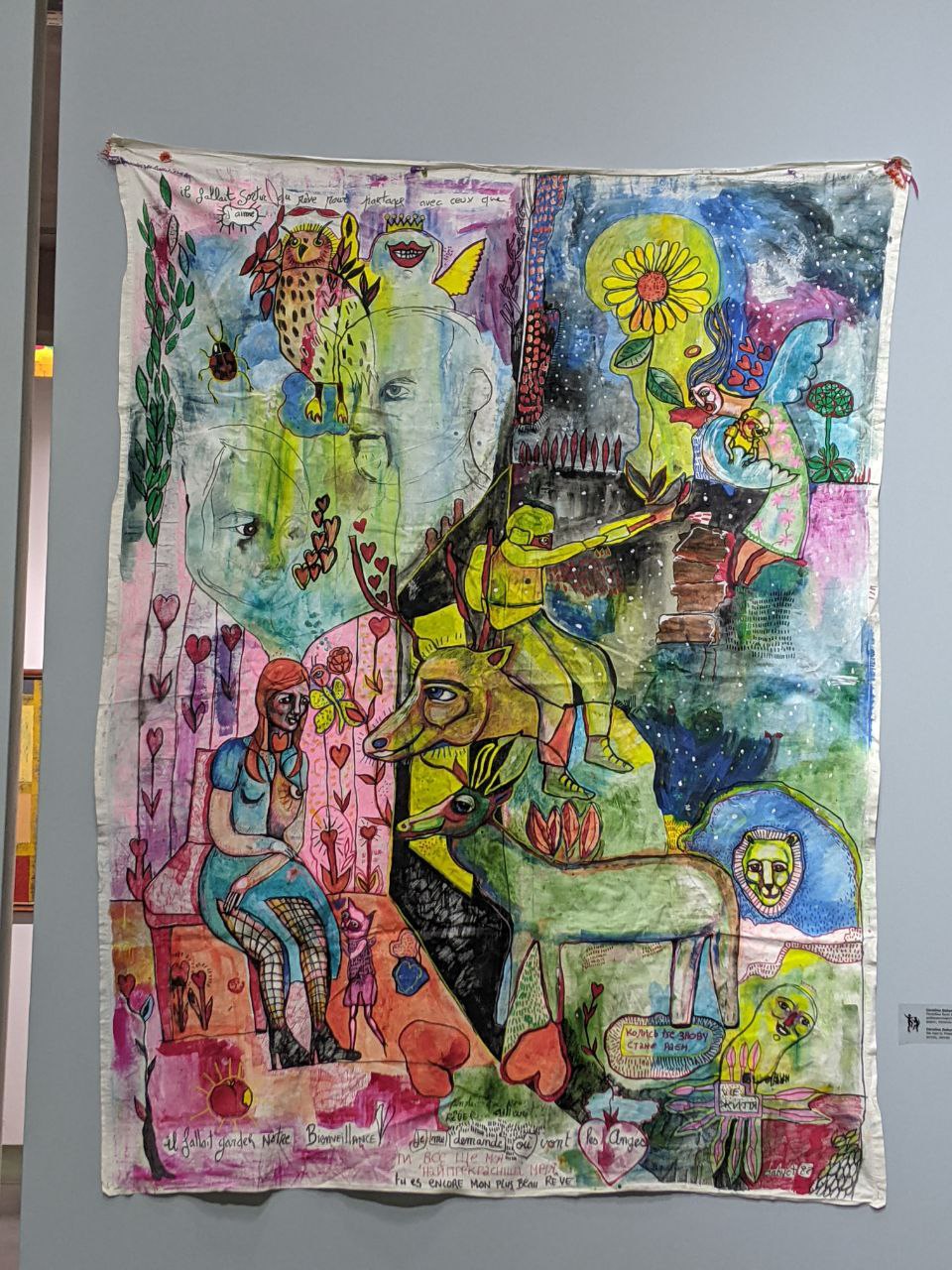
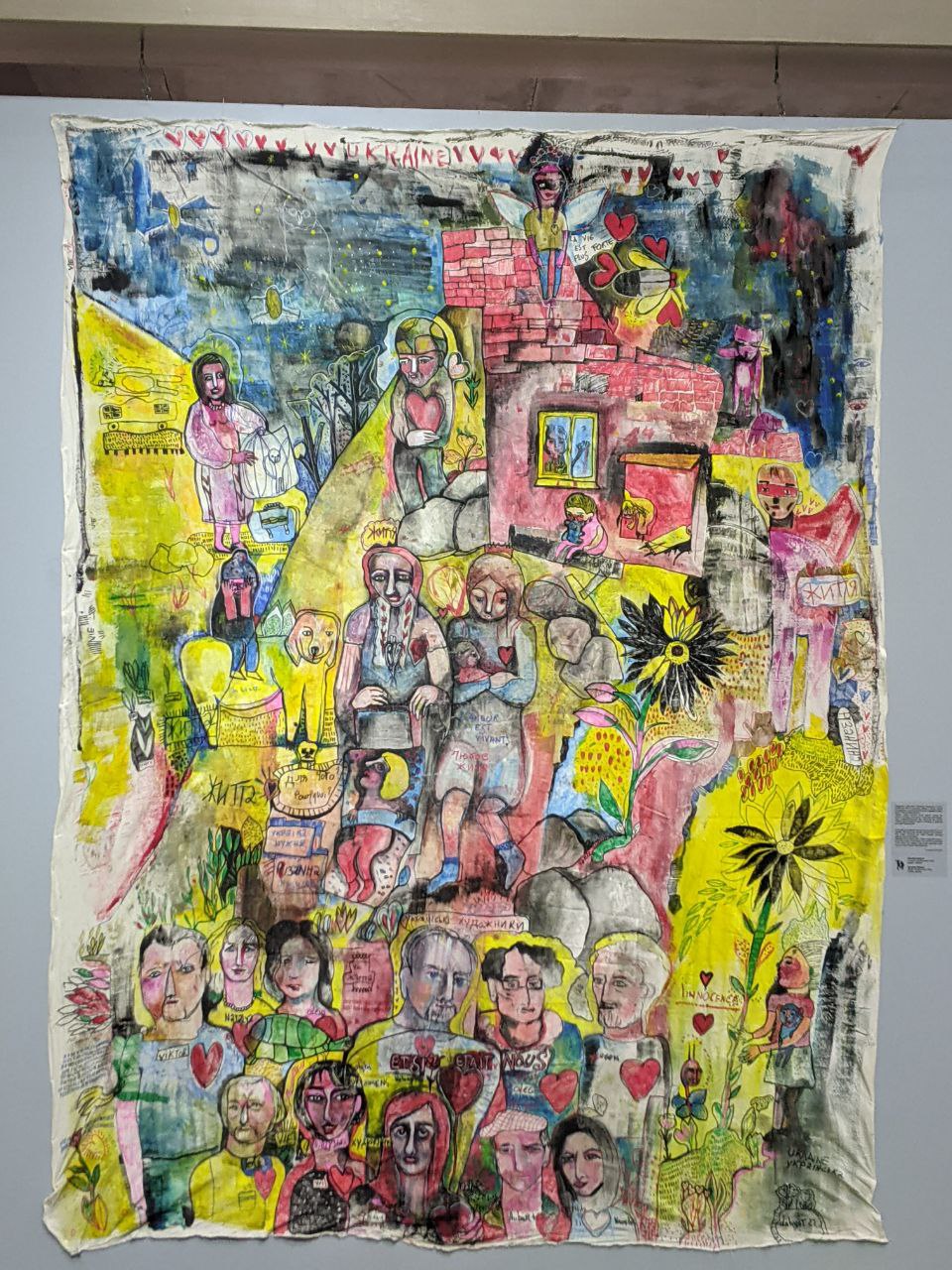
Caroline Dahyot works with textiles, installations and spatial objects. Her works, created in a naïve artistic style, have been shown in galleries across France, Belgium, Canada and the United States. She brought her project, Cat People, to Ukraine, where it opened at the Korsak Museum of Modern Ukrainian Art.
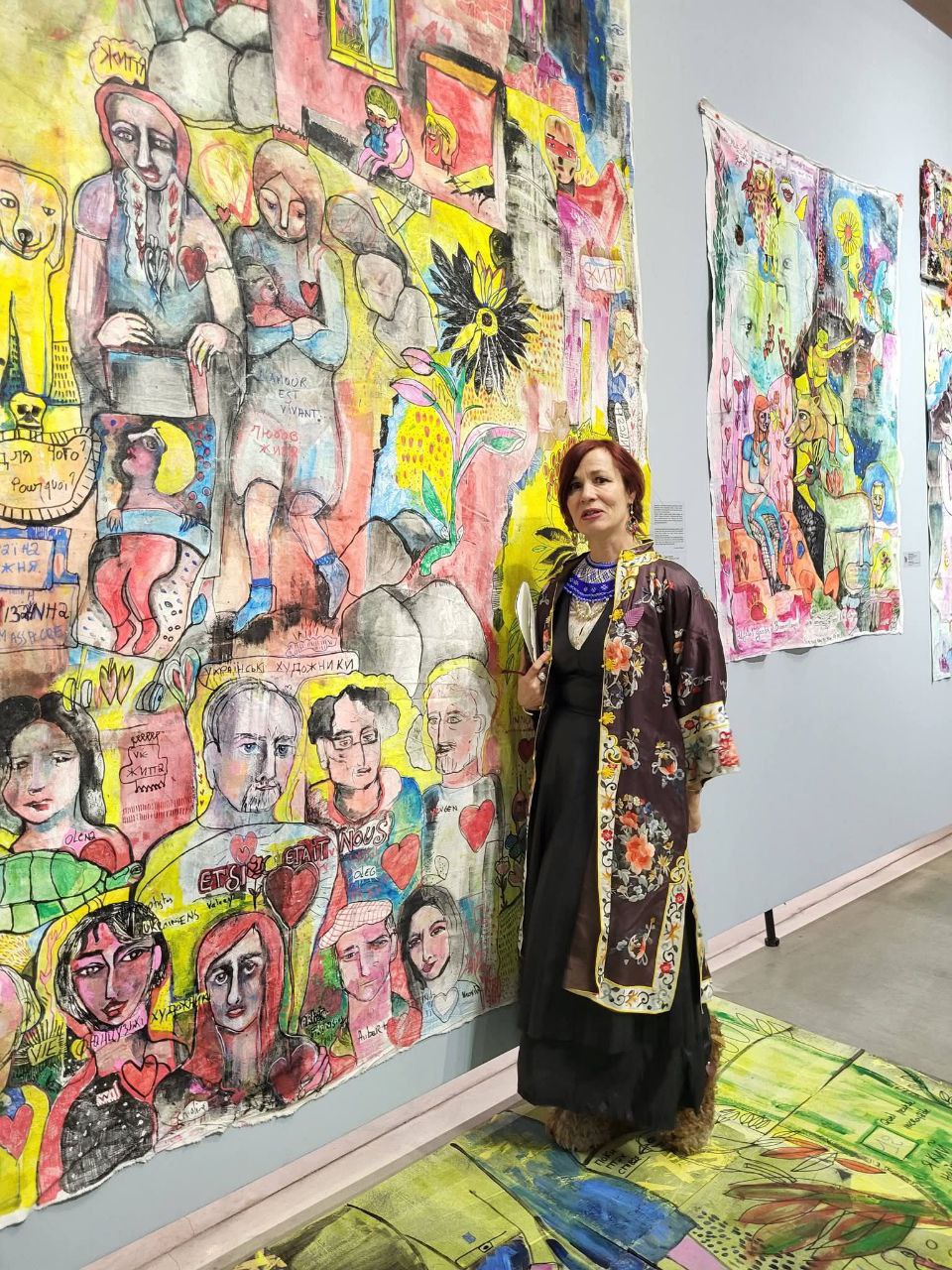 “Caroline Dahyot is an exceptionally multifaceted artist,” says Lesia Korsak, Managing Partner of the museum. “At home in France, she has painted everything — the exterior and interior of her house, sofas, lampshades, floors and ceilings literally. Visitors to the region make a point of seeing her home, which has become something of a tourist attraction. Her work explores empathy and the vulnerability of modern life, including this current project, Cat People. Here, cats represent a collective image of all animals living in our world.”
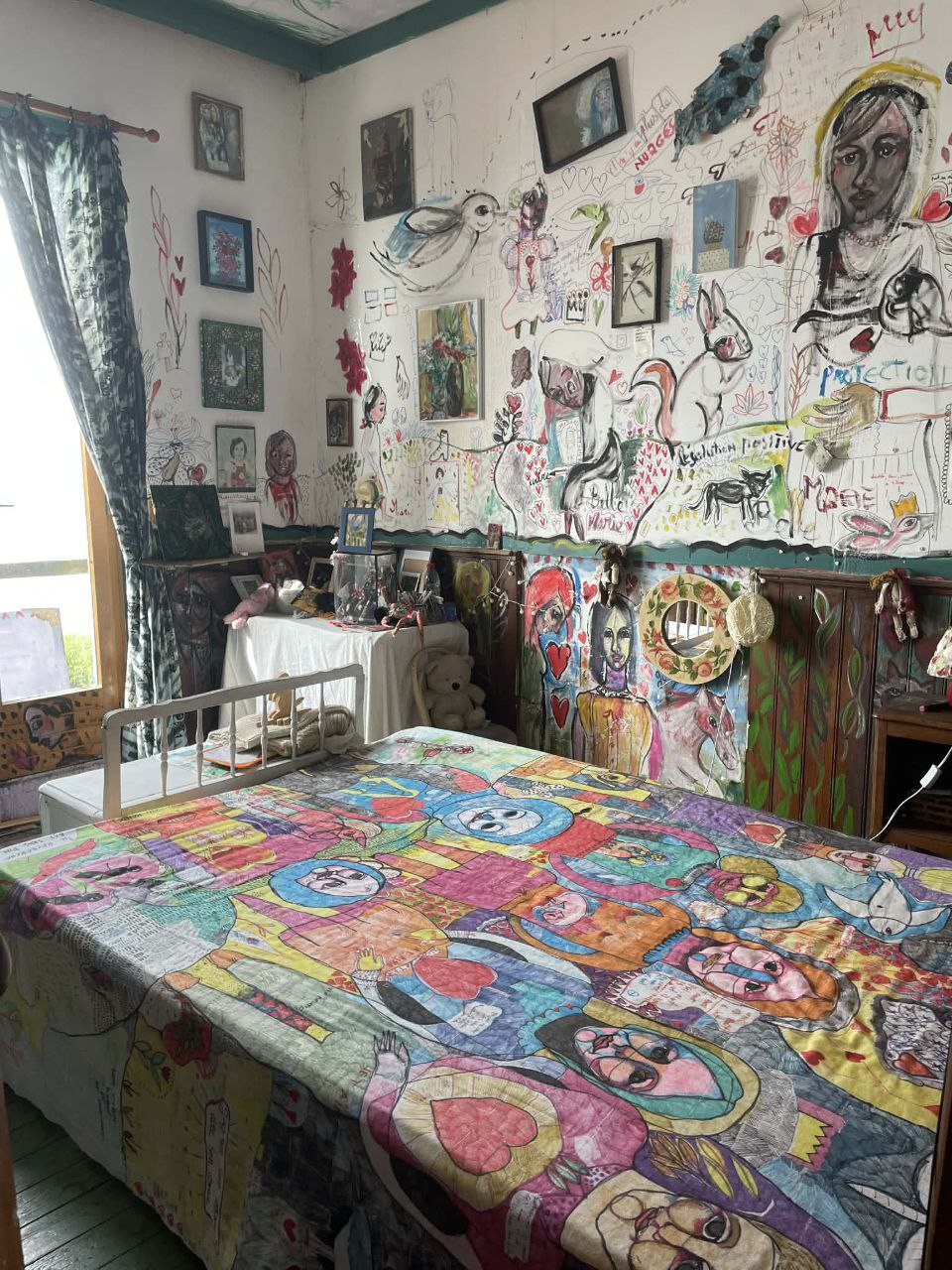
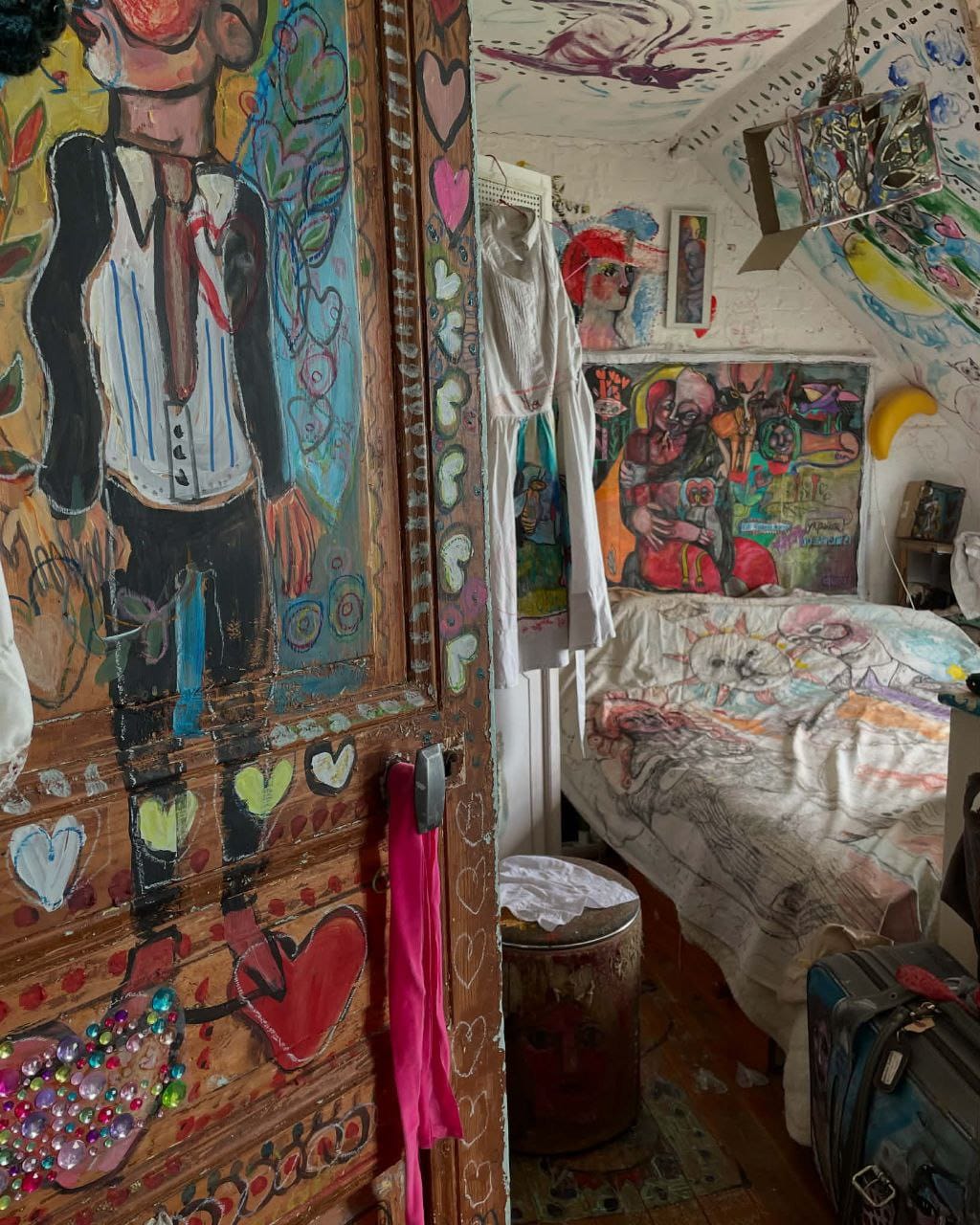
Through the project The Other Beside Us, the artist rethinks relationships between humans and animals. The initiative invites viewers to see animals not as resources or property, but as companions, partners, even members of the family.
Painting as an Act of Care
As Dahyot explains, she began drawing in childhood. At first, art became a way of protecting her personal boundaries.
“When I started painting my house, it was first and foremost about caring for my family and my children,” she says. “Today I continue to paint all the people I love. And animals — I had four cats; two have passed away, but they remain in my heart. My works combine both sides of existence: darkness and light, death and love, compassion.”
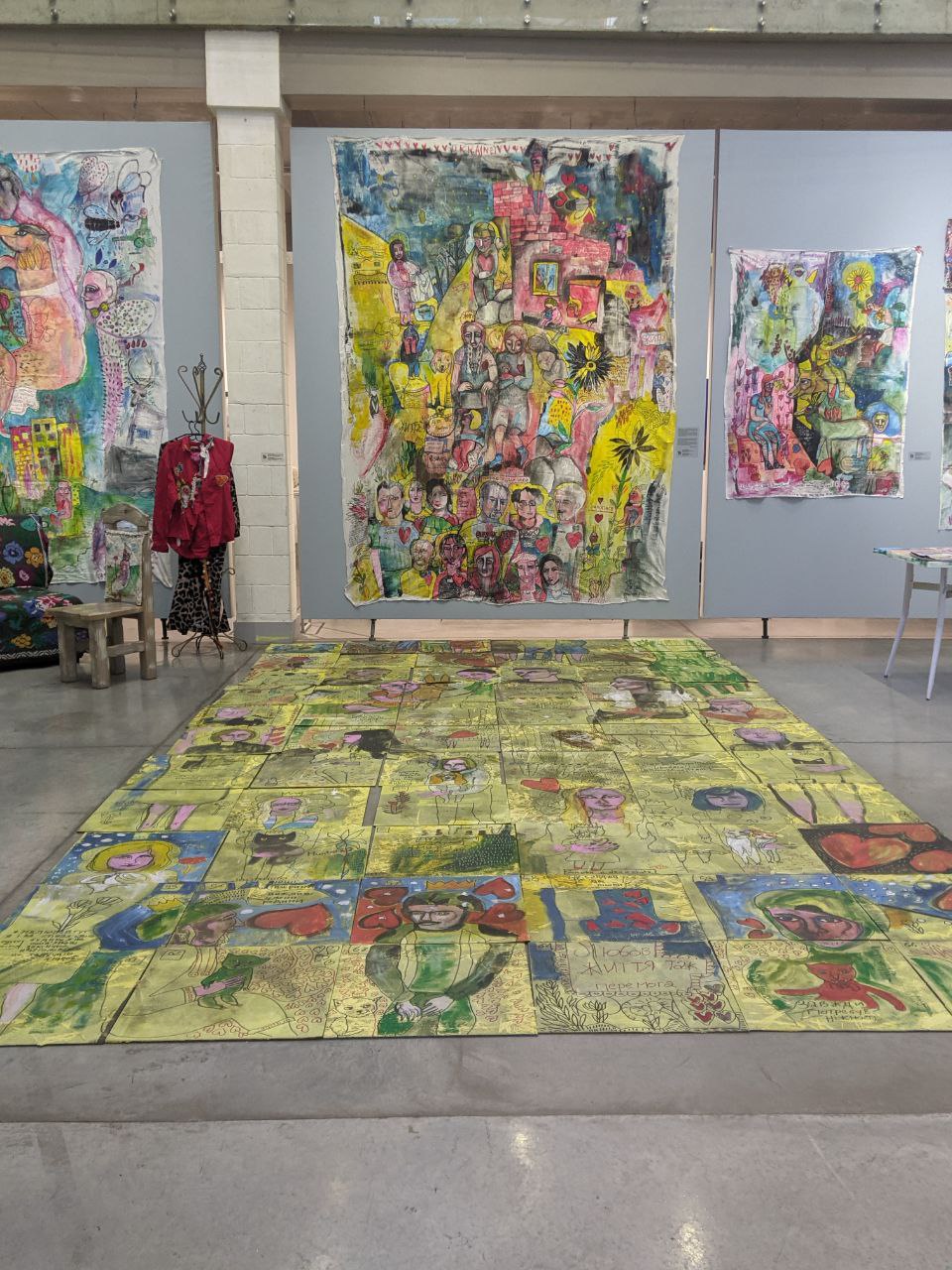
Painting helped her endure a painful period when her husband left. It was also what connected her with fellow artist Valerii Hubenin from Lviv. Intrigued by photographs of her extraordinary home on social media, he left enthusiastic comments. He was also drawn to her music — Dahyot once formed her own band. Valerii sent her a friend request on Facebook, and they began corresponding.
“We’ve been in touch since 2014. We discovered we had many shared interests — music, art,” Dahyot recalls. “Valerii mostly posted about other artists, even though he himself is a wonderful musician and painter. Sometimes we wrote to each other for hours; sometimes we simply exchanged holiday greetings. Everything changed when the full-scale war began. I immediately called him and offered for him to come to France and stay at my home. I said his friends would be welcome too. But he refused — he said he had to defend Ukraine.”
Distance Could Not Divide Them
Dahyot says she worried deeply about him. Moved by her concern, Valerii began contacting her whenever he could. Soon he suggested recording a song together: he would perform the first part — she calls him “Valéri”, in the French manner — and she would join in.
“I heard his voice — it was wonderful — and I fell in love,” she admits. “We managed to record the song in French; it is available on a music platform. From then on, our long-distance relationship reached a new level. In 2023 we met for the first time in Lviv. I am very grateful to Valerii for introducing me to Ukrainian culture. I want Europe to speak more about Ukraine.”
Dahyot now waits for his return from the war, expressing her feelings through paintings in which he appears in each work shown in the exhibition. Their correspondence has been interpreted in ceramics by Ukrainian artist Nadiia La Hanza, whose piece is also part of the display. Visitors can listen to the artists’ song, Comédie d’amour.
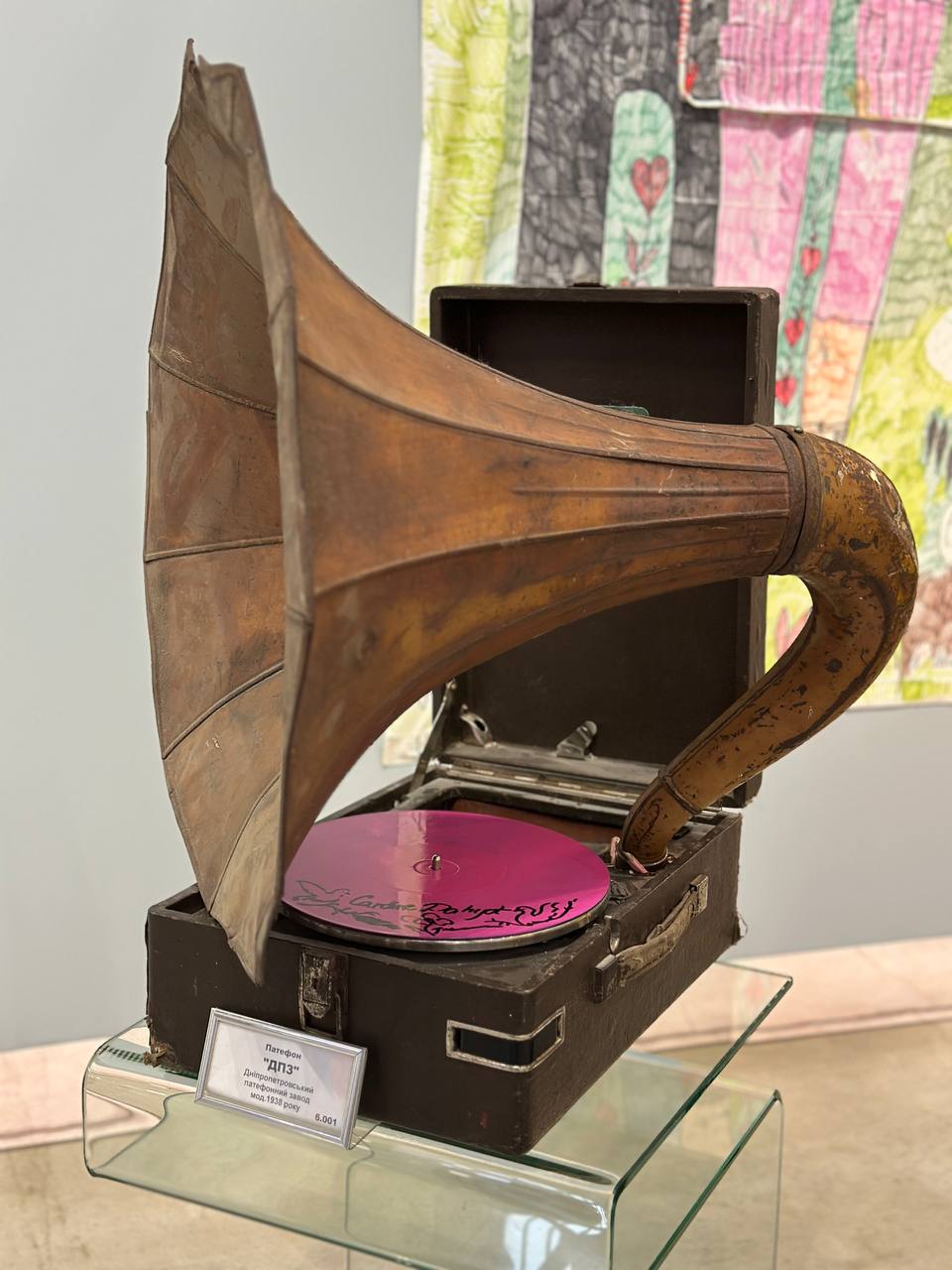
“We have been close friends with Caroline since 2022,” says Lviv-based artist Viktor Prodanchuk, a colleague of Hubenin. “When the war began, she immediately wrote that she was ready to host everyone in France. My wife and children stayed with her — she welcomed them warmly. When she learned Valerii needed funds for a bulletproof vest, she sold one of her paintings and rallied French artists to help. She cares deeply about Ukraine. She’s an extraordinary person. In just two years, she has almost learned Ukrainian. If there were more people like her in the world who love Ukraine, it would be easier for us to prevail.”
His wife, Nataliia Yevdokymenko-Prodanchuk, adds: “Caroline is a very luminous person — like a flower, or butterfly. Everything she does comes from the heart. She lives in harmony with the world. We remember staying at her home, watching her create. And every morning she would quietly go out early to buy fresh croissants for us before we woke.”
A Purpose — To Be With Ukraine
The choice of venue in Lutsk is no coincidence. Opened eight years ago, the Korsak Museum of Modern Ukrainian Art is the largest contemporary art museum in Ukraine, covering 12,500 square metres and founded by Viktor and Lesia Korsak.
Its collection includes more than 6,000 works of modern Ukrainian art — from painting and sculpture to installations, video art and augmented reality projects. Among them is the well-known Cosmogony project, a philosophical and artistic installation featuring one of the largest paintings in the world, spanning over 2,000 square metres and combining light, sound and interactive elements.
In 2025, the museum received international recognition as a laureate of the European Museum of the Year Award (EMYA), earning one of seven Special Commendations from the European Museum Forum. That year, 42 museums from 18 Council of Europe member states were nominated, with the Korsak Museum the sole representative from Ukraine.
Prodanchuk notes that he and Hubenin had visited Lutsk many times and knew the museum’s founder. During Dahyot’s first visit to Ukraine, they brought her to Volyn as well. What she saw left a strong impression, and she gladly agreed to exhibit her works there.
Gentle, modest, open and deeply sincere — this was the impression Dahyot left on those attending the press conference at the museum.
“Weren’t you afraid to travel from peaceful Europe to a country at war?” she was asked.
“That would usually frighten me,” she replied. “But when there is meaning, fear disappears. My destiny is to be with Ukraine.”
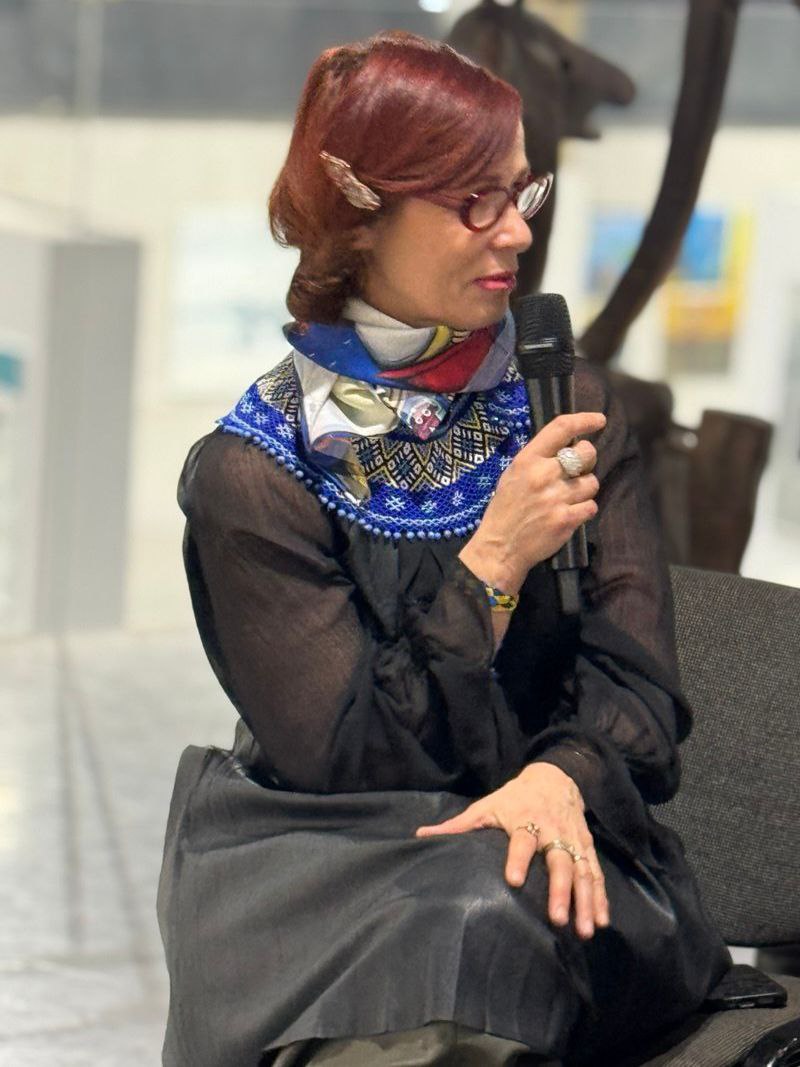
Author and photographer: Liudmyla Pryimachuk
Photos: Liudmyla Pryimachuk, archives of the Korsak Museum of Modern Ukrainian Art, and courtesy of Caroline Dahyot.