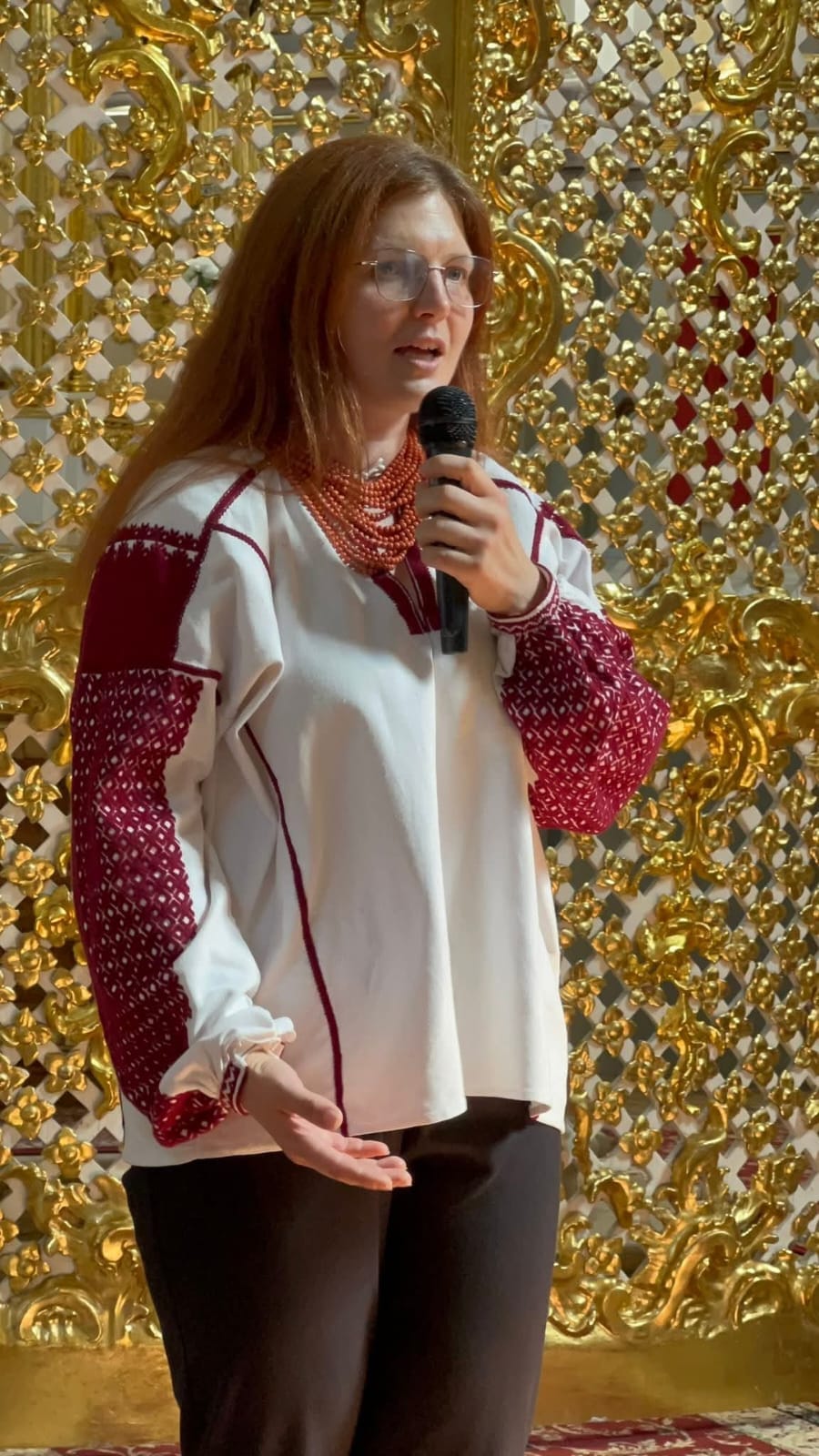
In the heart of Pokuttia, in a town where the past intertwines with the present, Maria coordinates cultural projects that give people a sense of unity and belonging. Searching for the long-forgotten in the patterns of shirts, marble and wood by Pinzel, in the coastal reeds of the Dniester, she fills participants with new meaning through festivals, eco-camps, volunteer campaigns and community associations. We spoke with Maria Zdrilia, a public figure and head of the Department of Projects, International Cooperation, Youth and Tourism of the Horodenka City Council, a woman who does not wait for change but creates it herself, about the traditions of Pokuttia and life in modern Horodenka.
I know that you recently returned from a conference on the restoration of Ukraine. Tell us about your impressions. What ideas resonated with you?
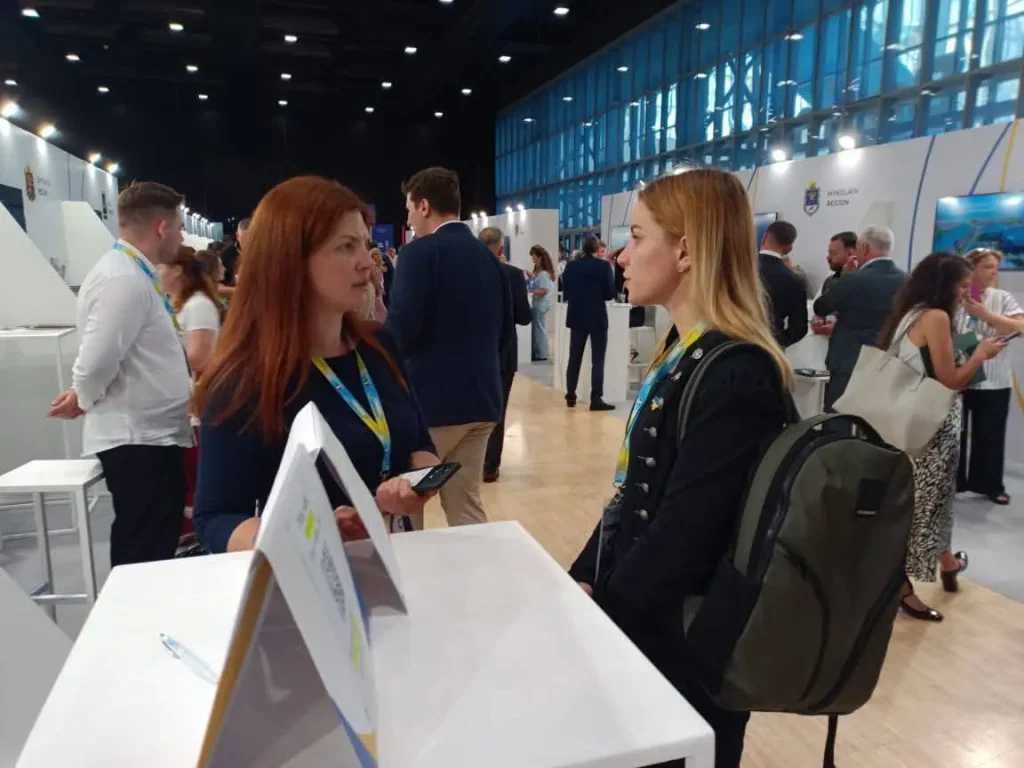
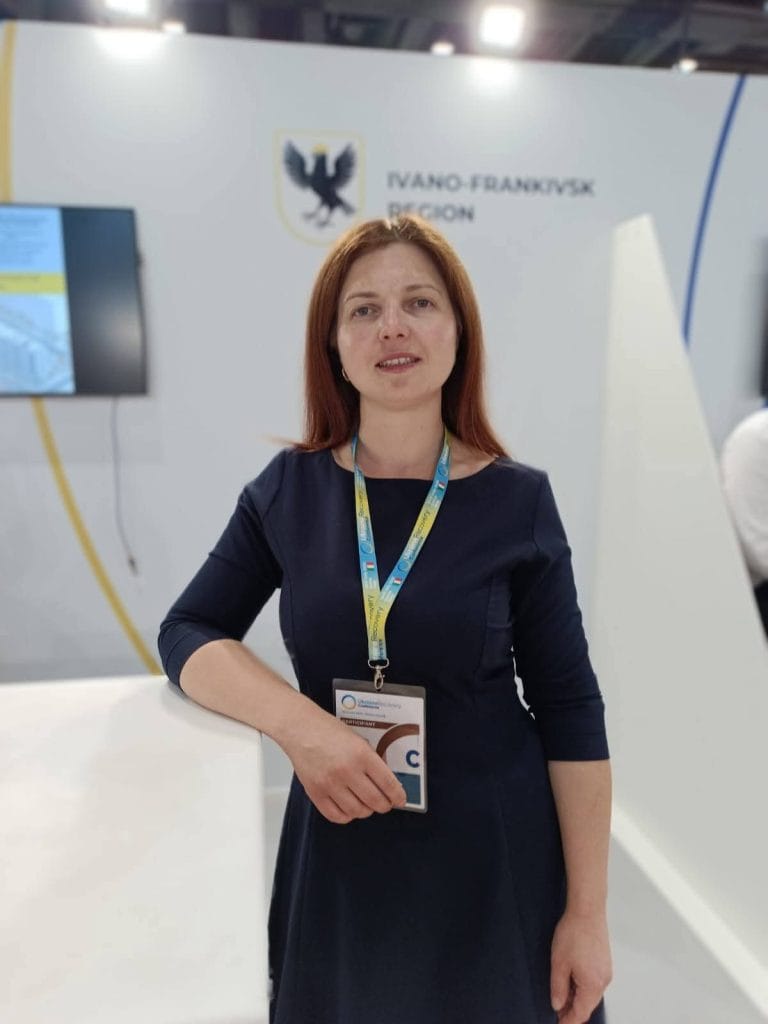
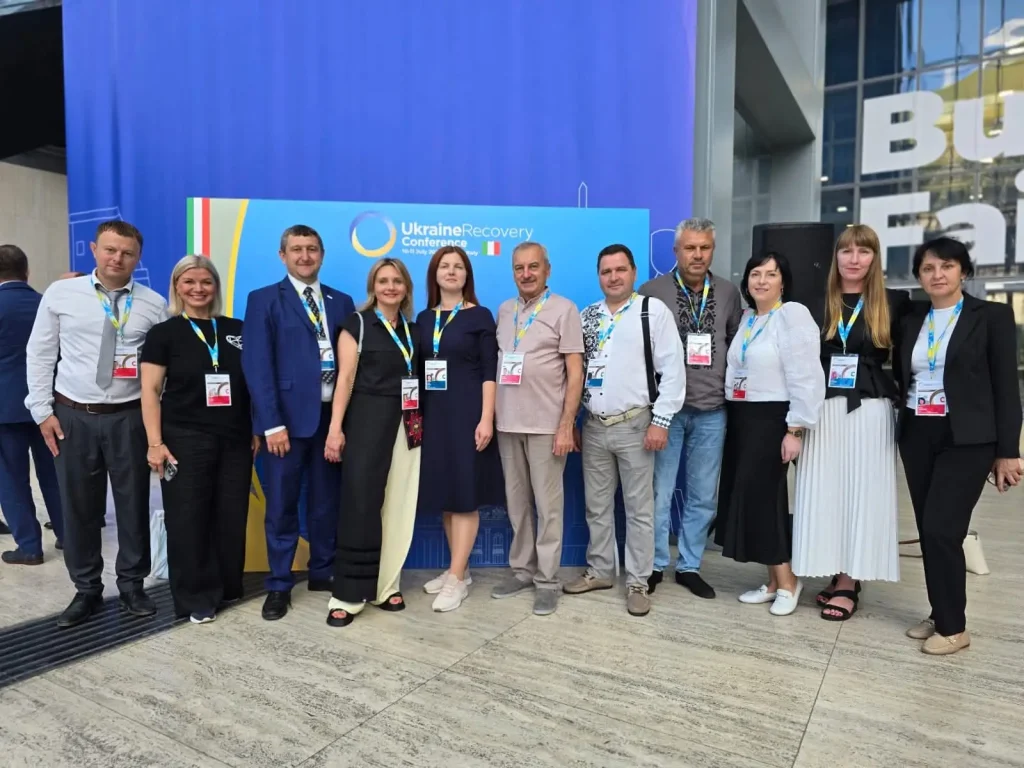
The Ukraine Recovery Conference (URC 2025), which took place this year in Rome, is a powerful global event. About six thousand representatives of governments, civil society organisations and businesses gathered to demonstrate their willingness to invest time, knowledge, expertise and funds in Ukraine for its recovery.
I can say with confidence that these people are interested in Ukraine emerging from the war as quickly as possible and joining the European family not only as a country in need, but as a partner country.
I was pleasantly surprised by the participants’ openness to comprehensive cooperation. Representatives of several countries immediately offered to help find partners for our community and provide mentoring for its effective development and increased citizen engagement.
At international conferences, you often present the results of projects that have been implemented in the community. One of the most famous is ‘Pinzel. RETURN’. How did the idea for a route that connects local churches with the works of Johann Pinzel come about? How has the project influenced the development of tourism in the region?
The cultural and tourist route ‘Pinsel. RETURN’ was created in 2021 in collaboration with the volunteer initiative ‘1743’. It was this project that strengthened my resolve to implement further ideas and allowed me to establish many useful contacts with restorers, artists, historians and other specialists.
The starting point was the Church of the Immaculate Conception of the Virgin Mary, an architectural monument of national importance designed by Bernard Meretyn. It was here that Pinsel created 33 of his most famous sculptures, each over 2 metres tall. Unfortunately, none of them remained in the church. Those that have been preserved are on display at the Boris Voznytsky Lviv National Art Gallery, as well as at the Museum of Arts in Ivano-Frankivsk and Kolomyia. In addition, there is an exhibition of Pinzel’s sculptures that has travelled around the world and has already been to the Royal Castle at Wawel in Warsaw and even the Louvre in Paris. In Horodenka, you can see a statue by Pinzel – it stands near the church. It is a tall, column sculpture of the Immaculate Virgin Mary.
At the same time, many visitors are attracted by the monastic cells, which occupy more than two thousand square metres, as well as the underground chambers of the sanctuary, which still hold many secrets.
Since Horodenka has always been an ethnically diverse place, the route includes sacred buildings of different peoples and confessions: a synagogue, Greek Catholic and Roman Catholic churches, as well as an Armenian church.
We are currently trying to take all measures to promote the project, including creating a trilingual website, an audio guide in Ukrainian, English and Polish, installing QR code signs, information stands, etc.
However, due to their neglected and sometimes dangerous condition, the monuments need renovation and, accordingly, significant funding.
Can you share the story of how the festival of traditional Pokuttya shirts and silyanky, beaded necklaces was created. Who was involved in restoring the ornamentation, and how long did it take to sew them?
A resident of our community, Ms. Halyna Didych, was known for her skill in recreating ancient Pokuttya shirts. She kindly joined one of our cultural projects and held not just a master class for the women of the community, but a real journey into the past, because, as it turned out, each shirt has its own destiny and history. Everyone’s enthusiasm was so strong that the meetings became regular and have continued for two years now.
This club is not just about learning or leisure; it is primarily about unity. Schoolgirls, elderly ladies, young mothers, and new residents of our community – they all become one, forgetting their problems and worries for at least an hour.
Last year, our craftswomen decided to thoroughly research the traditional Horodenka ornament called ‘Volove oko’ (Bull’s Eye). They found four authentic shirts at the National Museum of Folk Art of Hutsulshchyna and Pokuttia and set about recreating the patterns. Fascinated by their work, the girls digitised the decorative patterns and organised a forum, which was attended by 120 guests from four regions of Ukraine.
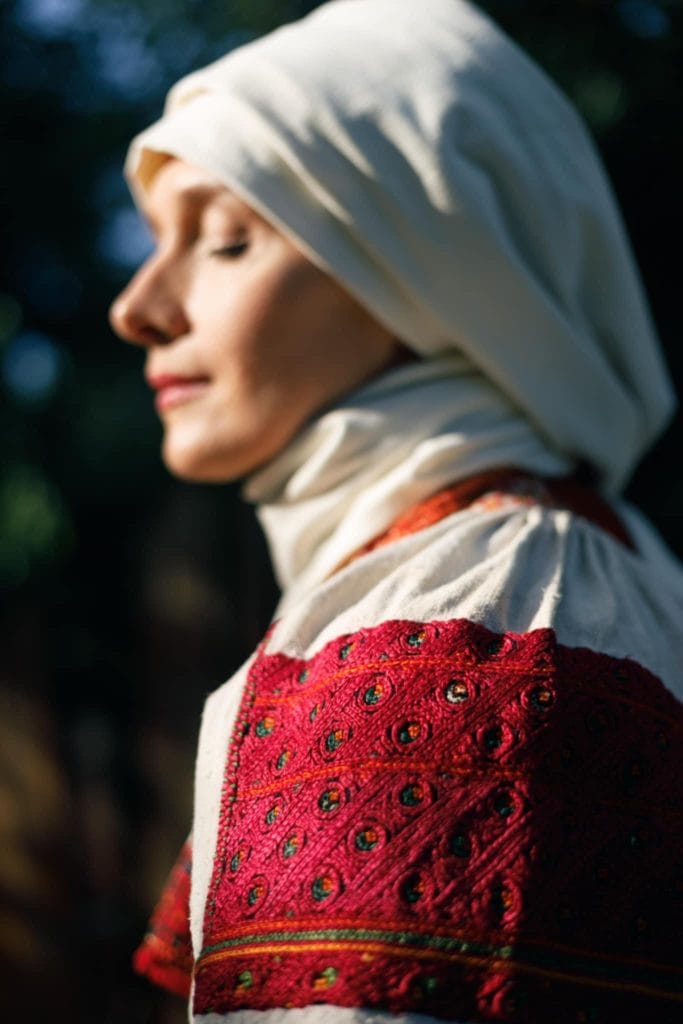
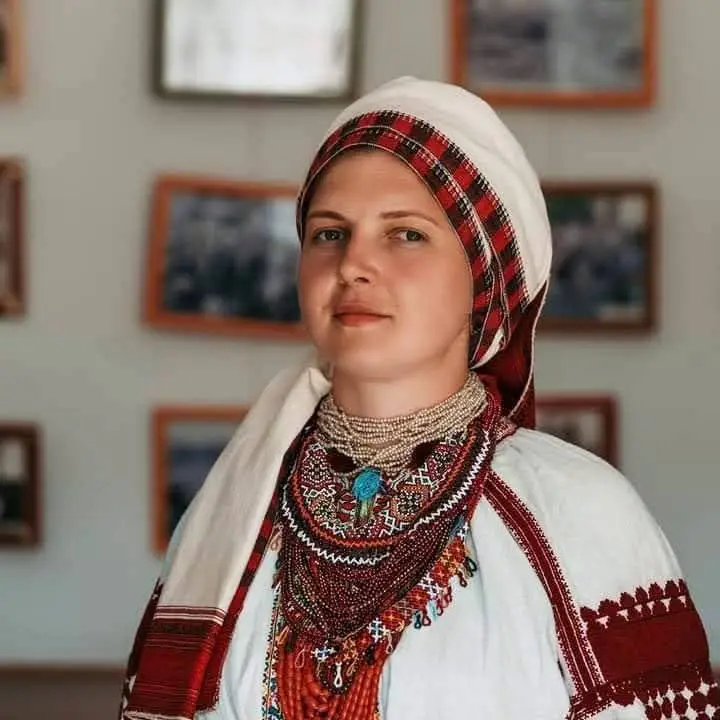
Maria in traditional Pokuttia clothes
Demand for the shirts gradually grew, so the craftswomen decided to combine business with pleasure and began sharing the embroidery patterns for a symbolic donation of 200 hryvnia (equivalent to £5) to support the Galician Squad unit of theEdelweiss Special Forces Brigade. This raised over 250,000 hryvnia (equivalent to approximately £3,000).
We are proud that shirts from our region are spreading not only throughout Ukraine, but also around the world. Owners of handicraft shops joke that our shirts have gone ‘viral,’ and that they have to wait a month or two for the fabric and thread in the right colours. Our craftswomen receive orders from Austria, France and Canada.
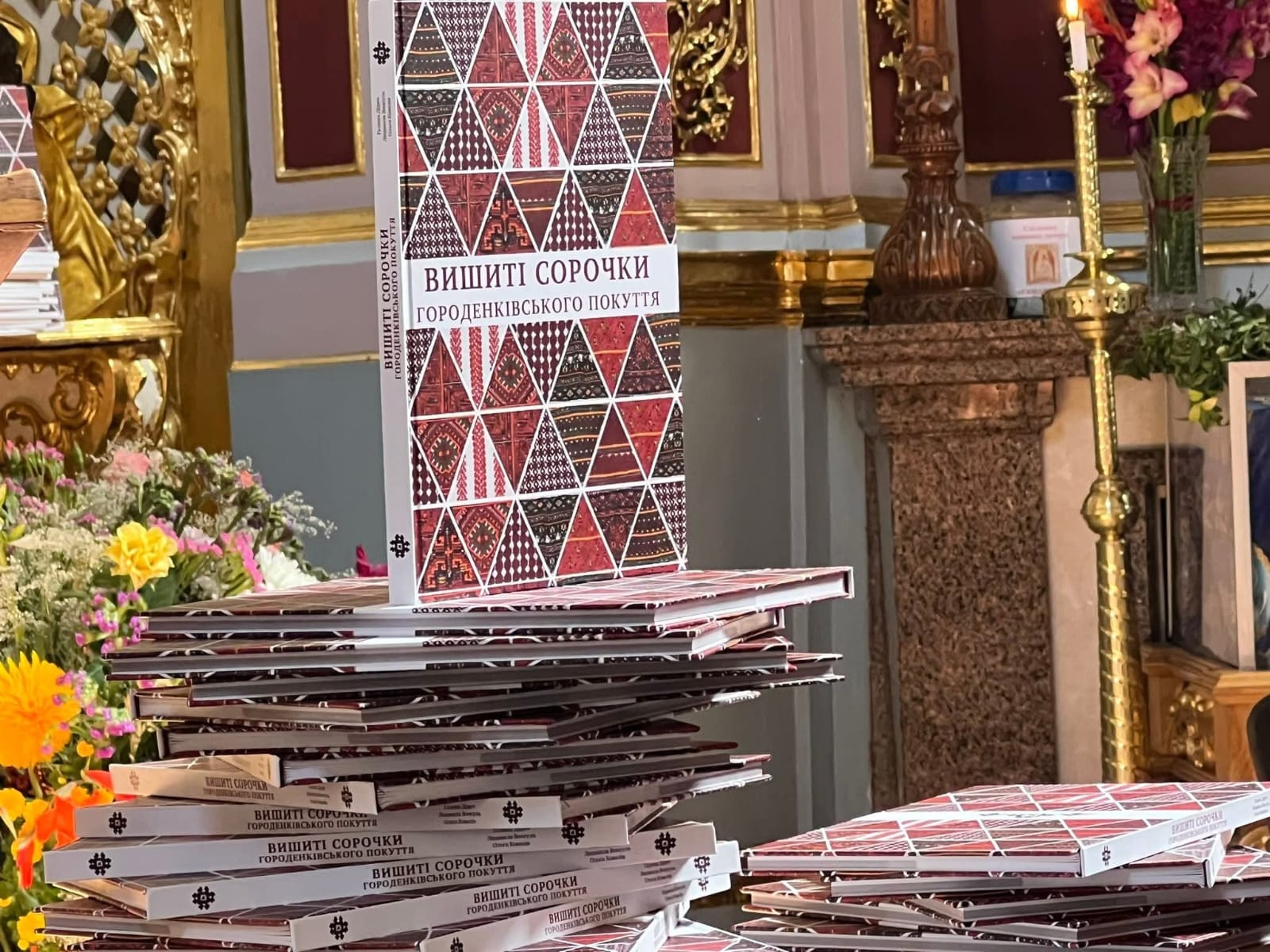
We are currently working with the Canada-Ukraine Foundation to create a book featuring the results of our research into 37 more traditional shirt embroidery designs obtained from museums and private collections. We believe that this will be an essential step towards the restoration and popularisation of our cultural heritage.
On 16 August, the second forum of embroidered shirts took place in Horodenka, dedicated to City Day. The presentation of the book, with digitised patterns of Pokuttya shirts, is also planned for the same day. The book will go on sale soon.
Another important initiative is your environmental activities on the Dniester. What threats exist to the reservoir? How are the clean-up days going, and who is participating?
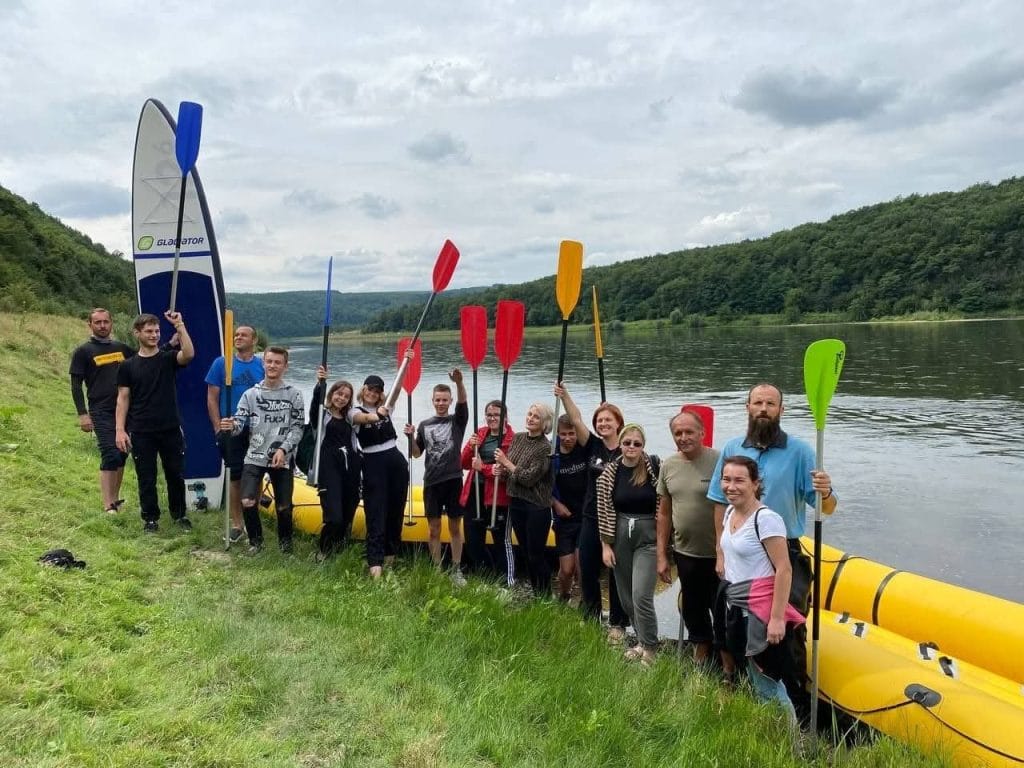
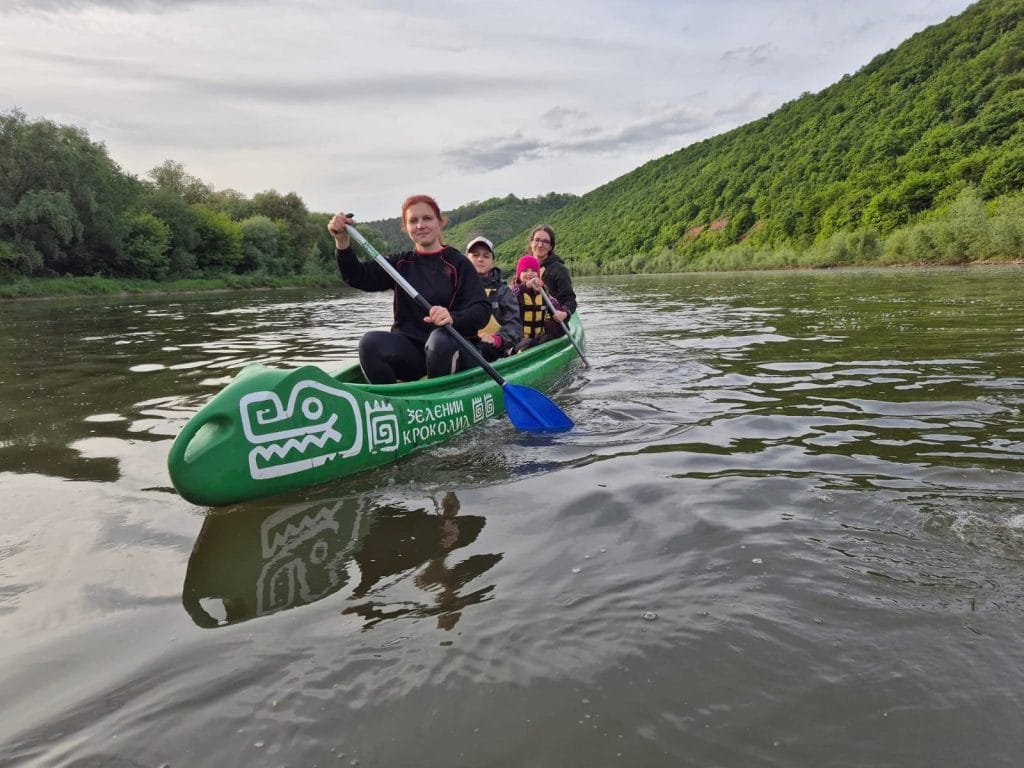
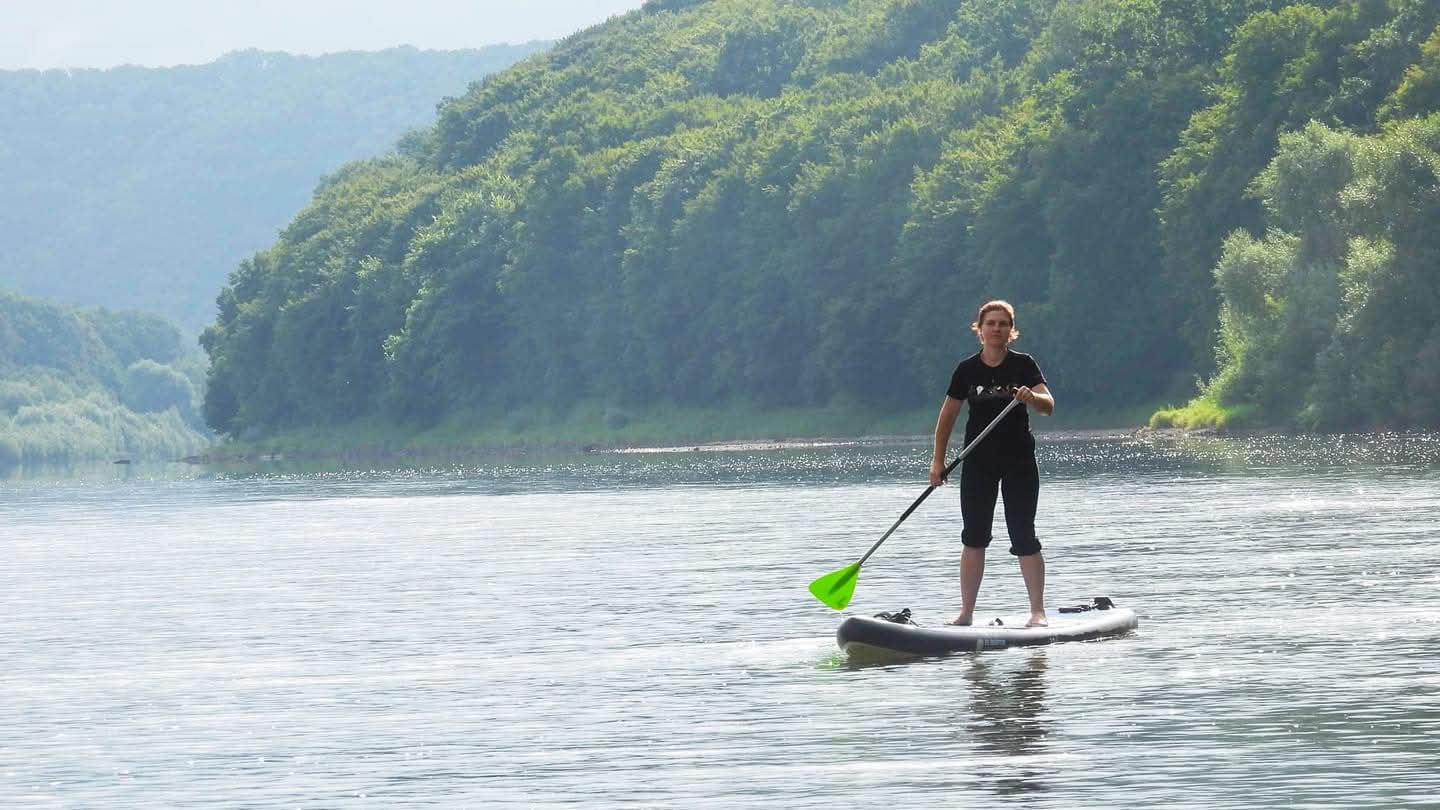
Recently, new tourist attractions have begun to appear in Horodenka – eco-camps on the Dniester. Tourists really like it here, because in such secluded places you can relax not only your body but also your soul. They often say that the Dniester is wild and untamed, and it really is a river with character. In addition, our community stretches along the most picturesque part of the Dniester Canyon, one of the seven natural wonders of Ukraine.
To support ecotourism in the region, the reservoir receives constant care from people who care. In addition, the overgrowth of the riverbanks poses a serious threat to the ecological balance of the area. This is a consequence of urbanisation, as the vegetation that was once consumed by livestock is now turning into impenetrable thickets. Given the length of the Dniester, this is not a task for a year or even two. That is why volunteers are needed constantly.
We are trying to involve young people in biodiversity conservation. For example, in the Chernelytska community, a project to preserve the Lastivka Ecopark was implemented in cooperation with theDniester Regional Landscape Park named after Serhii Didych. Professional recreation specialists, biologists and entomologists joined the project to teach the younger generation how to care for nature. Children built hotels for insects, houses for bats, huts for hedgehogs and squirrels, and planted trees and bushes. The project also included a photo exhibition of birds, most of which were taken by recreation specialist Andriy Kravets.
This fieldwork with children proved to be very useful: they finally put down their electronic gadgets and immersed themselves in a little adventure. Just imagine their excitement when a real squirrel moved into one of the houses they had built within a month. I sincerely believe that a child who has been involved in such an activity at least once will never harm a single plant and will treat animals with care throughout their life.
In addition, we want to involve our veterans in eco-activities as guides. We have already prepared and submitted a project proposal for funding. This could be a good career alternative for defenders who, for various reasons, have lost their jobs or cannot return to their previous profession due to health reasons.
Eventually, they could teach our young people how to conduct tours along the Dniester River and provide community excursions, so that they can remain at home and won’t have to search for a better life elsewhere. I had the opportunity to present these and other initiatives during my internship in the Czech Republic.
The world must see our efforts, both in protecting biodiversity and in developing local communities. Given the large-scale ecocide currently taking place in Ukraine due to the war, we must cherish and protect the corners of nature that have survived, because they are truly unique.
Is it challenging to involve young people in projects?
Today’s teenagers do live on their smartphones. But unlike adults, they are pretty easy to involve in activities, especially by setting an example. You just need to understand that children need a different approach. Sharing a post on Facebook is unlikely to interest them, but a reel or TikTok is.
Children from our region are athletic. They attend tennis, football and basketball classes. We are proud of our handball school, whose graduates now play for the national teams of Ukraine, Romania and Poland.
In addition, we are implementing a community project on STEM education. We have electronics and robotics clubs, which, at the request of young people, even operate in the summer. I remember how impressed I was by a girl who was the most skilled at twisting wires. And how her eyes lit up when the light bulb finally came on!
It is so essential for a child to find themselves in something – without any stereotypes or prejudices.
In general, we strive to involve people of all ages in our projects. At the media school, the age of the students ranged from 10 to 68. And that’s great, because we all need live communication, especially in today’s world.
How many internally displaced persons has Horodenka taken in? How did their integration go?
In total, more than 5,000 people have moved to our community since the start of the full-scale invasion. The official figures vary greatly, as some of the displaced persons have moved on, while others have not registered.
We are currently working closely with the Podilskaya Perlyna charitable organisation from Khmelnytskyi, which is helping IDPs with beds, bedding and other household items as part of theCanada-Ukraine Foundation project. Given the demand for these services, I can say that the number of people is growing. Perhaps it is small initiatives like these that give people a sense of comfort and faith in a new beginning here in our community.
Many students from different parts of Ukraine have also joined our Waldorf school. Twenty-six families are actively looking for permanent housing, which indicates their desire to stay for the long term.
Women are actively starting businesses, and we help them apply for grants to set up their own businesses. Some have opened a podiatry office, some a sewing workshop, others intend to start a yoga studio or even a microgreens farm.
We are happy to hear that Horodenka has become their second home.
Over the years, we have become very close, so we don’t feel any difference between the ‘locals’ and the ‘newcomers.’ They are all pleasant, creative, educated, and close to us in spirit. Despite the pain and loss they have experienced, these people do not lose hope but strive to move forward. And we support them in every way we can.
Tell us more about the community organisation you co-founded: what is your team like, what were your first steps, and what are your current goals?
We founded thePokutsky Office for Territorial Development (PORT) in October 2021. The team was partly formed during our work on the Pinzel project. Apart from me, the organisation currently consists of: Yulia Melnychenko — chair of the board and English translator; Tanya Hamula — deputy head of PORT; Mykhailo Kovtun — director of the Dniester Regional Landscape Park, who has been defending Ukraine in the east since the first days of the full-scale war; Andriy Kravets — local historian and tour guide; Ulyana Myroniv — psychologist working with IDP families and veterans, art therapist; Ivan Ivasiuk — communications manager and youth engagement specialist; Olga Yevchenko — IDP from Kherson region who has become an active member of the community.
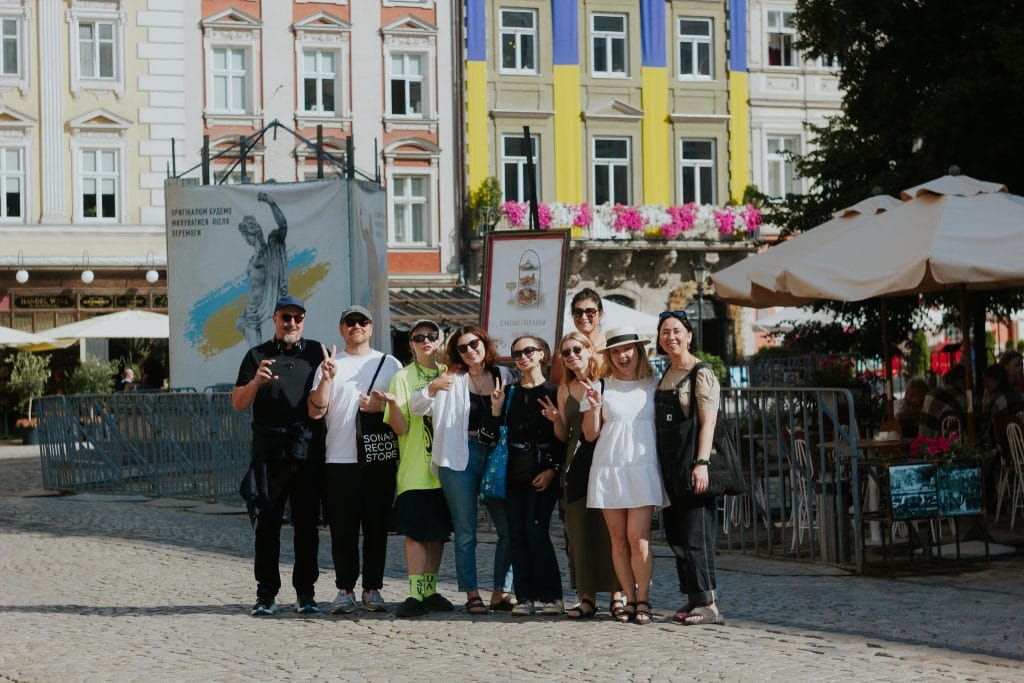
Together, we have implemented 11 cultural, educational, tourism and environmental projects, recently we worked on Dress up. Pokuttya. At the same time, we hold educational events, forums and workshops, and work with young people and women.
We also receive help from European friends and colleagues. For example, we are currently working virtually with a Peace Corps volunteer who helped us translate our NGO’s strategy into English and also supports us with international communication.
There are many ideas and initiatives, but the main obstacle is time, as each of us combines community activities with our professional work.
What are the challenges in preparing projects? What enables you to overcome these challenges?
The biggest problem for small communities is the fear of responsibility. People often avoid creating community organisations because they are afraid to take the initiative and do not believe that they can make a difference. And that’s a pity.
Each new project is like a mini-startup that requires new knowledge. You need to understand donor requirements, keep accounts, draw up contracts correctly, communicate with foreign partners, look for volunteers, organise logistics, coordinate contractors – it’s a whole system.
Everyone in our team has their area of expertise. For example, Tanya excels at writing applications and organising events, whereas I focus on finances, donor communication, and analytics. We complement each other.
Of course, not everything works out. Given the significant number of applicants, some applications are rejected. This is discouraging, but fortunately, it doesn’t stop us.
What advice would you give to someone who wants to start a cultural or environmental initiative in their hometown?
Don’t be afraid to take a step forward and look for like-minded people. If you don’t step into the unknown, you’ll never know what lies ahead. As soon as you start taking action, people will appear who are ready to support you, give you advice, and get involved.
When you have the opportunity to apply your expertise to someone else’s activities, or find someone you can learn from, it’s a win-win situation, as my colleague Tanya likes to say.
It is communication, cooperation and openness to new things that allow us to step outside our comfort zone and start doing what we have been afraid to do for a long time. This is not easy for our people. Despair and exhaustion often get the better of us. That is why it is so important to look ahead, without looking back at things that are beyond our control.
The desire for change and development is our choice, even in the darkest times. Because only in this way can we create a new reality – for ourselves and for future generations.
With the start of full-scale war, the amount of work has increased significantly, so we are always in need of creative people who share our values of preserving cultural heritage, promoting art and ecotourism. We also care about valuable, high-quality partnerships. So if you feel like you want to work with thePokutsky Office for Territorial Development (PORT), please contact us on social media.
Author: Anna Lysenko Editor Ukrainian language: Anastasia Zanuzdanova Editor English language: Helen Lewis Photo credits: Maria Zdrila
Anna Lysenko is a translator and a journalist at heart with a deep affection for pop culture in all its forms. She is a devoted fan of Twin Peaks, enjoys slow living in her native Cherkasy region and adores her dog-daughter Paris. Anna especially enjoys telling the stories of Ukrainians who pursue their work with talent and dedication. She believes that the best way to understand contemporary Ukraine is through the stories of its people.



 We also receive help from European friends and colleagues. For example, we are currently working virtually with a Peace Corps volunteer who helped us translate our NGO’s strategy into English and also supports us with international communication.