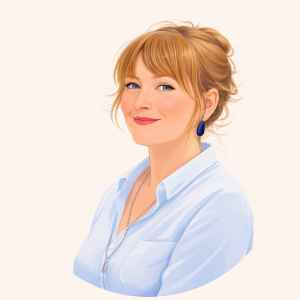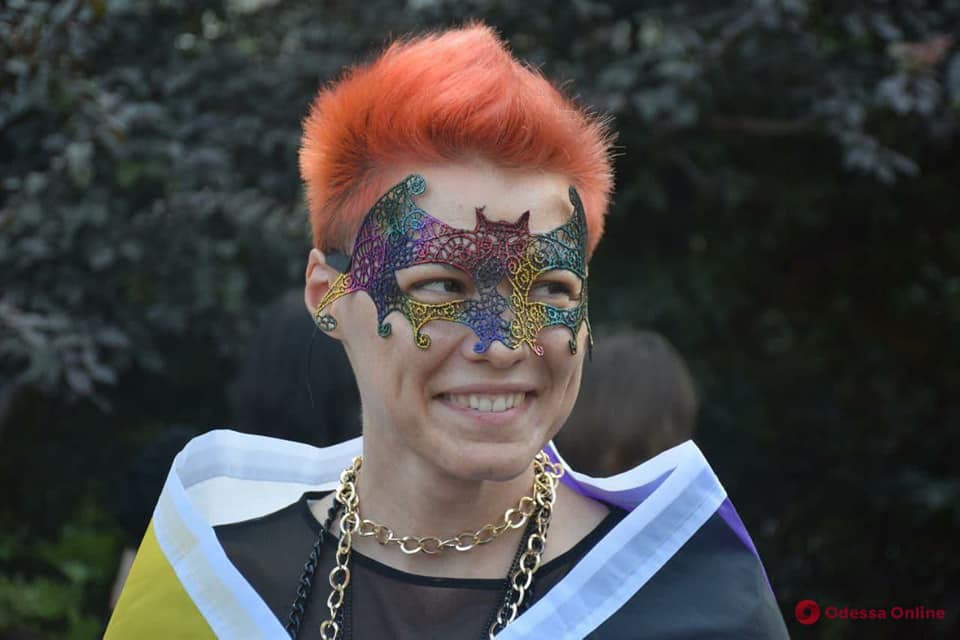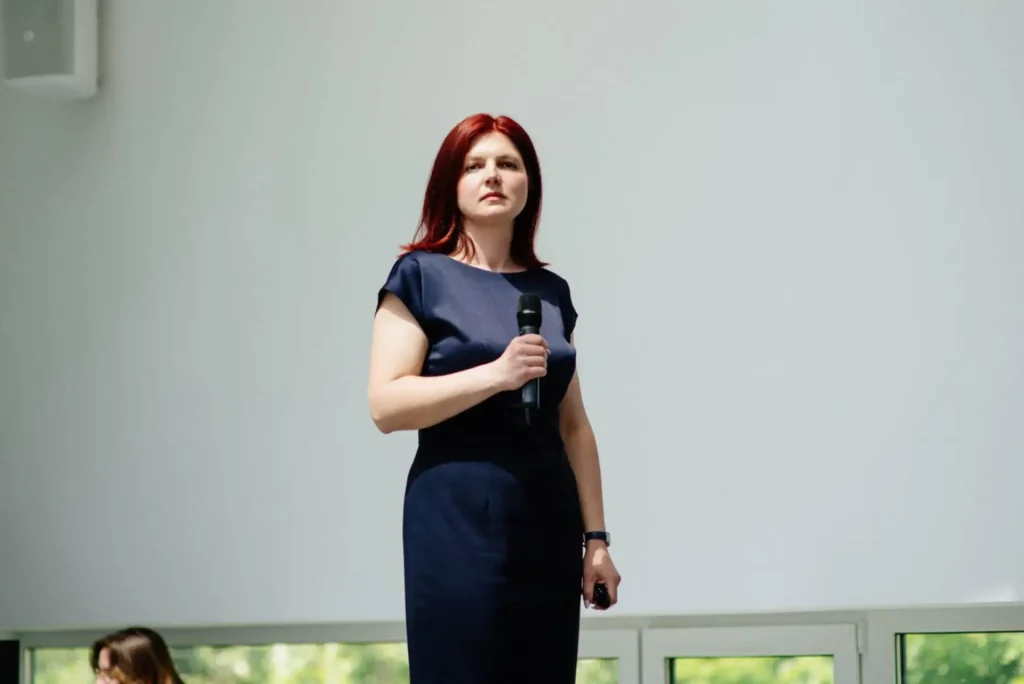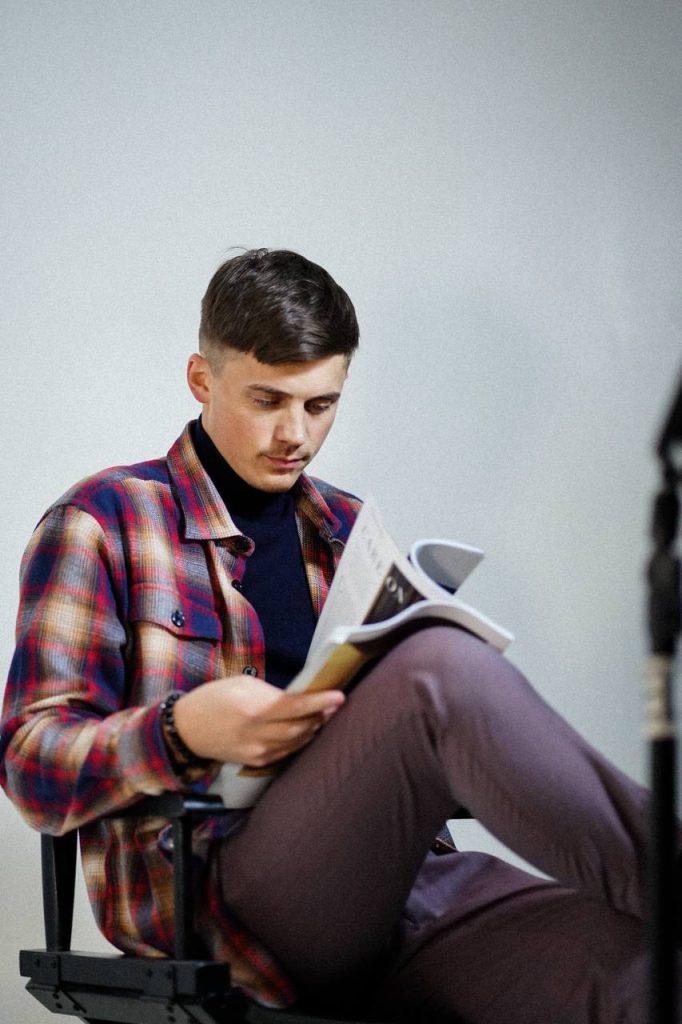
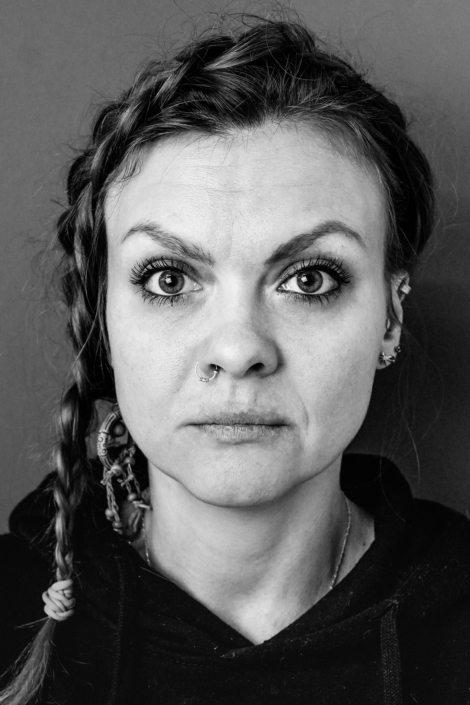
Ksenia Fuks is an Ukrainian woman who is shaped by a deeply contradictory cultural and historical background. Her grandmother survived the famine in Slobozhanshchyna in 1946–1947; her grandfather was a committed communist. Ksenia herself grew up in Russian-speaking Donetsk.
Since 2014, she and a team of like-minded people have been actively promoting Ukrainian culture in Germany. She founded the bilingual glossy magazine Gel[:b]lau (from German gelb-blau, meaning “yellow and blue”) and co-founded the non-profit organization Ukrainian Atelier of Culture and Sports.
A writer and visual artist, Ksenia is the author of three books focusing on social and psychological themes. Her life story embodies the fact that/the concept that: ‘a truly talented person is talented in many ways’. The breadth of her experience evokes both admiration and a natural question: How, when, and why does she manage to do all this?
This is a story about the cultural and artistic background of a young woman who appears gentle at first glance, yet proves to be dynamic and striking — sincere, expressive, and deeply engaging in conversation.
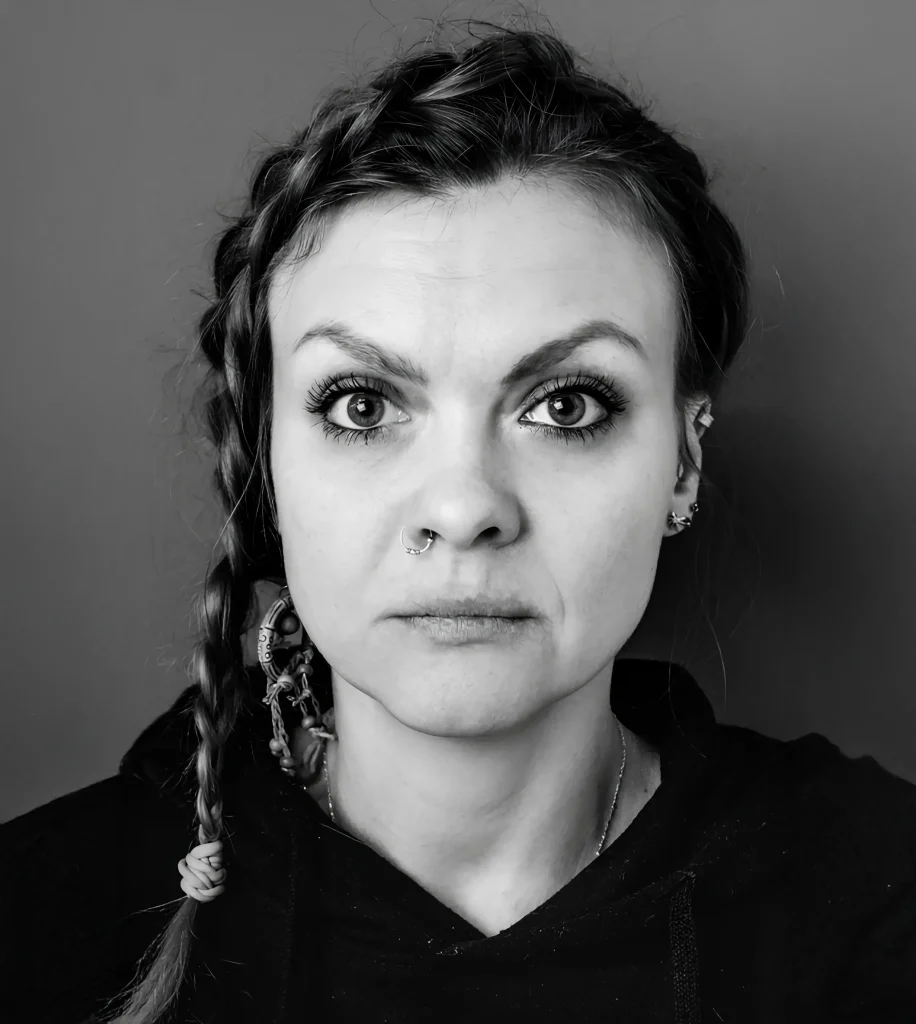
Exploring, Observing, Communicating
Ukrainian people frequently say that: ‘Every person carries a unique universe within them.’ Ksenia Fuks is one of those rare people who seem to hold several worlds at once — a gift that can also be a profound challenge.
Ironically, her creative path began as an attempt to survive depression. Her work blossomed only after she learned how to live “on the other side of the sun” — and to speak openly about it.
Ksenia recalls feeling genuine happiness when she signed her first publishing contract and released her debut book, On the Other Side of the Sun. In 2019, she experienced a mix of shock and joy when the book was first long-listed, and later shortlisted, for the BBC Book of the Year Award. It took five years for the book to reach its readers — but it did.
The first draft was written in pencil on loose sheets of paper while Ksenia was in a psychiatric hospital. Writing was not a goal; it was a necessity. It became a way to survive a deep personal and psychological crisis — and eventually helped others feel that they were not alone, that their struggles were neither a stigma nor a dead end, and that life with them was still possible.
“Even years after the book was published, people still write to me,” Ksenia says. “They ask for advice, share deeply personal — often tragic — stories, and thank me. They realise they are not alone, not ‘broken,’ and that their problems can be worked through.”
A New Life in Germany and the Birth of a Non-Profit Organisation
While studying foreign languages at Donetsk National University, she was simultaneously preparing to enroll in a German university. At Stuttgart Media University, she found friends and kindred spirits who would stay by her side through both the darkest periods of depression and moments of recognition and success. Stuttgart became a city she would always want to return to — even after living in Berlin — for her it’s a place to build plans and pursue dreams.
But in 2014, just as her life in Germany was beginning, war broke out in Ukraine. Ksenia’s roots — and her loved ones — remained in Donetsk.
The war became a turning point. First, she consciously switched to speaking Ukrainian and grew increasingly intolerant of indifference toward the dominance of Russian in everyday life. Soon after, she became deeply involved in volunteering and co-founded the Ukrainian Atelier of Culture and Sports.
The organisation aimed to promote Ukrainian culture among Germans and to support fellow Ukrainians. Many locals knew little to nothing about Ukraine — not its location, not even its capital. Volunteers often had to point it out on a map and explain why such a culturally rich country had remained largely invisible for so long.
Food turned out to be the fastest way in.
“When people taste varenyky (dumplings) while listening to stories about Ukrainian culture — it works,” Ksenia explains. “With every event, Germans became more aware of where Ukraine is, what its traditions are, and how the country lives.”
Today, Stuttgart’s public and civic institutions support Ksenia’s initiatives. Many volunteer projects in the region have grown alongside — or were inspired by — the work of the Ukrainian Atelier and the personal example set by Ksenia and her team. Sometimes one person — or a small group — really can make a difference, even on a large field.
Why Germany Needed the Yellow-and-Blue Gel[:b]lau
As activism grew, one thing became clear: there was a need for a voice – a presence in the media landscape. German-speaking space was saturated with Russian-language, often propagandistic sources, while Ukrainian voices were almost nonexistent.
That is how Gel[:b]lau was born — the first Ukrainian-German magazine was created mostly on a volunteer basis, by a team with professional media backgrounds and a shared passion for journalism.
Today, the magazine exists in both print and digital formats and serves as a cultural and informational window into Ukrainian society — for both the diaspora and German readers. Once it became clear that locals were genuinely interested, the magazine became fully bilingual. Since 2016, 38 issues have been published.
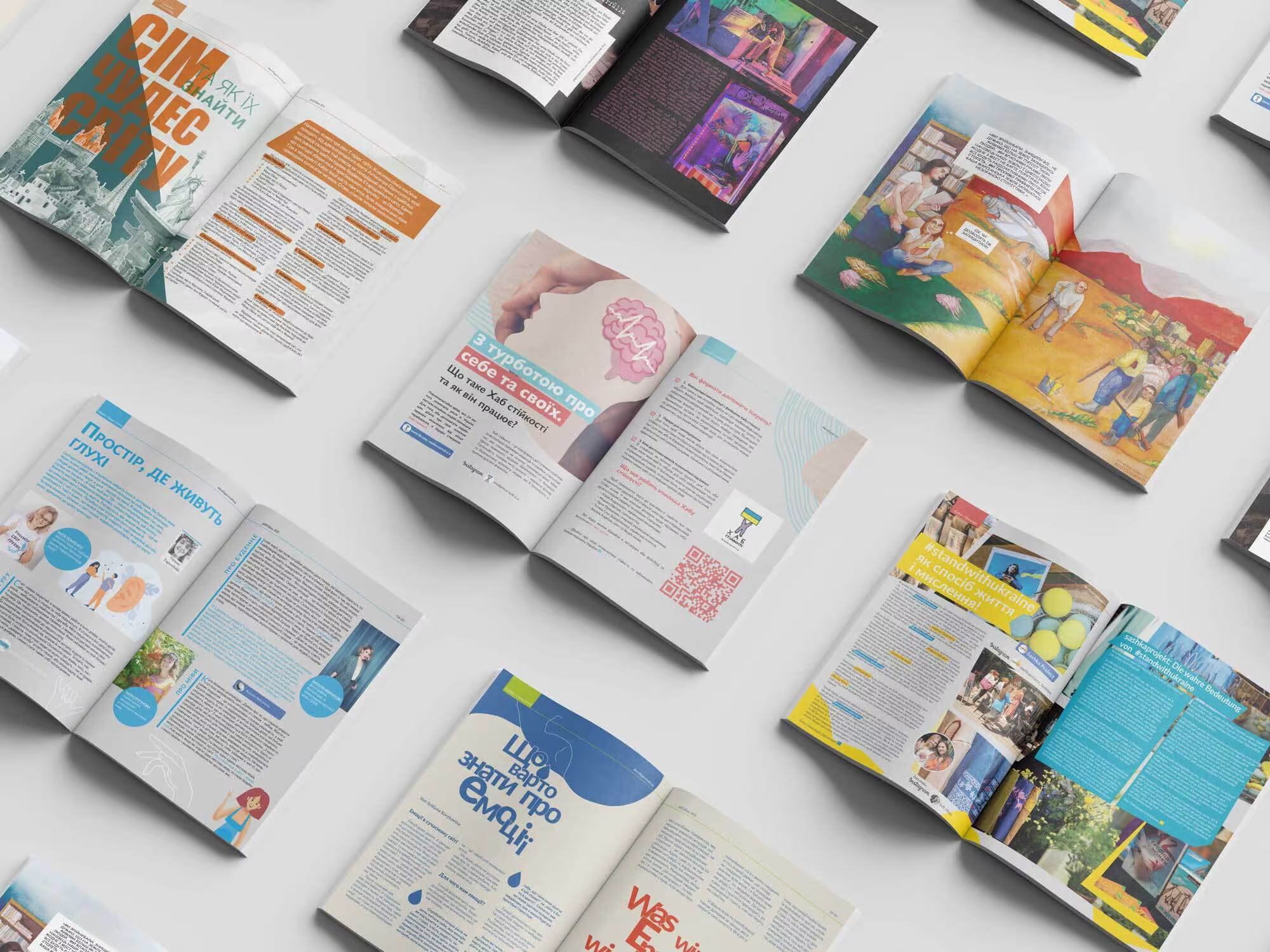
For nearly a decade, the team has introduced German readers to Ukrainian culture through traditions, art, and a broader social context. The magazine is not meant as a news chronicle, but rather as a modern cultural poster and social mission — promoting Ukrainian values and identity abroad.
It tells stories of inspiring Ukrainians (from the diaspora and beyond), highlights organizations and creative projects, reflects key moments in Ukrainian and German life, and announces events and initiatives. Its pages include travel tips, psychological columns, and reflections on life in different European countries.
“Each issue includes a comic by Kateryna Kostiuchenko — our signature feature, created especially for the theme of the issue,” Ksenia notes.
The project is supported partly by sponsors and partly by donations; readers can support the magazine via the website or when ordering the print edition.
Ksenia believes that the foundation of Gel[:b]lau is friendship.
“People often say that working together ruins friendships. For us, it’s the opposite. That’s why the project has lasted so long.”
Love and friendship have become Ksenia’s anchor, giving meaning to both her work and everyday life. Stuttgart is her city, not because of infrastructure or events, but because of its people and community.
Creativity, she says, is the fuel behind everything she does. The ability to create with joy and lightness helps maintain balance when everything feels broken.
“Over time, I learned to see the peculiarities of my psyche not as diagnoses, but as a kind of superpower — something that needs to be managed so it becomes a resource rather than a destructive force. Creativity, therapy, self-reflection, and sharing my experience have helped the most.”
War Photography and a Personal Exhibition
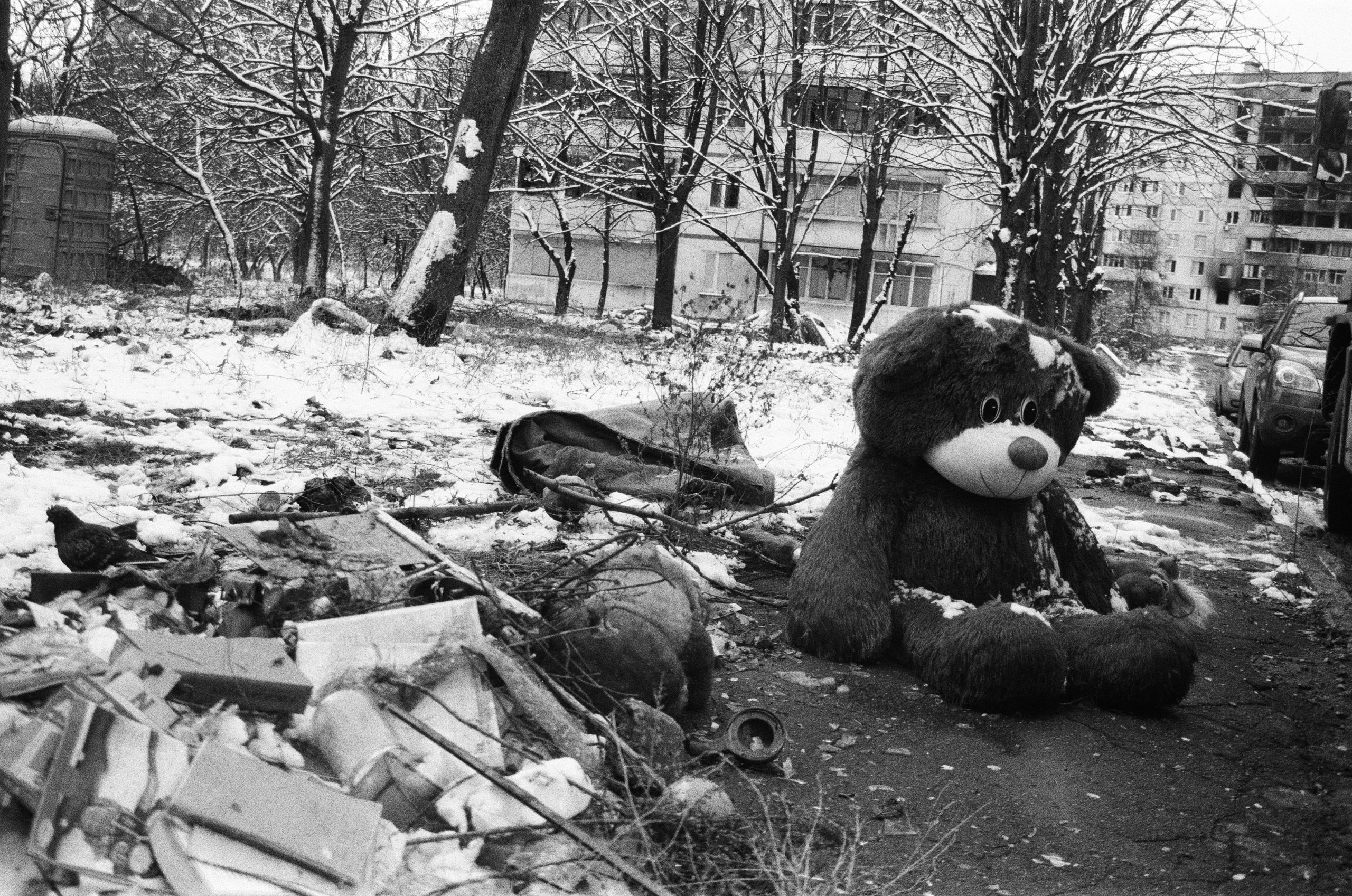
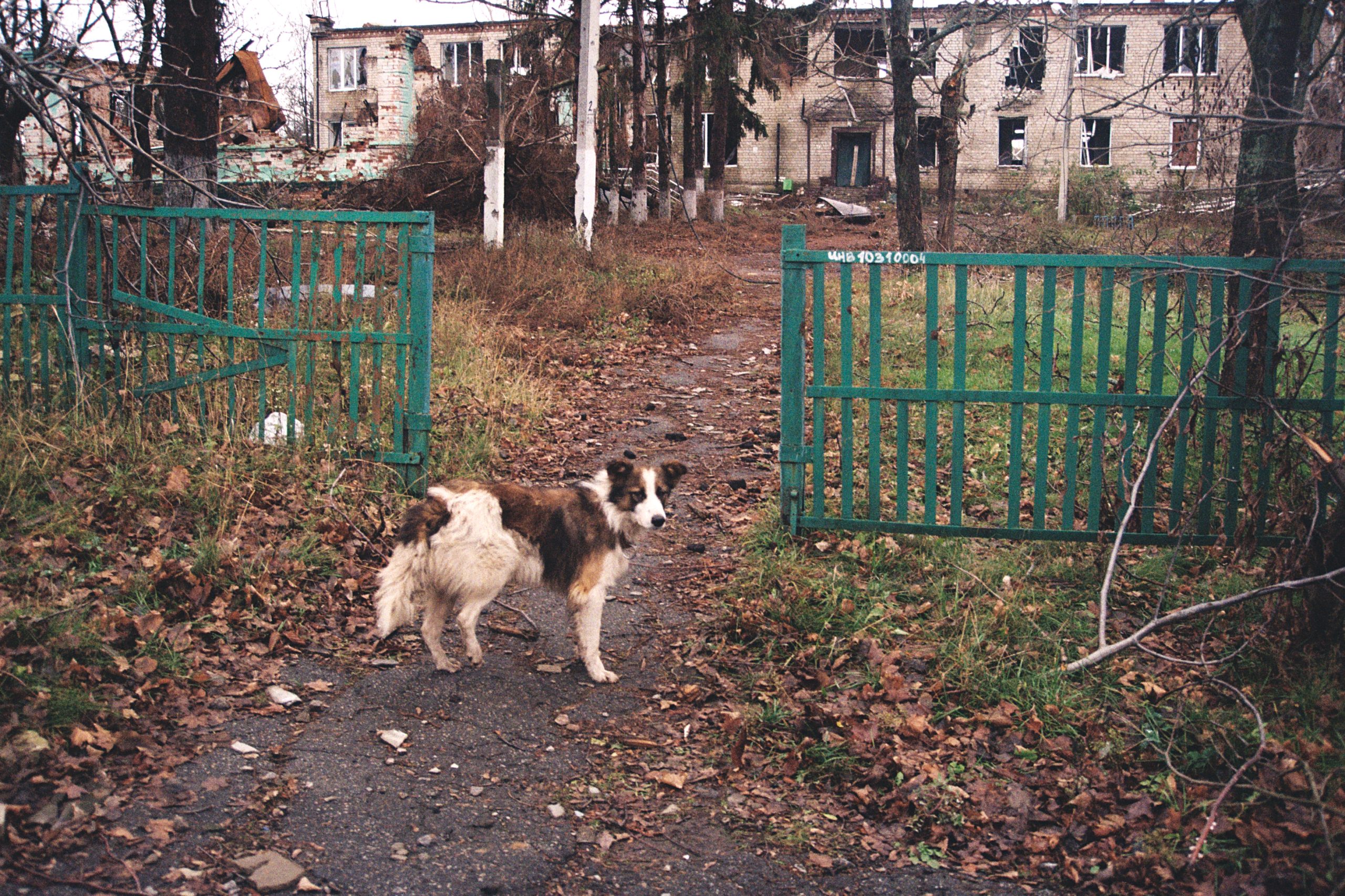
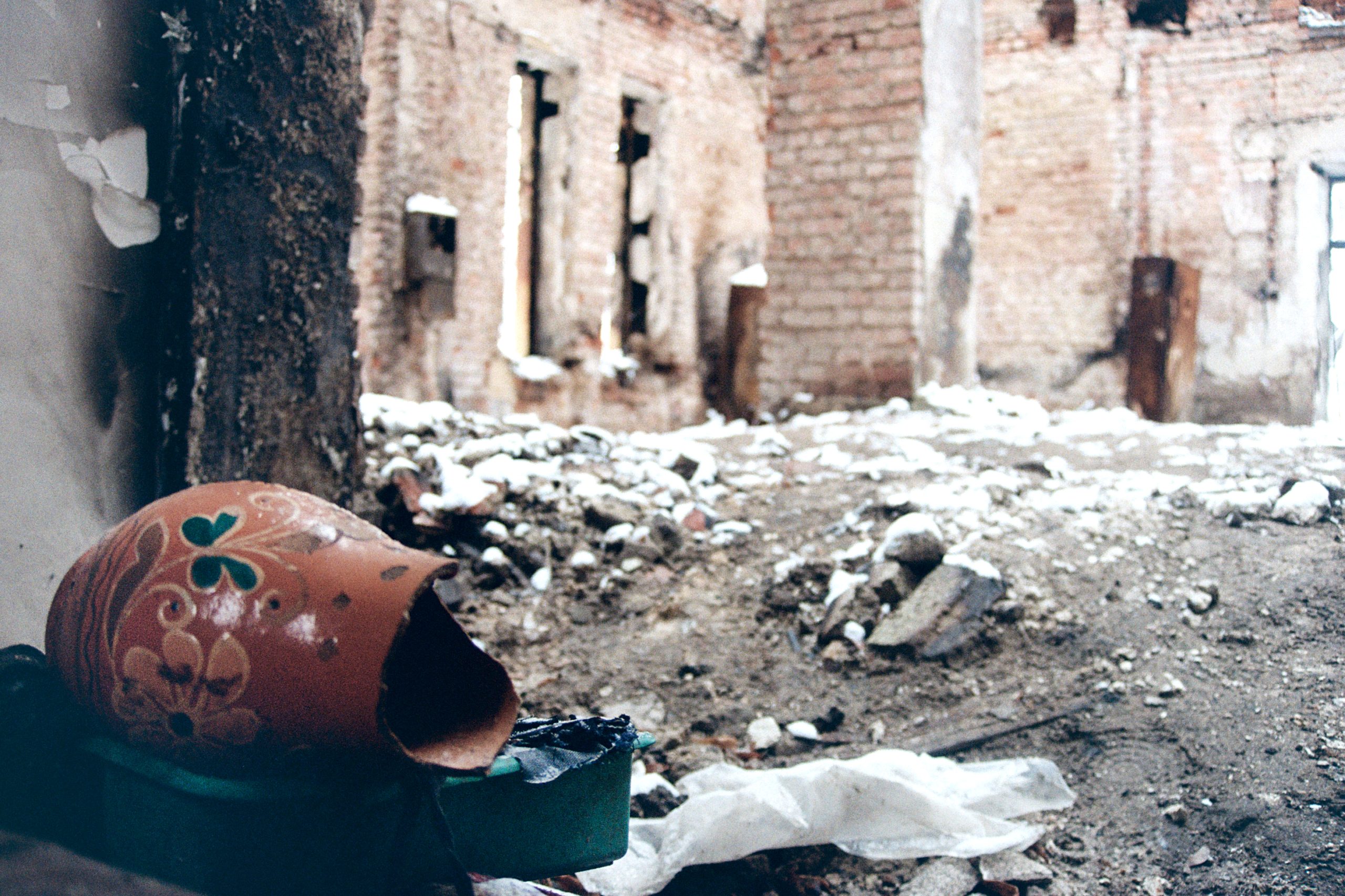
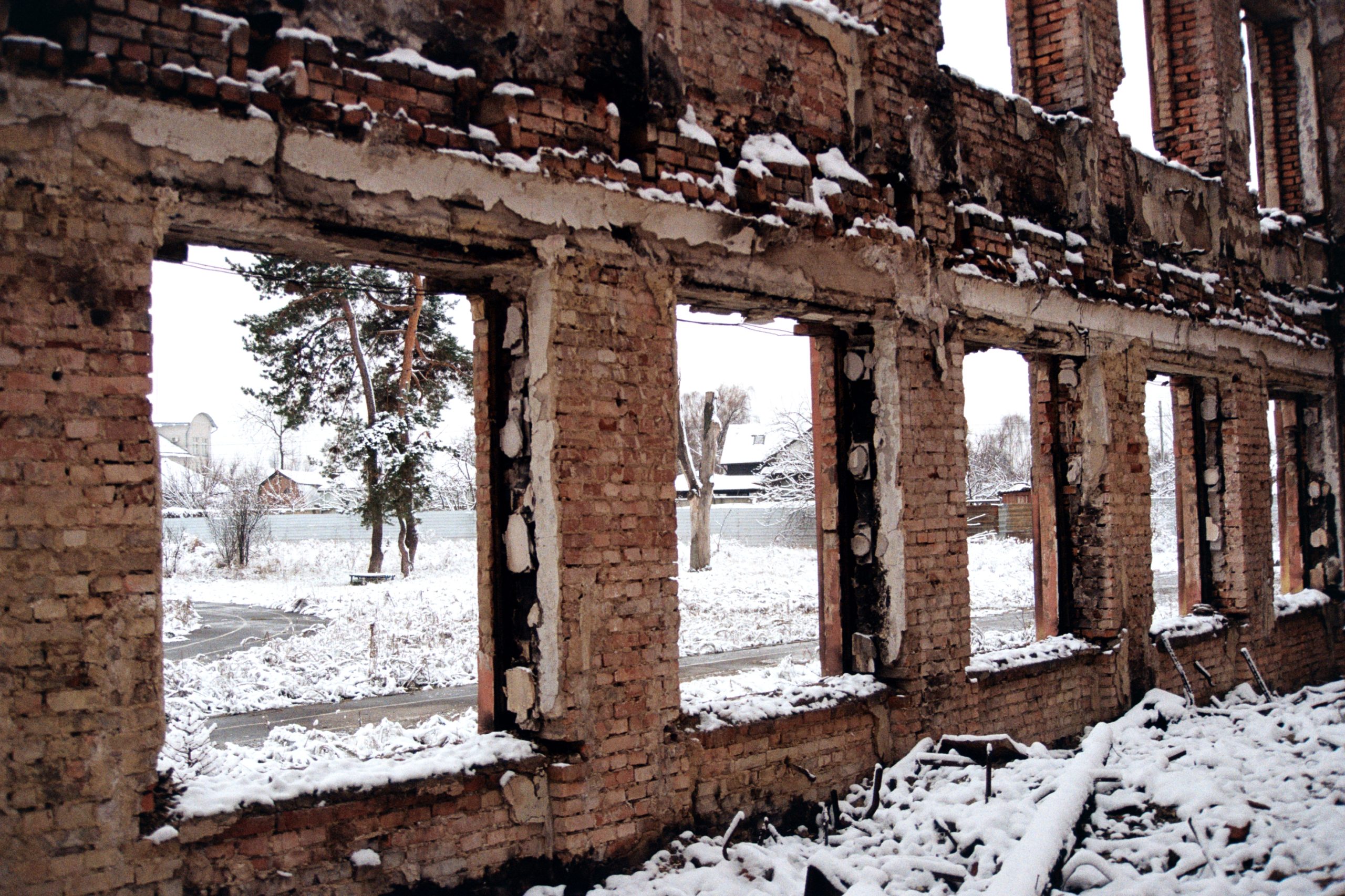
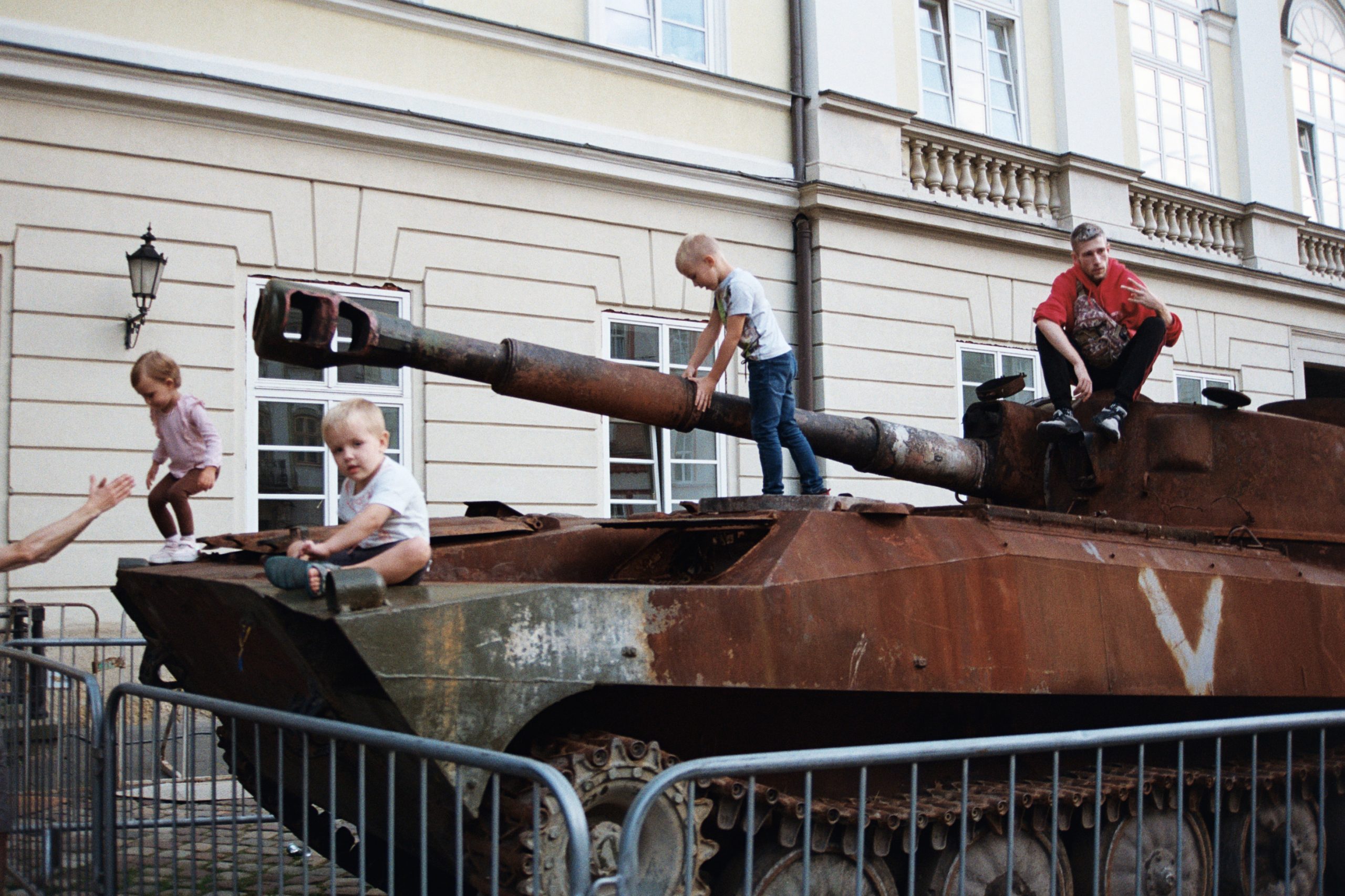
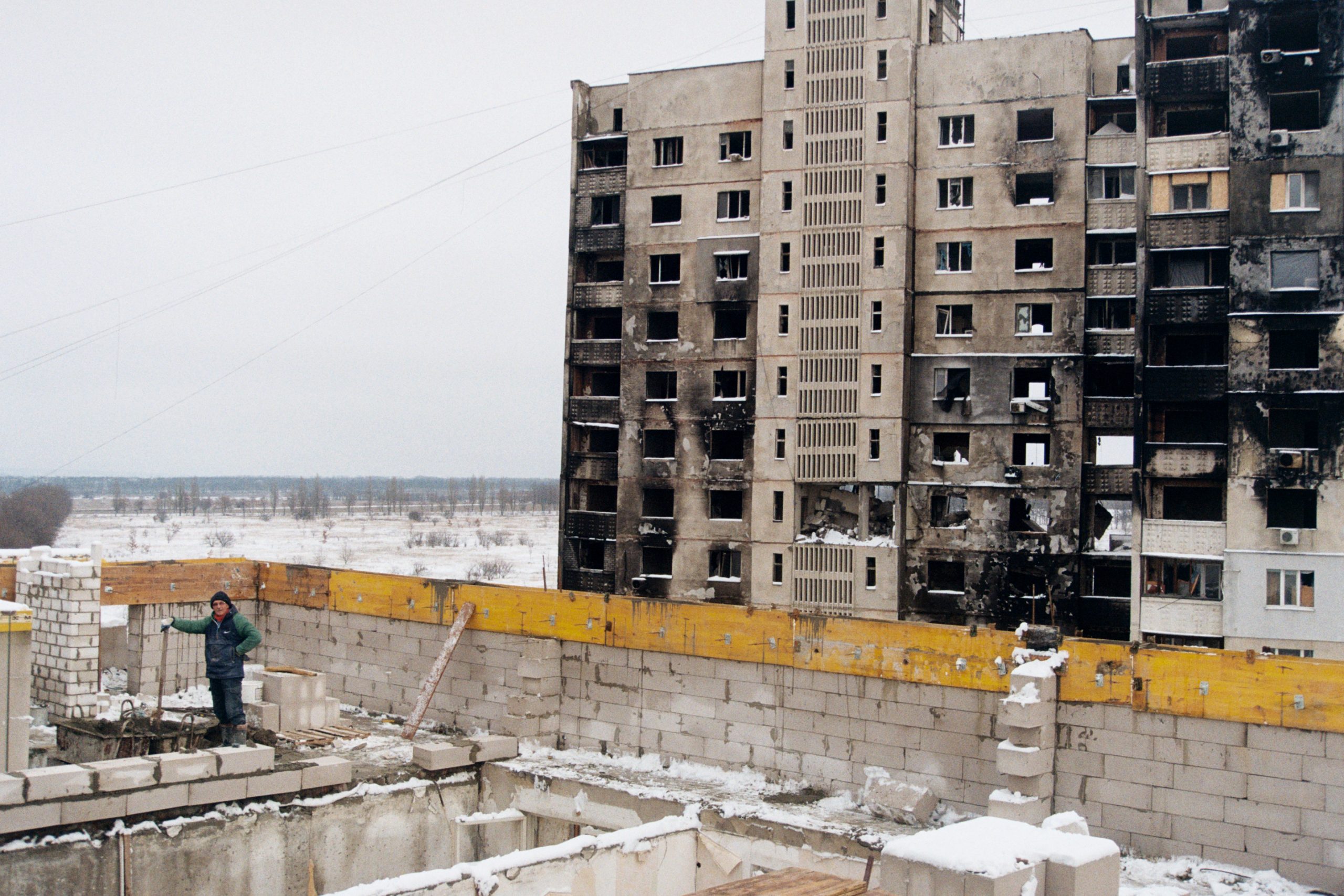
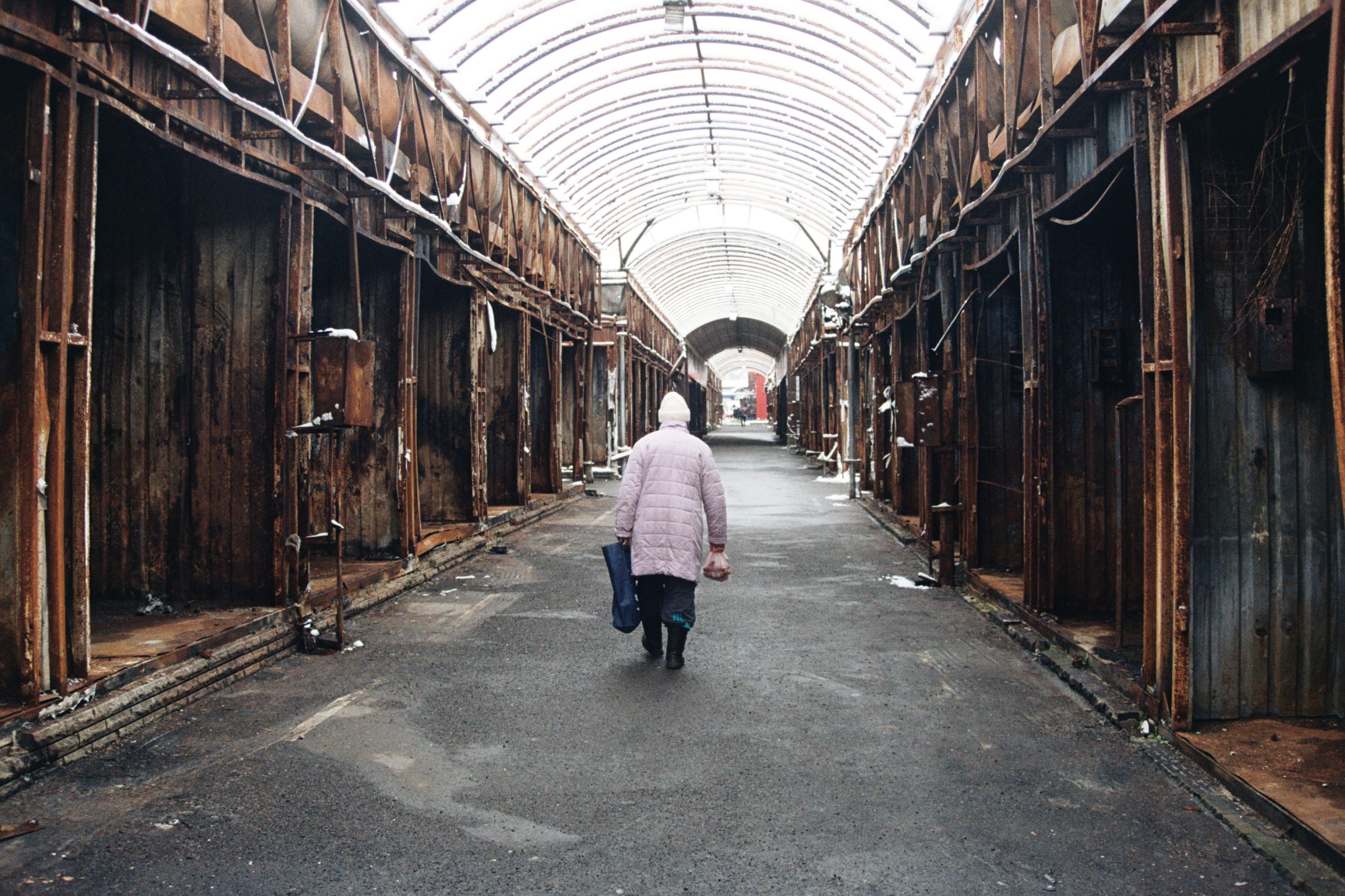
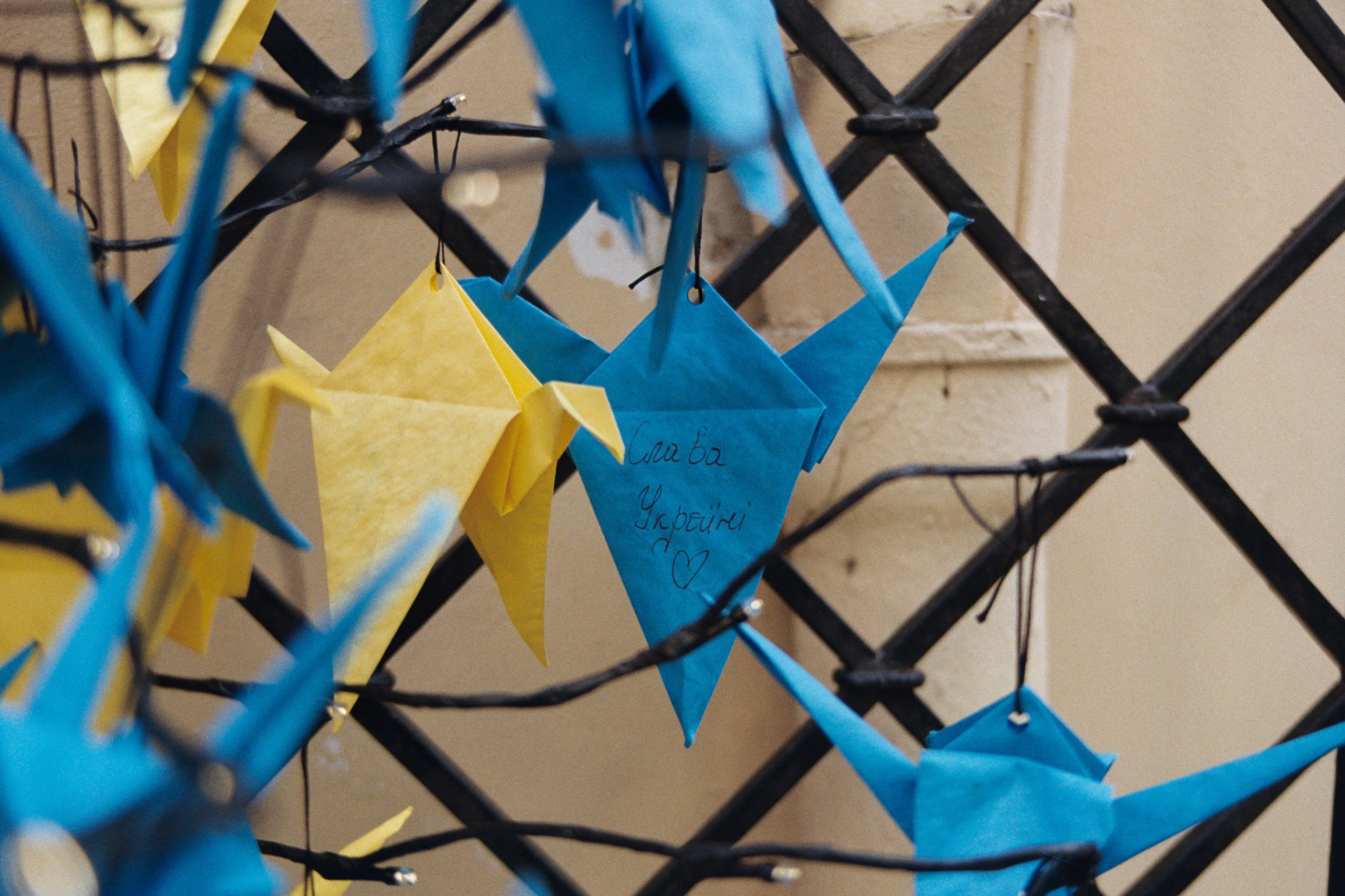
In addition to providing aid from Germany, Ksenia repeatedly travelled to Ukrainian-controlled territories as a photographer and supported the army.
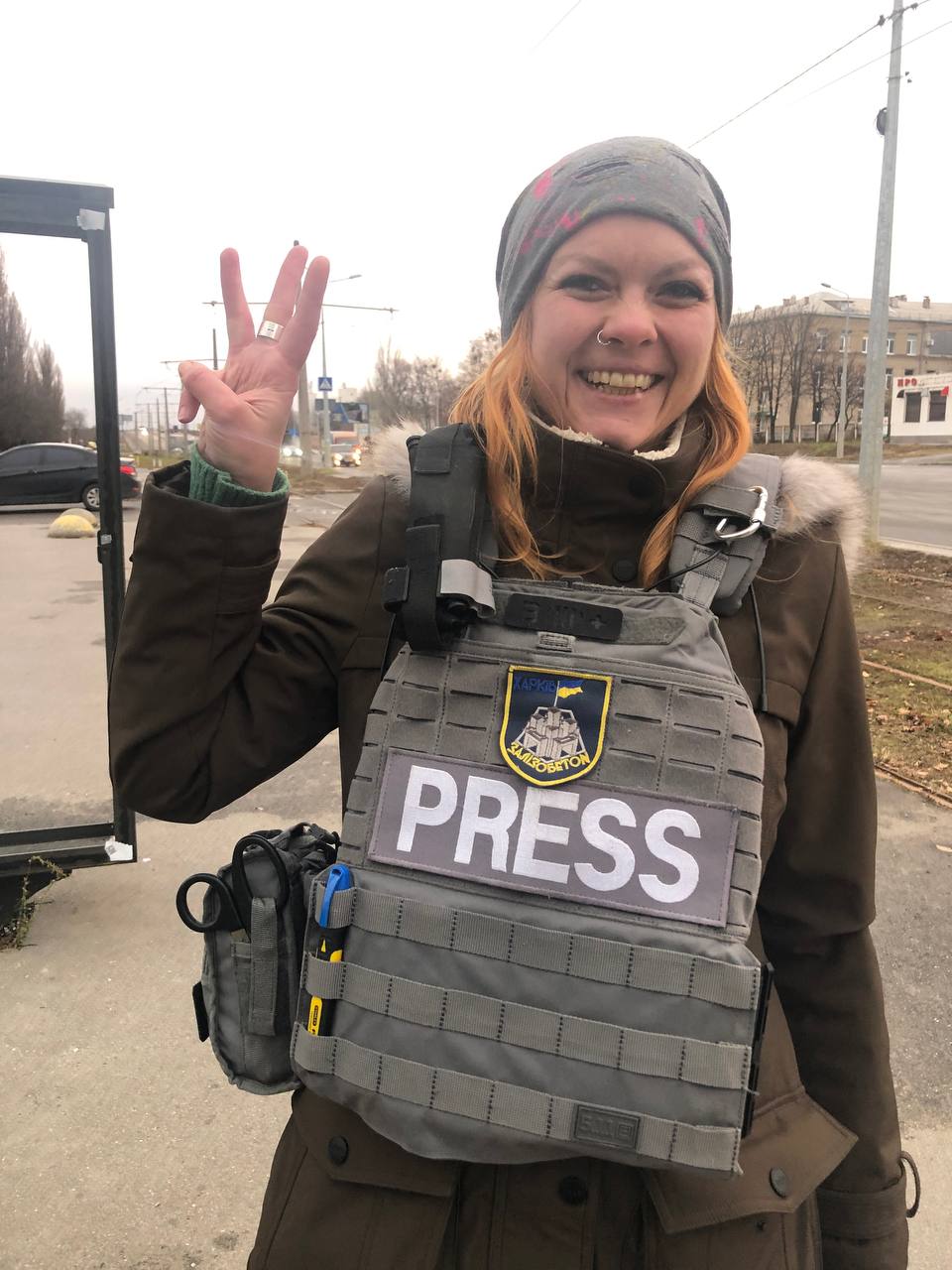
“I was one of the last people to fly out of Donetsk airport.”
Her trips to Donbas were dangerous, but also instructive.
“When our team found ourselves in risky conditions without communication, not fully understanding what was happening or even what time it was — especially during the grey autumn and winter days — analog devices saved us, and I was the one who had them.”
Her advice is simple:
“Always carry old-school mobile phones, battery-powered cameras or film cameras, and mechanical watches. They will absolutely come in handy, especially in conflict zones.”
One result of these trips was a photography exhibition featuring images taken during her travels in 2022.

“When I Was Painting, I Entered a Completely Different World”
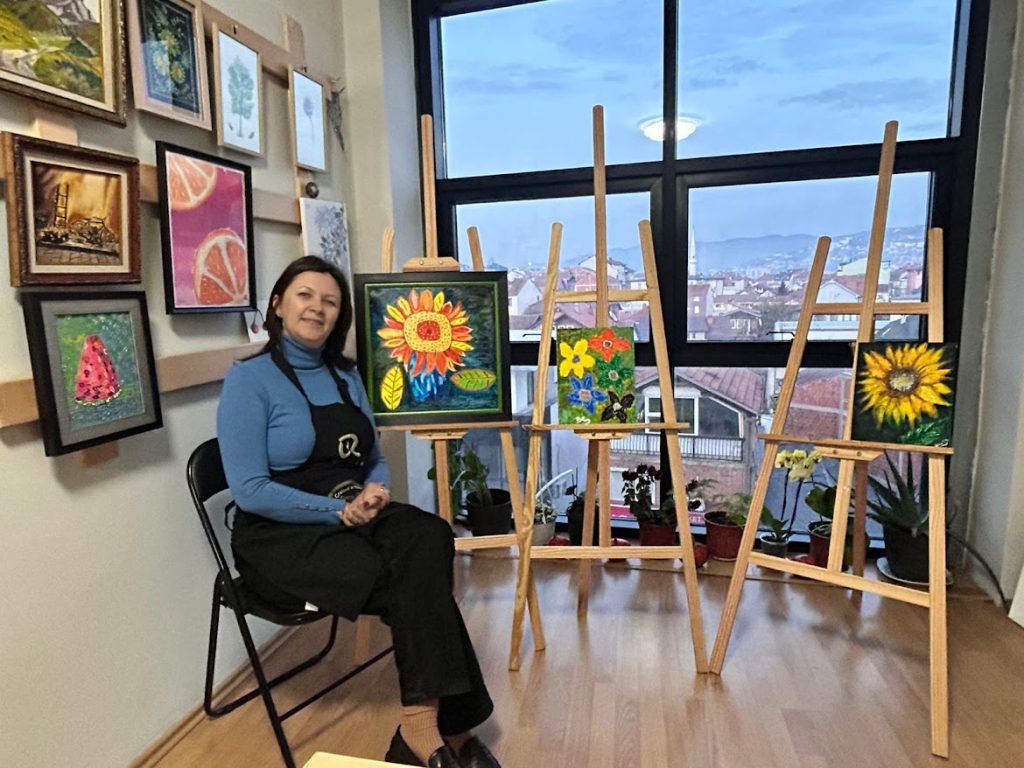
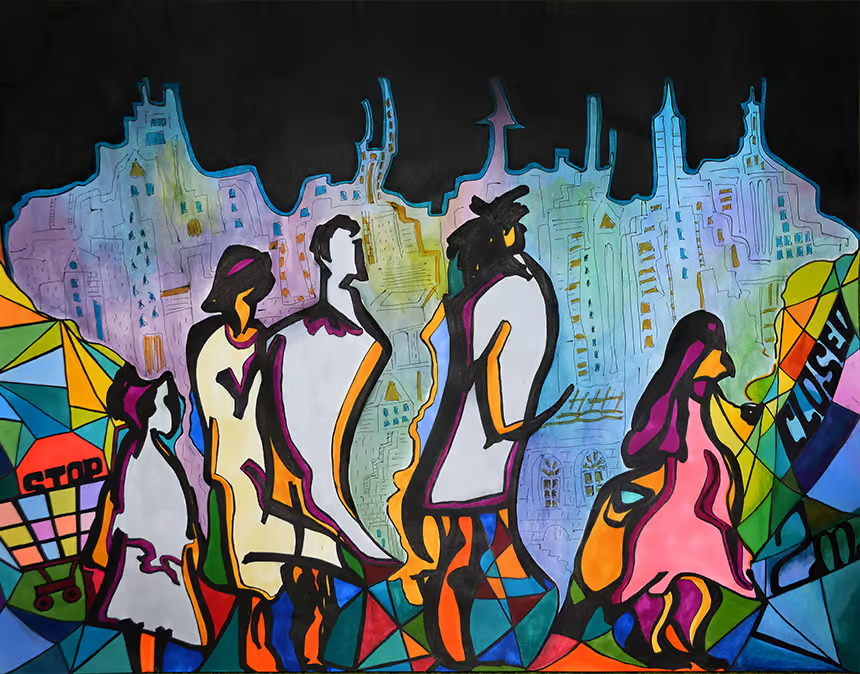
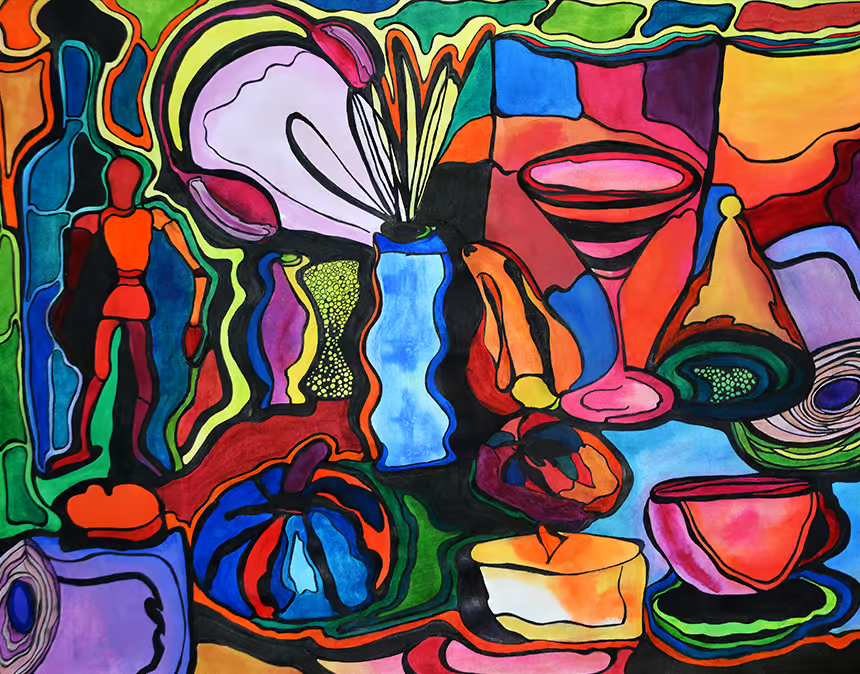
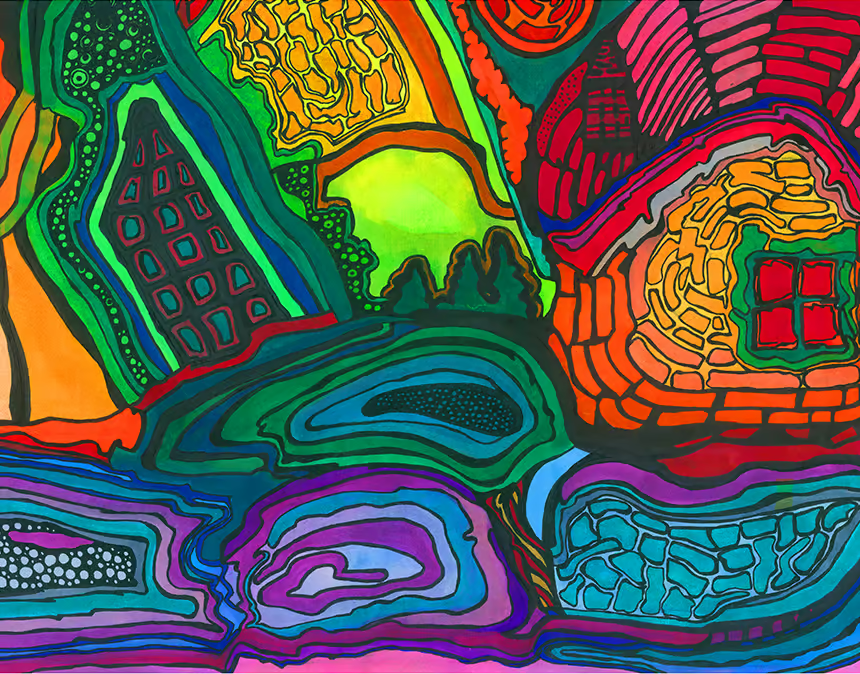
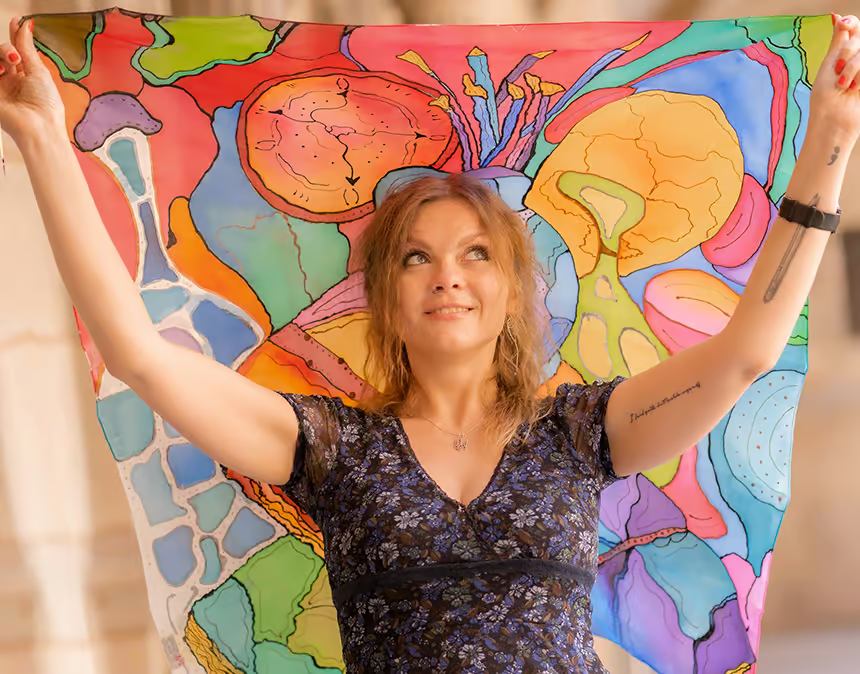
Art has always been part of Ksenia’s life, alongside prose, poetry, and music. During her stays in psychiatric hospitals because of severe depression and Borderline Personality Disorder (2014–2016), she discovered visual art.
Later, she learned about art therapy and its proven positive effects on mental health. After finishing the illustrations for her book, she moved on to painting portraits of friends, then to acrylics. She attended occupational therapy twice a week instead of once, simply because she wanted access to paints. Eventually, she discovered the hospital’s fully equipped art studio.
“The studio was wonderful. Like any studio, it smelled strongly of paint – and I fell in love with that smell…” (From On the Other Side of the Sun)
After leaving the hospital and years of volunteer, editorial, and professional work, her love for painting only deepened – becoming another expression of her talent and a source of joy.
“No specifics. Just colors, stains, and lines. To hell with proportions and composition. None of that mattered. What mattered was the joy of the process.” (From On the Other Side of the Sun)
On the Other Side of the Sun: A Story of Solitude
Turning personal experience into a book is both a logical and courageous step, but the path to it is a story in itself. For Ksenia, writing was therapeutic, a habit formed in childhood.
“The first manuscript was written in 2015, when my psyche couldn’t withstand the shock of the war in my native Donetsk, and broke.”
(From On the Other Side of the Sun)
The first reader of her drafts was her father. He was the one who told her the text should — and must — become a book. That act required courage, love, and generosity: to see value in his daughter’s pain for others.
Ksenia believes that people rarely understand what they haven’t experienced themselves. Yet empathy is possible, if one person dares to share their pain honestly, and another is willing to listen with maturity and respect.
That is exactly what happened with On the Other Side of the Sun. Ksenia openly shared her struggle and delivered a clear message: mental health matters — and asking for help is not something to fear.
Mental health culture in Ukraine is developing, but stigma remains strong. For many years, psychological struggles were silenced, labelled, or ignored. Today, after years of war, mental health has become a matter of survival.
“Psychotherapists read my book and recommend it to their patients. Readers write to me, sharing their stories and thanking me for helping them feel that they have a chance — that they are okay. What more could an author want? The book helps.”
A year later, Ksenia published 12 Seasons of a Woman, followed by 12 Hours of a Man — a conceptual continuation, exploring social challenges faced by women and men today. Each book contains 12 interconnected short stories. They can be read separately, but together they reveal the full picture.
Her fourth book “Echoes of these days” has already been written and is currently being prepared for release. The translated edition is now available for pre-order. For those who want to listen audiobook, it’s now available in Ukrainian and German.
Ехо цих днів – Audiobook by Various Artists | Spotify
Echo dieser Tage – Audiobook by Various Artists | Spotify
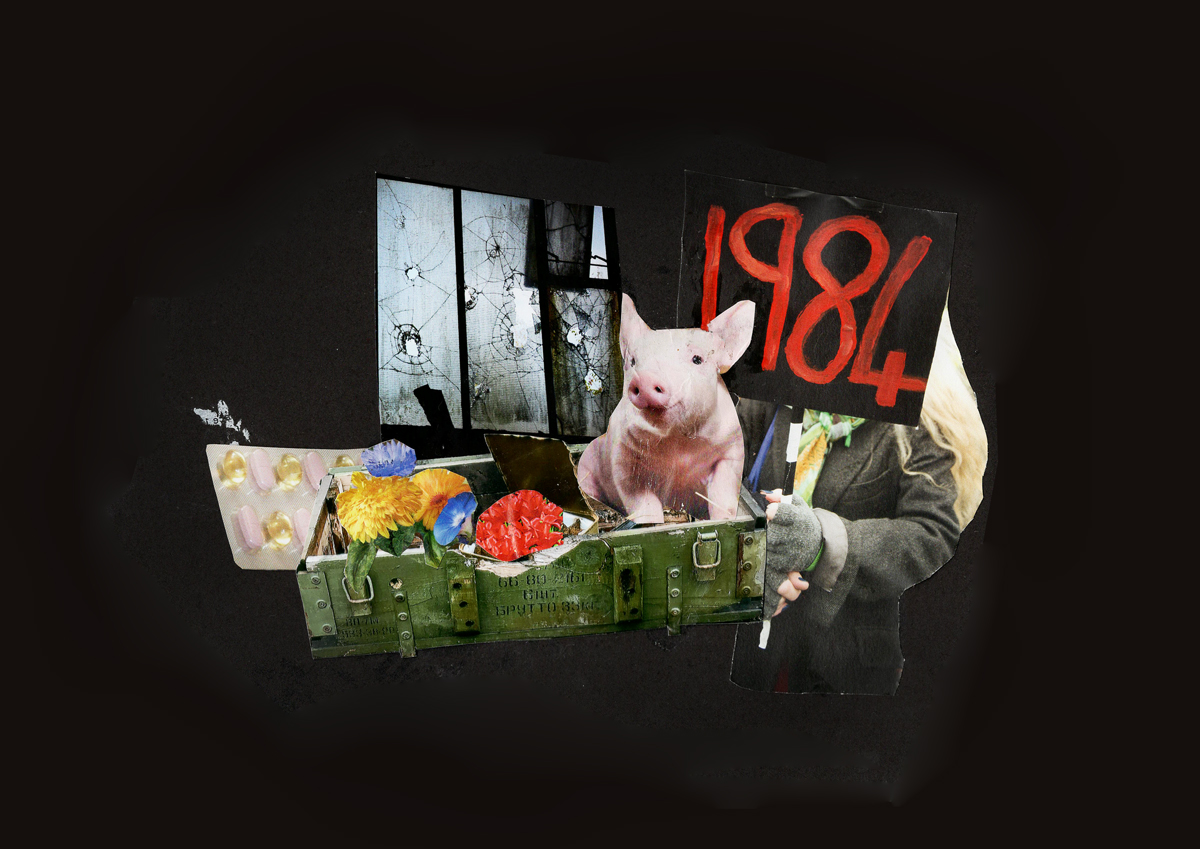
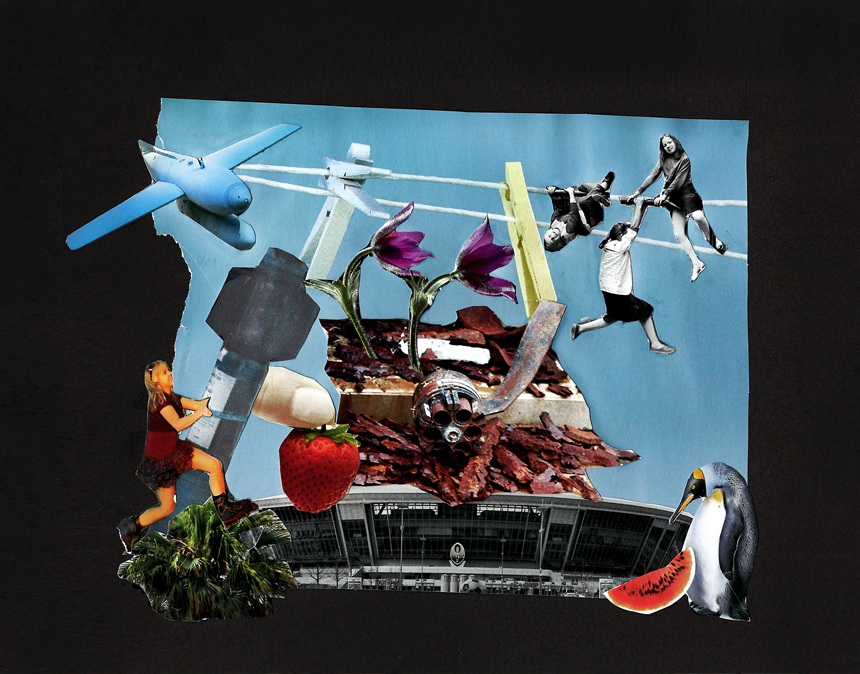
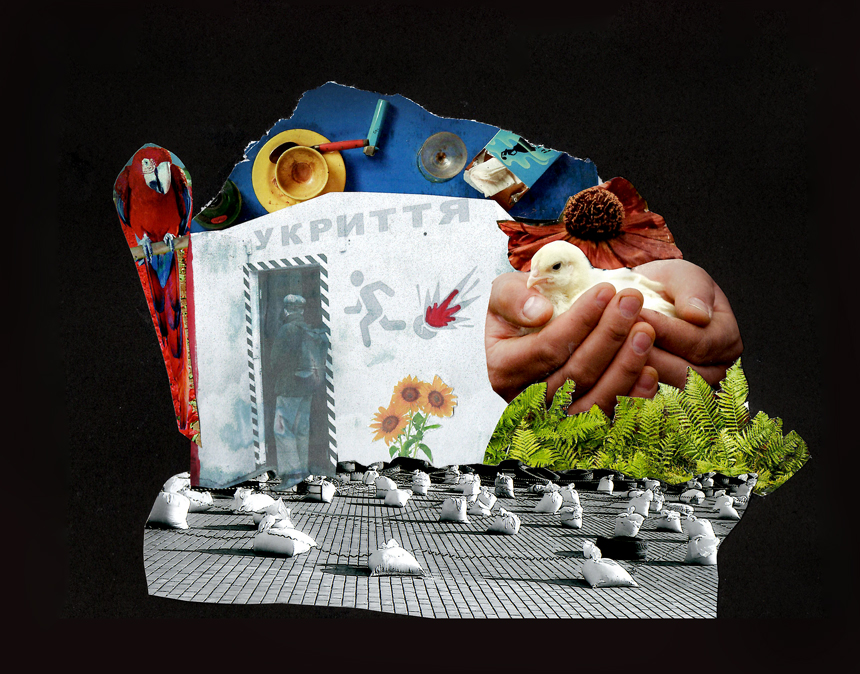
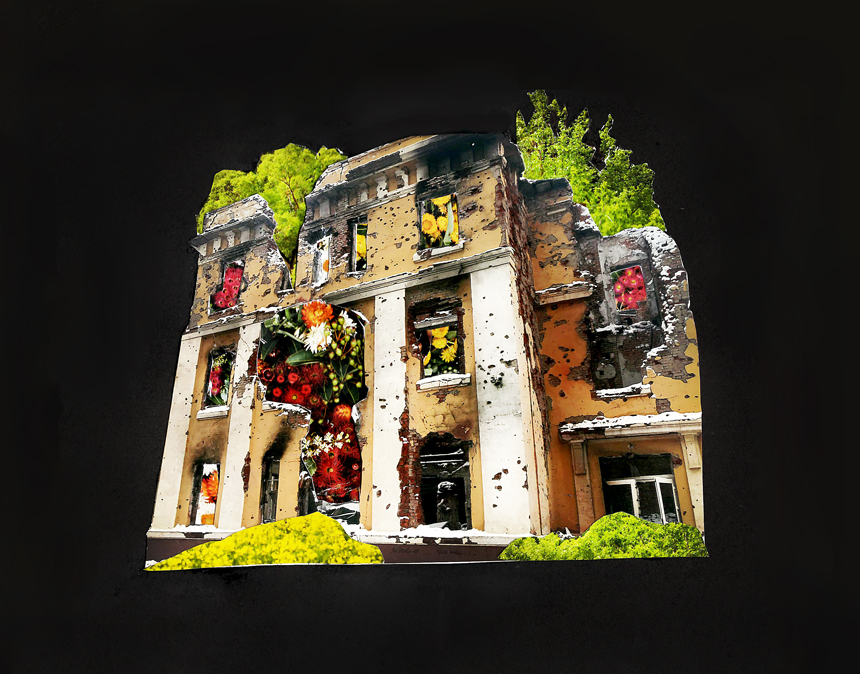
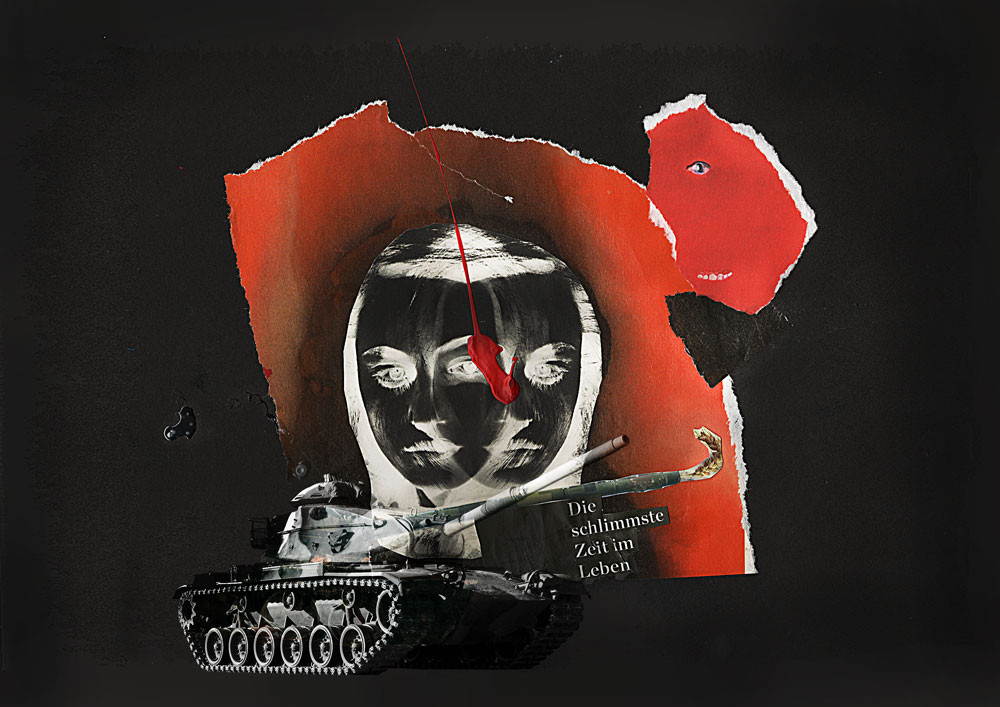
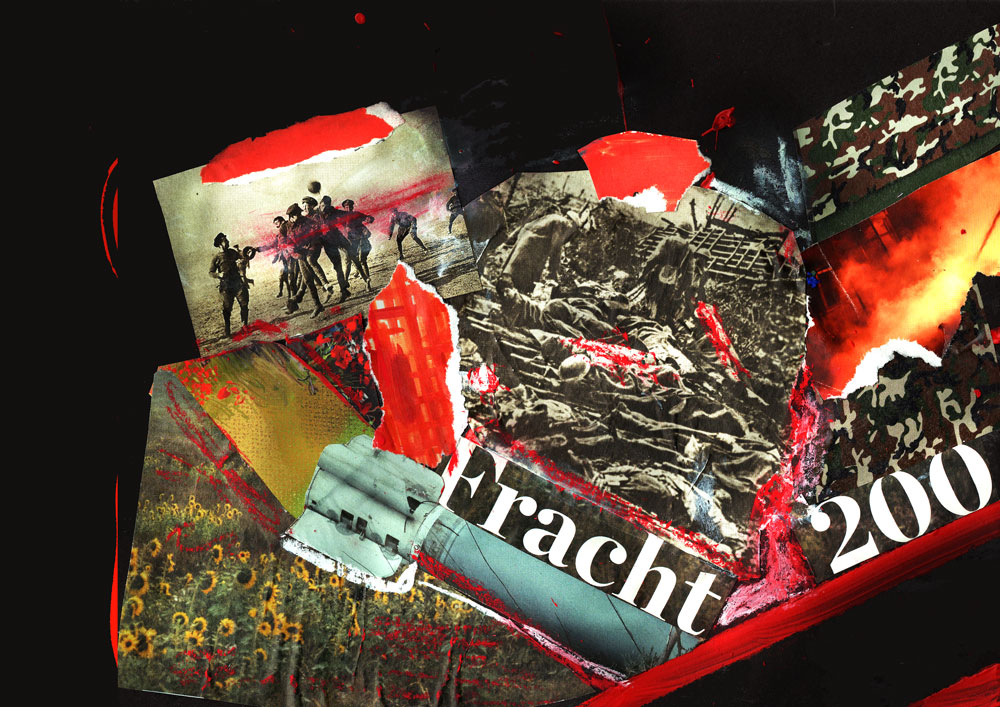
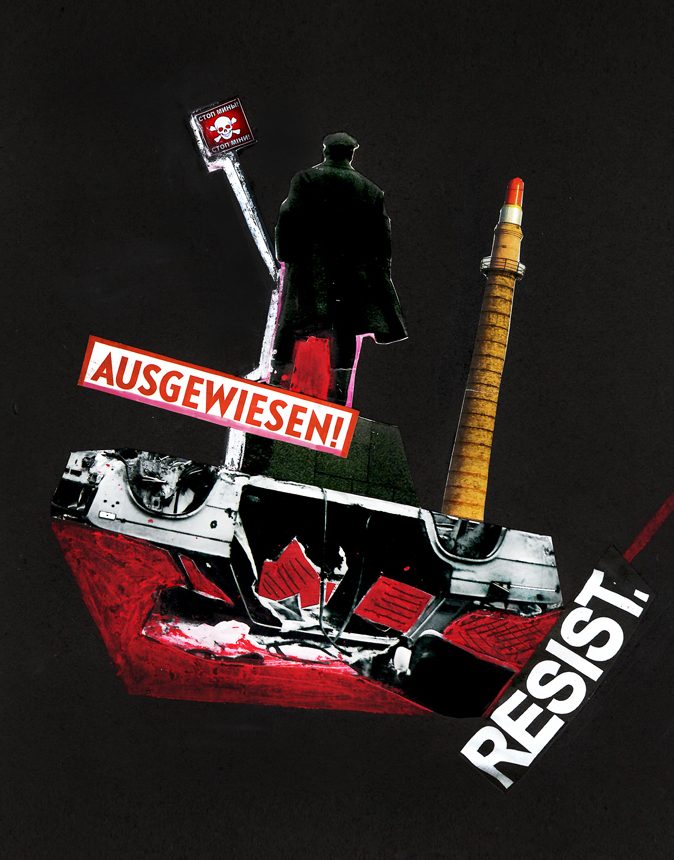
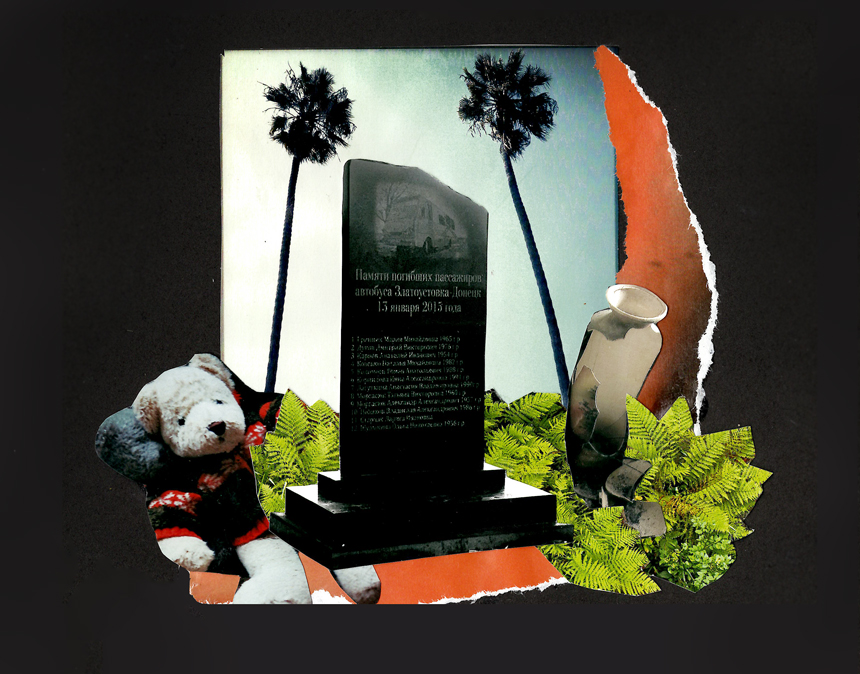
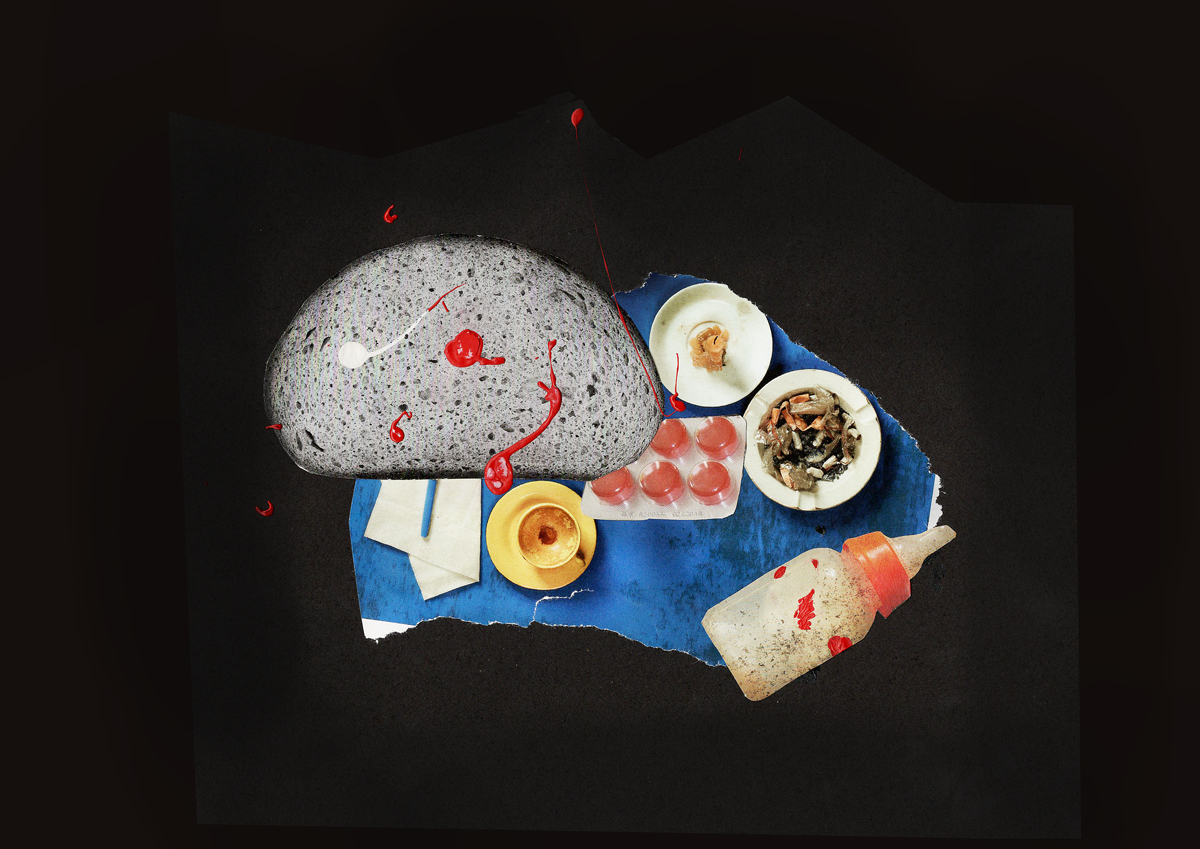
Collages made by Ksenia from photos she took during her war photoshoot.
Text: Svitlana Pylypchuk
Editor of Ukrainian text: Anastasiia Zanuzdanova
Editor of English version text: Helen Lewis
Photos courtesy: Ksenia Fuks