During the full-scale war, a hub in Zaporizhzhia, known as ‘Under the Umbrella’, has produced nearly 70,000 square meters of camouflage nets to date. These nets can cover over 1,500 tanks or the same number of armoured personnel carriers. The volunteers weave the nets using a unique technology, recognized by the Ministry of Defence of Ukraine. Additionally, the craftswomen, who call themselves the ‘Umbrella Ladies,’ create decorative picture nets, which they sell to raise money for fabric.
Valentyna Vinichenko, known as the “guide-legend” in her hometown, has dedicated 46 years to her job, having given approximately 30,000 tourist guides of Zaporizhzhia and its surrounding areas.
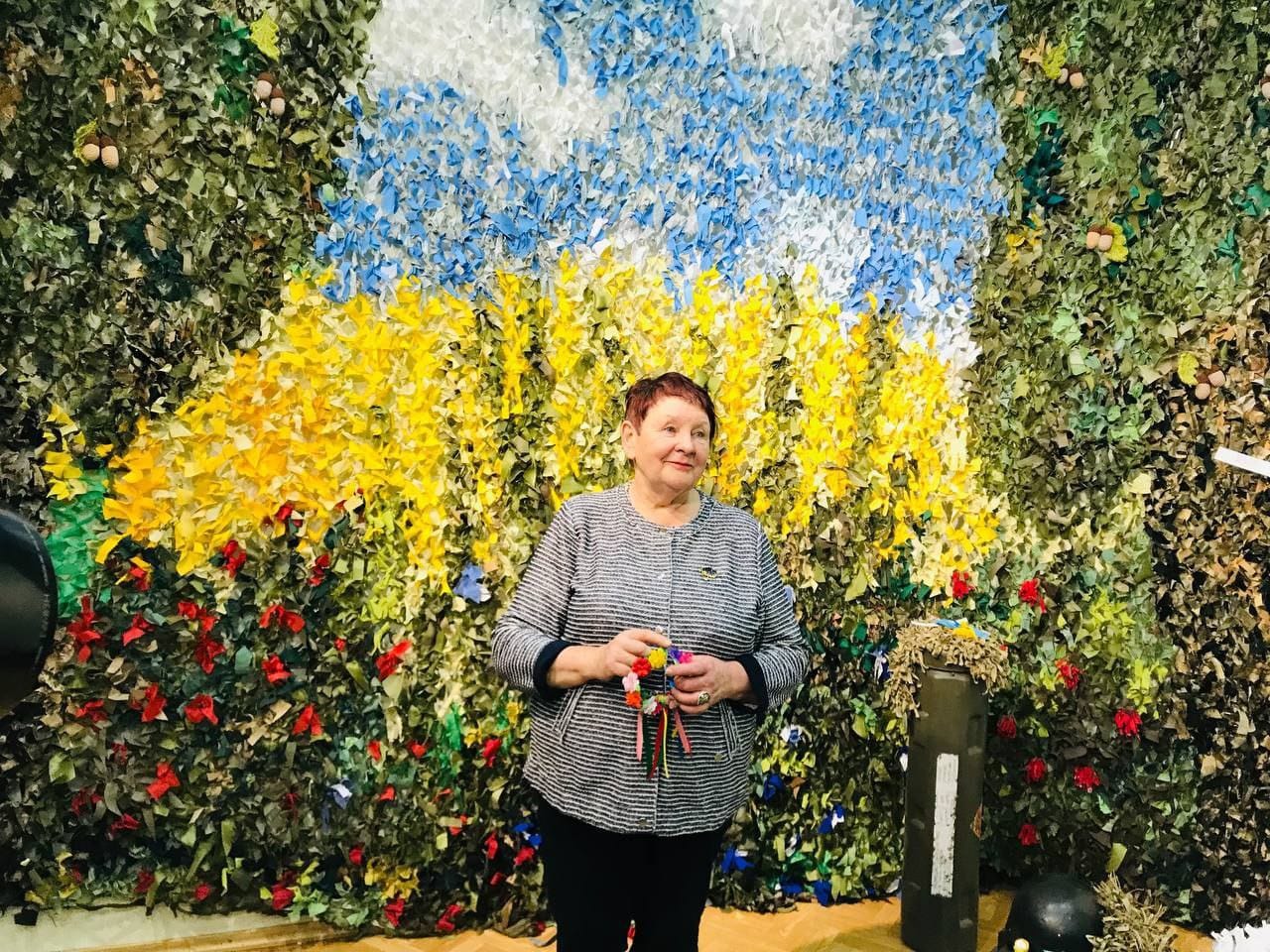
However, with the onset of the full-scale Russian invasion, tourism is no longer her primary occupation. Despite constant shelling and blackouts, due to the city’s proximity to the frontline, she chose to remain in Zaporizhzhia. What used to be a hobby until recently has transformed into her life’s work.
“My daughter, Kateryna, and I have been helping the military since 2014. At first, we sewed pillows and mattresses – about two thousand of them – and sent them to the frontline. The soldiers were very grateful, as these items improved their living conditions. We asked them what else they needed. In one conversation, they mentioned a lack of covers for their equipment. That’s when we decided to start weaving camouflage nets.”
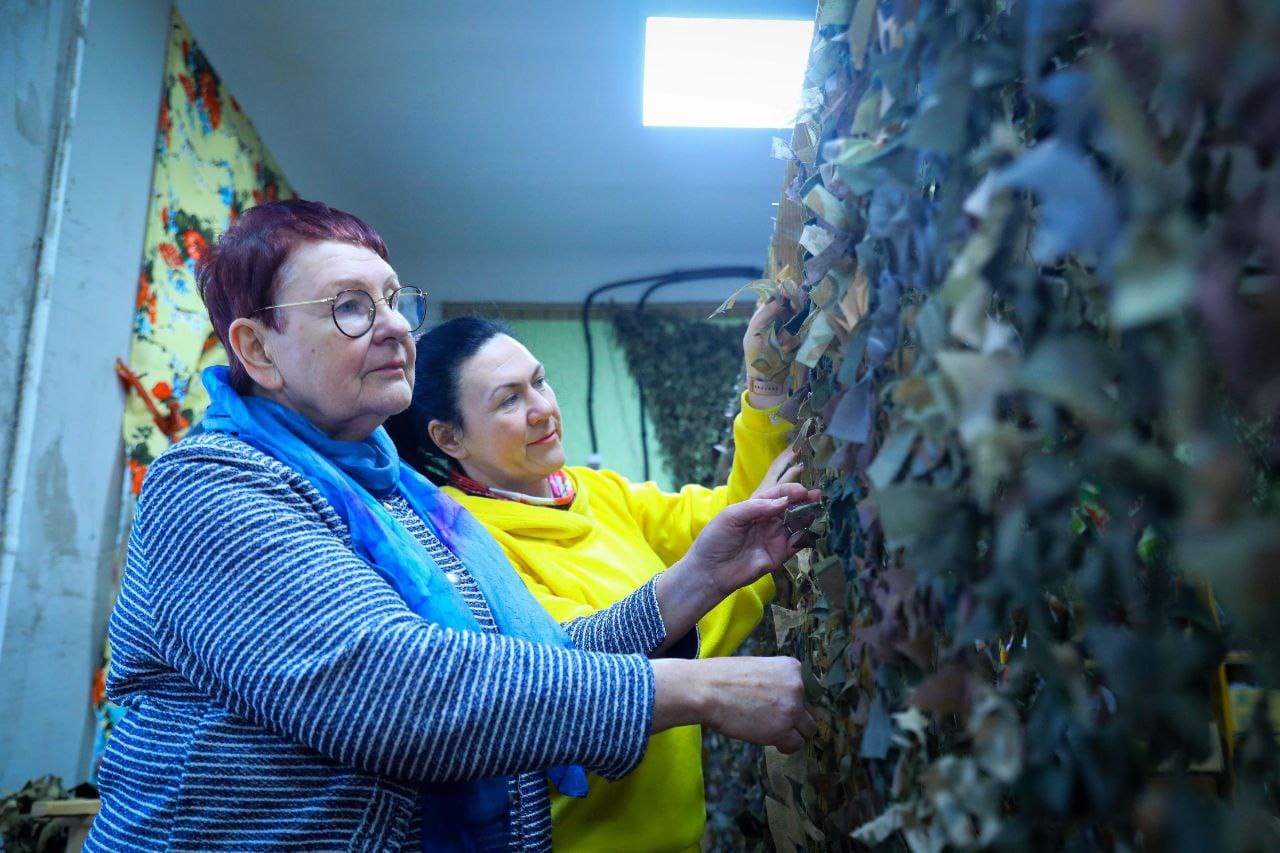
The women shared their initiative with friends, who quickly agreed to help. As the word spread, more people joined in their efforts. This collective became a voluntary association, aptly named ‘Under the Umbrella,’ a nod to the accessory Valentyna used during her guided tours.
They camouflage so that even drones cannot find them.
The first camouflage net was woven from scraps of old clothes and fabrics taken from home. It turned out to be very bulky, weighing over 30 kilograms. However, the military was satisfied with it. Yet, Valentyna’s daughter, Kateryna, who holds a degree in fashion design, was not pleased with the outcome. Her concerns grew during a trip to the front line with other volunteers.
“As soon as the military covered the equipment with a net, I immediately noticed several flaws,” says Kateryna Vinichenko. “Firstly, it did not blend in with the environment because the color was very different. Secondly, the netting was incredibly heavy after rain or snow, making it almost impossible to lift. We’d spent so many resources – time, materials, and human labor – and it was useless!”
Upon returning to Zaporizhzhia, Kateryna began developing her own method for making nets. She experimented and tested various techniques, leading the volunteers to weave the camouflage fabric in a new way. The soldiers on the front line appreciated the results and praised the products made by the women from Zaporizhzhia. Other volunteer centers soon became interested in the new design.
In 2015, Kateryna Vinichenko shared her workshops on YouTube for free. “I developed a new way of cutting fabric strips for the nets. If you cut them correctly and stretch the strips, they can become about 20 centimeters longer. This allows for braiding a larger area of the net base. The weight of the net is significantly reduced. Each knot on the base is tied with a strip in either a ‘U’ shape or a zigzag pattern, which gives the net a more textured and natural appearance. Additionally, we only use new, preferably natural fabrics for the strips — we no longer use old clothes.”
According to Kateryna, she received a Badge of Honour from the Ministry of Defence of Ukraine in 2016 for this innovative development. Before accepting orders from the soldiers, the women ask them to send general photos of the area where they are deployed. This helps them choose the appropriate colors and shades for the nets based on the environment. They send one net for testing, make corrections if necessary, and then fulfill the rest of the order.
“Each region of Ukraine has its own unique landscape. For example, it is currently snowing in most regions. The color of the snow differs in the Kharkiv region compared to the Donetsk region and even near Zaporizhzhia, where various shades are present. We weave and label the nets as ‘dirty snow,’ ‘dirty-muddy snow,’ ‘Kharkiv snow,’ and ‘Zaporizhzhia snow.’ We already have orders for spring, where we will mix these camouflage nets in different shades of green and brown. The most popular among the military are the chameleon nets, which feature up to three dozen shades.”

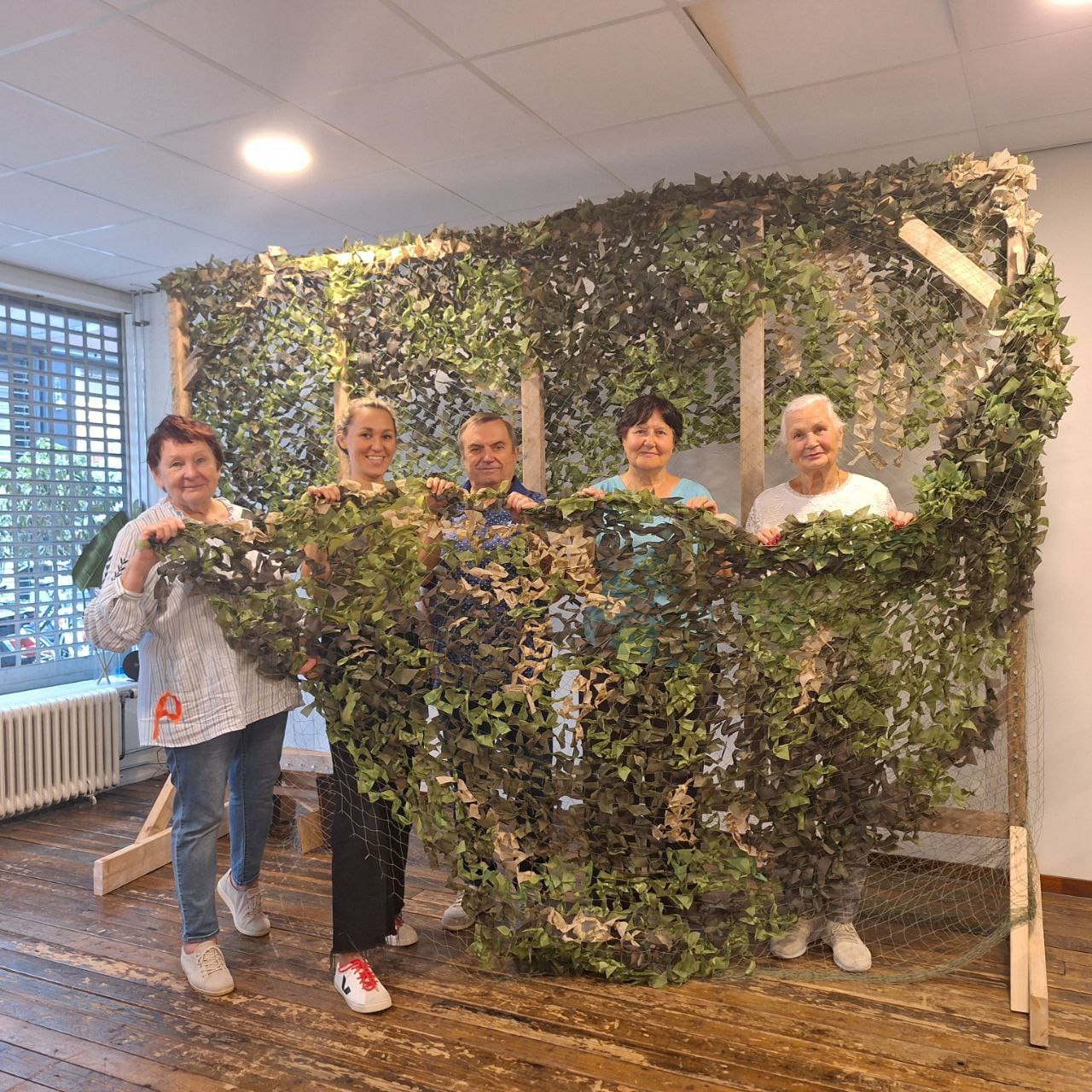
The volunteers report that Ukrainian soldiers continually enthusiastically provide feedback. Recently, they received a drone photo from one brigade that allowed them to see the location of the equipment camouflaged by their nets. The soldiers expressed their surprise and happiness at discovering that the Umbella Ladies’ efforts had not been in vain.
Two dozen hubs in Ukraine, ten abroad
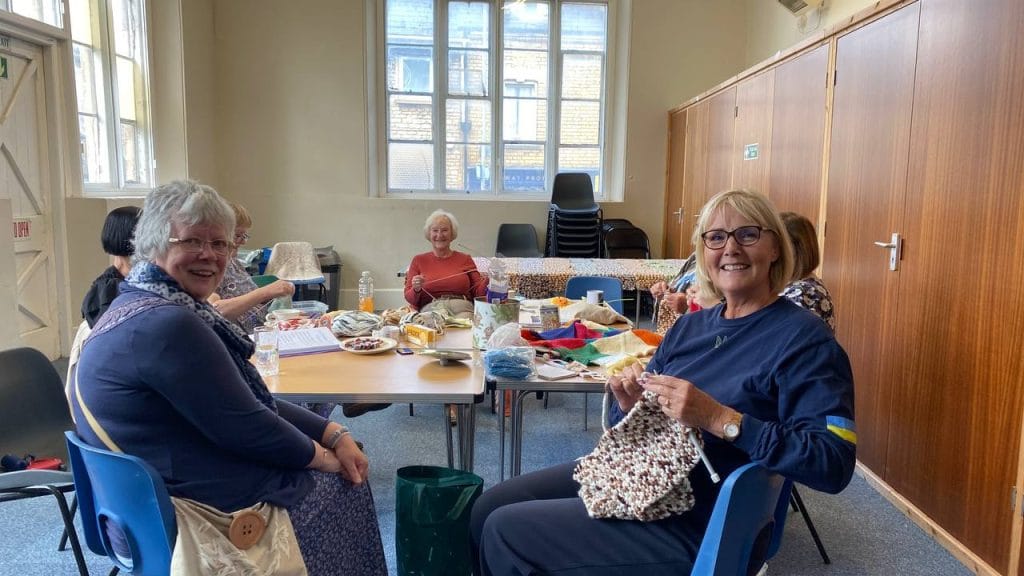
The center also produces helmets, backpacks, and sewn gloves. As the volunteers work diligently, the atmosphere is lively, like a bustling hive of bees: Some quickly cut fabric into strips, while others skillfully weave the nets.
“I came here in the early months of the full-scale war because staying home was driving me insane,” says volunteer Liudmyla Liashenko. “I was looking for a volunteer organization where I could contribute, and I found it. I love the friendly atmosphere here; it truly helps relieve stress. Over the past three years, we’ve all become a family. We jokingly call ourselves the ‘Umbrella Ladies.’ Here, you support the military whilst also nourishing your soul.”
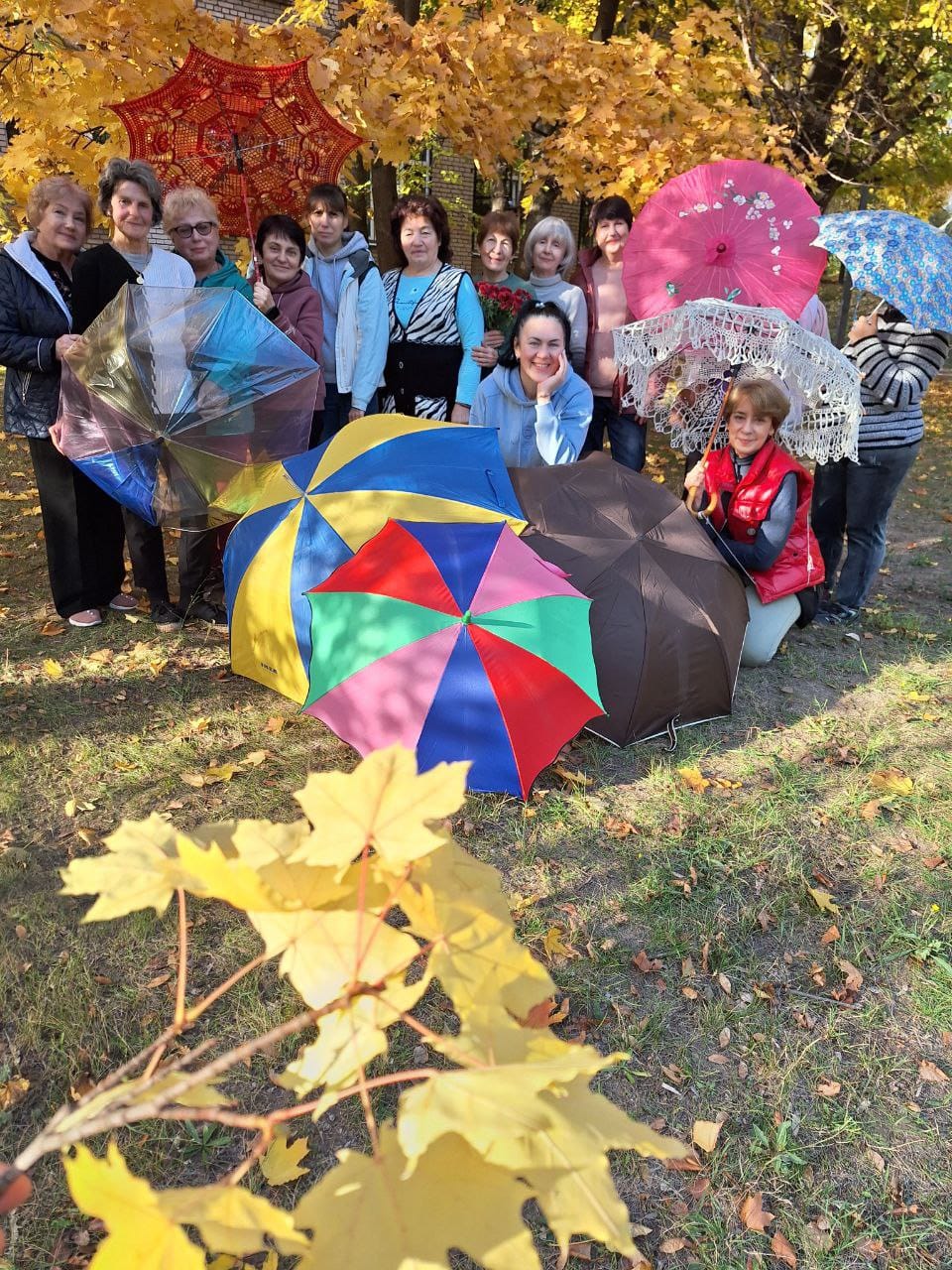
Olena Topchiy joined the Under the Umbrella Association at the invitation of her son’s godmother, who convinced her that a fantastic team was undertaking essential work for the military. “My husband is at war, and I worry about him constantly. Here, I manage to distract myself from my anxious thoughts. I’m glad we are able to send the nets to my husband’s unit. He has often praised us and said we make excellent camouflage.”
Since the start of the full-scale war, the volunteers have produced nearly 70,000 square meters of camouflage nets, enough to cover 1,500 tanks or the same number of armored personnel carriers. In total, they have woven nearly 500,000 nets since 2014. According to Kateryna Vinichenko, her netting workshops have gained significant attention since she posted them on YouTube. Today, in addition to Zaporizhzhia and its surrounding areas, her techniques are utilized in two dozen volunteer hubs across Ukraine and about ten international locations, including Canada, the Czech Republic, Poland, Sweden, and Switzerland.
Umbrella nets are amulets from enemy eyes.
Most of these hubs are located in the Netherlands. Last summer, Valentyna Vinichenko visited the country and conducted workshops at five of the six volunteer centers established there.

“Most of the people who want to learn how to weave camouflage nets are refugees from Ukraine. Some have brothers or sons in the war, while others have husbands. They all feel a deep pain for Ukraine and want to help their families from abroad. Locals also participated, as well as visitors from other countries, such as a Frenchman who heard about our project while in the Netherlands. All the hubs are functioning well. We send them the fabric and the bases, and they send the finished nets to Ukraine. My daughter and I are very happy that the Under the Umbrella project has become international.”
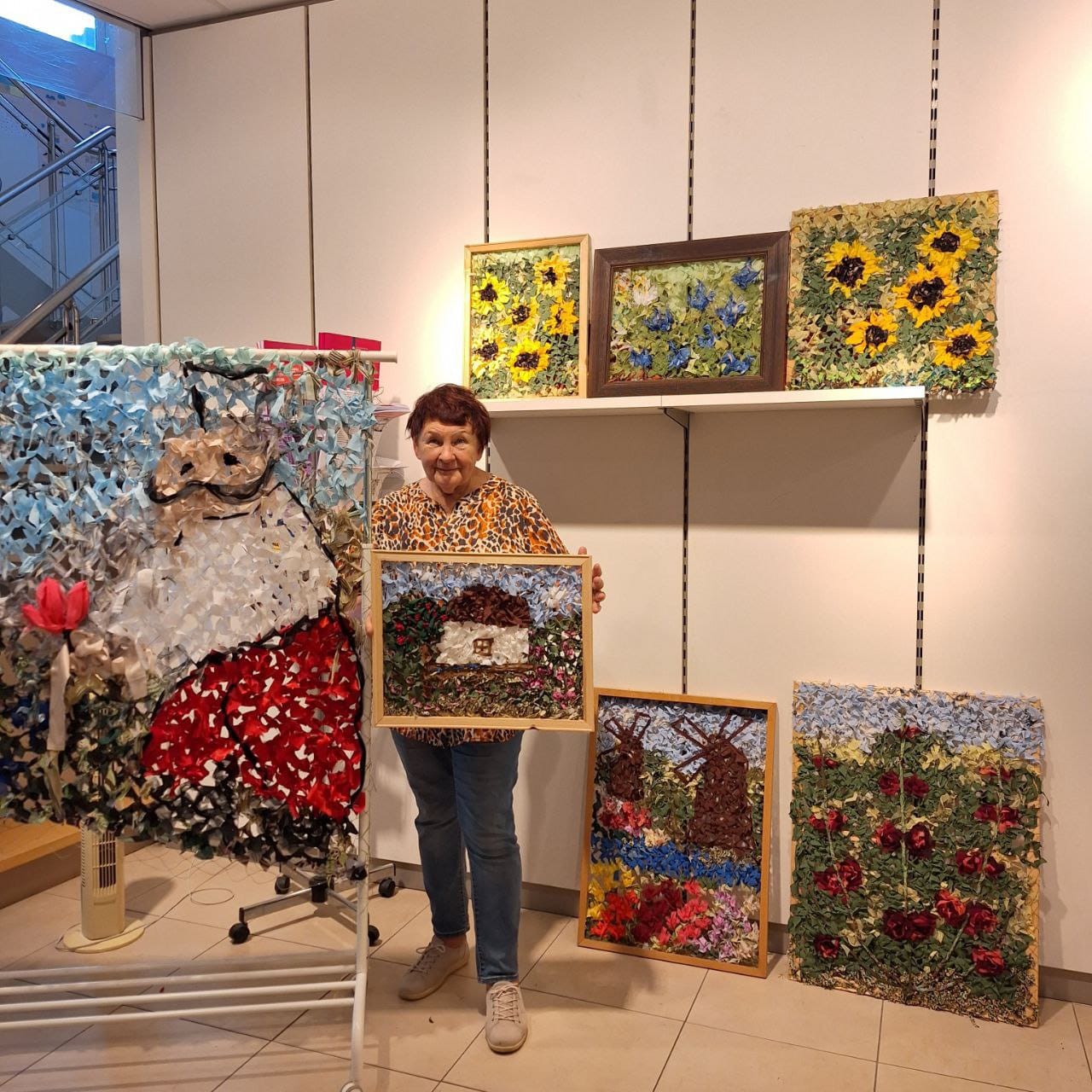
At the invitation of the local diaspora, Valentyna spent several months in the Netherlands. In between the workshops, she created net paintings: “We started making them in Zaporizhzhia as a way to cope with burnout. At some point, we realized we needed to create something bright to relax and restore our energy. That’s how the first embroidered mesh came about. The next piece was ‘Scouts in Flowers.’ On the eve of Independence Day, we introduced the ‘Angry Vyshyvanka’ net to our collection, which features pixel colors and a touch of red.
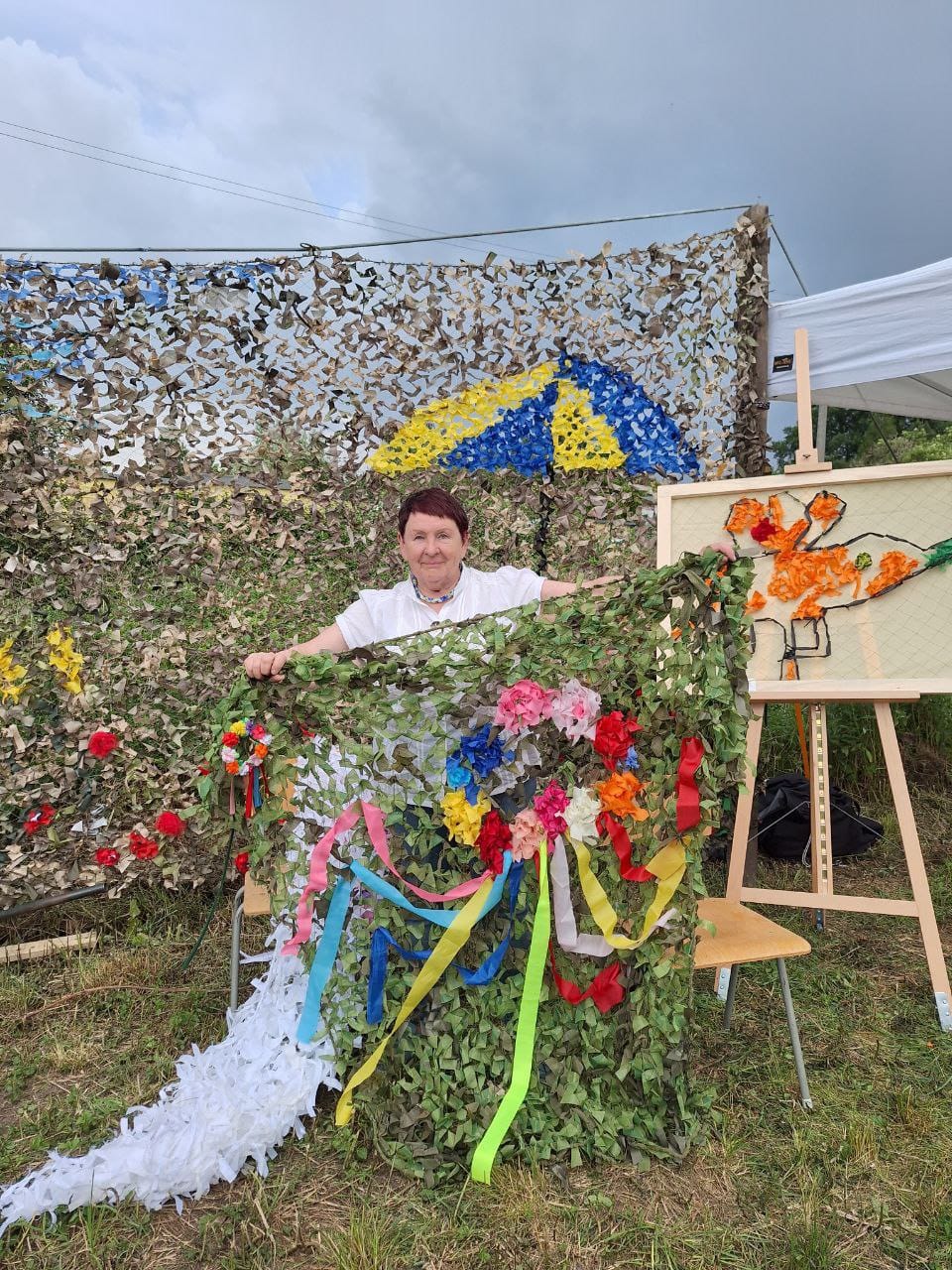
Now, our collection of grid paintings is exhibited in museums in Zaporizhzhia.”
Valentyna mentioned that the hospitality of the local diaspora and the beautiful Dutch landscapes inspired her creativity. During her stay, she created about two dozen works based on paintings by Claude Monet and Maria Prymachenko. Some of these were sold at auctions, and the proceeds went towards purchasing fabric for new camouflage nets. “We have so many orders that we work from early morning until dark. We don’t pay attention to air raids or power outages. If there is a power outage after shelling, we weave by candlelight or use flashlights on our foreheads. The military considers our nets to be amulets. Just as umbrellas protect from the sun and rain, our products safeguard against enemy eyes. We weave them with intentions of goodwill and victory.”
The author: Liudmyla Pryimachuk
Ukrainian language editor: Anastasiia Zanuzdanova
English language editor: Helen Lewis
Photo credit: Volunteer Association ‘Under the Umbrella’