Thanks to the support of their parents, young people with Down syndrome in the regional centre of Volyn are living full and active lives: they work, volunteer, take part in sport games, dance and sing, and their experience is now being adopted in other cities.
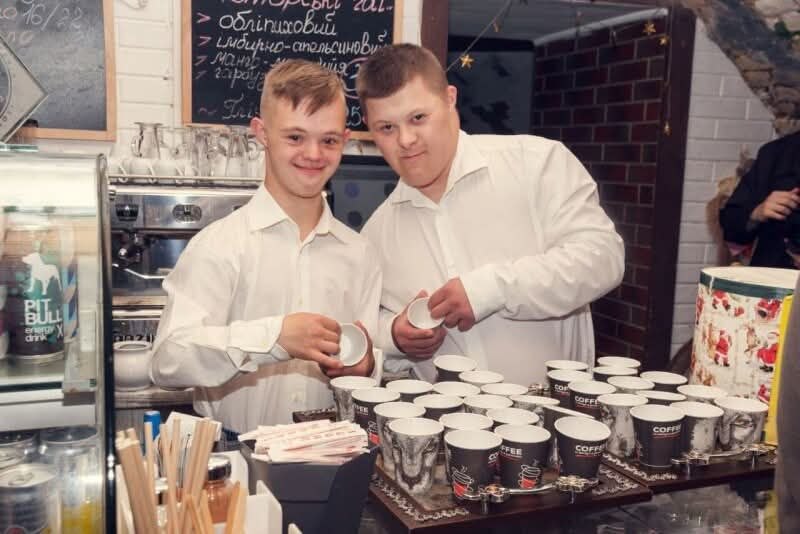
Young men, Valentyn Novosad and Andrii Melnyk, are true local celebrities in Lutsk. For the past seven years, they have worked as waiters at the social enterprise, a patisserie café “Old Town”, regularly taking catering and delivery orders. They are invited to run workshops and take part in flash mobs. These young men with Down syndrome are also constant participants in charity fairs, raising funds for the Armed Forces of Ukraine. In their free time, they attend a theatre studio with friends like themselves, sing, and actively engage in sport. Valentyn and Andrii, who have been friends since childhood and studied together, found their place in life thanks to their mothers’ support.
Starting a business so their sons could work
“When our children were still at school, we were already worried about what they would do after finishing their education,” recalls Andrii’s mother, Olena Melnyk, Chair of the NGO “Parents of Children with Down syndrome and Other Developmental Disabilities”. “Young people like them often have nothing to do in adult life, because it is extremely difficult for them to find employment.”
Thanks to the determination of both mothers, their sons received vocational training. Andrii trained as a photographer, while Valentyn qualified in restaurant service. However, finding work proved challenging. After analysing the situation, learning how young people with Down syndrome work successfully in Poland, and completing training in social entrepreneurship, the boys’ mothers decided to take a risk and start their own business.
In January 2020, this led to the opening of a social enterprise in Lutsk: the inclusive patisserie café “Old Town”. It became one of the first establishments in Ukraine to employ people with intellectual disabilities.
“Not every employer is ready to hire a person with a disability,” says Valentyn’s mother, Larysa Novosad. “You need to create the right conditions and provide support. Olena and I became pioneers in this area and helped our children with everything. We supported them, and the boys worked incredibly hard. Before becoming waiters, they completed internships. When we opened the café, we were very anxious. We hoped people would come not out of pity or curiosity. We did this for our children, so they could feel like full members of society.”
From Kyiv to Lutsk — learning from experience
Time has shown that those worries were unnecessary. Thanks to word of mouth and media support, the inclusive patisserie café on Drahomanov Street quickly became popular in Lutsk. Many local residents and visitors came to enjoy aromatic coffee, delicious pastries, and conversations with the ever-smiling and welcoming “sunny” waiters.
When the café received a grant to install a pizza oven, visitor numbers increased even further. The space also began hosting book presentations, meetings with well-known figures, and charity events; local guides started including it in their tours.
“We did everything we could to turn our café into an art space,” says Larysa Novosad. “And to make that art space open to everyone, especially people with intellectual disabilities. That’s why we invited different artists to run workshops here — and it worked. Young people with Down syndrome, who often stayed at home after finishing school, were able to socialise and make friends here.”
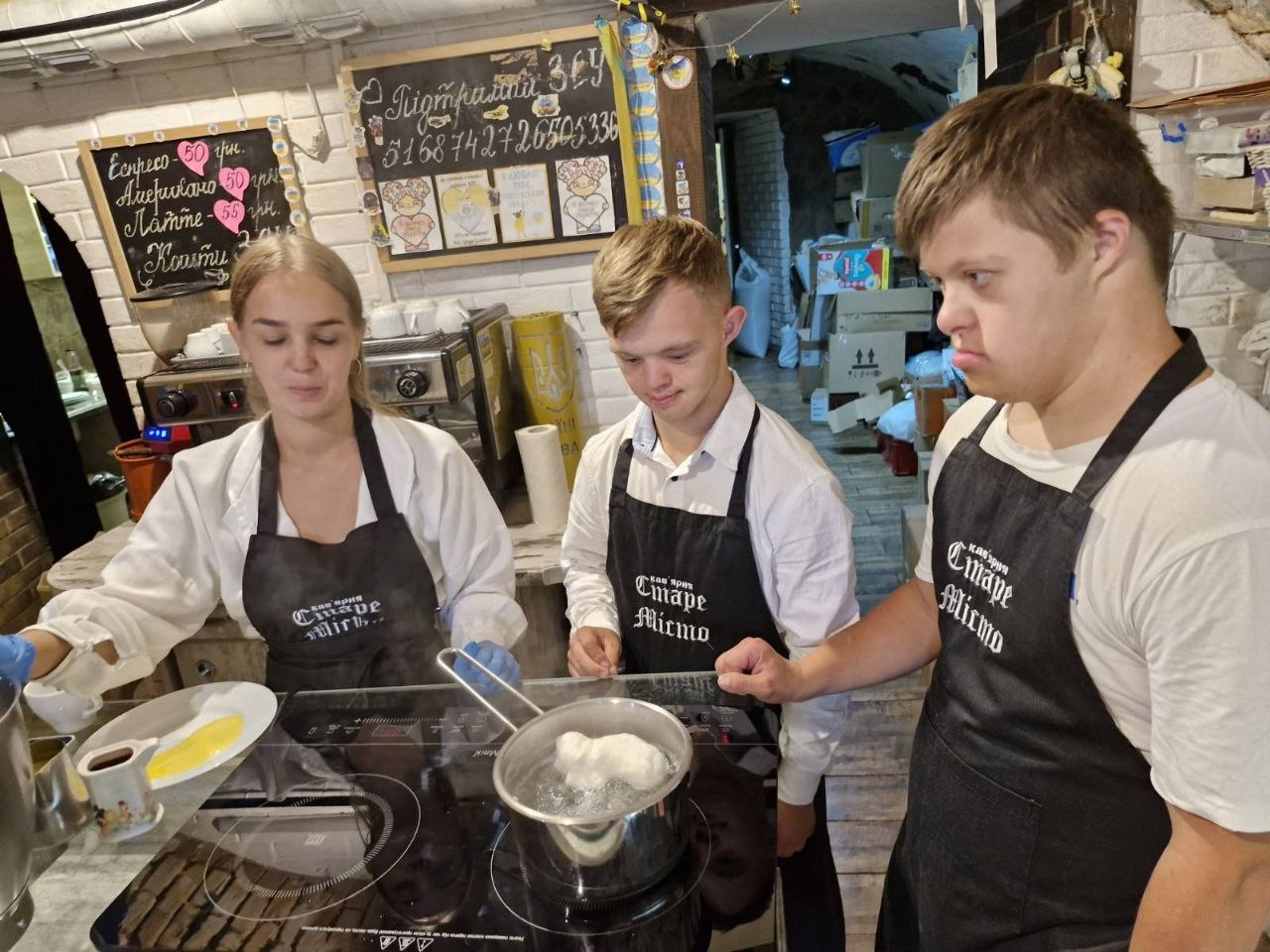
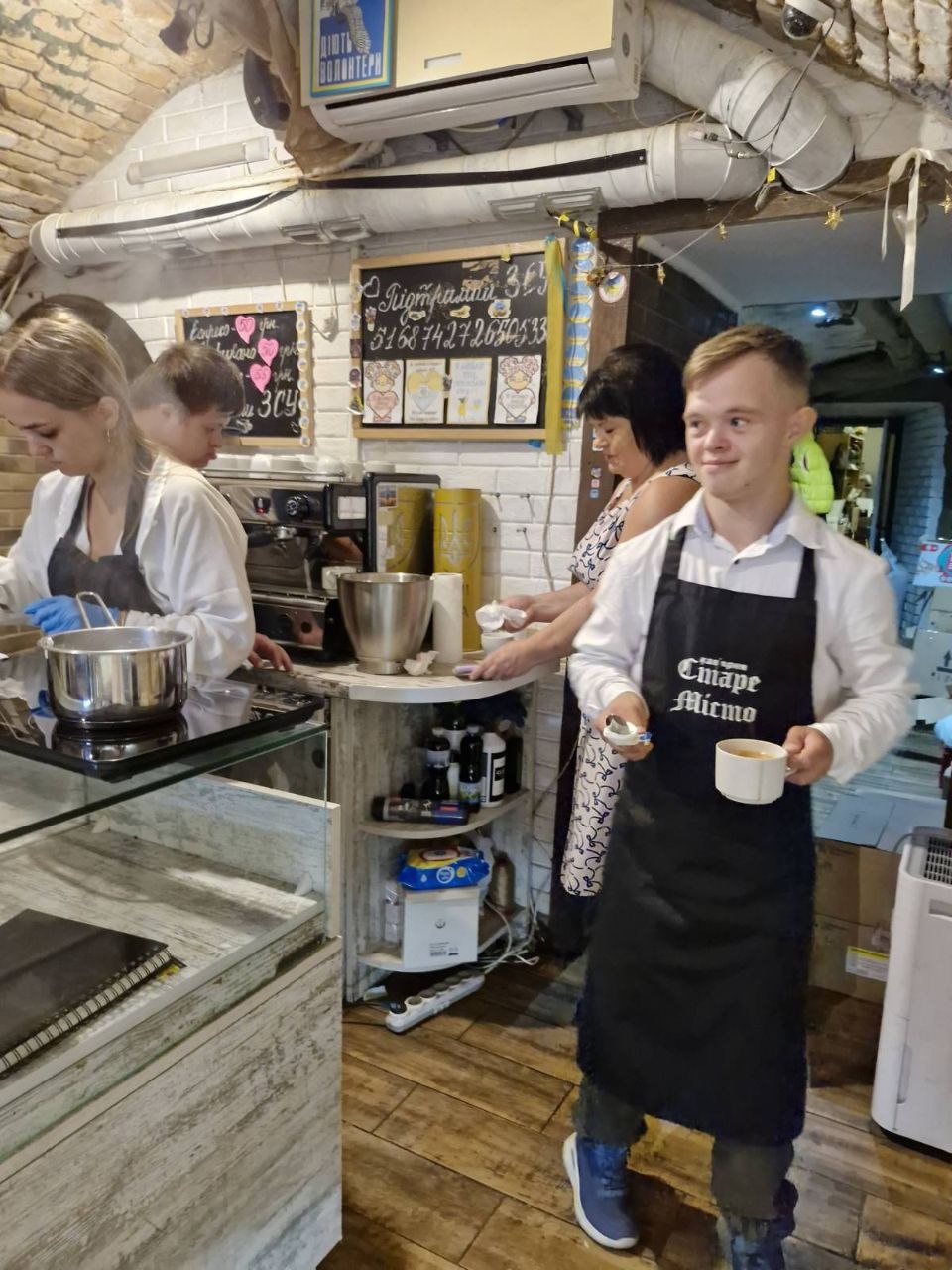
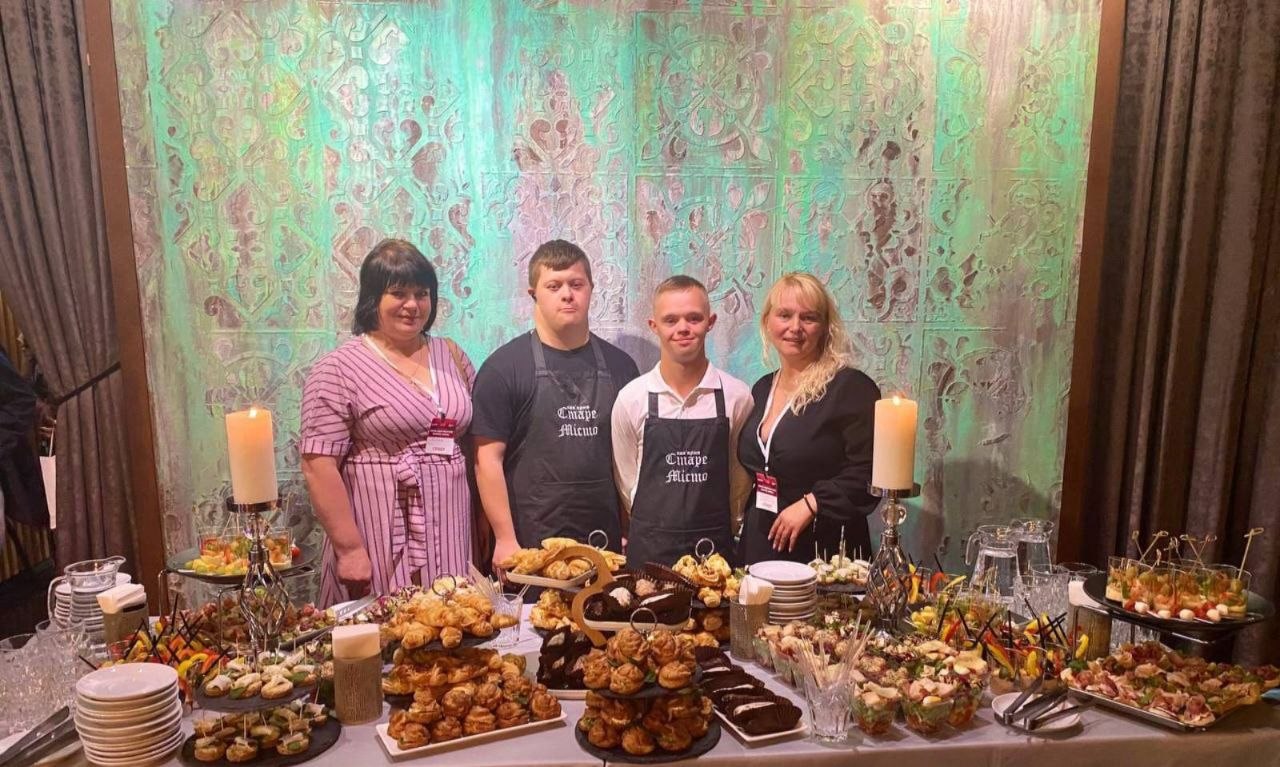
According to Larysa Novosad, once people in other cities learned about the café, they began travelling to Lutsk to gain experience from the café. Today, similar establishments employing young people with intellectual disabilities have opened in six Ukrainian cities, including Kyiv, Kharkiv, Sheptytskyi and Brovary.
A café turned volunteer hub
Russia’s full-scale invasion significantly changed the work of the “Old Town” patisserie café and reshaped its focus. Since 2022, the emphasis has shifted from business-oriented projects to supporting the Armed Forces of Ukraine and vulnerable groups. The café itself has effectively become a volunteer hub.
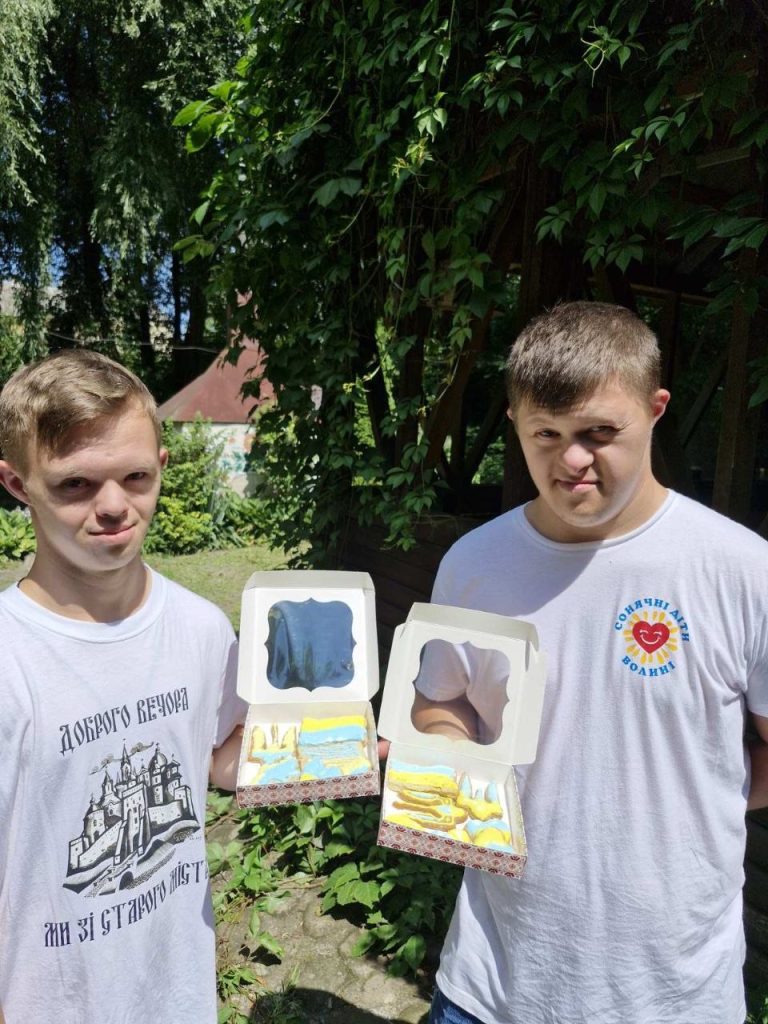
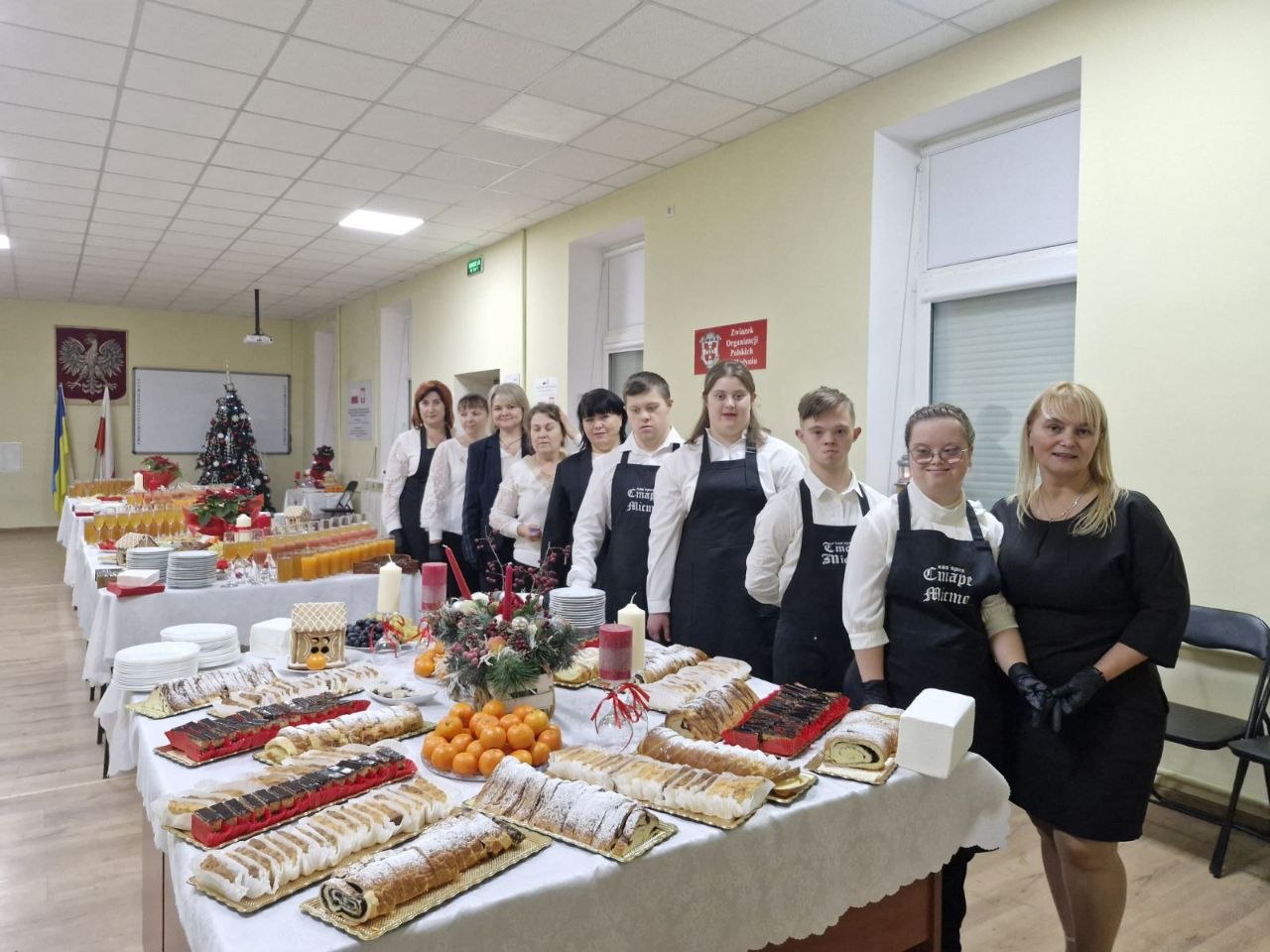
“We realised that in these difficult times, we could be even more useful through inclusive volunteering,” says Larysa Novosad. “At our social enterprise, we bake goods and sell them at charity fairs. The money raised goes towards the needs of the Armed Forces, helping to fund various appeals. We run biscuit-decorating workshops in exchange for donations for the military. We prepare dry breakfast packs for them. We support the families of fallen heroes — and in every one of these initiatives, young people with Down syndrome from Volyn take an active part.”
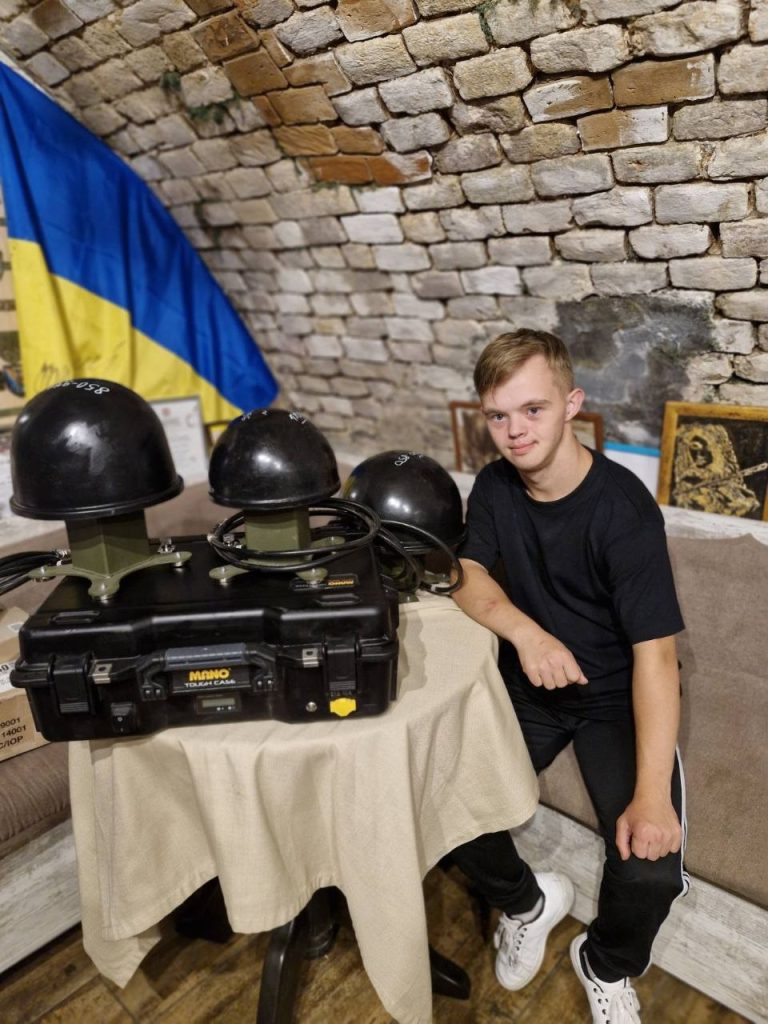
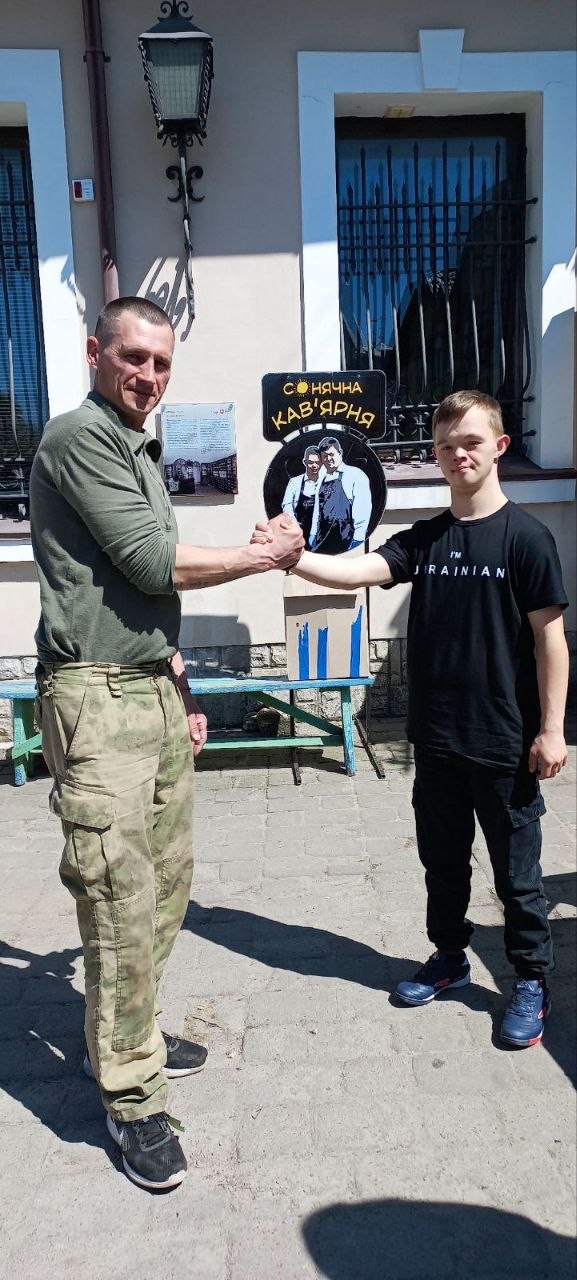
Larysa’s words are echoed by Liudmyla Denysenko, Director of Lutsk Zoo, who speaks warmly of the “sunny children”, long-time friends of the zoo.
“At first, they simply came to visit us on excursions,” she recalls. “Seeing their interest, we began inviting them to workshops, festivals and photo exhibitions. During the full-scale invasion, we carried out joint volunteer projects. For example, on Pumpkin Day and St Nicholas Day, young people with Down syndrome sold gingerbread and gift sets at the zoo in exchange for donations. When my husband, a soldier, was serving in the war, they helped pack humanitarian aid for the troops.”
A service that is in demand
When asked how the café operates today, the boys’ mothers explain that their sons mainly work at off-site catering events — and demand for these services remains high.
“Our organisation has ordered catering from the ‘Old Town’ café several times,” says Olena Kuzmych, a specialist in government relations at the charity foundation Rokada Volyn. “We were very pleased with their service — the waiters were attentive, sincere and hardworking. For clients, it’s not just about service, but about the experience of interaction — human, warm and genuine. People with Down syndrome have the same right to work, self-realisation and a dignified life. Society often underestimates their abilities. When we interact with them as professionals, it changes our very understanding of what is considered ‘normal’.”
“Get socked up” — in honour of people with a genetic difference
March is a particularly busy month for the cafe, with events marking World Down Syndrome Day on 21 March. They are invited to flash mobs, sports competitions, educational talks, and informal gatherings with friends. Dozens of institutions and organisations also take part in the annual “Get Socked up” campaign, where people wear colourful, mismatched socks to show support for people with Down syndrome.
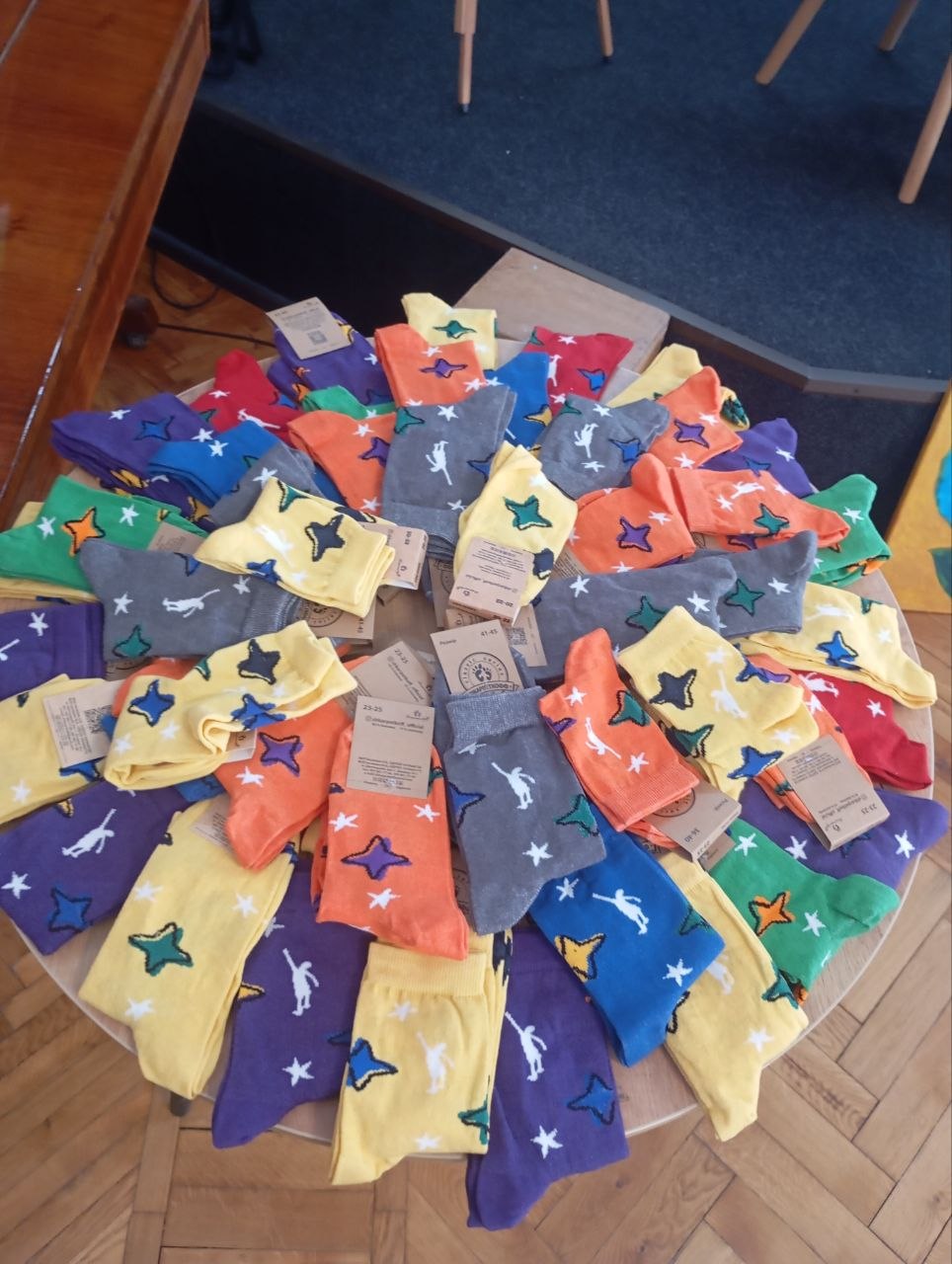
At one such event, the author met Valentyn Novosad and his mother.
“We came to support our friend Uliana Sukhachevska, who is presenting her art exhibition,” Valentyn says. “She paints, sells her work, and donates the money to charity. A girl with cancer whom she supported has already recovered. Uliana also supports Ukrainian soldiers.”
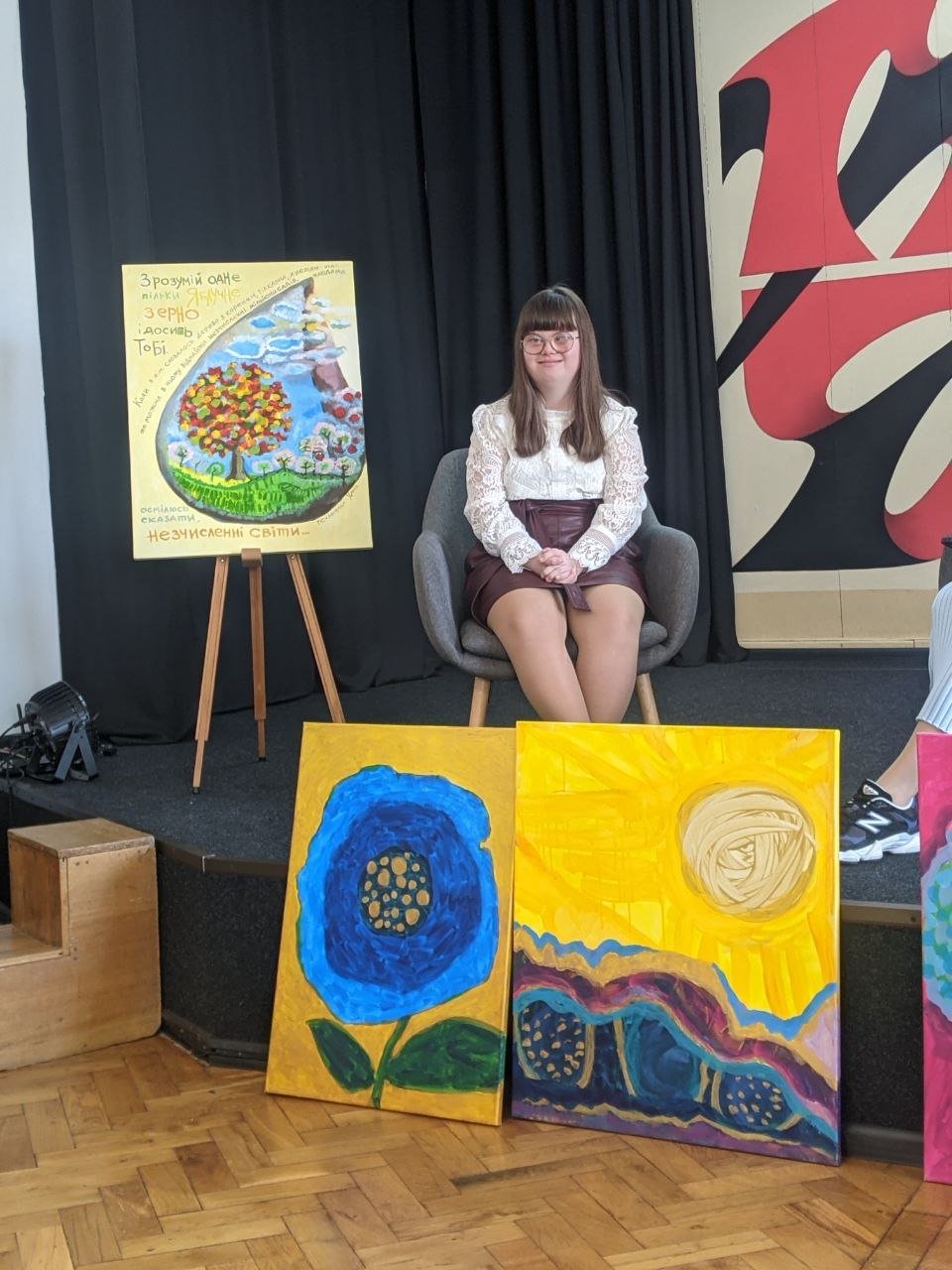
“My son Valentyn paints as well,” adds Larysa Novosad. “We sent some of his works to Belgium, and in return, we received three vehicles for the military. Many people abroad appreciate artwork created by people with intellectual disabilities. We are proud of our children — they are an example to us. They set themselves big goals and achieve them. Our children truly have unlimited potential.”
Author: Liudmyla Pryimachuk
Photos: Liudmyla Pryimachuk and Larysa Novosad
Ukrainian-language editor: Anastasiia Zanuzdanova
English-language editor: Helen Lewis