Despite significant problems with her eyesight, Nataliia Loginova perceives the world in a way many people never manage to. In her skilled hands, every emotion turns into colour, and each canvas becomes a space where harmony and beauty can take shape. Through her work, the artist offers the world something it often lacks — light, joy, inspiration and faith in the beauty of everyday life, transforming an ordinary sunrise or a walk through the forest into something almost magical. In the interview, she speaks about creative doubts, finding her own artistic voice, unusual working methods and the healing power of art.
Before art became the main focus of your life, what did you do?
After finishing school, I obtained a law degree, specialising in social welfare law. For a while, I worked in the field and completed internships under the guidance of experienced lawyers. However, I quickly realised that something very basic was missing — simple human support.
When you arrive at a new workplace where you know very little and can hardly see anything, it is incredibly important that someone explains things, offers guidance and helps you adapt. Instead, I encountered a system that simply did not take into account the needs of people with disabilities. At that time, there were no modern digital tools, and the work relied almost entirely on paper documents and books. In such conditions, I understood that I would not be able to overcome this system on my own. Despite my sincere desire to work and defend people’s rights, I had to give up legal practice.
After that, there were difficult periods in my life, followed by years of inner searching, psychological recovery and personal development. Only after the age of twenty-seven did I begin to seriously think about art, and over time, it became the central part of my life. Recently, I also obtained a master’s degree in psychology — a natural continuation of a path that connects creativity and working with people.
When did you first feel that art was your way of communicating with the world?
If we are talking about drawing as something enjoyable, then it has been with me since the moment I could hold a pencil. Drawing entered my life naturally, almost instinctively.
At the same time, I lacked confidence. I never really saw myself as an artist — the title seemed too big for me.
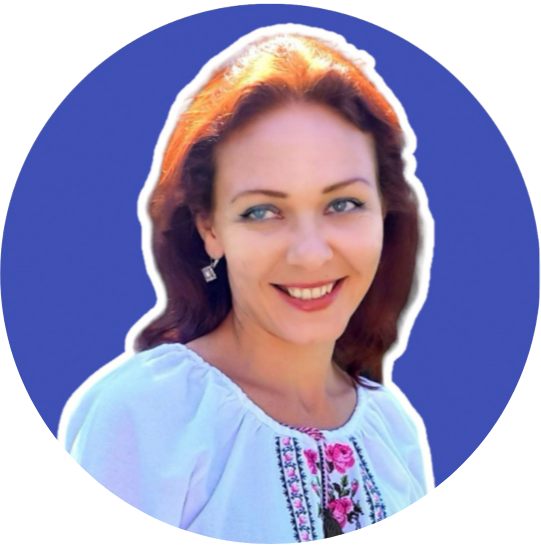
I came to art in a more professional sense much later. After a long pause, when I was 27, a fortunate coincidence brought me back to painting. It happened unexpectedly, but at exactly the right moment. I allowed myself to create again — without internal restrictions or doubts.
It happened during a chromotherapy seminar — a form of colour therapy. During the session, we were given paints and paper and asked to create a drawing without form, clear outlines or compositional logic. For me, it was a real challenge. I had always been drawn to aesthetics, proportions and symmetry. At that moment, I genuinely wondered: can a painting really be chaotic?
I was a perfectionist — either perfect or nothing at all. Because of my eyesight, “perfect” was often impossible, so the result was usually “nothing”.
It was a real mind-blowing moment. Painting without form — was that even allowed? That day, I did not create a painting at all. I was not even brave enough to try.
It took several weeks before I allowed myself to pick up the simplest paints and just smear colour across the paper. I allowed myself to make mistakes and experiment. I think that was the true beginning of my path as an artist.
Do you remember the first work you were truly proud of or that brought your first success?
The first thing that comes to mind is a painting with a pegasus. It was a very romantic scene — sunrise, a soft morning mist and several winged horses surrounded by the light of dawn. There was something almost dreamlike about it.
For me, that work was a real challenge. At the time, I was only learning, struggling with doubts and searching for my own direction. But it was thanks to that painting that my first small “success” happened.
I took the painting to a creative festival, where a symbolic exchange took place. I fell in love with a piece of jewellery made by one of the craftswomen, while she fell in love with my painting. Neither of us could afford to buy the other’s work, so we simply exchanged them.
That was the first moment I truly felt my art had value — that it could be meaningful and desirable to someone else.
What genre do you mainly work in?
It is difficult for me to place my work within clear genre boundaries. I am not one of those artists who consciously build their identity around a particular direction or style.
To be honest, I do not study art history deeply enough to operate with complex terminology or clearly distinguish every stylistic movement. My knowledge in this area is more intuitive than academic — and I am not ashamed of that. I create in the way my heart suggests.
Later, professional artists or art historians look at my work and say, “Oh, this is romantic realism,” or “There is an expressionist mood here.” I smile and agree. If it helps someone better understand my art, that is wonderful. For me, sincerity in the creative process is what matters most.
What usually comes first when you begin a new piece — an image, an emotion or an idea?
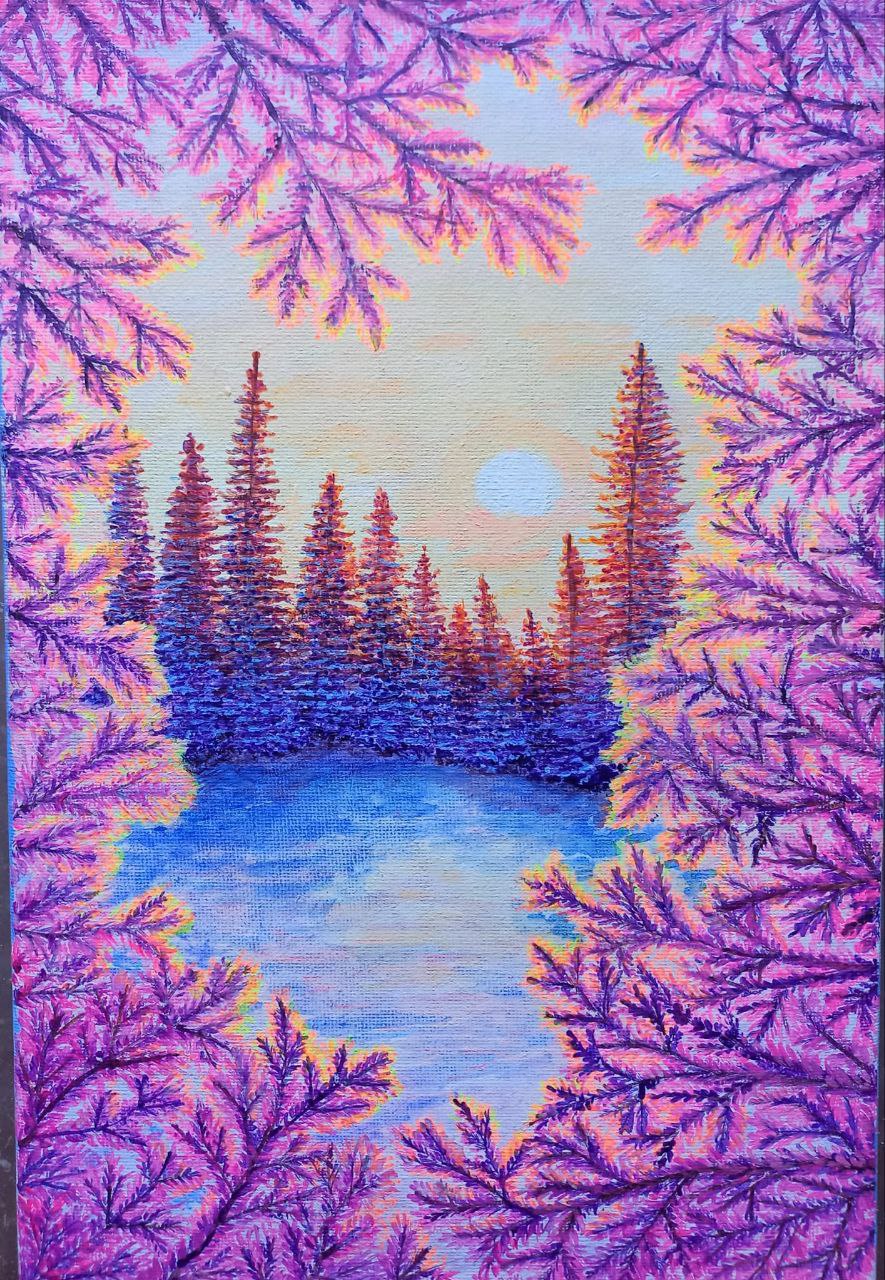
Despite significant problems with my physical eyesight, my inner vision is incredibly rich. In my imagination, images constantly appear and colours shimmer. It is not even a specific idea, but rather a state — a mood that wants to manifest itself on paper.
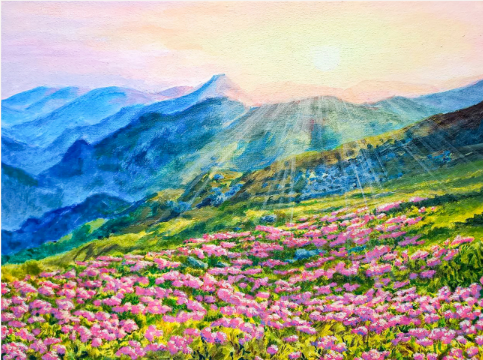
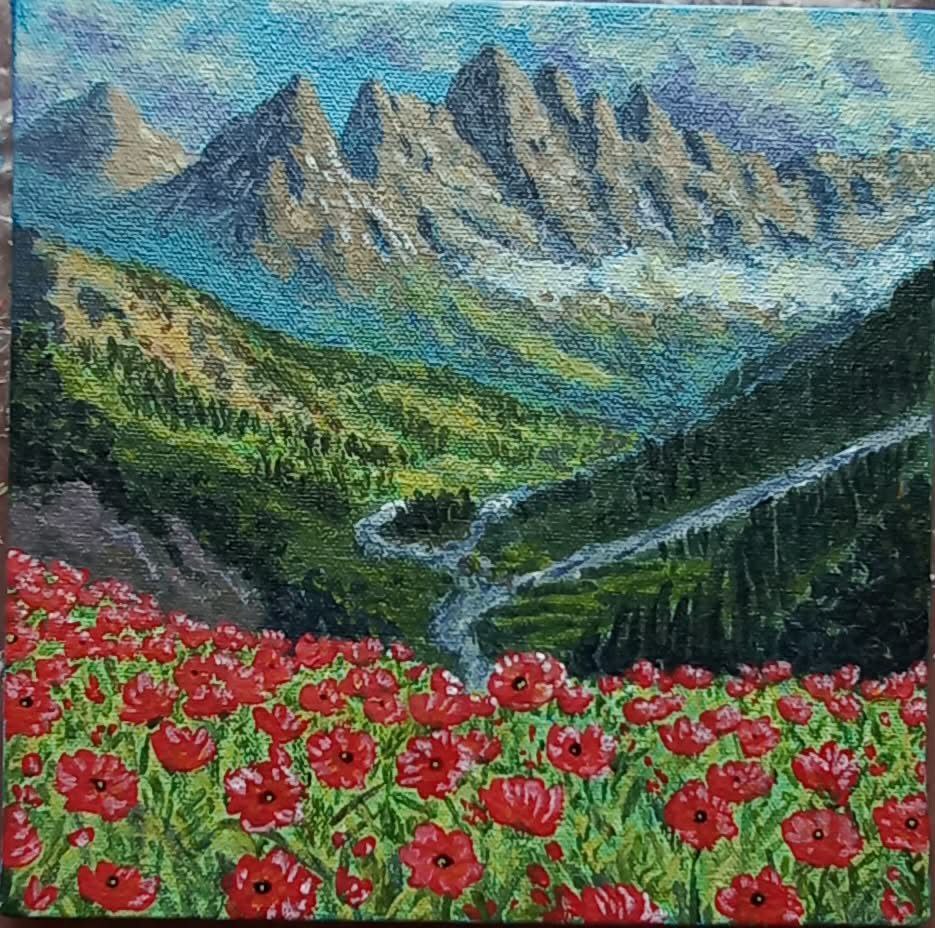
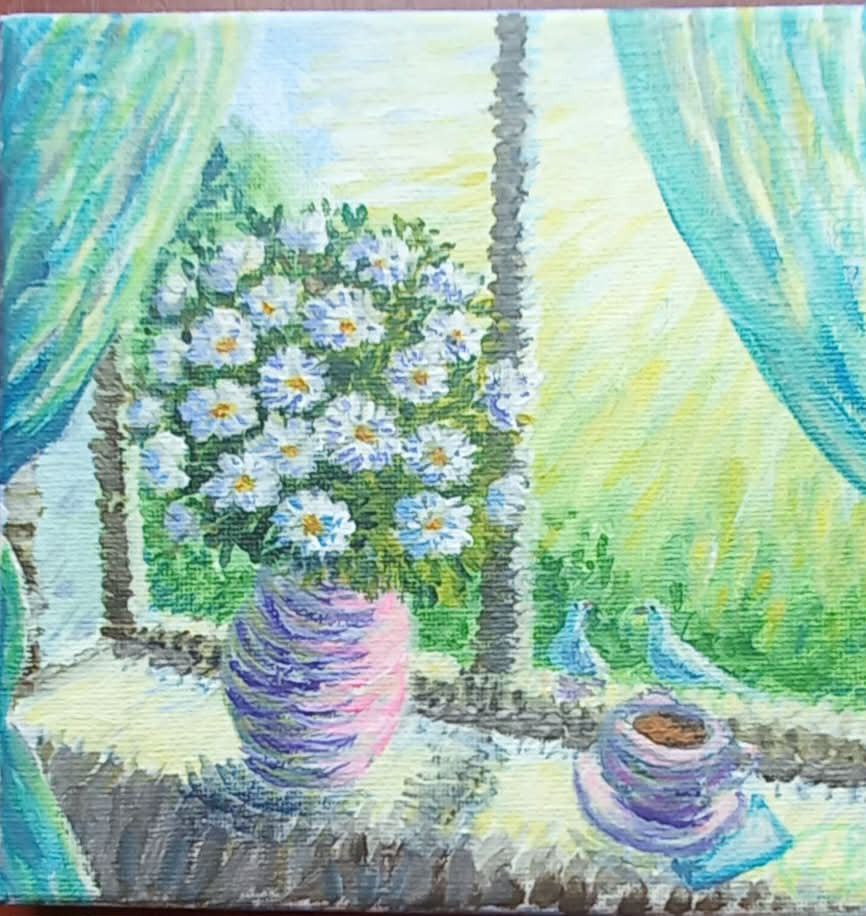
If I want to create something warm, bright and sunny, I can already sense which colours should sound in the painting and what atmosphere it will convey. Then an image appears — perhaps a flowering riverbank at dawn, a light breeze and soft morning light.
Sometimes the soul longs for something more mysterious — and in my imagination a night forest appears, with silence, deep shades and the cold glow of the moon.
For me, everything begins with emotion, which gradually takes shape.
Does your visual impairment affect the way you work?
It influences my work quite significantly. Working with one eye is physically difficult, so I cannot do without a magnifying glass — it helps me draw the smallest details.
Often, I have to stand and bend over the canvas at almost a right angle, which slows the process and makes my back tired very quickly.
Lighting plays a huge role. Dark weather or a power cut can delay work for weeks. Sometimes my eyesight itself becomes an obstacle — I experience cloudiness or a heavy feeling in my eye and have to pause to avoid harming my health.
Financial difficulties and a lack of specialised tools also complicate things. For example, I need a jeweller’s magnifier with 40-times magnification, but most shops only sell weaker ones, so finding the right tool can sometimes feel like a quest.
As for materials, I chose acrylic paints. Oil painting is difficult to store and dry because my studio is also my bedroom. In such a small space, constantly leaning over the canvas, I would be breathing in toxic solvent fumes. Acrylics are much more convenient — they dry within minutes and are completely safe for health.
What feedback about your work has stayed with you the most?
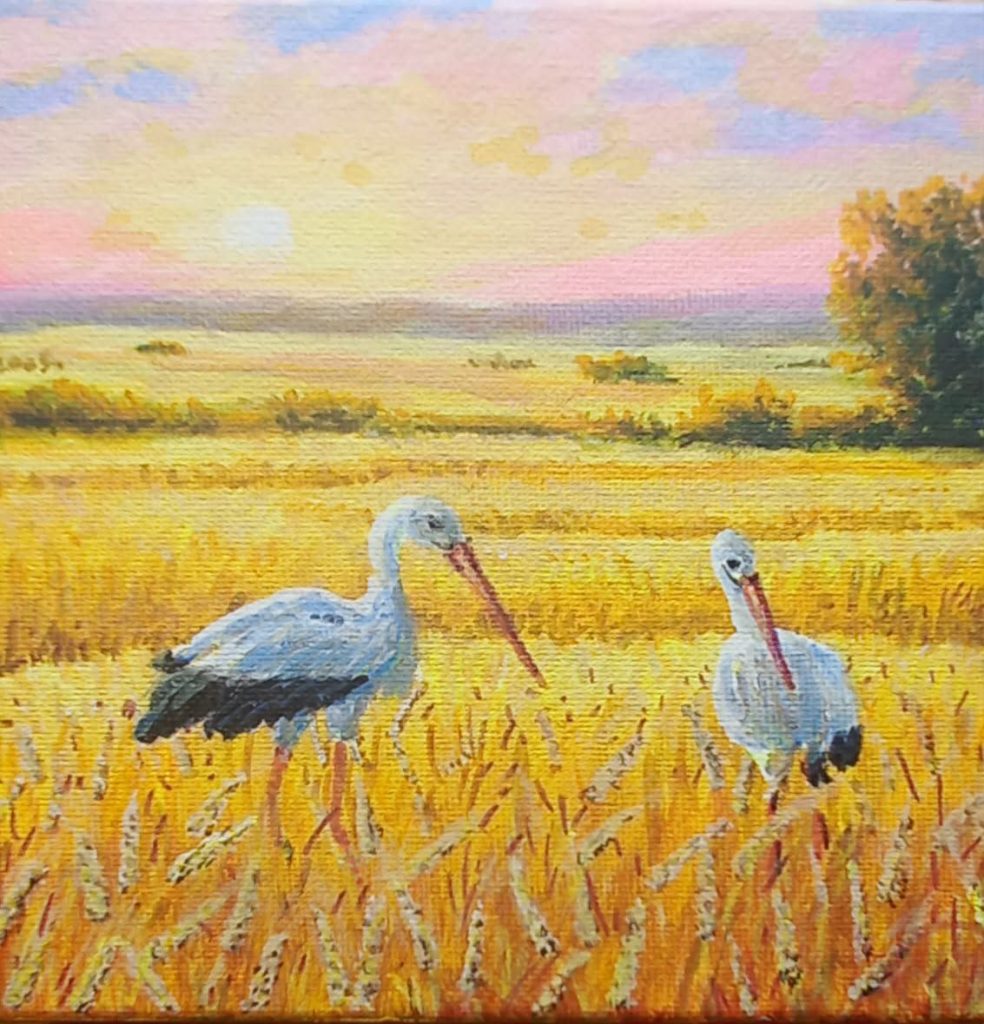
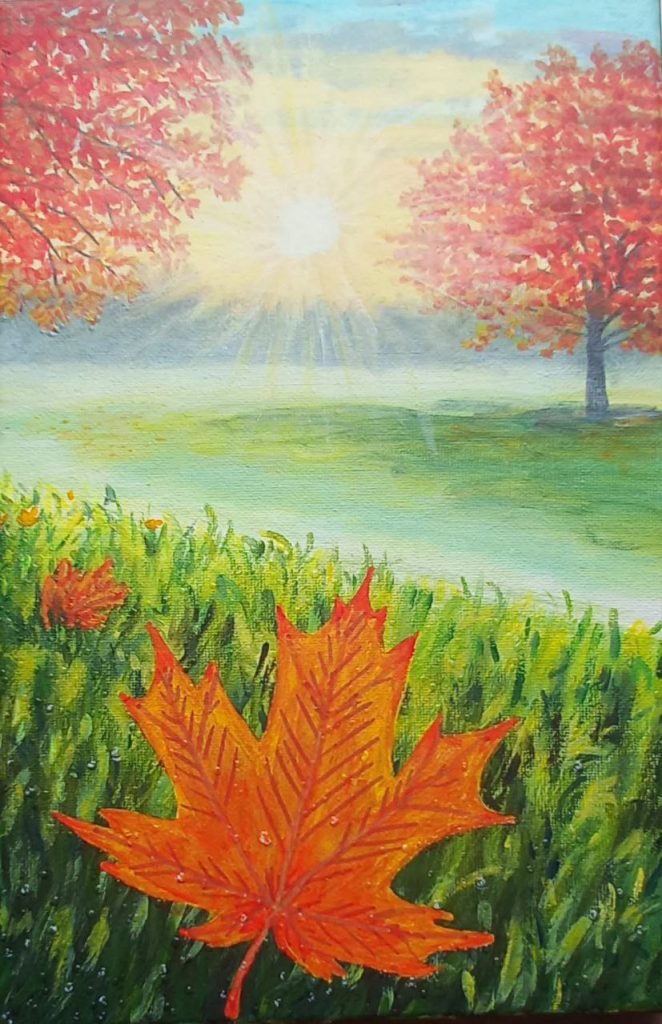
There have been many responses from people who received my paintings as gifts or bought them, and even from public figures. But the most memorable moment was a publication in 2021 in the ophthalmology journal of the Filatov Institute.
In the “Colour Palette” section, there was an article about me with photographs of several of my paintings.
The same issue also included comments from well-known Ukrainian artists. They evaluated not so much the technical side of my work as its energy and emotional depth. Their words of support were a great honour and a powerful motivation to continue.
When recognised artists said that my paintings radiate light and carry a message of resilience, I felt for the first time that this was truly present in my work.
What feelings do you hope to evoke in the viewer?
First and foremost, I hope to evoke joy, inspiration and a sense of immersion in another reality.
My paintings are filled with light and energy, and many people say they inspire them to live their lives. Some viewers say that when they look at my work, they want to step into that fairy-tale world that appears on the canvas.
Recently, I formulated a phrase that I often repeat: “I paint the world I cannot see.”
Because of my eyesight, there are many things I genuinely cannot see, especially from a distance. But the phrase also has a philosophical meaning. I create those landscapes, flowers and rays of light precisely because they are often missing from our everyday lives.
Perhaps I paint what I wish to fill both my own soul and this world with — beauty, calm, joy and light. In times when we are surrounded by pain and suffering, I try to bring people something good and to heal them through art.
Your Facebook page also mentions that you are an art therapist. How did you discover this side of yourself?
I came to art therapy even before I became seriously involved in art. I always felt a calling to help people, but I wanted to do it in a way that was beautiful, light and creative.
My first experience came at an international art therapy festival. Seminars, workshops and practical exercises inspired me to continue in that direction. Later, I attended several similar events, participated in art-marathons and online courses, and realised that art therapy — a combination of creativity and psychology — was truly my calling.
I studied systematically and completed various courses. Music therapy particularly stayed with me.
Even before formal training, I ran a small online women’s group online for several months. Every meeting felt inspiring and productive. I often felt like a guiding light — not someone who “treats”, but someone who helps through creative tools: knowledge, movement, emotions and music.
Because of my eyesight, I mostly work online and use techniques that do not require direct observation — drawing, sculpting, music and meditation practices, landscape therapy and creating installations from natural materials.
People come with different requests: problems at work, memories of childhood trauma. In such cases, I can act as a supportive specialist alongside a psychotherapist.
How do you think the role of art in Ukraine has changed in recent years, especially during the war?
It is difficult for me to assess how art as a whole has changed, but it is obvious that many artists today express themselves through charity initiatives, auctions and events supporting the Ukrainian Armed Forces.
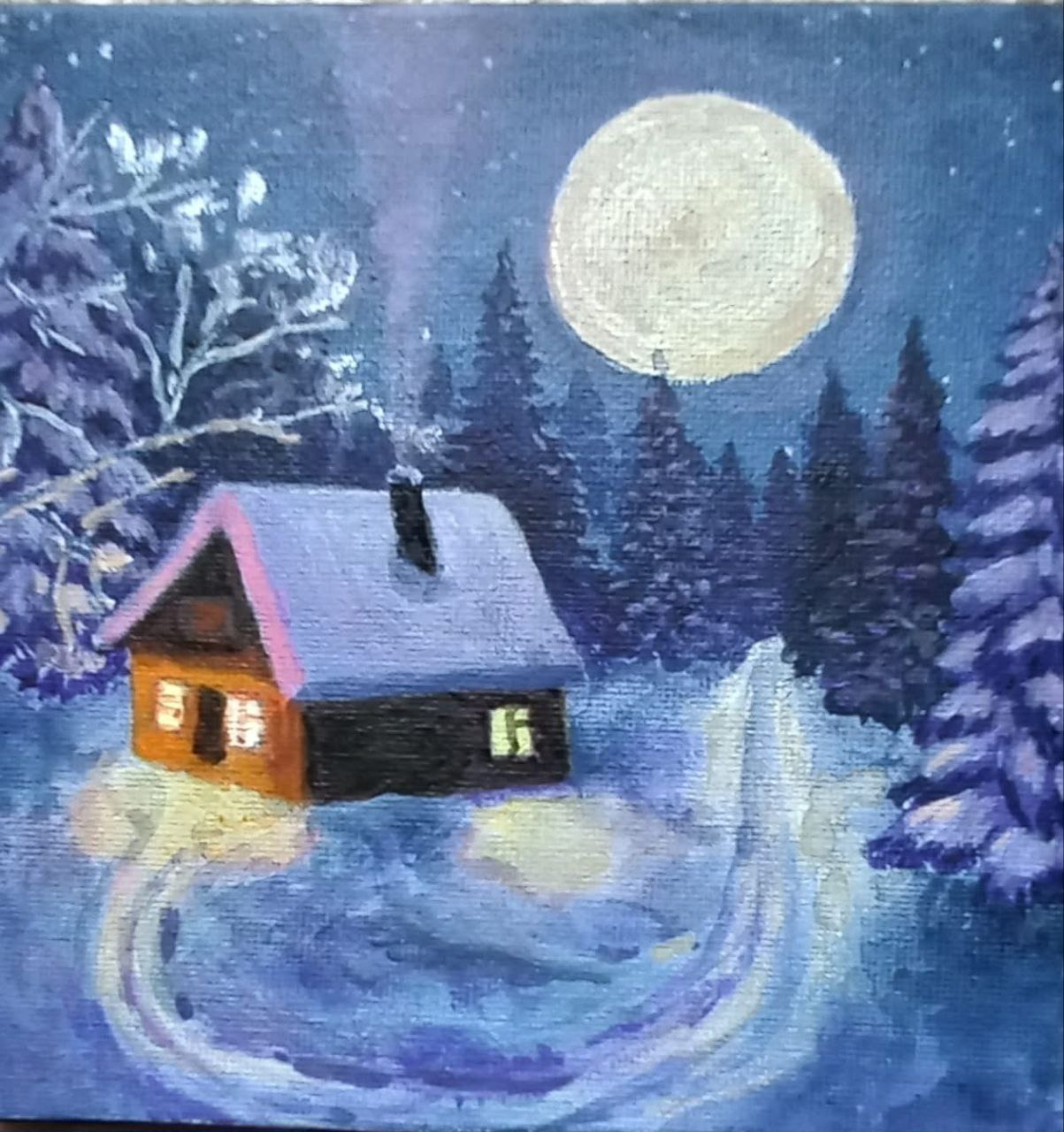
Some artists work directly with the theme of war — suffering, trauma and war crimes. This kind of art has its important place and audience. Personally, however, I do not have the inner resources to work with themes of violence, so I move in the opposite direction.
Before the full-scale invasion, I was not particularly public. The year 2022 became a turning point. I painted only two works during that year because heavy emotions — aggression, anxiety and depression — blocked my creativity.
I gradually returned to work in 2023. Many grant opportunities appeared for artists, and I joined a programme focused on developing one’s own creative business. The course did not give me much artistic knowledge, but it did give me confidence and the ability to present myself.
For the first time, I truly realised: I am not just “a woman who paints for herself”, but an artist.
Since then, I have become more active in exhibitions and artistic events. Paradoxically, even during this difficult time, the number of pieces of art I produce has grown. Recently, I painted artillery shell casings that were later sold at charity auctions.
For me, it is a way not only to share my creativity, but also to do something meaningful — to support others and remain part of our collective struggle.
Are there enough opportunities in Ukraine for emerging artists to present their work?
Formally, there are enough platforms — exhibition spaces, festivals, online platforms and social media. But the question is not only about their number, but about their real value for artists.
There are many talented artists in Ukraine. We try to unite on social media, create communities and support one another. But often everything stops at “likes”. Real sales and tangible support are still lacking.
To truly make a name for yourself, you need to invest in promotion, exhibitions and PR, and this is not only a Ukrainian reality — it is the same across the world.
The modern art market operates on its own rules, and talent alone is not always the decisive factor. Strategy, visibility and connections also matter. I speak about this openly because I have already seen some of the backstage reality of this sphere. One needs more than talent — one needs consistent work on building a professional presence.
Are there dream projects you would like to realise?
First of all, I dream that people in different parts of the world will see my paintings. It is important for me to represent Ukraine through art — to show our culture, roots and identity on the international stage.
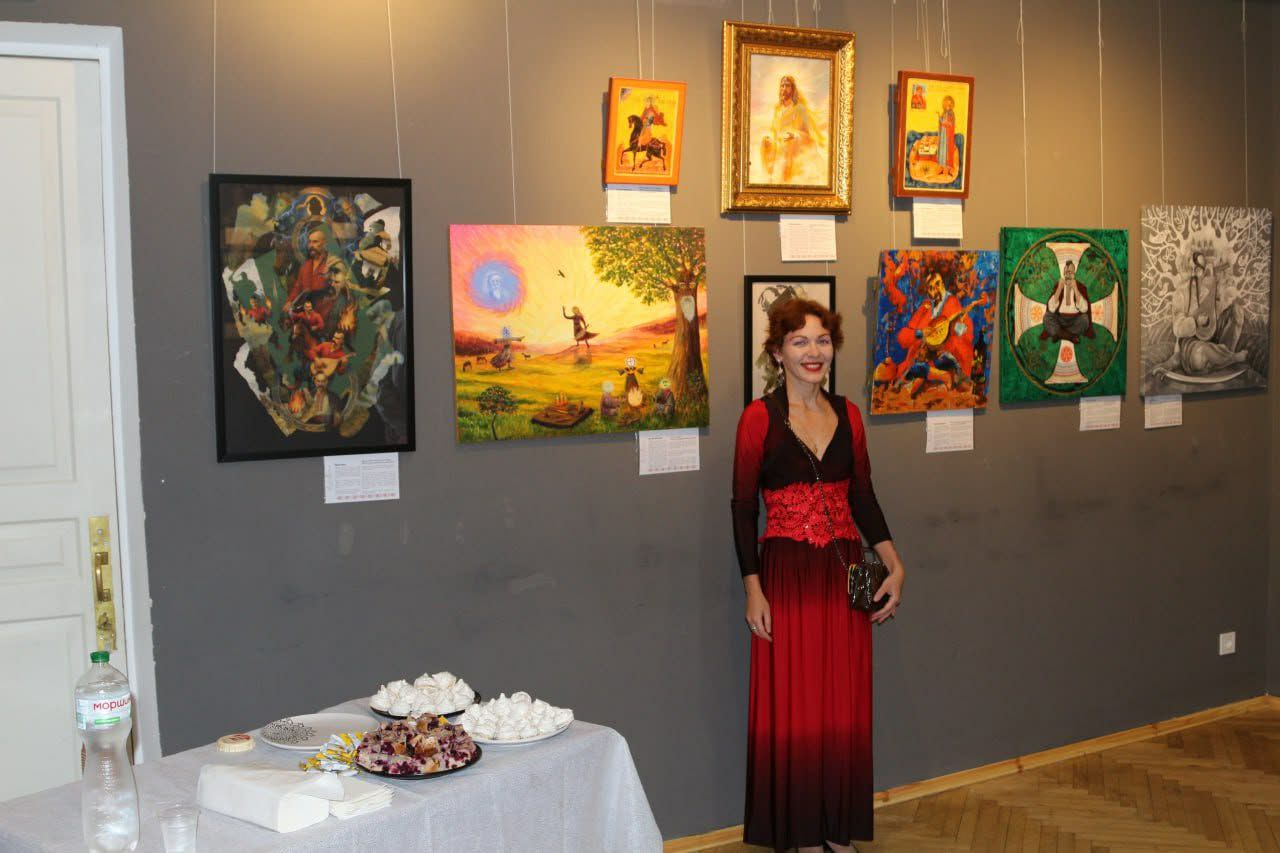
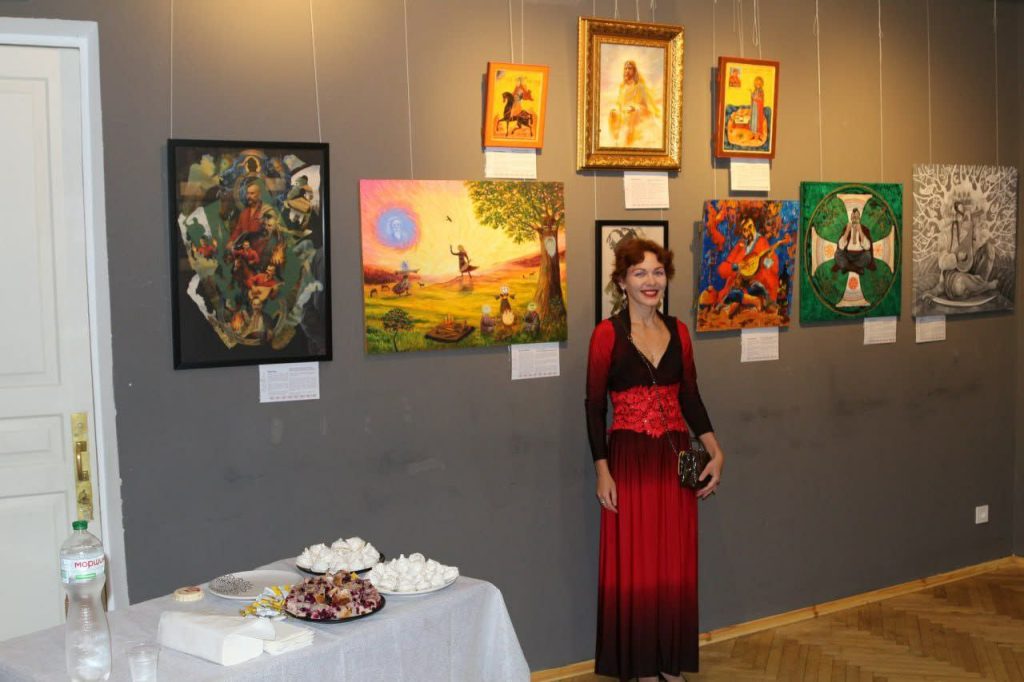
Recently, I participated in a project called Mosaic of Heritage within the Art Fine Nation community. It was dedicated to symbolism, ancient signs and the spiritual heritage of our ancestors. The project lasted almost a year and included several exhibitions.
For me, it was a deeply patriotic and inspiring experience — not based on clichés, but on a living, multi-layered conversation about Ukrainian culture.
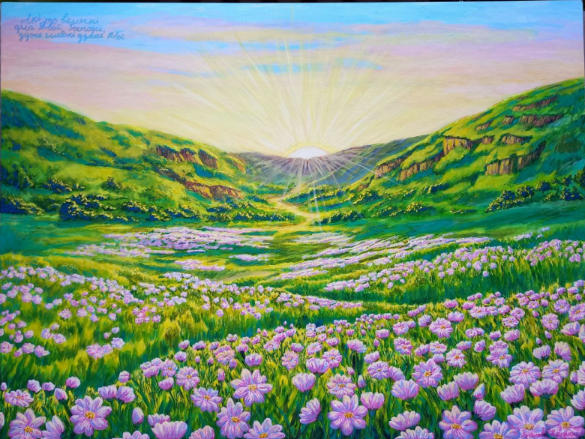
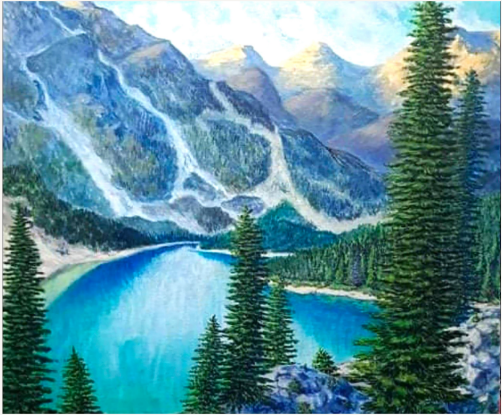
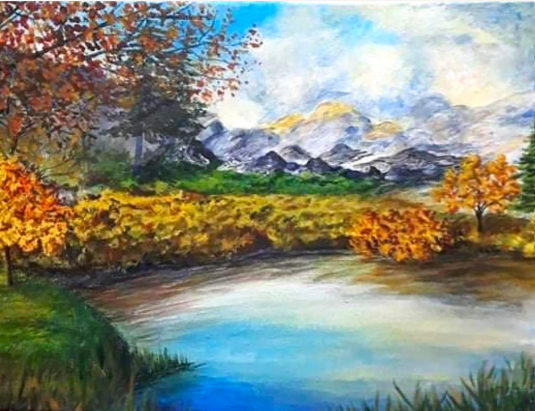
I would love to take part in a large international project of this kind, and eventually create my own. I want Ukrainian artists to be seen as strong and unique creators, not only through the prism of war or sympathy.
I would like people to feel the light, strength and beauty of Ukraine through our art.
I also have ideas for supporting vulnerable groups. I dream of creating a project where young people and adults with disabilities could produce artistic items, receive payment for them, and reinvest that income into their creativity. For now, these ideas are only forming, as they require a team, space and funding.
For the moment, I am focusing on my own creative work — painting new pieces, fulfilling commissions and continuing to create the world I want to see around me: a world of light, beauty and hope.
Is there a topic you would particularly like to advocate for?
I would like to speak more about supporting artists in Ukraine, especially those who belong to vulnerable groups. I myself have a first-degree disability, so this topic is deeply personal.
Creative work requires resources — participation in exhibitions, implementing projects, and purchasing materials. Many opportunities remain inaccessible.
There are many talented people — children, young people and adults — who cannot fully dedicate themselves to art because of a lack of time or resources. Often, they must work in other fields simply to support themselves, leaving almost no energy for creativity. As a result, many gifted artists disappear into everyday routine.
That is why real support is so important — programmes, grants and artistic residencies with inclusive conditions, including the possibility to attend with an assistant. Without such support from the state, foundations or patrons, many artists remain almost defenceless.
I would very much like people to speak more about these artists and to expand the opportunities available to them.
Text: Ann Lysenko
Ukrainian version text editor: Anastasiia Zanuzdanova
English version text editor: Helen Lewis
Photos: courtesy of the artist’s archive