It started with just one van…
In the early days of Russia’s full-scale invasion in Ukraine, British citizen Richard Astle, who was born in Sheffield and lives in Peterborough, was overcome by anger, frustration, and a deep sense of injustice. Determined not to stand by, he contacted his friends — and within weeks, Richard and his friend Tony drove a van full of humanitarian aid across Europe to Kyiv. Since then, Richard has built a grassroots network of volunteers united by shared values of solidarity, compassion, and action. Together, they have delivered over 100 tons of humanitarian aid, raised more than £360,000, and sent ten 4×4 vehicles and two ambulances to the front lines. The group includes people from all walks of life: school leavers, local business owners, and a 90-year-old who raised money by selling cakes and oatmeal. What began as one man’s response to injustice has become a powerful community movement – and even as the war drags on, Richard and his team are determined to keep helping, no matter what comes next.
Tell me more about your life before the war in Ukraine started. What was your first reaction when you found out about the war?
I have been running my own PR and marketing business in Peterborough since 2003. We work closely with local businesses, schools, and construction companies. It’s a small but successful company. That was my focus before the full-scale war in Ukraine.
Prior to that, I spent ten years working for the British Foreign Office and three and a half years at the UK Embassy in Moscow from November 1990 to February 1994. As a Trade Attaché, I sought to establish a commercial relationship between the Soviet Union and the UK. During that time, I visited Ukraine four to five times, travelling to Lviv, Kyiv, and Crimea on a couple of occasions. However, despite these work-related trips, I did not develop any significant connections in Ukraine. In 2012, I visited Kharkiv and Donetsk during the UEFA EURO 2012. My friends and I stayed with a Ukrainian couple, Halia and Ihor Mokryk from Donetsk, because we couldn’t find accommodation; everything was fully booked. They became friends of mine, and we had an amazing time in Donetsk, where they took us on excursions to show us beautiful places.
When Russia invaded Ukraine in 2014, I was astonished that it managed to occupy Crimea and the Donbas region, and that my country did nothing in response. We stood by and let this happen as if nobody cared. Russia continued to occupy Ukraine without facing any consequences. Four years later, we even let them host the World Cup in Russia. My friends Halia and Ihor were forced to leave their home in Donetsk and move to Kyiv, which left me feeling angry because my country didn’t react appropriately to prevent such outcomes.
I view the invasion of Ukraine in 2014 as part of the Russian military’s broader strategy to bully their neighbours while remaining unscathed. This behaviour did not surprise me, given my studies of Russian history during my time in Russia, where it became clear how they have treated their neighbours for many years. In 2022, during the full-scale war in Ukraine, I was surprised to see that the Western world reacted much more decisively than it had in 2014.
Do you remember the time when you decided to help Ukraine?
I vividly remember the week leading up to the invasion. I was on holiday in Derbyshire, keeping up with the news. About two days before the invasion began, I realized that Putin was serious about invading Ukraine; it was not just an empty threat. When I woke up on the morning of the invasion, I wasn’t surprised. I felt a deep sense of anger and frustration, coupled with a strong urge to take action.
I first contacted my friends from Donetsk to find out how I could help. They didn’t respond for some time, but eventually, we got to talk. I learned that Halia had fled to Poland with her three kids, while Ihor stayed in Kyiv. He is a heart surgeon and was clearly needed in Ukraine. Ihor sent me a list of medical supplies that the hospital needed.
On that day, I participated in the Cambridge half-marathon. Two hours before it started, I received an email with a list of wanted supplies. Throughout the race, I kept thinking about what my next move should be.
I contacted as many people as I could to ask how they wanted to help. On March 20th, about a month after the full-scale war began, my friend Tony and I found ourselves in the eastern part of Poland with a van full of medical supplies. Tony was with me in Donbas during EURO 2012, so he already knew Halia and Igor. The supplies we delivered were destined for the Kyiv Heart Institute, where Ihor worked. Due to blackouts and the ongoing warfare, doctors and patients were forced to take refuge in the basement, where surgeries were being performed.
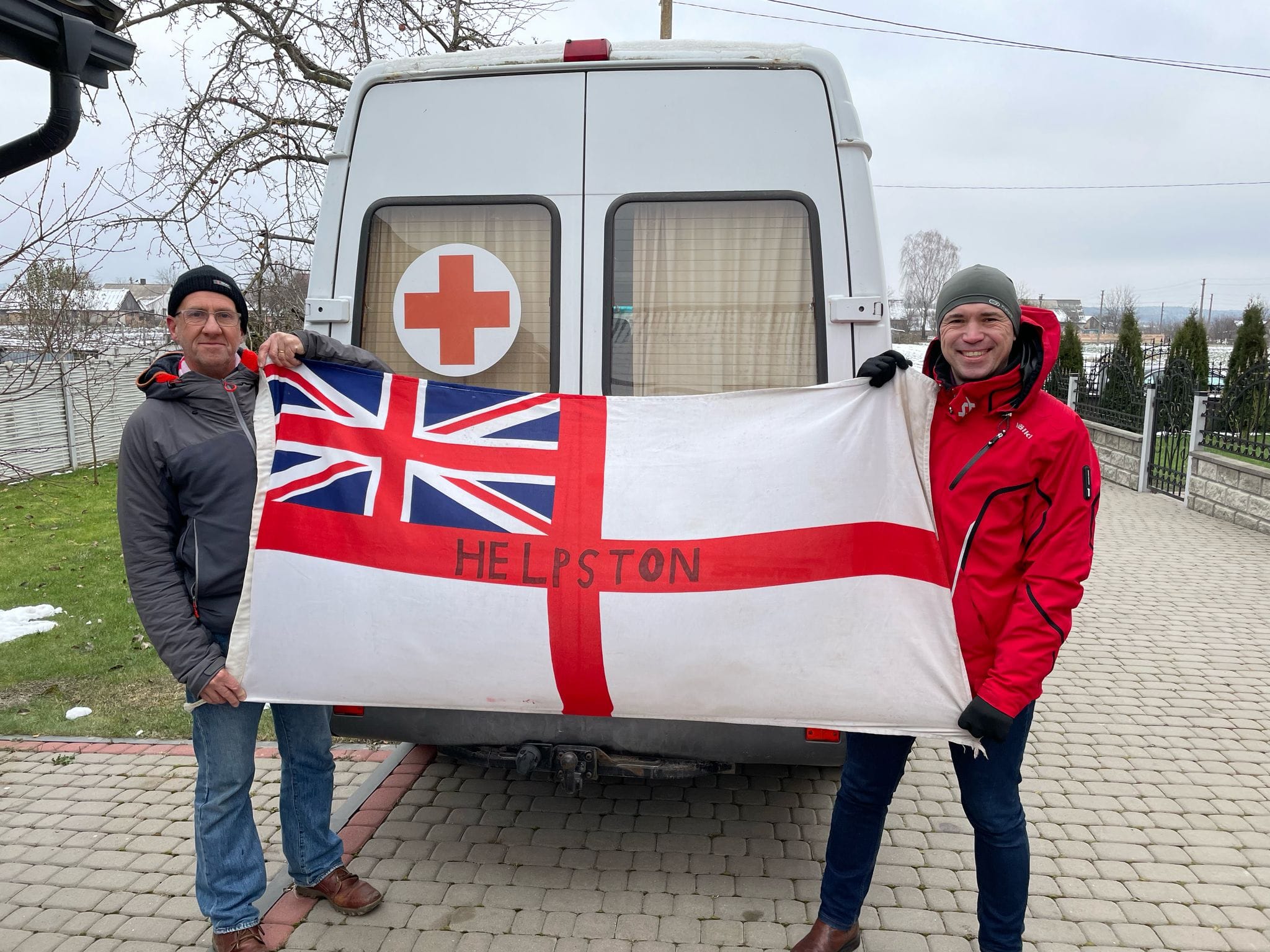
We stopped in Gliwice, Poland, where Halia and her kids had settled among many other Ukrainian refugees. Halia compiled a list of items that the refugees needed. Over the next five months, we made five additional trips, delivering clothes, food, medicine, and sanitary products to the Ukrainian refugees.
During these trips, we would first stop in Poland to exchange money and drop off donations for the refugees. Then, we would purchase pasta, rice, and other necessities, which would be delivered to Kherson and the surrounding area for those who remained in Ukraine for various reasons. It became an endless process.
Could you share some numbers? For example, how many vehicles or other supplies have you delivered to Ukraine?
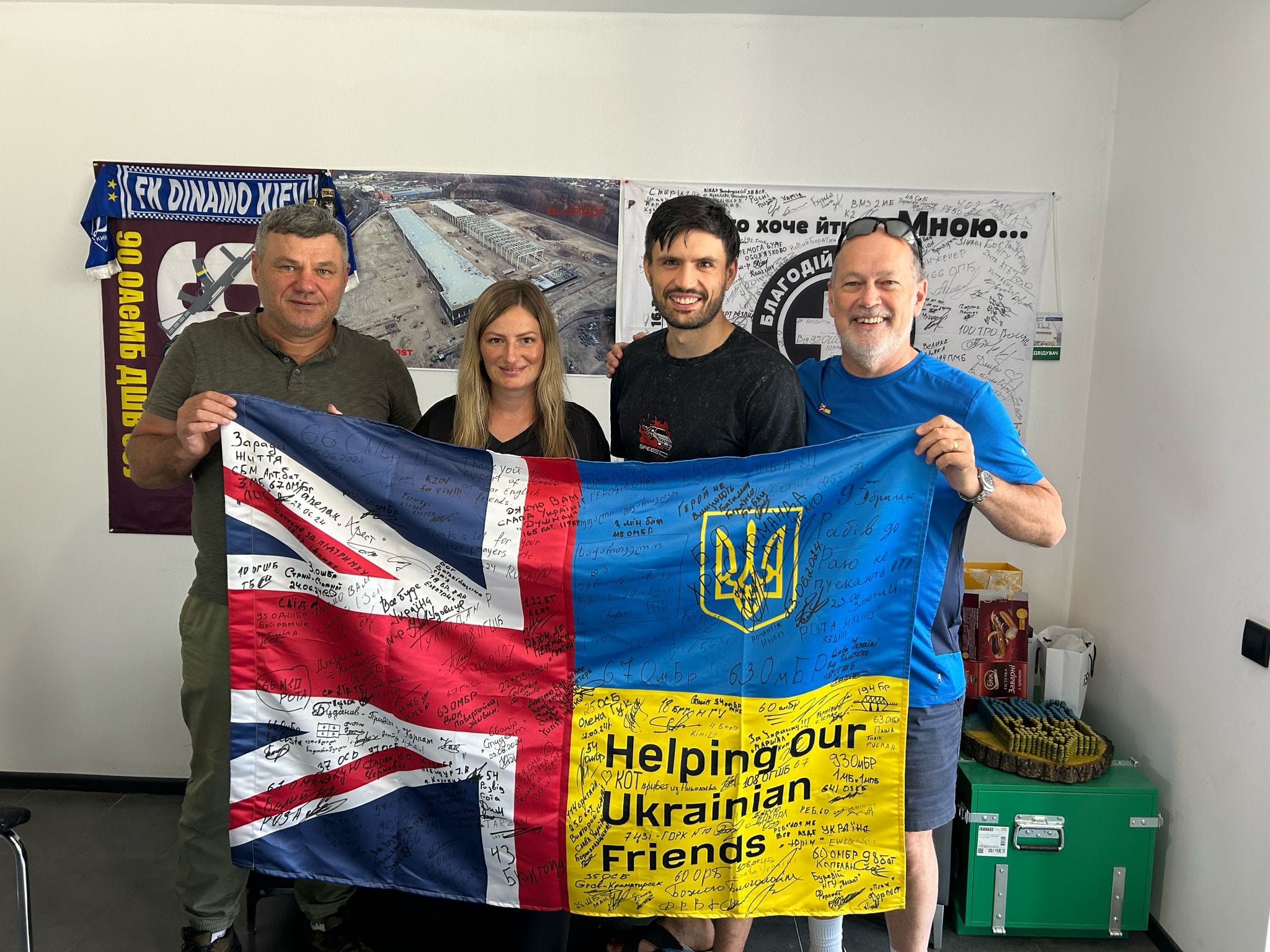
We created a Facebook page called “Helping Our Ukrainian Friends” (HOUF), which has been active for three years. It’s simply a group of people motivated to help our Ukrainian friends.
Since our inception, we have completed 20 separate deliveries of humanitarian aid, totalling around 100 tons. We have raised over £360,000, most of which has been spent on generators and medical supplies for the Kyiv Heart Institute. Additionally, we have purchased numerous sleeping bags for soldiers and delivered five 4×4 vehicles and two ambulances to the frontline in Ukraine.
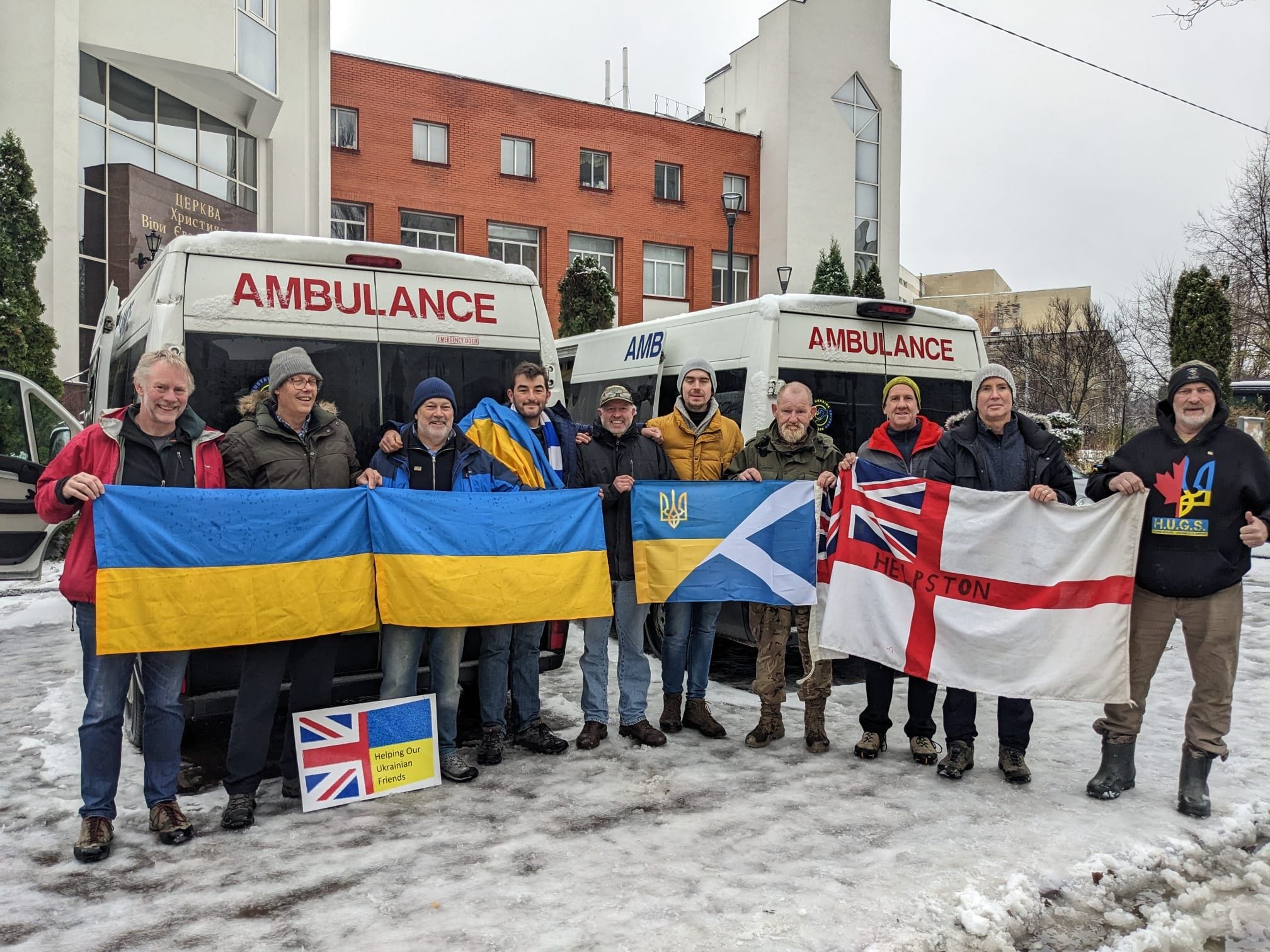
Our efforts continue to grow, and rather than sending just one van full of humanitarian aid, we now send lorries or multiple vans at a time. When we transport these supplies, it resembles a convoy.
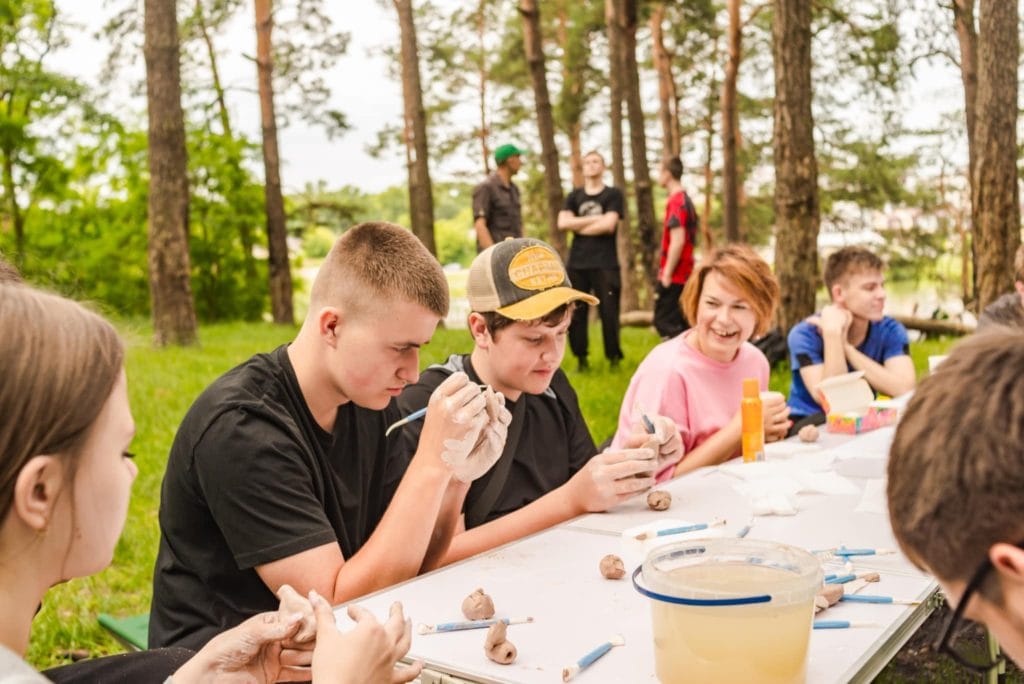
Each year, we also raise money for a summer camp in Poland for Ukrainian children whose fathers have died in the war. We engage psychologists and grief counsellors to support the children who participate in various activities, including sports, music, games, healthy meals, and massages.
How do you raise money for Ukraine?
We have several regular individual donors who contribute money 2-4 times per year, with donations ranging from £5,000 to £6,000. Additionally, local businesses also support us by donating money or equipment.
We organize fundraising activities quite regularly. For example, last November, we held an event at Milton Hall, a local mansion owned by an aristocratic family. They kindly allowed us to use their large hall to host a concert featuring a local choral group. This event helped us raise approximately £3,000 for the children’s summer camp.
Last summer, we organised an afternoon garden party that included cakes, drinks, and music, raising £7,000.
This year, we held a Race Night in Stamford. The concept was to showcase a horse race from 20 to 30 years ago on a big screen, so attendees had no way of knowing the outcome. People placed bets on the horses, and if they wagered on the winning horse, they won money; however, they would lose money if their horse did not win. This event raised £4,000.
Our most recent event took place about two weeks ago. It was a dinner for local businesses, organised by a local construction company, PrinceBuild, and held at an Italian restaurant. That evening, we raised £20,000.
Additionally, one of my friends is planning an abseil in August, while my son is participating in the London Marathon to raise money. Another colleague is running the Brighton Marathon. There is a strong sense of community here that is eager to support Ukraine.
You are talking about the whole community. Who are those people?
I grew up in Sheffield, and my close friend still lives there. He has also travelled to Ukraine and met Halia and Ihor. When I learned about the full-scale war in Ukraine, I called him, and he reached out to his friends. It started with two to three people in Peterborough and a similar number in Sheffield. Then my family joined in: my wife, sister, son, and daughter. Each time we organize something, more people get involved.
Sometimes it’s young people: my son, who is 28, and my daughter, who is 27. We also have a young lady who just finished university and a boy who just graduated from school; they all went to Poland to help with the summer camp. Our group includes people running local businesses and retirees. Our oldest participant is 90 years old, and he raised £500 by selling drinks, cakes, and oatmeal during a ‘coffee morning’.
We have a diverse team based primarily in Peterborough, Stamford, Sheffield, and Yorkshire, including some Ukrainians who help us drive supplies to Ukraine. Occasionally, we engage local schools. For example, twice a year, we collect gift boxes for Ukrainian kids at Easter and Christmas. Local children gather these boxes, decorate them, and write letters for the Ukrainian kids. They even donate their toys, which we deliver to schools in Ukraine. Nine schools are currently involved in this effort.
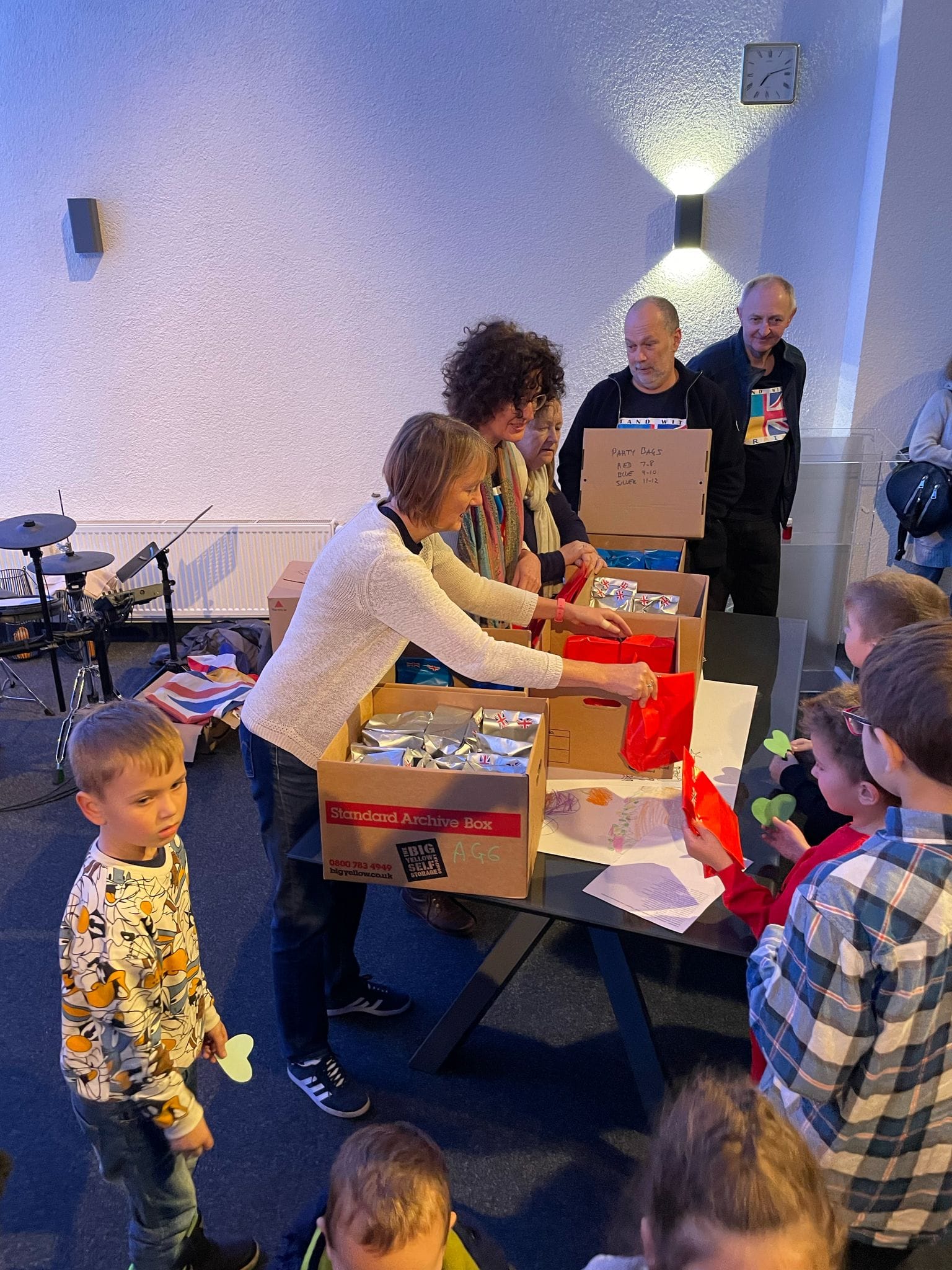
Local churches are also helping us. This initiative is not just about me; many people are constantly thinking about how we can support Ukraine. It’s not only about the donations or humanitarian aid we send; through our work, we aim to show our moral support to Ukraine, sending the message, “You are not alone.”
Despite having a large community, we are always looking for volunteers who can help raise money or gather donations. Over the next few months, we will collect food, clothing, hygiene items, medical supplies, shovels, sleeping bags, and more to deliver to Ukraine in June. If anyone is willing to contribute, we would love to hear from you.
Whether you want to become a volunteer or share supplies, please contact me at richard@helpingourukrainianfriends.com.
Do you feel that people are getting tired of the news from Ukraine, or are they helping less than in previous years?
No, I don’t feel that way. We consistently receive a steady flow of donations. We’ve had significant individual contributions, especially following the meeting between Trump and Zelensky in the White House. When I reflect on events like the dinner with businesses last week, I realize how determined people are to help; they recognize the importance of their support. It amazes me how many individuals reach out to assist us. For instance, a hospital in Wales managed to find my contact information to offer a donation of several wheelchairs for Ukraine but was unsure about how to deliver them. We connected with a local company that agreed to help, and they sent vans to collect the wheelchairs. We frequently receive requests for musical instruments, like those from an orphanage in Sumy. We were able to send them trumpets and trombones.
Do you have any partner organisations? How did you find them?
We began collaborating with my friends Halia and Ihor, who introduced us to a church in Poland. From there, we started working together. We also met with and spoke to several organisations in Kyiv. We are currently partnering with 5 to 6 organisations in Ukraine. They provided us with a list of items they needed, and we made efforts to locate and deliver those supplies. During our last humanitarian aid shipment, we sent 18 pallets, which we labelled with the names of the different organizations we are working with.
Tell us more about those organizations…
One of the charities we have been working with the longest is The Cross. They prepare meals and head to the front line every 2-3 weeks to feed the soldiers. During their last trip, they cooked a large bowl of bograch, a traditional Hungarian goulash, and brought pastors along to provide spiritual support and pray with the soldiers.
I learned about this organisation through one of my college students, who is from Ukraine. She discovered that I was delivering humanitarian aid to Ukraine and suggested that I contact them. Initially, I was hesitant to collaborate since I didn’t know them well. However, when we visited Kyiv and met with them, we were very impressed by their work. Now, we try to send them money every month to help them make more frequent trips to the frontline. They share incredible videos of soldiers who are grateful for the food they receive.
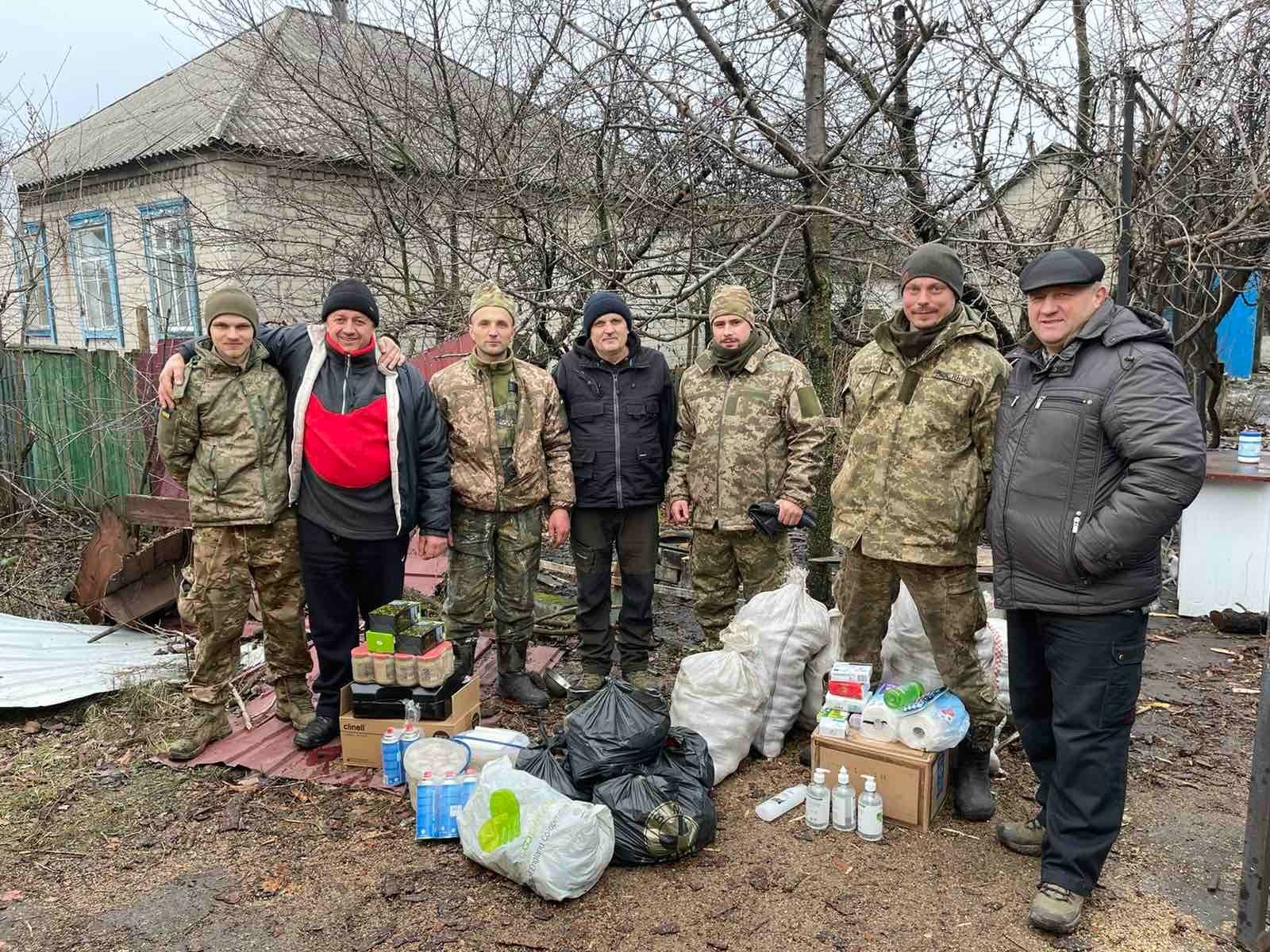
In addition to Cross Charity, we work with a Pastor in Rivne, whom we met through our contacts with Ukrainian refugees in Poland. Pastor Oleksandr delivers humanitarian and military aid to the frontline. We have supported him with food, clothing, generators, and more. Recently, we sent him funds to purchase four tonnes of potatoes for the people living near the frontline.
Another organisation we support is Person to Person, based in Kyiv. They work closely with displaced individuals, particularly children, and also support orphanages in Ukraine. We provide them with financial assistance so they can purchase essentials for the children.
On one occasion, participants from both organisations met near Pokrovsk, close to the front line. They spoke with each other and discovered that we had been supporting both of them.
Additionally, we support a small charity from Odesa that assists deaf individuals. We supply them with food, generators, battery packs, and equipment specifically designed for the deaf community. They needed batteries for lights because, during power outages, it becomes difficult for them to see each other and communicate using sign language.
We have also collaborated with an organisation called Sustain Ukraine. They have teams based in Romania and Kyiv, primarily consisting of ex-military personnel. They help us acquire vehicles in Romania and transport them to Kyiv. Recently, we provided them with several chainsaws for use at the frontline.
Lastly, we partner with a charity founded by two Canadians called H.U.G.S. They run a wonderful program called Smart Kids, which is focused on creating activities for young people. Recently, their hub in Kharkiv was hit by Russian missiles, so we sent them funds to repair the venue.
What is your personal motivation for helping Ukraine? Why are you doing everything you do?
Everything comes from feelings of anger and injustice. We cannot live in a world where anyone can invade their neighbours. I’m not speaking only about Ukraine; this is a matter of principle. We must preserve a world governed by laws, international treaties, and established boundaries. A significant part of my motivation comes from having lived in the Soviet Union when Ukraine was a part of it, which creates an emotional connection to that territory. I believe this is our war, not just Ukraine’s. The fact that Russia can so easily attack a sovereign country is equivalent to attacking the entire Western world and our shared values, including those in the UK. Putin has already committed numerous crimes in my homeland, such as using radioactive poison to kill people. I believe we are at war as well. I may not be young enough to serve as a soldier, but I feel a strong obligation to do something; we all must take action.
Can you tell me more about your visits to Ukraine? What do you think about the people, cuisine, and culture?
I love Ukraine and its fascinating history, and cuisine. Being a large country, the culture varies from region to region. I’m a huge fan of the food; I could eat it all day. I also find the Ukrainian language to be very beautiful and lyrical. Ukraine’s history is intertwined with countries like Poland, Austria, Latvia, and Lithuania, making it intriguing to uncover new facts.
Since the war began, I have travelled to Rivne, Kyiv, and Chernivtsi. It felt much scarier at first, but now I’ve got used to all the possible dangers I could face. Sometimes it kind of feels very strange:
I remember the first time I was in Rivne. It was night, and everything was dark because of blackouts. The Russians attacked Ukraine’s energy system, military checkpoints were set up, and Ukrainian flags fluttered. You drive and feel the war is close, but at the same time, most of the shops are full. At the first fuel station, I found a fine wine section with very expensive French wine.
In Kyiv, on the one hand, it’s like any other big city: busy, with people going to work, jogging, shopping, and the buses are full. If you go to the bars, you’ll find people inside playing music. On the other hand, in the evening, when the air raids go off, in the main square, you see a field of flags, which symbolise people who died in the war, and you start to feel the tragedy of the place. Sometimes you have thoughts – what’s the problem here, everything seems fine, and then it hits you in the face and you realize…
What if the war were to stop one day, would you still help Ukraine?
We hold regular meetings to discuss fundraising, upcoming trips to Ukraine, and upcoming events. During our last meeting, someone raised an important question: What will our future actions be if a ceasefire occurs? Should we stop work or continue delivering humanitarian aid, or is it no longer needed?
Of course, it’s significant to continue working on summer camps, supporting war widows and veterans, and addressing mental health issues. But the key message from our group is that we want to carry on, but we don’t know in what form that would be yet.
We engage in these activities because we want to make a difference. Whenever I deliver vehicles or humanitarian aid and interact with other charities or our partners, I consistently hear that it’s vital not just to send money, but also to visit Ukraine and connect with people. It’s a sign of our commitment and engagement. We won’t stop.
Author: Rostyslava Martyniuk
Editor of Ukrainian language: Anastasia Zanuzdanova
Editor of English language: Helen Lewis
Photo credit: Richard Astle