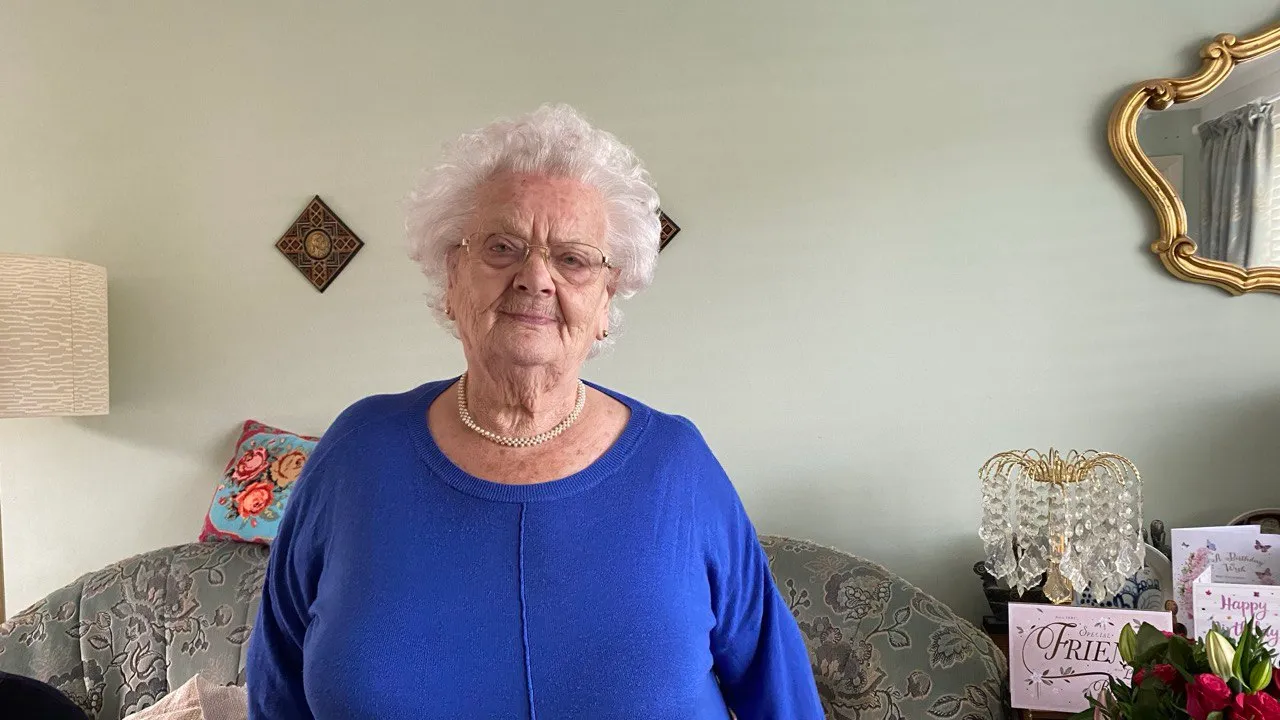
Anastasia is 93 years old, and she was born in the Lviv region. At the time, parts of the western areas of Ukraine were part of the Polish Republic, and the world was about to face World War II. She was working as a babysitter for a very famous Ukrainian family of public figures — Daria and Lev Rebet. They were leaders of the Organization of Ukrainian Nationalists (shortly OUN, A Ukrainian political movement dedicated to establishing an independent Ukrainian state — ed.). When the Soviets took control of the majority of Ukraine, the Rebet family found themselves in danger. They were harassed, persecuted and imprisoned by the Soviets for their actions and active pro-Ukrainian position. During World War II, Firstly Daria and secondly Lev fled abroad, adopting little Anastasia. However, fate decreed that she lived most of her life in Peterborough, England. She did not meet her birth family until 50 years later.
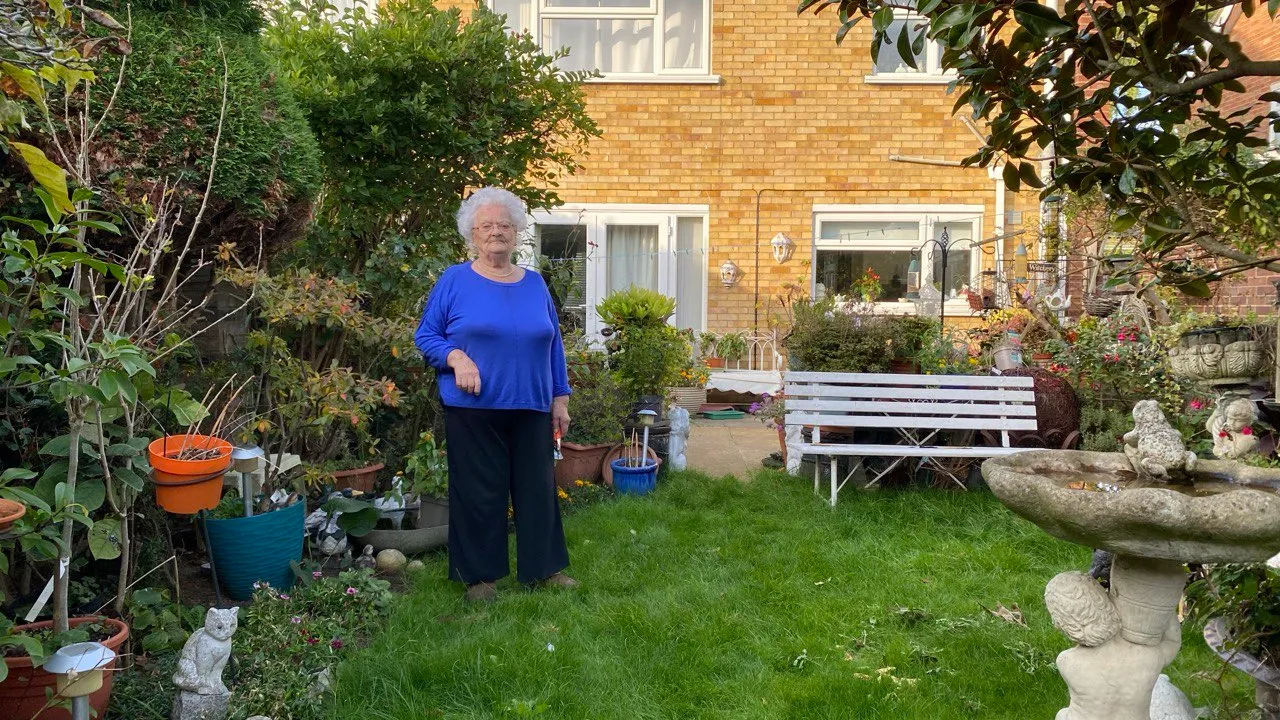
The house, where Anastasiia and her daughter Helen live, differs from the others as it has a Ukrainian flag at the front door and a well-kept garden with flowers. The backyard has a whole garden — bay leaves, figs, magnolia, palm trees, vegetables, and berries: carrots, red beets, raspberries, strawberries…
” Now we don’t plant that many plants, but when my late husband was alive, we had much more: he was very fond of gardening and planting various vegetables. Now I’m not healthy enough for it, but Halyna helps me”
Anastasiia invites me to her house.
“Come on, let’s go” — she talks to Agata’s cat.
The woman complains that she has almost no one to speak to in her native language because English is spoken everywhere. She talks to her daughter in both English and Ukrainian: she graduated from a Ukrainian Saturday school and understands everything, but speaks with a noticeable accent.
‘I left Ukraine when the Germans were still in power’
The Kominsky family, into which Anastasia was born, came from Yanchyn (now Ivanivka — ed.), a village in the Lviv region. According to the woman, they were ordinary rural people: not poor, but they did not differ for their wealth.
‘There were seven of us in the family — I had three sisters and three brothers. We weren’t too rich, but we weren’t poor either: we had enough of everything: a field, oxen, and sometimes peasants worked in our field. My father cared about our education and did not force us to work in the field, but sent us to school instead. Everyone in the family was literate’
When Anastasiia was 10, the Rebet family recruited her to look after their eldest son, Andrii.
‘Their uncle Vasyl Tanchak (husband of Olena Tsisyk, sister of Omelian Tsisyk, a literary critic, public figure, father of Daria Tsisyk-Rebet — ed.) was a priest, and I often attended services there. Our family was religious and we knew him well. Father Vasyl recommended me for Andriy’s nanny. According to him, the mother [Daria Rebet] worked a lot and often had no time for her son (Daria was a member of the OUN(r)evolutionary at the time — ed.)
Little Anastasia was babysitting Andrii in Lviv, and she recalls that most of the time they were at home in the flat. They could go out, but rarely, as the Rebet family was underground at the time. Naturally, this step was necessary to avoid putting the children in danger, as Daria and Lev were persecuted by the Soviet authority at that time. OUN was known for their pro-Ukrainian position, and the Rebet family had leaders in the organization.
But when the German occupation authorities reached Lviv, the city became completely unsafe, so they decided to flee abroad.
‘My adopted mother [Daria] wrote a letter to my birth father, asking him what to do with me — take me abroad or send me back to the village. My father asked to take me with her because it was not clear what would happen next in Ukraine — times were unstable”
That’s how Anastasia became part of the Rebet family.
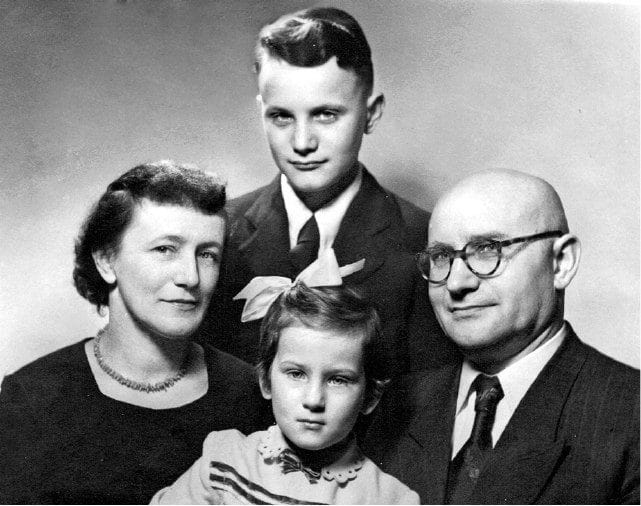
‘I never felt like an adopted child, on the contrary — she always emphasized that I was her daughter, and even until her death, she signed her letters as ‘Daria, mother’. Later, my children always called her ‘grandma’. I never felt any difference between me and her birth children. They treated everyone equally warmly. My mum and dad were very kind to me
‘We moved from city to city and never stayed anywhere’
The woman has limited recollection of how they got across the border of Ukraine, during fleeing the war, her memories are fragmentary and vague.
‘We went from Lviv to Zakarpattia (as I was told) in the military vehicle… there were other people with us — OUN members, doctors, professors, very famous people… I remember we lived in Zakarpattia (one of the Ukrainian regions – ed.) for a while in the house for nuns… and after that we were travelling on the train. We were transported in the place for cattle sitting on the floor… in Comanche (Komancza the territory of Poland. — ed.) we crossed the Osława River over a bridge and went a little further, not far. And then my mother screamed, she said: ‘Nastia, look, the bridge is gone, it was blown up, how are the other people who were walking with us going to get to this side of the river?’
We crossed the Komancha River to reach the city of Prešov (the territory of Slovakia — ed.) and then Bratislava.
‘The Second World War caught us in Vienna’
The Rebet moved from Bratislava to Vienna. According to Daria Rebet’s* memoirs, she went abroad without her husband, as he had been imprisoned in the Auschwitz-Birkenau concentration camp as a political prisoner since 1941. Her son Andrii was born in 1942 and saw his father for the first time in Vienna when he joined the family abroad. The boy was so completely unfamiliar with Lev’s presence that at first times he called him ‘uncle-dad’.
Meanwhile, the frontline was gradually moving further west, and it was becoming more dangerous.
‘We lived in a half-ruined former hotel, sometimes it was cold, and we had nothing to eat. There was an active war going on in the city, so from time to time we had to spend days in bunkers and basements to hide from bombs and to stay alive. We learnt to identify by sound whether the plane was flying full and would soon start dropping bombs or empty, and therefore not dangerous. A loaded plane would make a very scary noise, and an empty one would sound like a whistle.
Soon, the Rebetov family was forced to flee to a safer area.
‘I remember once my mother promised me that we would go to church together. I was very happy. But the next morning, everything changed: we did not go to church. And since Vienna was divided into several zones: where Soviet soldiers, Americans, and Germans were based, and the front line was constantly moving, it was dangerous for us to continue living in the area. We had to go over to the side of the Americans because my mum and dad were under the observation of the Soviet Union authorities.’
During the transition, the city was actively bombed — military planes flew low and dropped bombs directly on buildings and people. The Rebet managed to hide in a restaurant.
‘I remember a very loud sound and then darkness… When I awoke, I realized I was alive because the shockwave had thrown me under the table. However, others were not as lucky. My mother was injured by shrapnel in the head, she had a terrible wound and her hair did not grow for the rest of her life. Andriy was seriously injured in the leg and head, and some of the people we were hiding with were killed’
Anastasiia says Andriy’s injury was serious — after the incident, he had to learn to walk again. Just like his mother, he has had a bald spot on his head all his life — a scar to remember that day.
Shortly after the incident, Andriy became ill with pneumonia. Twelve-year-old Nastia often looked after her brother during this period. Yaroslav Stetsko(one of the leaders of OUN, a Ukrainian public figure – ed.) gave the Rebet his flat in Vienna, where they lived for some time while Andrii was undergoing treatment.
Because of the incident in the restaurant, they were unable to leave Vienna. It became very difficult. The situation was aggravated by the lack of documents and persecution by Soviet agents.
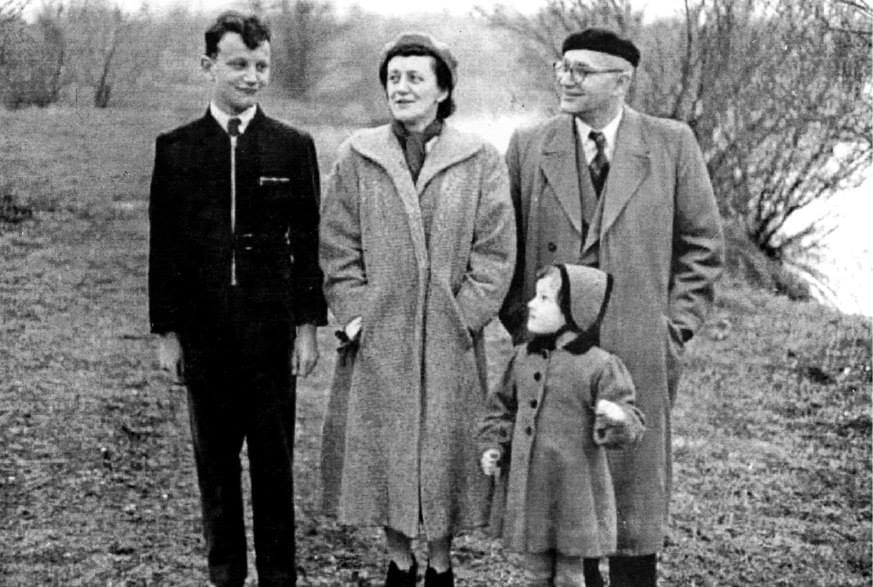
According to Daria Rebet*, the situation in Vienna was so difficult that her husband Lev was forced to look for food for the children in the rubbish, and when he found nothing, he would exchange clothes for any food. ‘Eventually, he managed to trade only two carrots for a blouse or a jumper.’
Later, for a small bribe, they managed to get fake documents and leave for Austria, the city of Innsbruck. There, they were given an entire floor of a house to use.
‘The room was very nice, we had separate beds and could move freely around the house, and from the window, we could see the whole city from above because the building was located in the mountains. I really liked it there.’
After Innsbruck, the Rebet family headed off to Munich, where they finally received their official documents.
‘In Slovakia, we were Novohradski, in Austria we introduced ourselves as Romanchuks, and when we got to Germany the war finished, we had to register as refugees, so we called ourselves Romany. My mother used to say, ‘Just remember that our surname is Romany, and don’t tell anyone anything. In Munich, we changed it, and for the first time I was given documents stating that I was their daughter, Anastasia Rebet.’
Getting married and moving to the UK
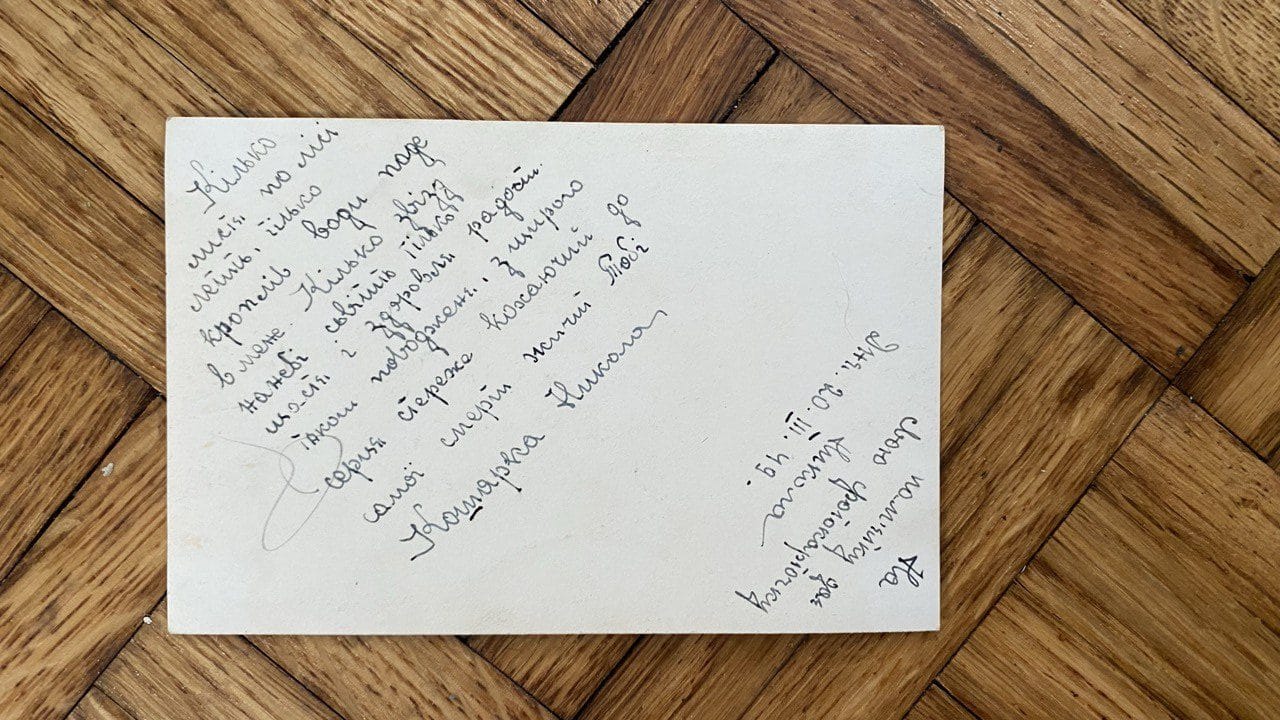
And how many drops of water fall on me while raining,
How many stars shine in the sky —
This is how much I wish you happiness and health.
From the bottom of my heart,
loving you till death,
yours truly, Mykola Kosharka’
Caption on the back of the photo
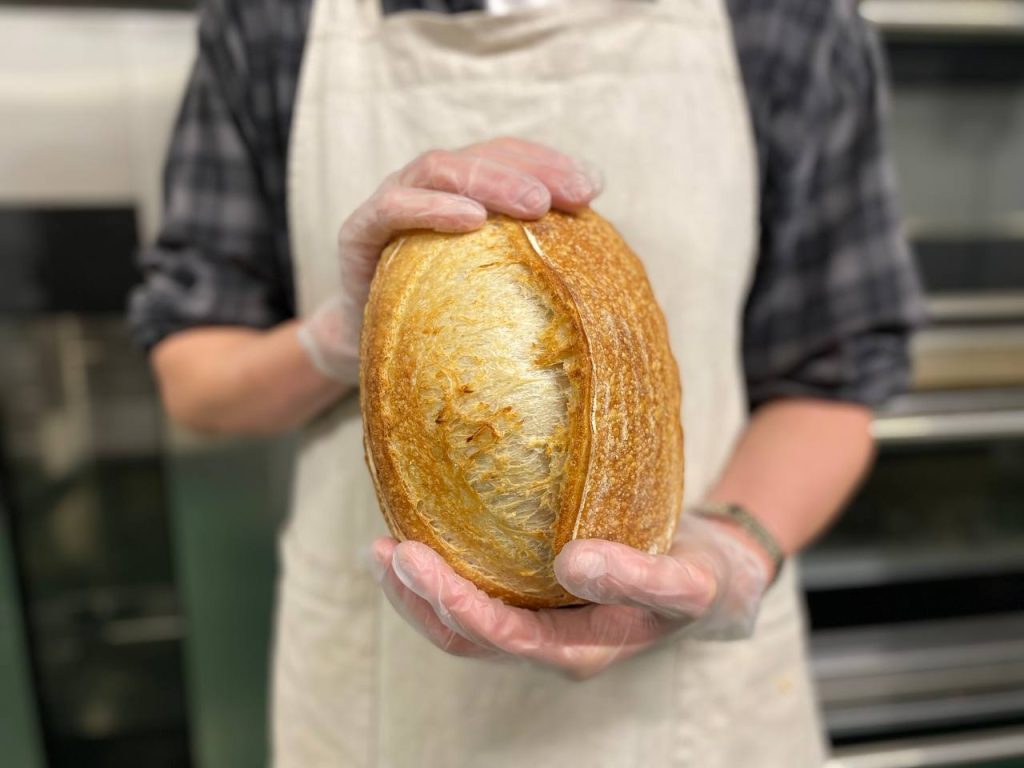
While living in Germany, 18-year-old Anastasiia had a long correspondence with a young man 7 years older than her. He was from the village of Mali Didushyntsi in the Stryi district of Ukraine. During the Second World War, he was a prisoner in the Dachau concentration camp. He was a baker there. In 1945, American soldiers liberated the concentration camp. After his release, Mykola first lived in a dormitory at the Ukrainian Free University in Munich. Later, he moved to a military barracks that had been renovated into a refugee shelter. Anastasiia and her parents lived there as well. Later, Mykola decided to seek a better life in the UK, and the city of Peterborough soon invited her to come with him.
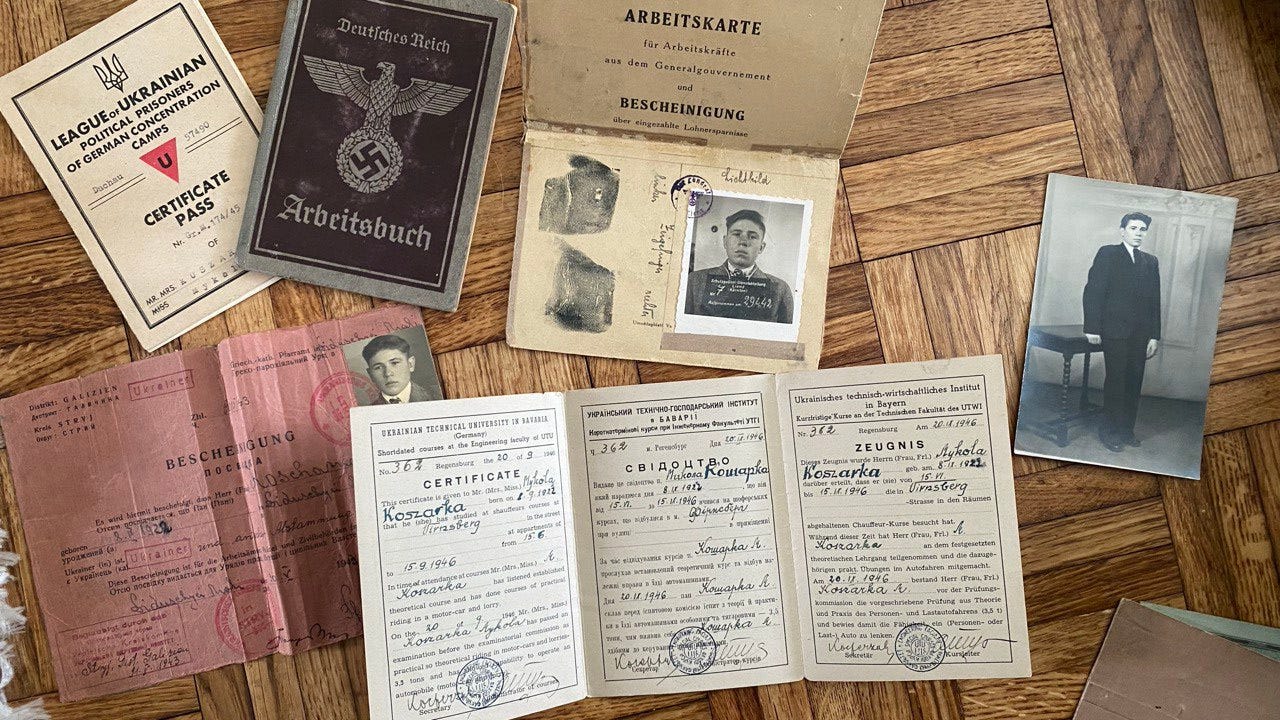
Anastasiia admits:
‘ I won’t say it was a big love, I just wanted to start an independent life’.
Immediately after their arrival, they got married — it was necessary for the paperwork.
‘I was 18 years old, and back at the time in the UK, you could only get married after the age of 21. So I wrote a letter to my mum asking for permission to get married — it would have helped. She not only sent the document but also blessed us’
At the time, Ukrainians arriving in the UK were housed in former military barracks. Among the tenants were former soldiers, war refugees, and even those released from concentration camps. The rooms were wooden or made of iron. There were beds in each room, and 6–10 people lived there. The newcomers worked in factories or farms to earn money for a living. However, Anastasiia did not live in such a barrack, because her husband Mykola had carefully prepared for her arrival.
‘We lived in one room, a three-room flat owned by a man from Yugoslavia. I remember it cost 1.5 pounds a month. At first, I worked at a factory that produced canned food — tomato sauce and honey. I received 2 pounds a month, and my husband worked at a brick factory and was paid 7 pounds a month. It was enough for us. Later, I started working in an atelier, sewing women’s stockings, sconces, and portmanteaus. I earned less there, but the work was not as physically demanding’
Anastasia does not talk much about her family life with her husband, even when asked to comment on a photo with poetry on the back, she jokes that he sent it to one of his ‘girlfriends’, not her.
She shares: ‘We had bad days and good days. Everything was like people. But I felt comfortable with him’
The Ukrainian post-WWII diaspora
In the post-war period, Ukrainians living in the UK raised funds and bought two buildings in the county of Derbyshire. One was used by the Ukrainian Youth Community (UYC shortly — ed.), which organized summer camps, training, and meetings for young people, and the other was a nursing home for the elderly.
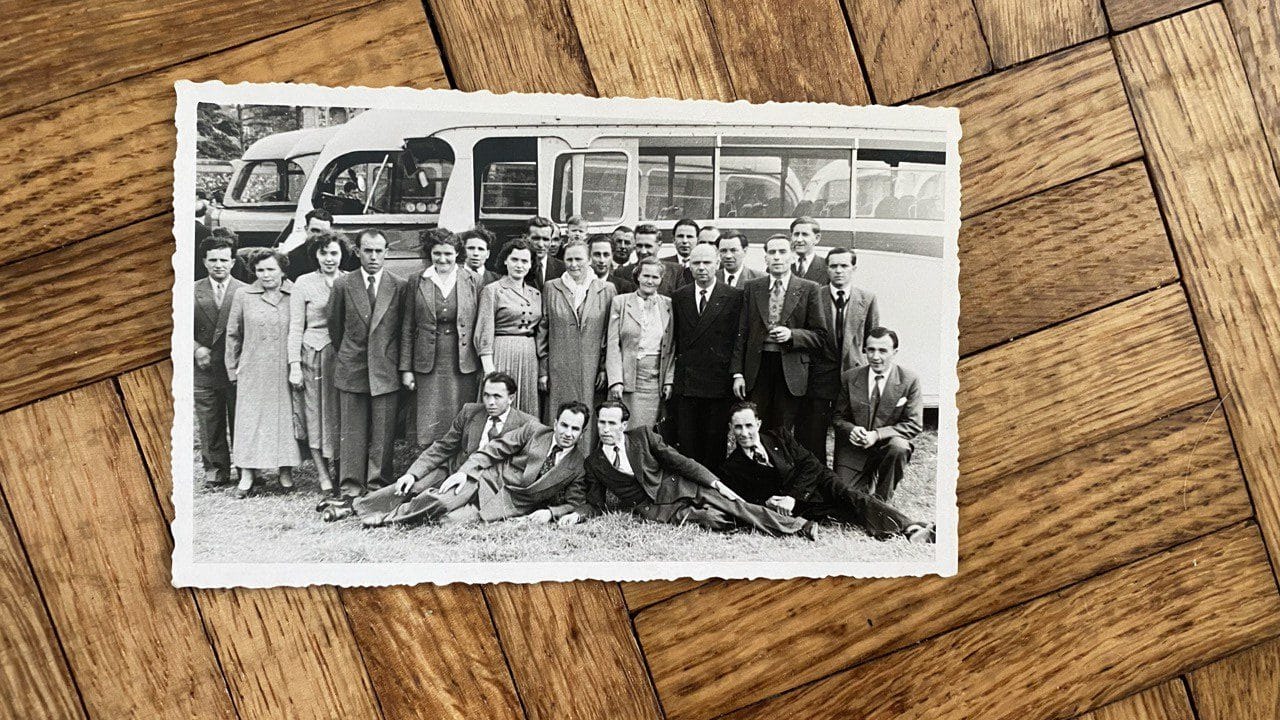
‘The Ukrainian diaspora at that time was active and very friendly — if we decided to go to the seaside, it meant we raised money, booked a bus and went. We often went on outings, made bonfires and sang songs. The set of premises bought by Ukrainian migrants was called a ‘village’. There were two Ukrainian villages — the one where the UYC was located, called Tarasivka, and the shelter for the elderly — Kobzarivka. In Tarasivka, there is a large cross dedicated to the fallen soldiers of the OUN-UPA in the struggle for independent Ukraine, a river flowing and very beautiful nature around. There was also a craft fair where you could buy paintings by Ukrainian artists, Easter eggs, bread, and even salo(pork fat, one of the traditional Ukrainian snacks. Prepare with salt, pepper, garlic, and seasoning — ed.). Not too far from Kobzarivka, there was a tavern, and do you even know what they planted? Viburnum!’**
She smiles dreamily and pauses, thinking about something of her own.
The Ukrainian Club was also established at the centre of Peterborough.
‘We gathered there to celebrate Ukrainian holidays — Christmas, Easter, Makovei(A day to celebrate the end of the planting season and honour the harvesting -ed.)
The women would get together to make dumplings and share them with the men. Our children studied Ukrainian at the Saturday school there and learned to sing Ukrainian songs and dance. Once, the local newspaper wrote about our club when we treated English children with disabilities to Ukrainian dishes. There were about 200 Ukrainian migrants in Peterborough, we were friendly and very active. We got used to helping each other whenever we needed to’
The Koszarski family
In 1956, Anastasia and her husband went to visit her adoptive parents, who lived in Munich.
‘That was the first time my mum and dad saw us as a married couple. I remember they were very happy to see us because my husband was also involved in the OUN. And that was the last time I saw my father alive(a few months before Lev Rebet was poisoned by KGB agent Bogdan Stashynskyi, hired by Soviet Union — ed.). I still can’t believe that he could have been killed so brutally”
We corresponded with my mother all the time, until her death, and she sent us gifts — a precious brooch for me, wooden toys for my children, and Easter eggs for my husband.’
Anastasiia was also in a good relationship with the Rebets’ own children, Andrii and Oksana, and they even used to visit each other. Over time, the connection was lost, but she still remembers her half-siblings fondly.
Anastasia has three children of her own — the eldest, Daria, is named after Daria Rebet and now lives with her son in Cardiff, Wales. Andrii, the middle one, lives in Peterborough, and Helen (Halyna) lives with her mom in the same house.
‘Of all my children, Andriy loves Ukraine the most, he used to go back almost every year before the full-scale war started. He really likes the food and says that the people there are sincere. He says that trips to Ukraine help him feel at home. Also, both of Daria’s children, my grandchildren Harry and Olivia, despite not speaking Ukrainian, love Ukrainian cuisine, especially homemade varenyky.’
‘They allowed only warm clothes to take with themselves’
Anastasiia returned to Ukraine for the first time after declaring independence in 1992. It was then she learned the fate of her family.
‘Letters rarely came, and they were very short because of censorship. ‘Everything is fine, we are happy, we have food, we love the Soviet Union’ — that’s all I read. They wrote about my older sister, saying that she worked as a tram driver, but because of her arrest and affiliation with the OUN, she was not allowed to work at any decent job. I knew nothing about their lives.’
Anastasiia’s family was dekulakized(the Soviet campaign of political repressions, including arrests, deportations, or executions of millions of kulaks (prosperous peasants) and their families – ed.) with the establishment of Soviet authority.
‘When the Soviets came, they started to force people to work on the collective farm. My father was against giving up our house and field. And back then it was very dangerous to have even one more loaf of bread than everyone else, because you were considered rich, and therefore dangerous. So they [the Bolsheviks] came at night to take my family to Siberia. They allowed them to bring only coats, saying that it was very cold where they were going. They didn’t want to take my grandmother, my father’s mother, who lived with them, and a soldier pushed her away with the butt of his gun, saying she was too old. But she didn’t want to be left alone, she shouted: if you’re taking everyone, take me too. She was the only one who didn’t return from Siberia, and was buried there.’
Only her eldest sister Mariia was not taken away because her husband collaborated with the communists. However, the communist cruelties did not spare her either. In 1943, Mariia was arrested for helping OUN underground fighters bandage their wounds.
The house also disappeared — at first, the communists used it as a storage facility, and then Mariia’s husband initiated the liquidation of the house as a ‘potentially dangerous object for the communist authorities’, dismantling it brick by brick.
‘When my family returned from Siberia, they had no place to live because there was a wasteland where the house used to be. So they lived with Mariia and her husband for a while. After that, they moved to an empty house in the village where no one lived. Mariia’s husband forbade her to bring them food packages, so she either passed them on through her neighbours or hid and ran at night to feed them.’
Now Anastasiia has relatives in Lviv — the children of her older sister Mariia and her brother. She shares they often talk on the phone, but she rarely travels to Ukraine — her health does not allow it. Nevertheless, she and her daughter are very empathetic to their fellow citizens.
‘The last time I was in Ukraine, random women on the street asked me where you were from. I answered, ‘I’m from Ukraine. They said, ‘Madam, you are not from here’. They must have heard my accent. And it hurt me so much, because it’s my home country, and people don’t recognize me.
Helena and I now go to a Ukrainian church and once baked cookies for a fair to raise money to help the Ukrainian army, they also trying to attend all the events, connected to Ukraine. ‘We even became sponsors (guarantors of visas for Ukrainians in the UK — ed.) for a Ukrainian lady, inviting her to our home. We wanted to help in any way we could.’
* from the book Sketch of the Life of Daria Rebet ‘Orlyan’. Mykola Posivnych and Vasyl Brelius. Toronto. 2013
**Viburnum is one of the symbols of Ukraine
Author — Rostyslava Martyniuk
Editor — Anastasia Zanusdanova