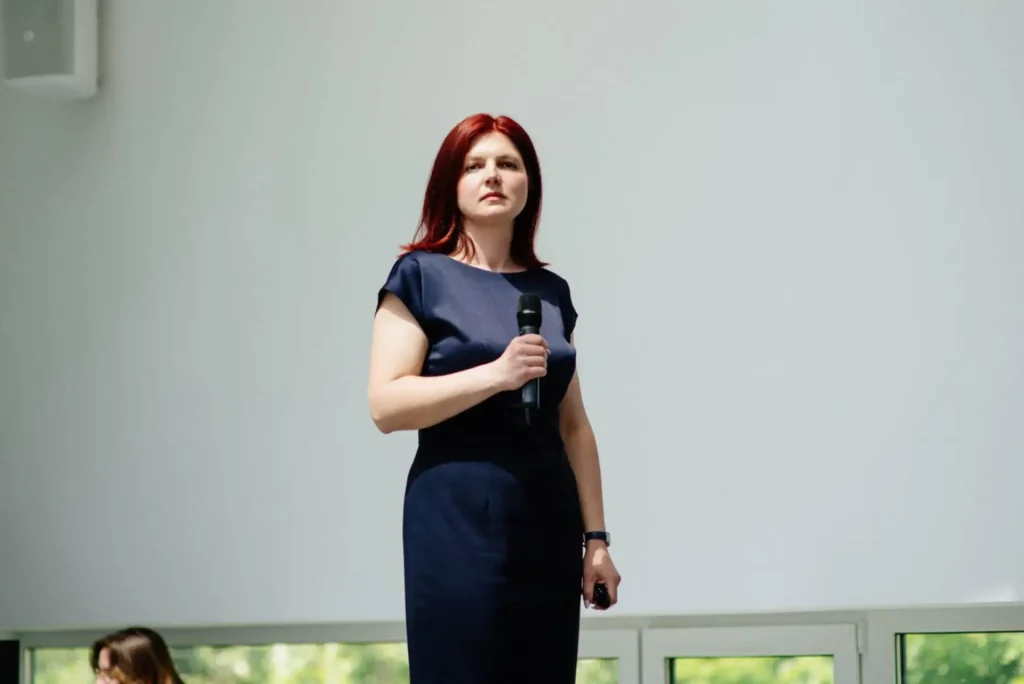
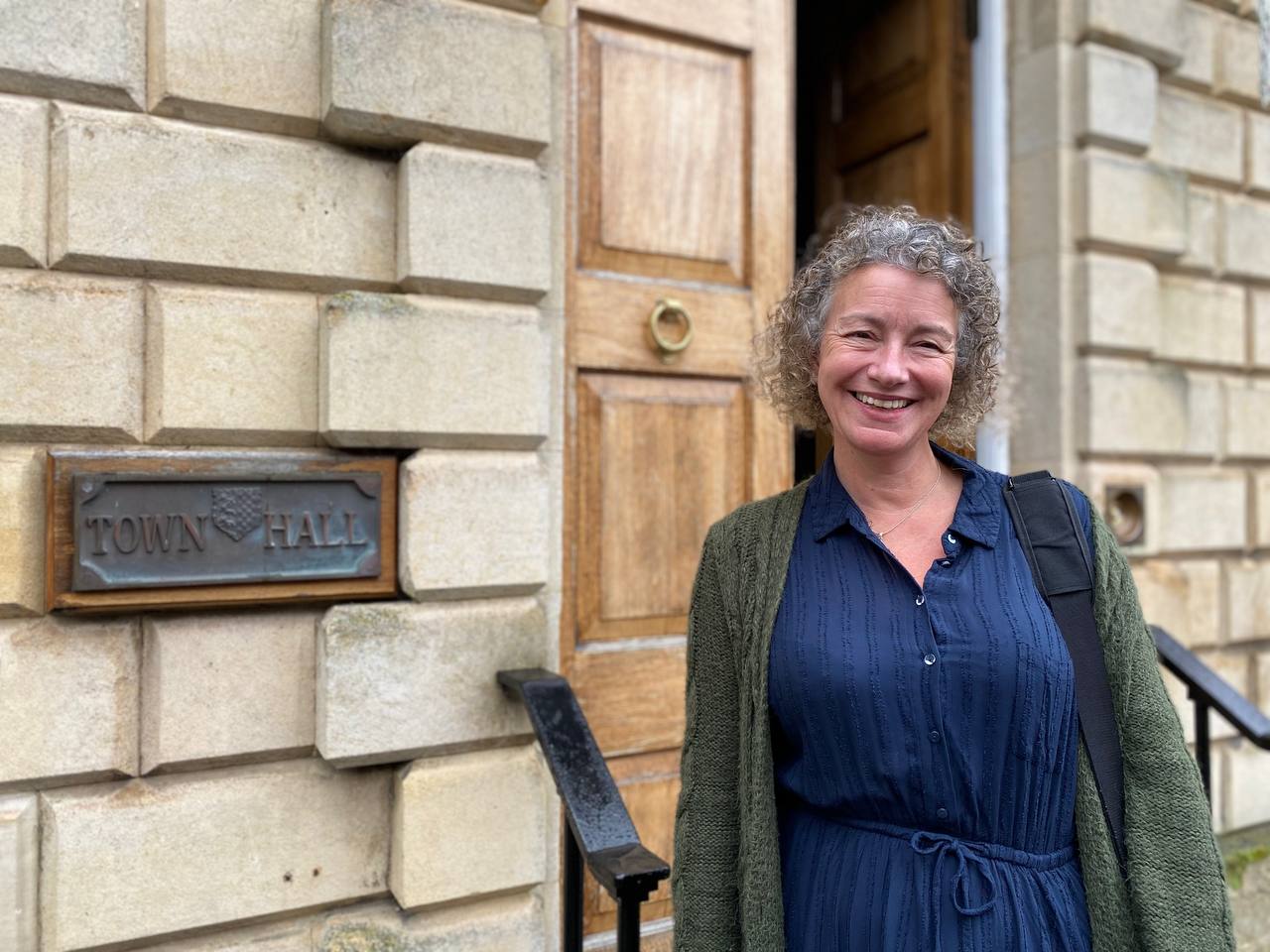
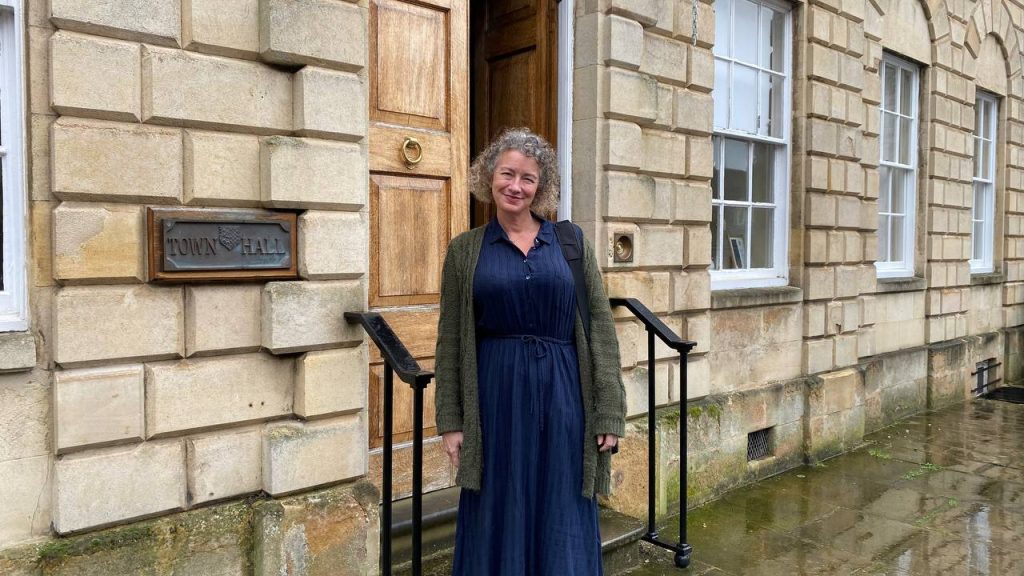
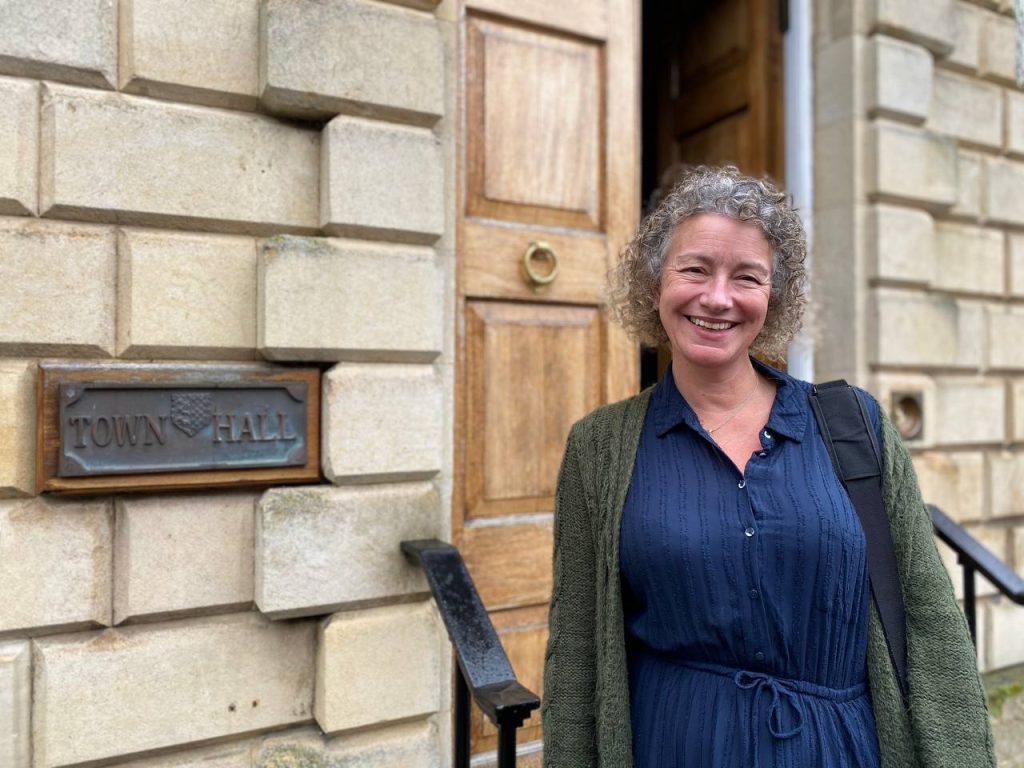
Amanda Wheeler never dreamt of becoming a mayor; it happened because she cared for the town she lives in. Despite her formal education at the University of Edinburgh in Philosophy and Politics, she never even set out to become a councillor. Today, she works from Stamford Town Hall and supports three charities: one that helps young people, one focused on mental health, and one that tackles poverty. She describes what she does simply – “to serve people”. Amanda is a feminist; she speaks openly about women in leadership, and has become a sincere friend of Ukraine and Ukrainians in Stamford.
Serving people
This was not my first meeting with Amanda Wheeler. The first time I saw her was at a local event, and what struck me immediately was not a speech or a formal entrance, but the way she stood near a table with snacks, offering biscuits to visitors and pouring juice for those who wanted it. She was also speaking to visitors, asking if everything was alright, whether everyone had enough, and whether anything was needed. For me, as a Ukrainian, it felt unusual: in Ukraine, mayors usually maintain a distance from the community and are much more associated with administration than with this kind of direct presence.
When I later mentioned this to Amanda, she explained that for her, being the Mayor is exactly that.
“I see being Mayor as serving people. Literally serving people. That’s what it feels like to me. It makes me feel closer to the community. I don’t want to be distant from people. I want to be among them, to know them, to speak with them, to understand what they need. That’s the part of the role that feels most natural to me.”
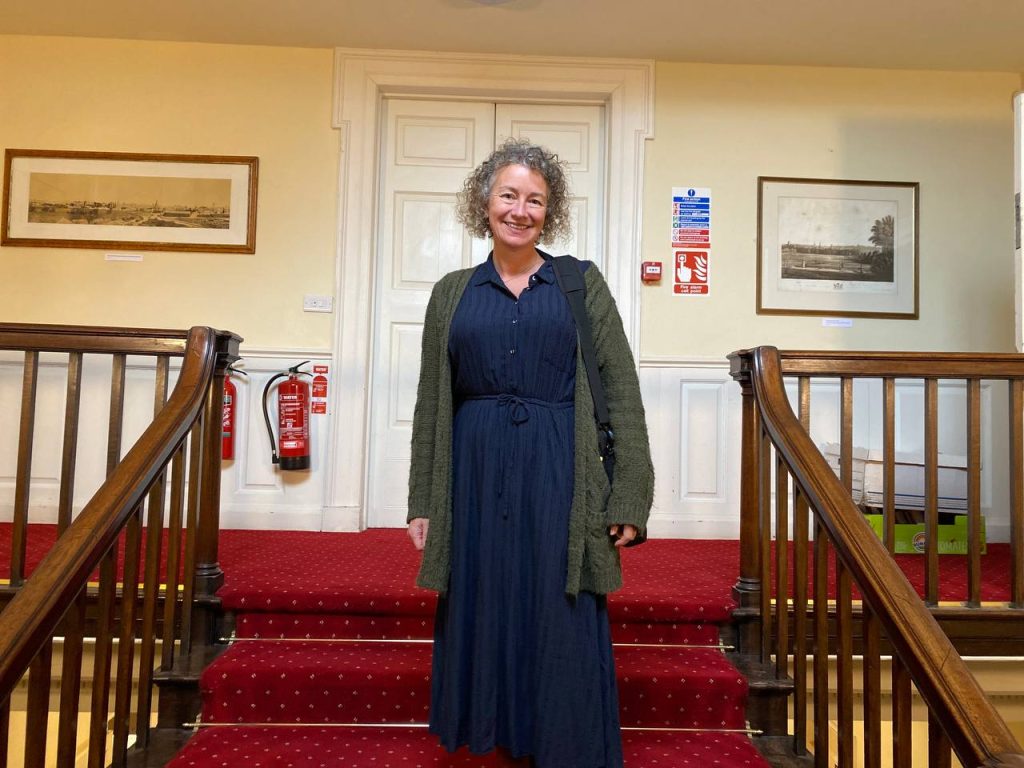
Growing up between places
Amanda comes from a multinational family: her mother is from Trinidad, and her father is English. When her father was in his twenties, he was sent to Trinidad for work. He stayed there for around four years, met Amanda’s mother, and got married. Amanda is the second of their four children.
The nature of Amanda’s father’s job meant that the family moved often. Her first language is French, as she attended school in Brussels. Nevertheless, most of her teenage years were spent in Stamford, Lincolnshire.
“Until I turned 16, my parents were together, but then they got divorced, and my mum returned to Trinidad. Since she is one of six sisters, I have a very large family there, including 27 cousins. I used to go on holiday to Trinidad to visit my grandparents and family.”
When asked where she feels most at home, Amanda says she feels at home wherever she is.
“I feel very settled in my surroundings. It doesn’t take me long to start feeling like I’m at home. Once, my husband and I, with two kids, moved to Stamford from London and lived in a huge house. I felt very grown-up. I hadn’t lived in Stamford since I was a teenager, and suddenly I found myself living in a big house in the centre of Stamford. For a few days, I kept expecting someone to open a door and say, ‘What are you doing in my house? Get out. This isn’t your home,” she says, laughing. “But right now, home for me is very much Stamford.”
Philosophy, politics, and activism
Amanda says she never dreamed of becoming Mayor, and she never planned a political career in the conventional sense.
“When I went to university, I chose to study Philosophy and French, but later I changed my course from French into Politics, because I realised how much I was into philosophy. I enjoyed discussions on different topics, arguing, political ideas, and theories. I could stay awake all night talking to my university friends and discussing politics. I loved conversations about utopian and dystopian theories, and I was very interested in revolutions and terrorist organisations. Studying philosophy took away my religion. I grew up in a very religious family, but while I was a student, I discovered that the philosophers I most admired were atheists, and those whose theories seemed most irritating to me were all religious. It slowly became clear to me that I didn’t believe in God, and that was quite a strange realisation about myself.”
Her activism began long before local politics.
“Then I started to be more active in real life. I attended marches and protests. One was for Free Nelson Mandela and against apartheid in South Africa — I used to go protest every week when I was a student. Then there was the protest against the Poll Tax. At that time, Margaret Thatcher was Prime Minister, and she tried to impose a tax on people, including students. Students weren’t earning any money, so it seemed unfair, and that was why I joined.”
At that point, however, she still did not imagine herself entering politics.
“Besides that, I had never thought of becoming a politician or anything like that. The only reason I became really active locally was due to the EU referendum on Brexit. I strongly believed that we needed to remain within the EU and stay close to others, so I campaigned for that. After Brexit happened, I saw the rise of nationalism and racism after the vote, which I found really upsetting. There were stories of people who had made England their home being attacked and being told to leave. There was a spike in hate crimes against people of other nationalities. That refigured my activism and made me really active in local political life.”
Power and responsibility
For Amanda, public office is not about status.
“Sometimes being in charge can be quite challenging because of unpleasant emotional reactions to things we are doing and criticism. But the only reason why I and the people who work with me are doing all the work and activities is that we want to help. So my becoming a councillor is not about wanting power, but about wanting to support the community and to do everything I can to make Stamford and its residents live the best possible life they can.”
She continues:
“That’s what we want to be sure of – that as a council we listen to people, support them, invite people in, and work with every corner of our community. We come up with new ideas, and we listen to others. I’m sure that people who work in the Town Hall also love the place they live in, and by joining the organisation, you are saying: I want to help.”
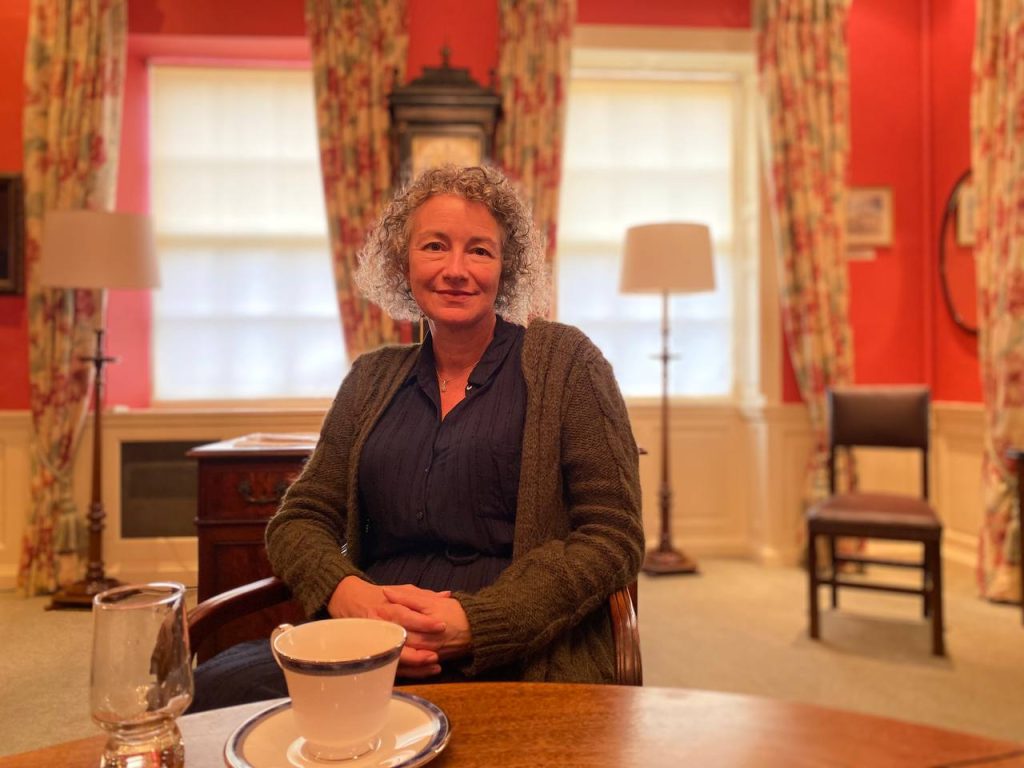
“For me, power is a big responsibility, but it’s the most exciting aspect too. Before I became Mayor, I always wanted to help people, but sometimes they didn’t listen to me because who was I? Now, being Mayor feels different because people listen to me; they’re more receptive. It’s been a wonderful, positive experience. Lots of things I want to do are within my reach now, and I can do them – for example, bringing people together, hosting events, doing some fundraising, raising awareness of different issues, and helping community groups.”
At the same time, she admits there are limits.
“It’s frustrating because there isn’t enough time to do everything. Sometimes my diary gets really full, or people ask me to do things that I simply cannot do, and that makes me sad; but at the end of my Mayoral year, I’ll know I did my best. If I can do something or move things forward, I’ll definitely try.”
Women in leadership
At one point, our conversation turned to women in Stamford and how many of the town’s most visible leadership positions are currently held by women. I told Amanda that, from the outside, it almost sounds like a matriarchy — and honestly, maybe not the worst kind of political system.
Amanda laughed and said:
“I personally think women are brilliant, and in Stamford we have women in charge all over the town — the Mayor of Stamford, the Town Clerk, the Deputy Mayor are all women, the people who are in charge of Burghley House, The George Hotel, and Stamford College are also women.”
She immediately adds that this is not about dismissing men.
“Don’t get me wrong, men in Stamford are doing absolutely fabulous things. Some of my favourite councillors are male, and personally, I love men’s company; I really enjoy being with them; but give women power, and we can do good things with it.”
I told her that I personally see this as a form of soft power – that women’s emotional intelligence, empathy, and ability to hold relationships together can be an advantage, not a weakness, in leadership. Women in high positions are not a problem, but more often a strength.
Amanda agreed.
“On International Women’s Day, I invited women from different fields for coffee. My idea was to connect all the women running something in Stamford so that they could talk, meet, and celebrate. For this event our team collected pictures of all the historically important women of Stamford and displayed them together. We are proud of these amazing women of our town, just as much as we are proud of modern women.”
“I’m an absolute feminist. I think feminism is simply equality, because women are worth as much as men – that’s what feminism is. It’s not anything against men at all. I love men; I married a man; I’ve got a son; a lot of my best friends are men; and they’re feminists as well. They believe in female equality.”
She adds that she has always been uncomfortable with the idea that a woman’s best strategy in life is simply to marry well.
“The opinion that the only perfect solution for women is to find a rich man to marry – I disagree with that.”
Motherhood, work, and financial independence
Amanda speaks very openly about why earning her own money mattered to her.
“There was a time when it was really hard for me to work. I had two small children, my husband was earning money. I also had a job, but the job that I had paid less money than the childcare costs for looking after my two children. I think I earned £300 less per month than the cost of childcare.”
She remembers a conversation with her husband very clearly.
“I remember my husband saying to me, ‘Why are you working?’ And I responded that the childcare costs are on both of us. So, you know, you could be paying the childcare costs. It is more important that I keep earning my own money. I love my children and being home with them, but I also love work, and going out, and I think it’s really important for my children to see their mother working. My three children would all say the same thing: that I am one of the busiest people they know and that I do more than anyone else – and I’m glad. I’m proud that that’s their role model. Not that it’s terrible to stay home and look after your children if that’s what you want — but it’s not what I wanted, and it’s not right for everyone.”
She also speaks warmly about her husband’s support.
“He’s a very busy man, doing his work and his life, and he’s very proud and very supportive. He’s probably not able to do as much with me, and we probably don’t see each other very much, but we’ve been married 30 years, so a bit of time being busy doing things without each other is probably quite good for a marriage. He likes to support the church and the military, including the Army, Navy, and Air Force. So he’ll always try to attend events such as Remembrance Sunday and things like that. He is very proud of me and very supportive. My husband is a good person to run ideas past, and he’s probably my number one fan.”
Stamford and diversity
Amanda believes Stamford has always been shaped by movement and by people arriving from elsewhere.
“I think that Stamford is right in the centre of the country, and people have always travelled through Stamford. Historically, pilgrims, market traders, and anyone travelling from London to the north travelled through Stamford, so Stamford always had people coming through, and it has always been a welcoming place.”
She lists the signs of that openness, both old and new.
“We have more churches, more pubs, more restaurants, and more bars than an average town of this size, and that’s because so many people come here. You see it on the weekends, you see it in the evenings. People flock to Stamford, whether they’ve come for a night out, from the villages or even from the cities. Buses turn up for the Friday markets, and on the weekends you’ve got visitors pouring in.”
She also points to the town’s history.
“Historically, it’s been a really important place. It was involved in various matters related to the royal family and the military. There was also a breakaway university here from Oxford for a while. It was the first conservation town in the whole of the country. In 1967, they wanted to preserve this town because it was so beautiful, so it was made a conservation area. Now they’re all over the place, but this place was the first.”
For Amanda, diversity is not an abstract concept.
“I think it’s a special place people like to come to, and the people who live here are very proud of it and very passionate about it, but they also enjoy sharing it with others. I think Stamford has always been incredibly welcoming. Diversity is really just about welcoming and embracing others, and that’s what Stamford is all about. It’s not about the colour of your skin or the language you speak. I think it’s about pride in what we have and pleasure in sharing it with others. When others come to Stamford, they bring so much to us. We have a whole breadth of community here that is supported and built up by others who’ve come here, and what they bring, and what they’ve taught — from the food, to the culture, to the music. People coming in and sharing their knowledge, experience, and customs with us is what makes Stamford such an incredible place.”
“We haven’t just become an inward-looking English town. We are modern and embracing. You see it in the Friday market. If you walk through the Friday market, you’ve got Greek, Spanish, Jamaican, and Indian food, and it’s all there – and it’s really welcome. It just adds to the pleasure of being in Stamford.”
Why Ukraine matters
From the broader conversation about diversity and welcoming newcomers, it felt natural to move to the Ukrainian community, who have also become part of Stamford’s life in recent years. I told Amanda about a moment that stayed with me.
“A few weeks ago, at the event for Ukrainians marking the fourth anniversary of the full-scale war, when it was the last song, which was the Ukrainian national anthem, I was looking straight at you, and I saw your eyes tearing up, standing there – and I thought, “Wow, she really does care. I was crying there too. I was standing there feeling so thankful for your support of Ukraine and Ukrainians as well. In Stamford, it’s really visible, and I wanted to ask you – why do you care so much? Why is it important for you to help Ukrainians?”
Amanda answers without hesitation.
“My heart breaks for what is happening in Ukraine. It’s been four years, and I feel so helpless. My life in Stamford is really happy, and I am so lucky. My children have never known suffering. They were born into a happy family in a safe environment. To have to grab your children and pack your bag and leave your home and move to another country where you don’t speak the language and where you know no one, just to keep your family safe – it’s unimaginable. It’s horrific that 80 years on from WWII, we seem to be on the brink of WWIII. I really don’t understand war. I don’t understand why another country can’t just let the people in their neighbouring countries live peacefully.”
At the same time, her support is not abstract or only official.
“I feel deep sadness and affection. The Ukrainians who live in Stamford — some of them are my friends now. They stop, and we talk in the streets. I’m not just there as Mayor, I’m there as a friend. I was there last year, and the year before, and the year before that, and I will be there again next year. It’s not about the role I play; it’s about the person I am and the relationships I have with the community.”
She says what hurts her most is not being able to do more.
“I wish I could make it better for everyone and fix it. I am a fixer. When people come to me with their problems, I’m always finding a solution, and it’s very frustrating not to be able to fix something like this. I can’t even imagine being a Mayor in Ukraine right now. They are very brave. I’d say: keep going and stay strong. Look after your people.”
Charity, young people, and what comes next
Amanda says that there are facets of her role that she finds challenging.
“One aspect of being a Mayor is to raise money for charity. You can choose one charity, but I found it hard because I want to support all charities.”
In the end, she chose three.
“I wanted to support MindSpace because I think mental health is very important. If you have physical health issues, you can usually access good care from the NHS, but there are long waiting lists for mental health care. Sometimes it’s not even about a mental health issue; it’s about mental well-being. There might not be something that can be done in the medical world, but there is something that can be done in the community. MindSpace is a great local charity that supports people’s mental wellbeing. Their activities are free. People can join sports activities or arts and crafts, or just go for a piece of cake and a coffee. They also have a garden, and they do amazing gardening.”
Other charities she has chosen to support are George’s Food Hub and Second Stamford Scouts.
“George’s Food Hub is another one. I’ve known George for many years, and he has been a passionate campaigner against food poverty and food waste. It’s something environmental that I feel strongly about – eliminating waste and making sure we aren’t throwing food away when there are people who are hungry. Poverty is a real issue in Stamford, even if it is not always visible.
The third one is Second Stamford Scouts. I am really passionate about supporting young people. When I joined the town council, one of the first things I did was set up a youth council so that young people could come and share their ideas. The Scouts share similar values, and they are fundraising for a new headquarters, which is why I chose them.”
She smiles and adds, practically:
“Of course, the more charities you choose, the less money each charity will get.”
When I ask what comes next for her, Amanda says her focus is already on the town’s future.
“Next step for me – there’s a competition for which town will be the UK Town of Culture for 2028, and right now that’s my main focus. That’s what I’m thinking about right now – that’s as far as my ambition goes.”
Text&photos: Rostyslava Martyniuk
English version text editor: Helen Lewis
Ukrainian version text editor: Anastasiia Zanuzdanova