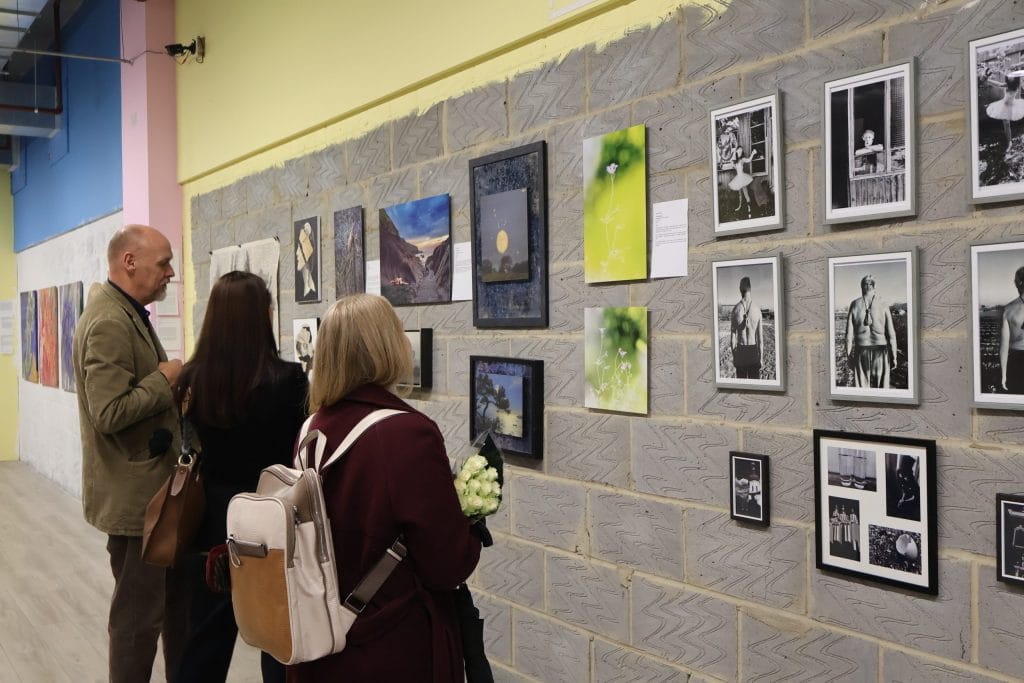
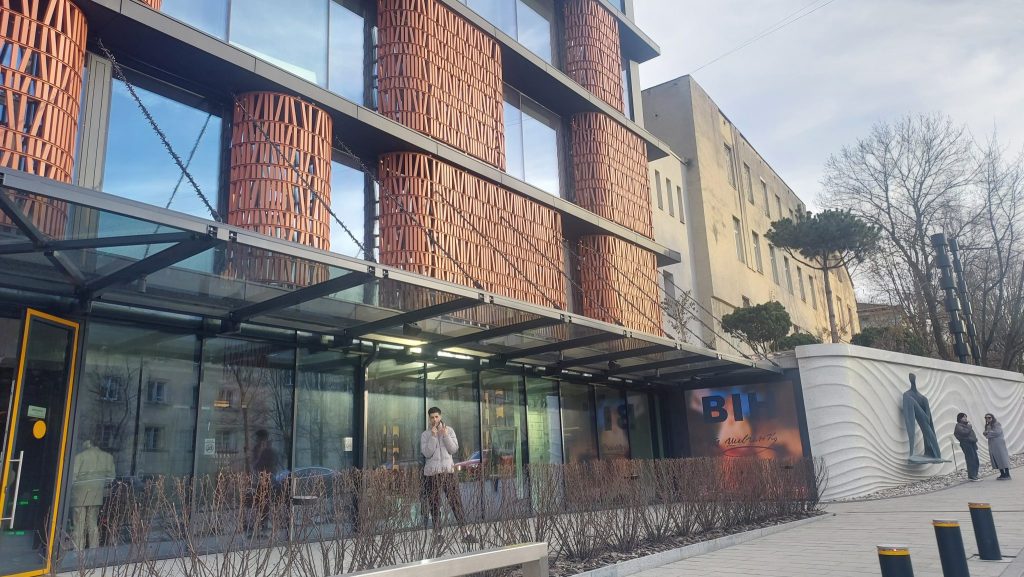
March is traditionally a month when Ukrainians honour the memory of Taras Shevchenko — the country’s best-known poet and one of the key figures associated with Ukrainian dignity, freedom and cultural self-awareness. Yet it is often mentioned only in passing that he was also an artist. And not simply a capable one, but an exceptional one. Visitors can see this for themselves at the Zenyk Art Gallery in Lviv, where the exhibition HE: Taras Shevchenko is on display. The Artist opened at the end of February. It offers a chance to look at Shevchenko beyond the familiar classroom image and to encounter him not as a distant monument, but as a complex, living cultural figure.
An artistic legacy larger than his literary one
In Ukraine, Shevchenko is often introduced first and foremost as a poet. Generations of schoolchildren have studied his verses, and his poetry collection Kobzar became so influential that the title itself turned into one of his best-known names. Today, Ukrainians often refer to Shevchenko simply as the Kobzar — not as a casual nickname, but as a sign of cultural recognition and affection rooted in the extraordinary impact of that book.
His poems have been translated into many languages, and monuments to him stand across the world. Yet paradoxically, this level of reverence has often made him feel distant rather than alive.

Part of that distance also comes from the way he was taught for decades. In Ukrainian schools, especially during the Soviet period, many important Ukrainian cultural figures were presented through a deliberately narrow, often joyless lens: poor, tragic, burdened, and almost frozen in suffering. At the same time, major Russian writers and artists were more often framed as grand, authoritative and unquestionably great. This was not accidental. It was part of a wider imperial and colonial policy that encouraged Ukrainians to see their own culture as secondary, provincial or marked mainly by pain, while Russian culture was positioned as the dominant and “superior” one.
That approach left a deep mark on collective memory. For many Ukrainians, Shevchenko became associated less with artistic discovery and more with the heavy, moralising figure imposed by schoolbooks — a stern man with a moustache and a sheepskin hat, staring out from the page as if demanding reverence rather than curiosity.
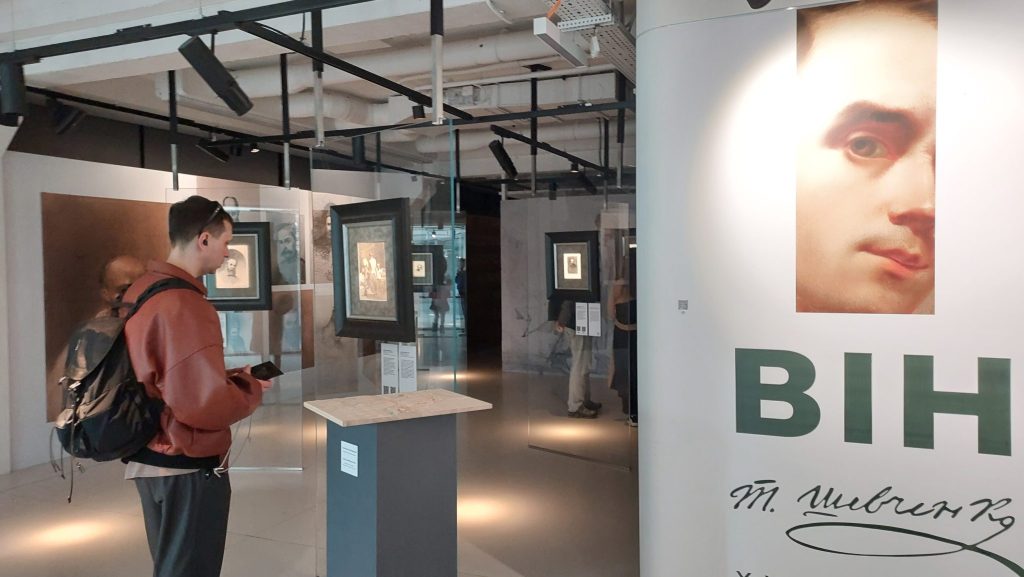
Because of this, many people grew up knowing that Shevchenko wrote poetry and perhaps “also did some drawing”, but very little beyond that. What exactly did he create? In what genres? In which techniques? Under what circumstances? The exhibition in Lviv answers these questions and opens up a very different view of him.
The project HE: Taras Shevchenko. The Artist focuses on Shevchenko’s visual art and presents to the public works that remained in museum collections for a long time. The exhibition includes 58 original works from the Taras Shevchenko National Museum in Kyiv, alongside digital reproductions that help reveal the breadth of his artistic legacy.

The curator of the exhibition and director of Zenyk Art Gallery, Khrystyna Berehovska, says the idea emerged from personal research and from a wish to restore Shevchenko to the artistic context he fully belongs to. In Ukrainian public consciousness, he is still too often reduced to the role of a poet, even though his artistic output was on a much larger scale.
According to Berehovska, Shevchenko left behind around 1,200 works of visual art — several times as many as his literary works.
“For me, the exhibition began with personal research,” Berehovska says. “I once decided to check how many doctoral theses had been defended in independent Ukraine about Shevchenko as an artist. The answer was none. Then I looked at how many solo exhibitions dedicated specifically to Shevchenko, the artist, had been held over the past 250 years, outside the museum created in his honour. Again — none. That surprised me deeply.

Later, I came across information on social media that in St Petersburg, a department of Shevchenko studies had been opened, where he was being described as a Russian artist. Even at auctions, his works are sometimes sold under the label ‘Russian artist Taras Shevchenko’.
About a year and a half ago, for example, his work Poplar was sold for around $1.8 million. When I saw that, I realised: we must speak about our artist ourselves and show him to the world.”
Not a bronze monument, but our contemporary
This is also why the exhibition’s title matters. In Ukrainian, VİN — “HE” — sounds blunt, direct and almost provocative. It strips away ceremony and invites the viewer to meet Shevchenko afresh, outside the usual canon.
The exhibition is dedicated solely to his artistic legacy. It was realised with the support of gallery owner Zinoviy Kozytskyi, although assembling it was far from straightforward. Most of the works were held in the archives of the Taras Shevchenko National Museum in Kyiv, and securing original pieces during wartime was especially difficult. A key role was played by the museum’s director general, Dmytro Stus, son of the repressed Ukrainian poet Vasyl Stus, who eventually agreed to lend a substantial number of works.
“At first I was told the exhibition could only be made with copies, because no one would provide originals,” Berehovska recalls. “But I understood that for our visitors this had to be a real encounter with Shevchenko the artist.
We spoke with Dmytro Stus a lot. I presented the concept. Even the title caused discussion at first. But I kept explaining that HE is an attempt to break the template. Shevchenko is so often imagined as a bronze monument or an icon, but in reality, he was alive. He could easily be among us today — in jeans, in trainers, on the Maidan, the biggest Ukrainian revolution, at the frontline, in a hospital, or in public transport.
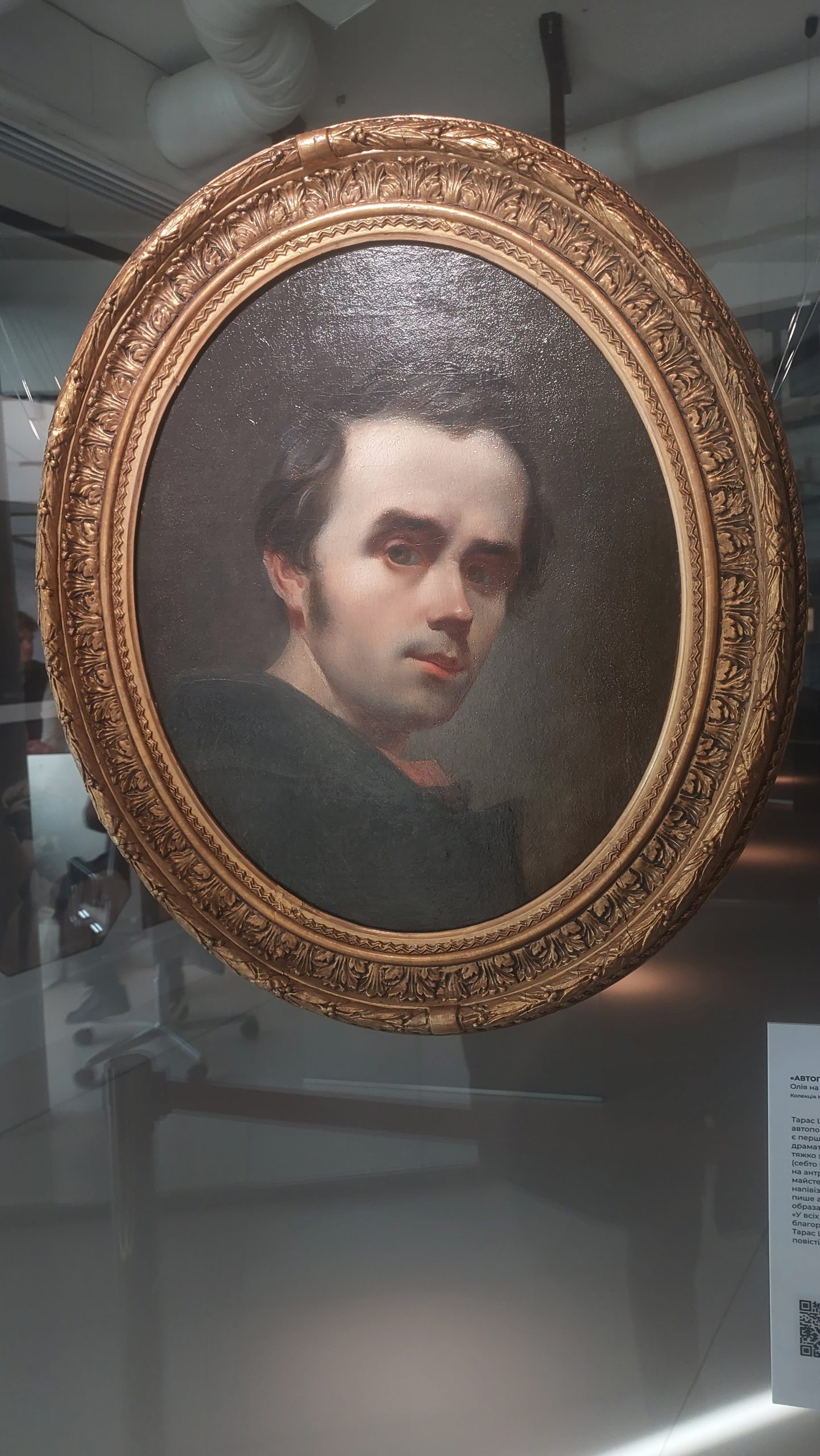
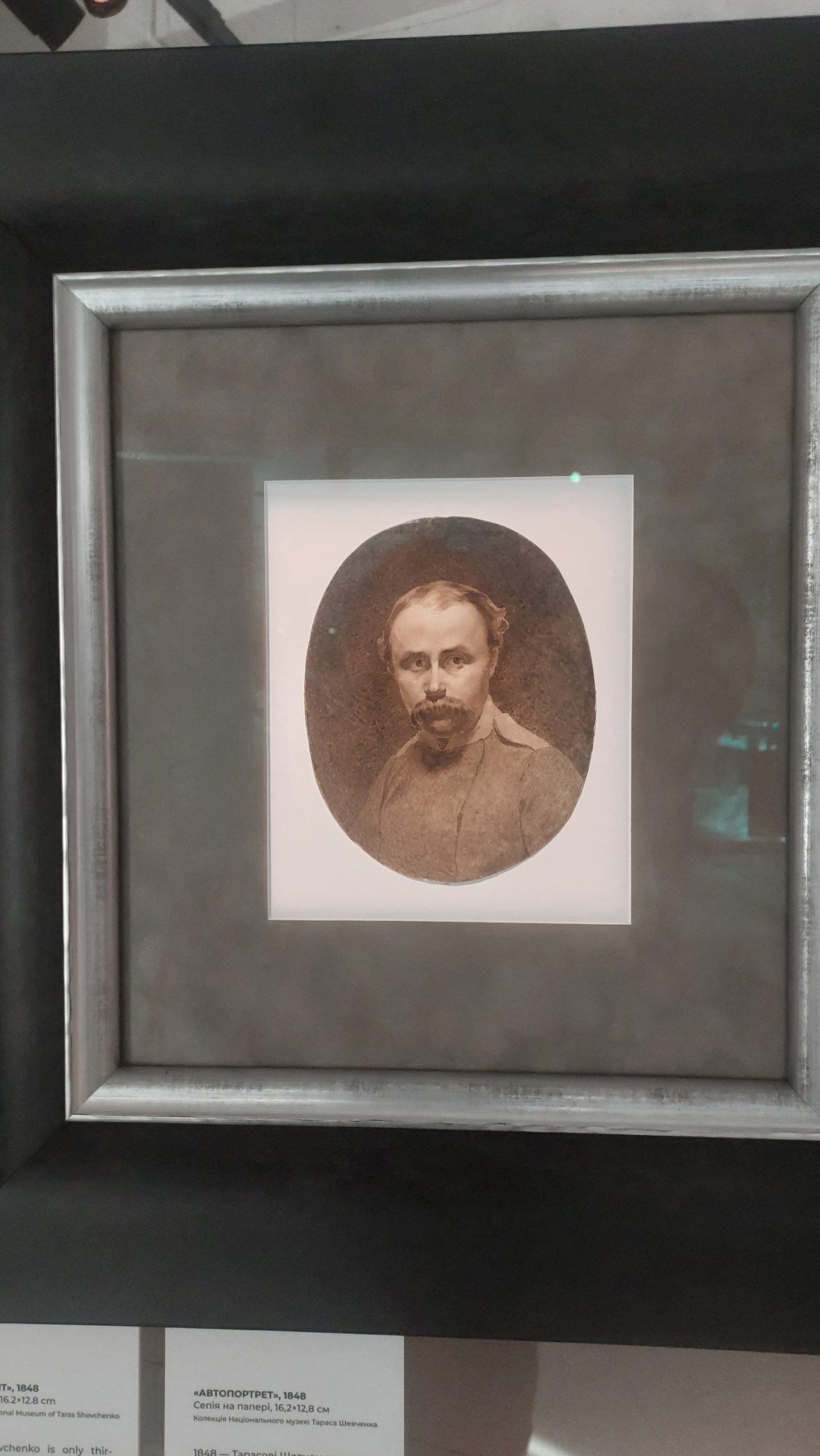
He is constantly presented and interpreted as a poet, but I wanted to show him as an artist. Because he himself might have said: I am not only the author of poems — I am also an academician of engraving and painting. An experimental artist who worked in twelve techniques.”
For non-Ukrainian readers, another cultural detail may be helpful here. In Ukrainian, historical figures are often referred to respectfully by their first name and patronymic — for example, Taras Hryhorovych Shevchenko. The middle element, Hryhorovych, means “son of Hryhorii” and functions as a patronymic, a traditional form used to express respect or formality. So when Ukrainians refer to Shevchenko in this way, it reflects cultural etiquette rather than a sense of distance.
Thinking ahead of his time
The encounter with Shevchenko begins in the gallery foyer, where two installations challenge the worn-out textbook image many people still carry.
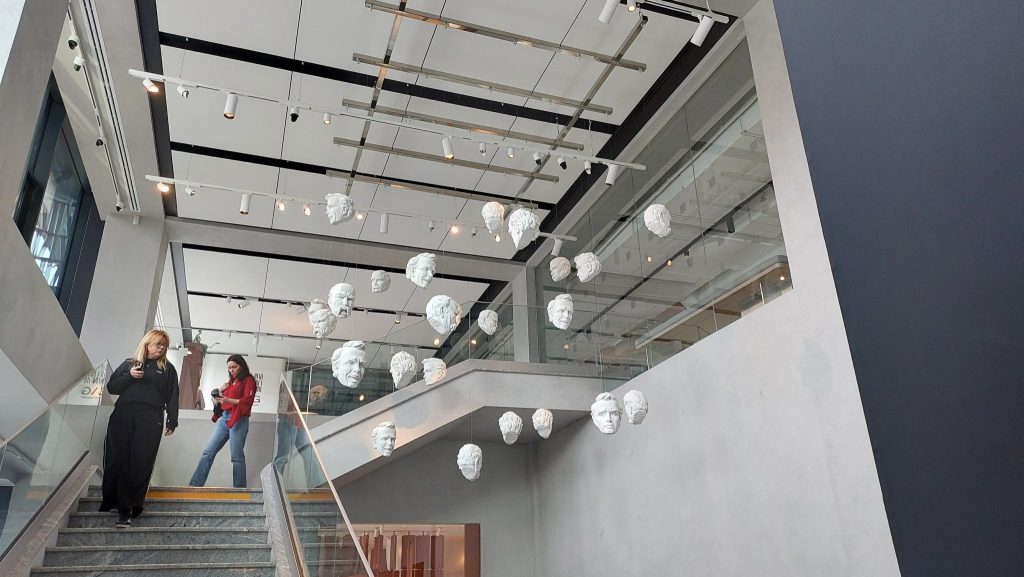
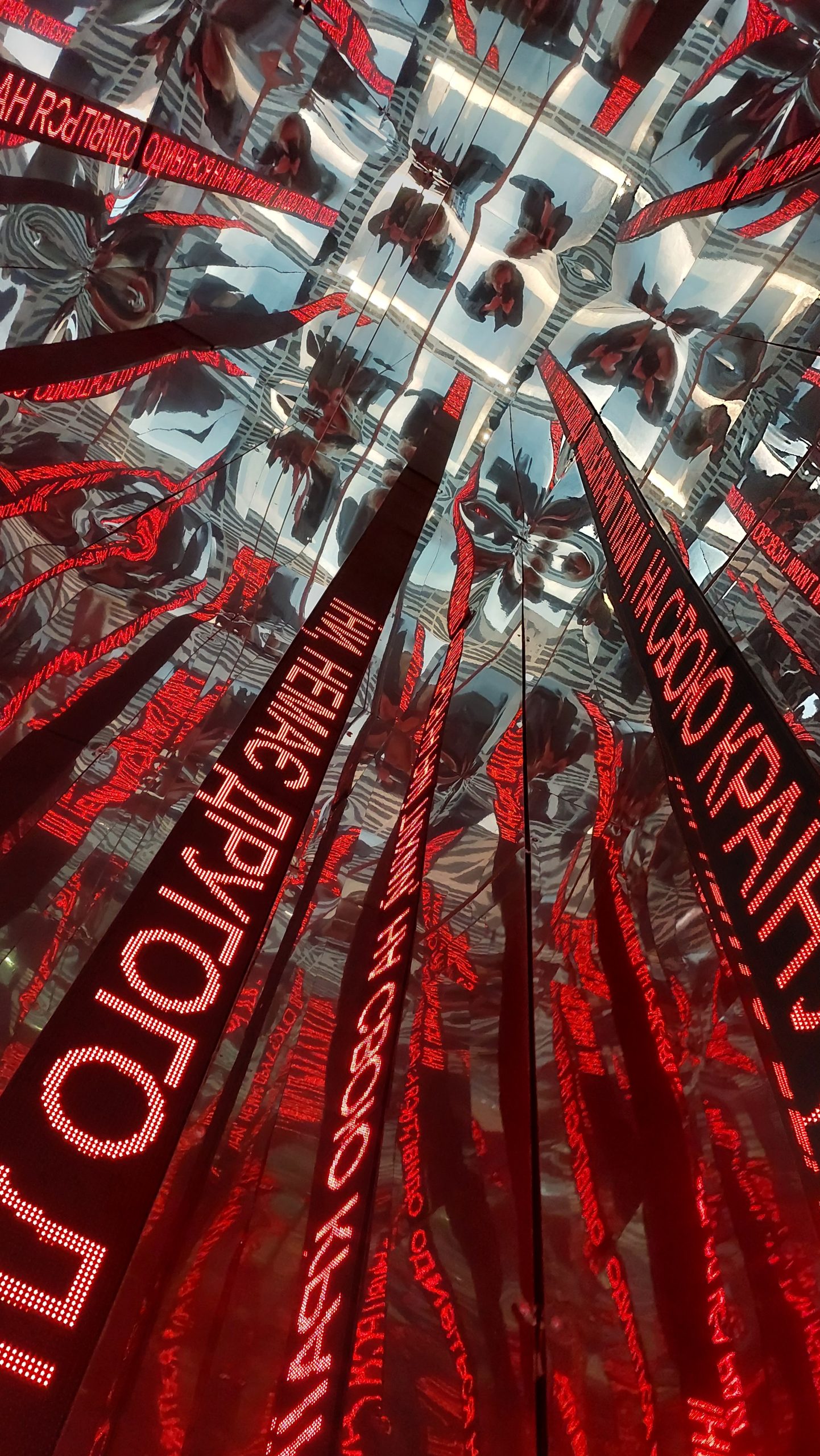
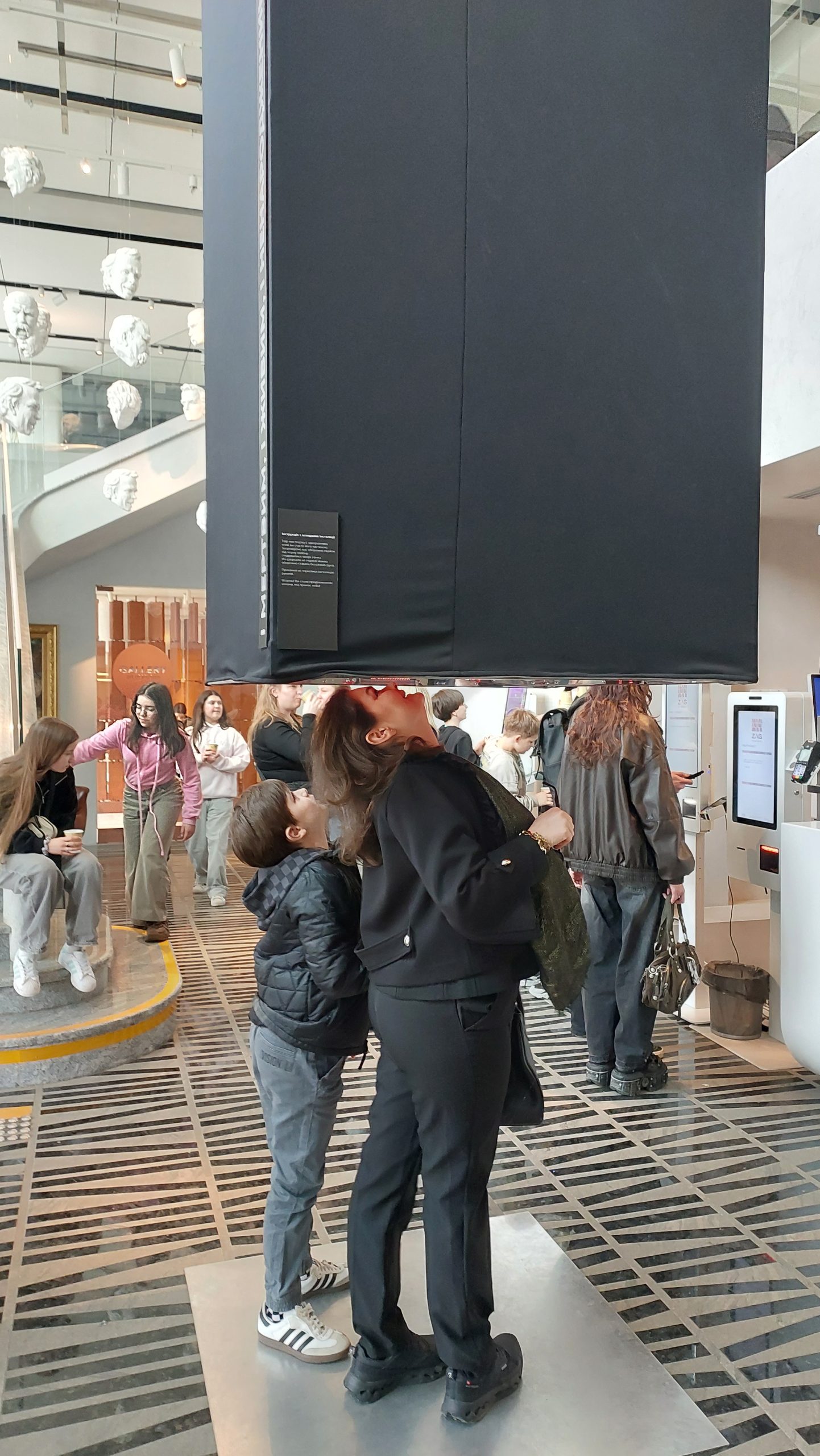
The first is a series of polymer portraits of the artist’s face, each depicting different emotions. Artist Oleksandr Honcharukcalls them Faces of Freedom. The second installation, by Vasyl Odrekhivskyi, is titled To the Dead, the Living, and the Unbornand is made of metal, mirrors and fabric in the artist’s own technique. Standing inside its illuminated rectangle and looking upwards, visitors seem to enter a portal into Shevchenko’s world — one shaped not only by prophetic poetry, but by a rich visual imagination that Ukraine is still learning to read in full.
The exhibition itself is arranged thematically rather than chronologically, focusing on subjects and images that mattered to Shevchenko. It includes works from different periods of his life — from early pieces to those created during exile.
Visitors can see etchings from the series Picturesque Ukraine, works from The Prodigal Son cycle, portraits, mythological compositions, graphic works and paintings. Together, they reveal the range of his methods and interests.
Some originals are accompanied by digital materials that help show the full series and broader contexts.
“The exhibition presents very diverse works — painting, graphic art, etchings, mixed techniques,” Berehovska explains. “Four works are oil paintings; the rest are graphic. At the same time, we obtained around 200 permissions for digital images to show a complete series.
For example, Shevchenko created 38 self-portraits, and we can show how that whole line of self-representation develops. There are also portraits of women, works from the exile period, mythological subjects and images of homeless children.
Another important theme is his trees — the poplar, the maple, the oak — which he essentially anthropomorphises, giving them human qualities. For me, it is important to show that Shevchenko anticipated many artistic styles — impressionism, expressionism, and even certain elements of surrealism. He experimented and thought in a strikingly modern way.”
Anatomical sketches and the enigmatic Kateryna
One section of the exhibition touches on Orientalism. Although Shevchenko never travelled to the East, he was fascinated by its imagery and cultural associations. In works such as Odalisque, he drew on Eastern motifs through the academic conventions of the time.
Another part of the exhibition presents academic works created while he was studying at the Imperial Academy of Arts in St Petersburg. Here, visitors can see drawings made during his anatomical studies. Like many European masters, including Rembrandt and Albrecht Dürer, Shevchenko studied the human body in great detail, even working in mortuaries. These works show his discipline, seriousness and commitment to artistic precision.
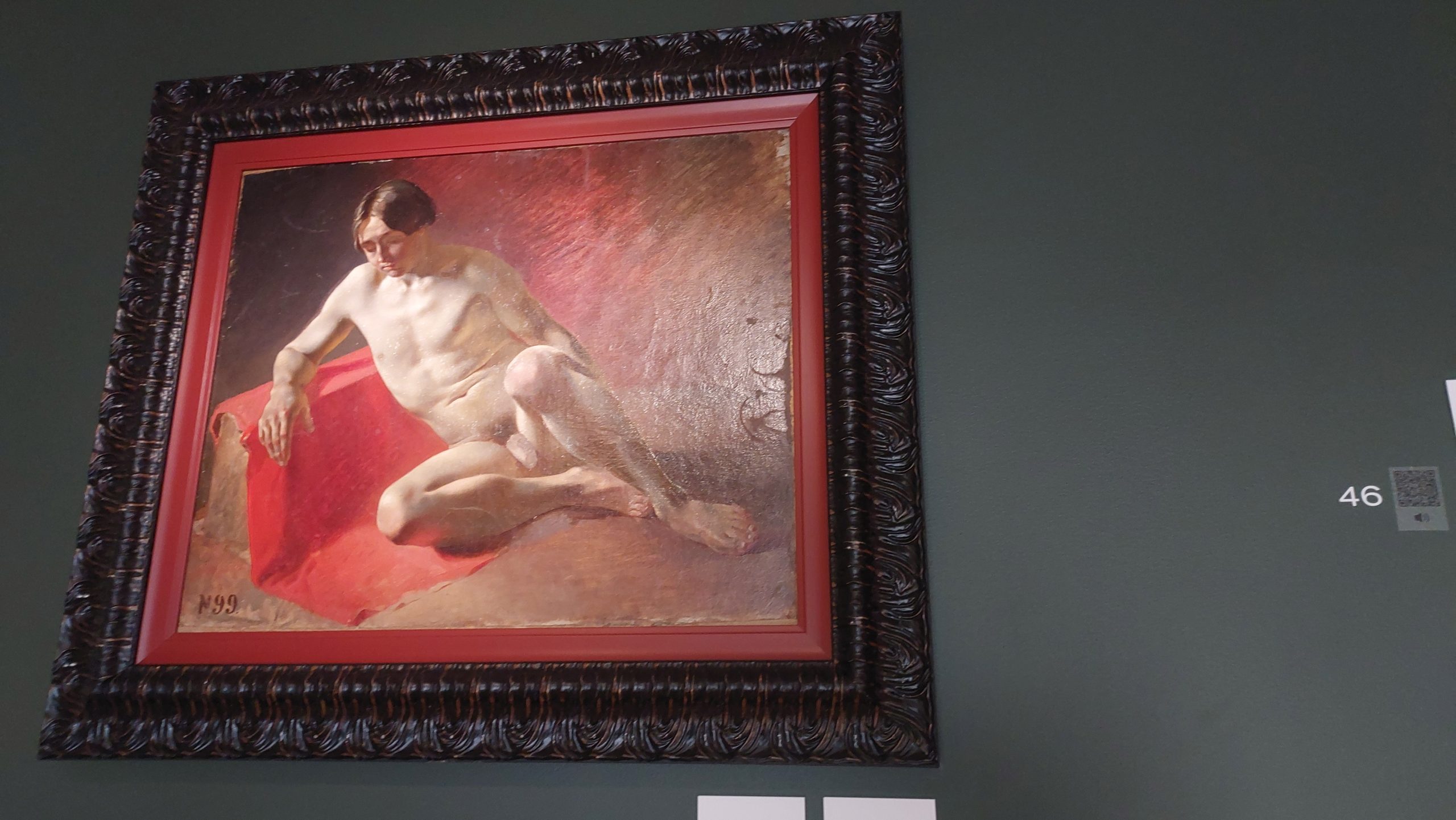
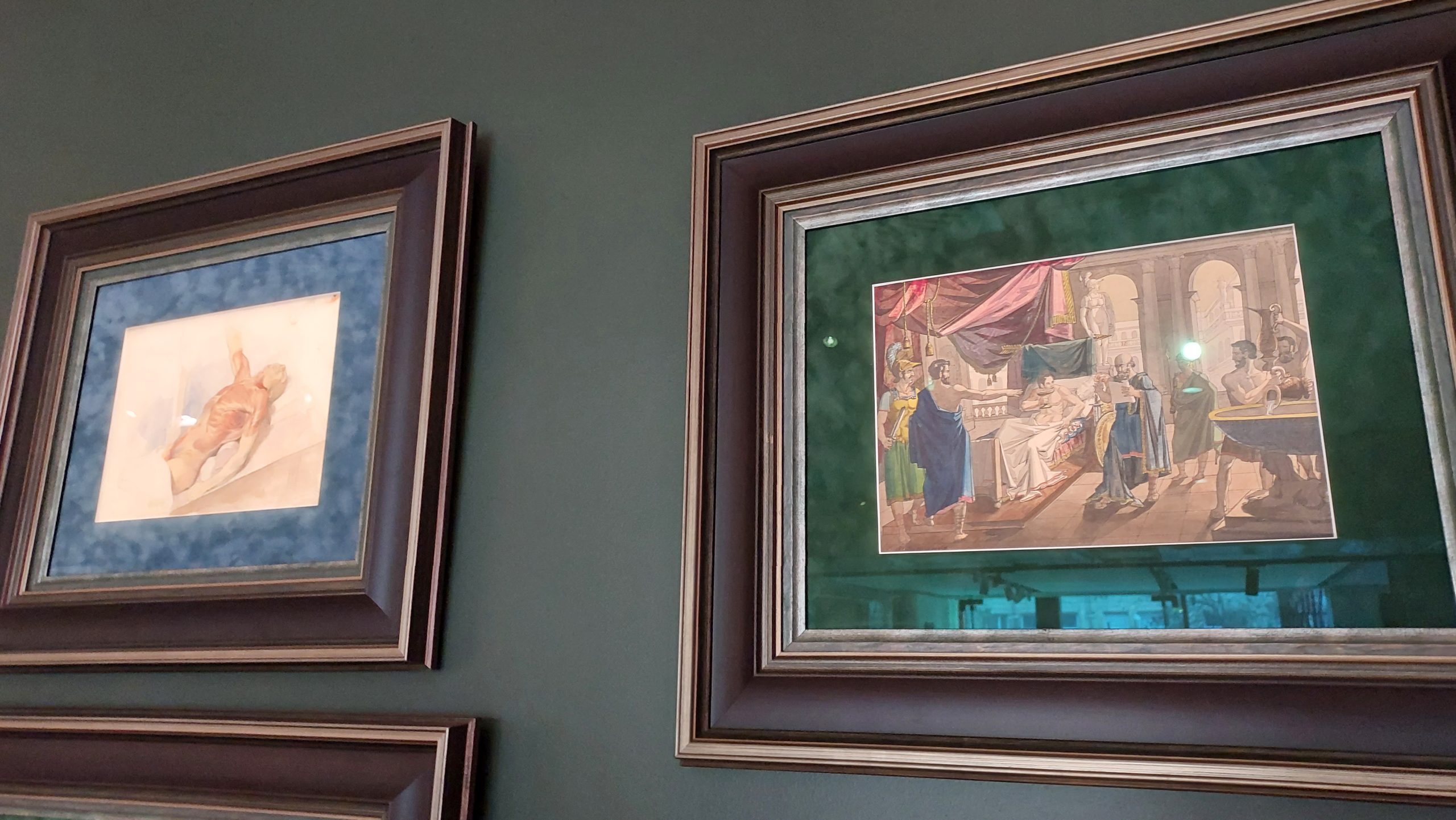
The exhibition also includes drawings of nude models — a subject that for a long time remained outside public view because Shevchenko’s image was so often idealised and stripped of anything that made him feel like a real artist of flesh, intellect and curiosity.
Among the works on display are illustrations to The Tale of Igor’s Campaign, where he turns to the history of Kyivan Rus and combines medieval subject matter with elements of classical tradition. These pieces show the breadth of his cultural interests and his desire to place Ukrainian history within a broader European frame.
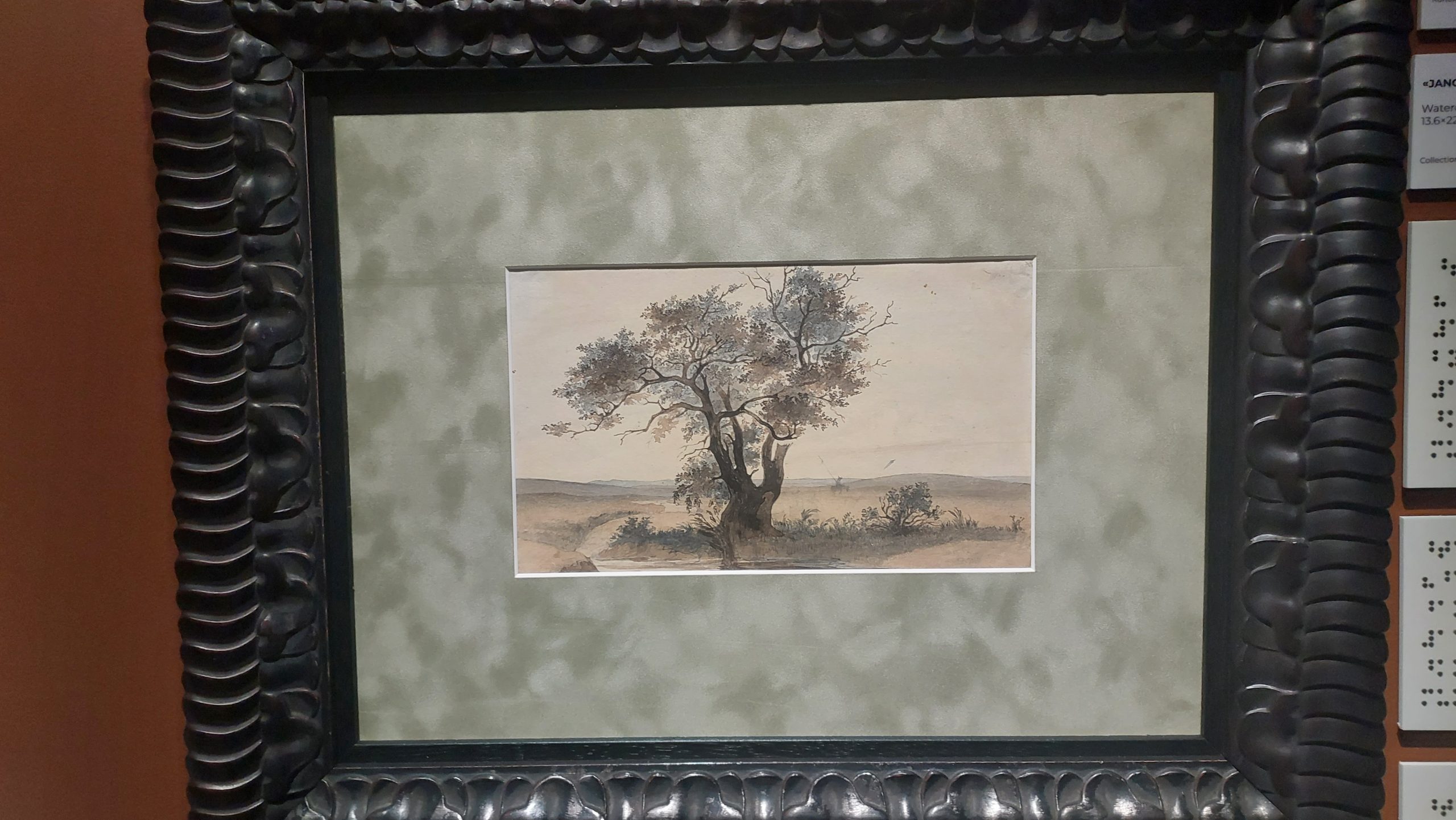
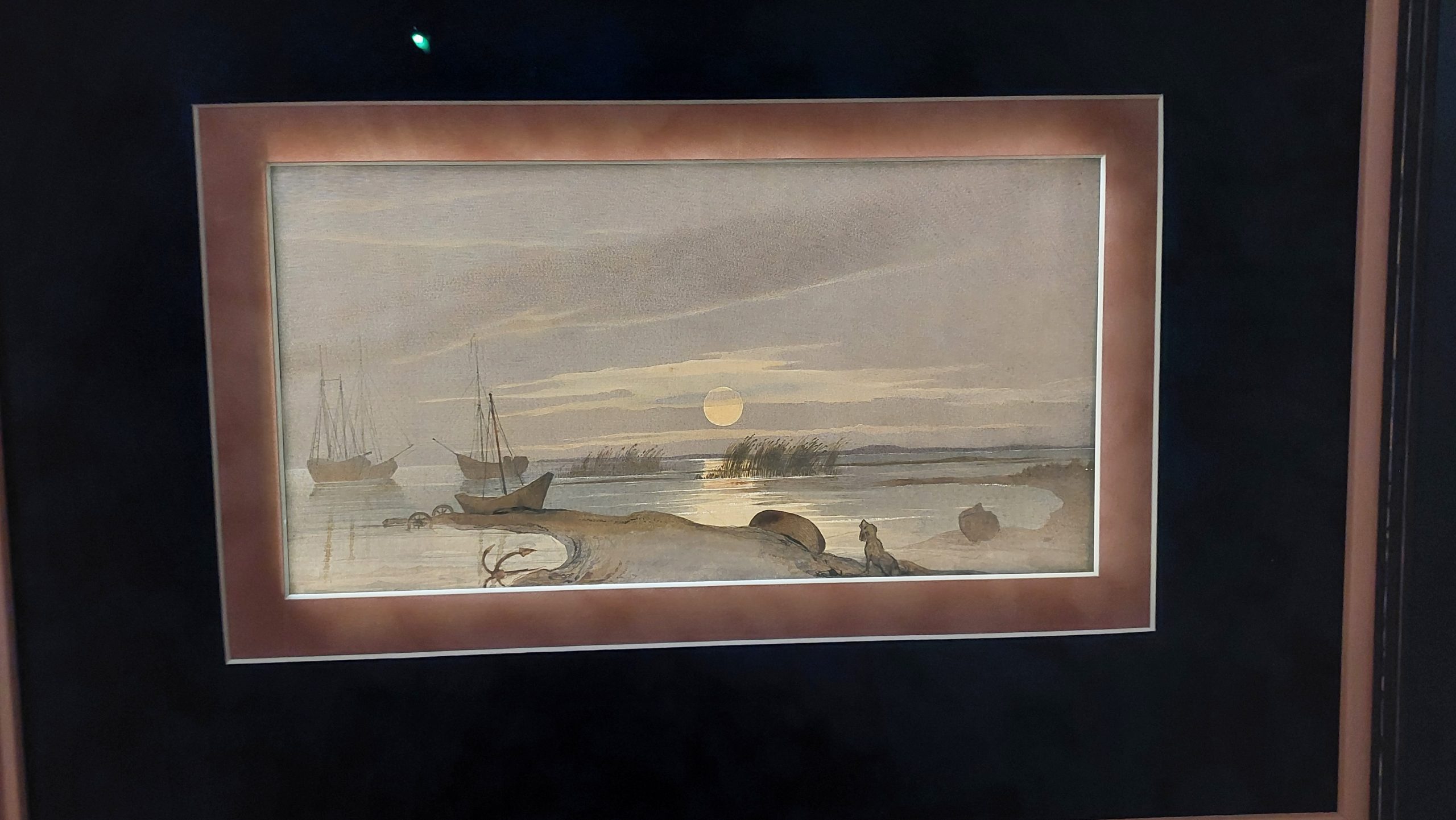
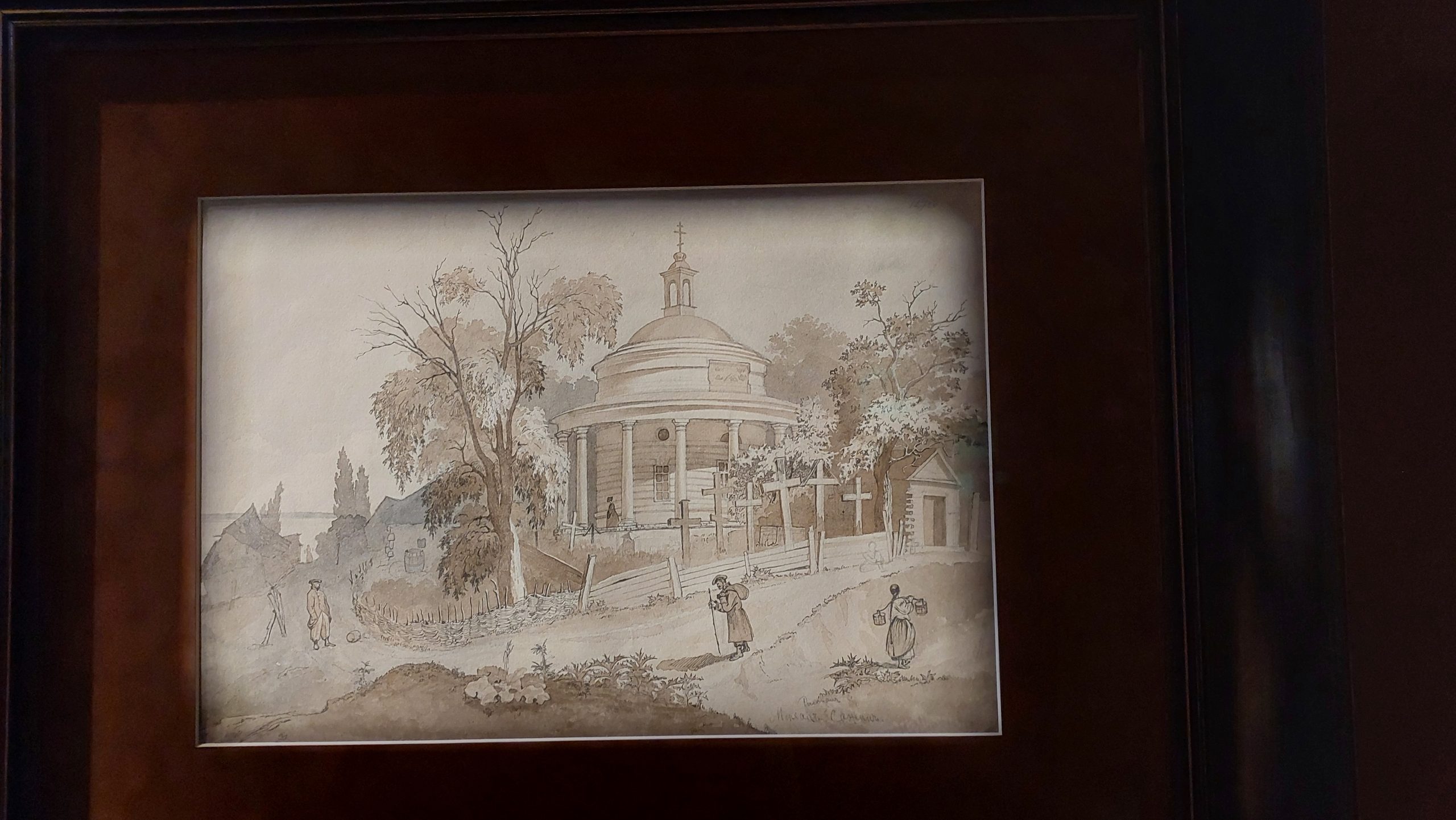
There are also portraits and genre scenes, including a touching portrait of a young boy. Particularly striking is a series of tree images in which nature acquires human qualities: the poplar appears as a young woman, the maple as a young man longing for a better fate, and the oak as a symbol of strength and endurance.
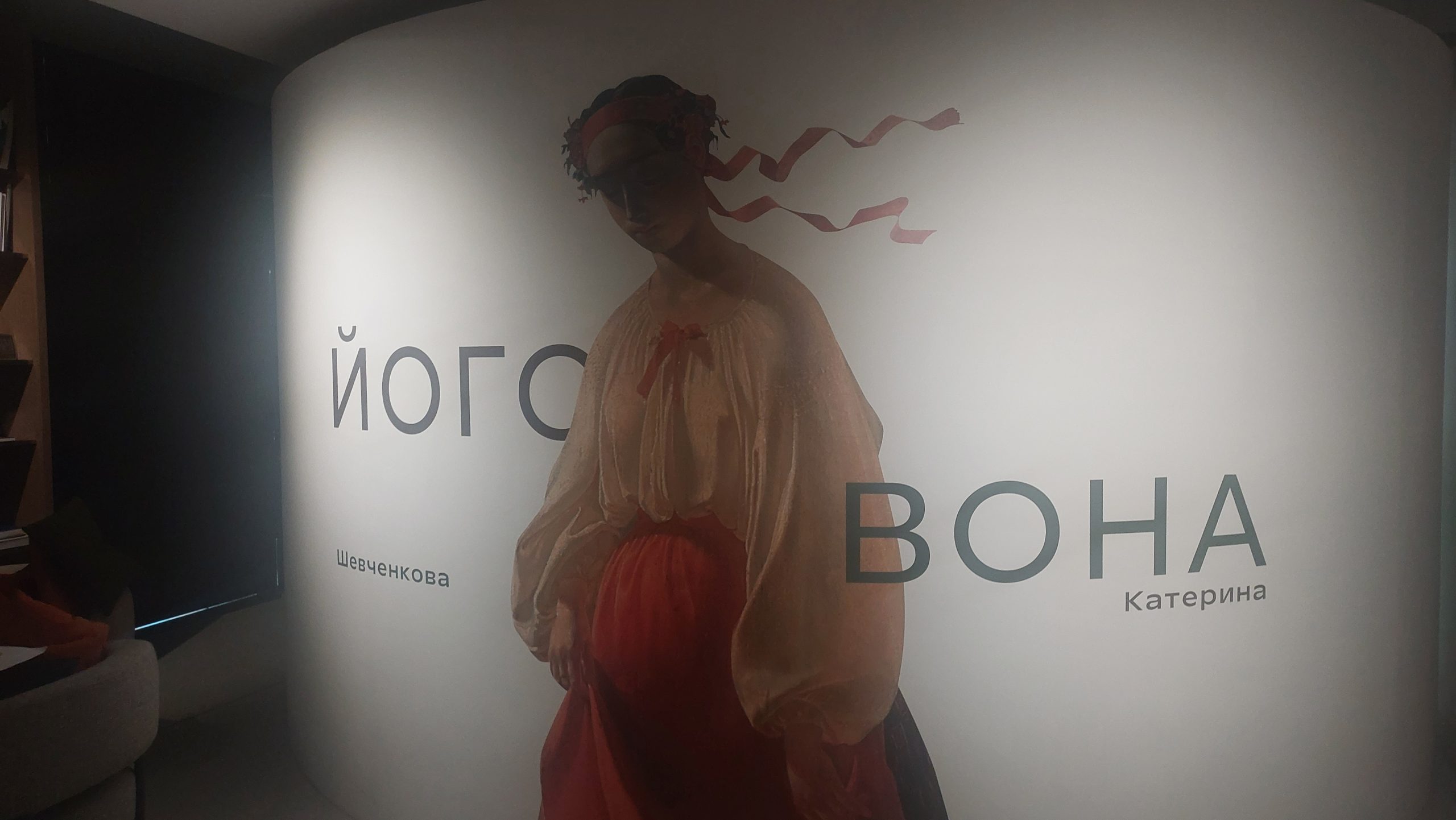
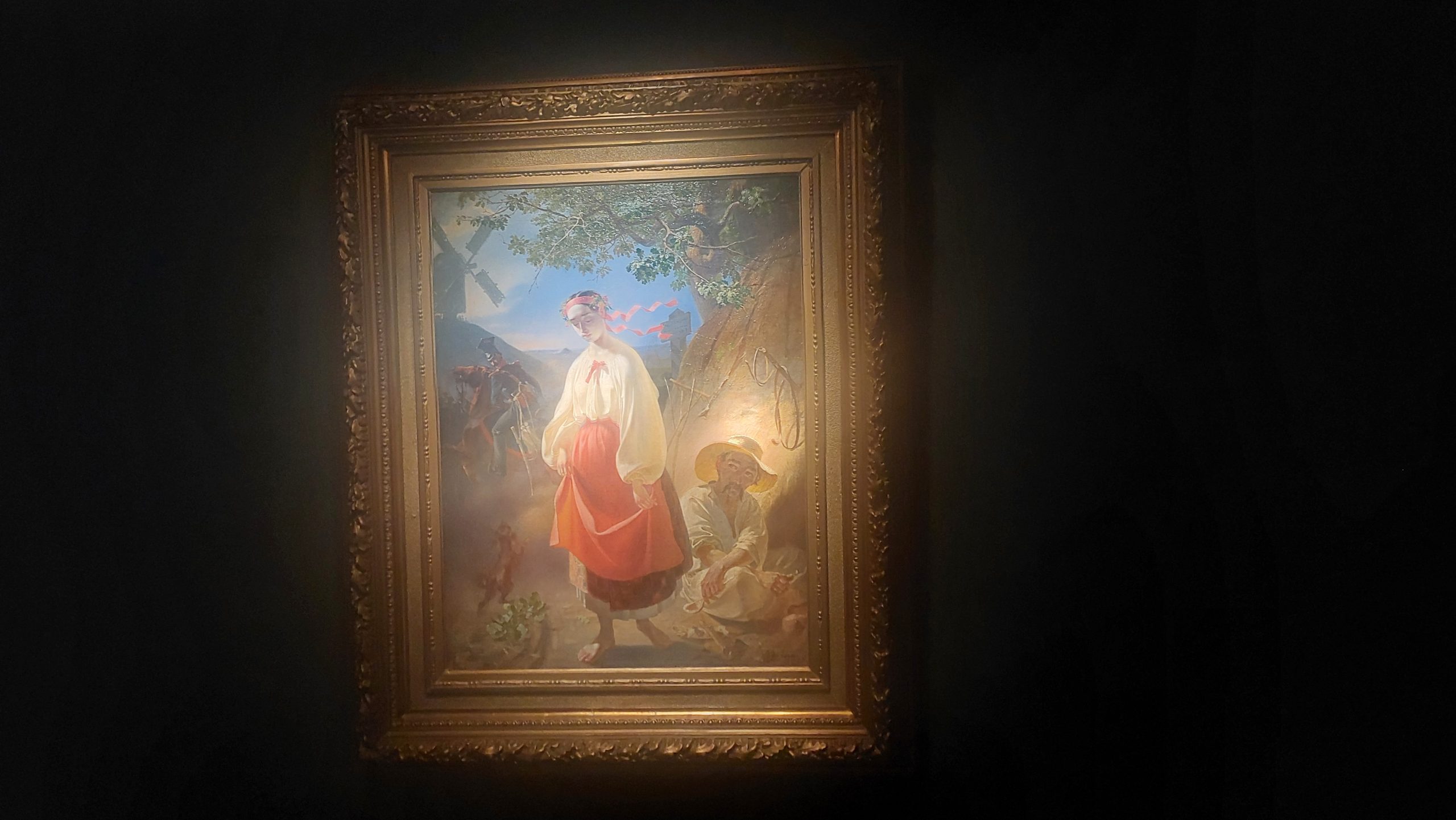
A special place in the exhibition belongs to Kateryna, one of Shevchenko’s best-known paintings. It was commissioned by the patron Hryhorii Tarnovskyifor his collection in Kachanivka. Here, Shevchenko presents a Ukrainian woman not simply as the fallen heroine of his poem, as the work is often interpreted, but as a more universal image of Ukrainian womanhood.
Displayed in a separate space, the painting is sometimes informally called “our Mona
Lisa”. Visitors gather around it constantly, studying it closely and taking photographs beside it.
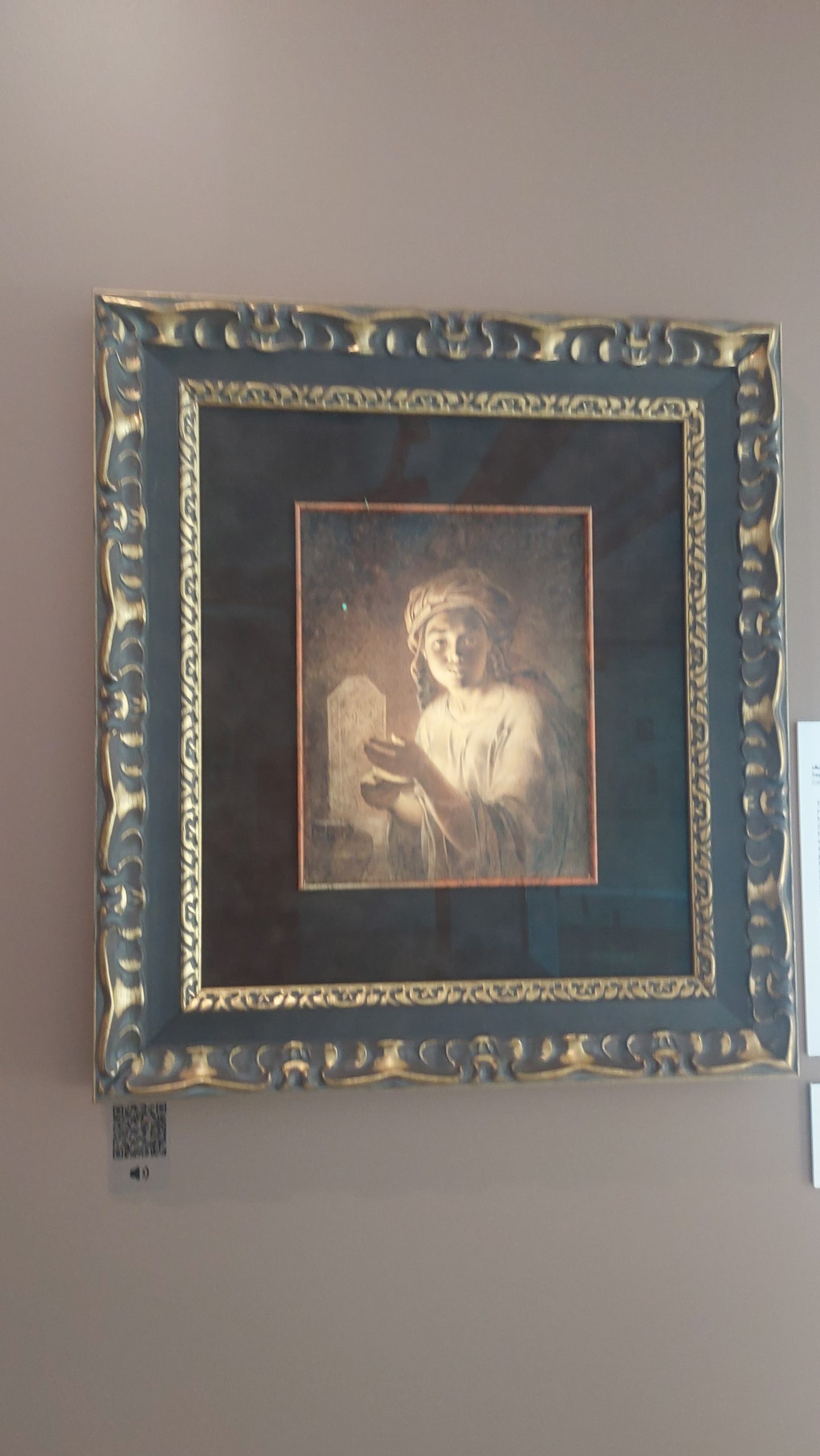
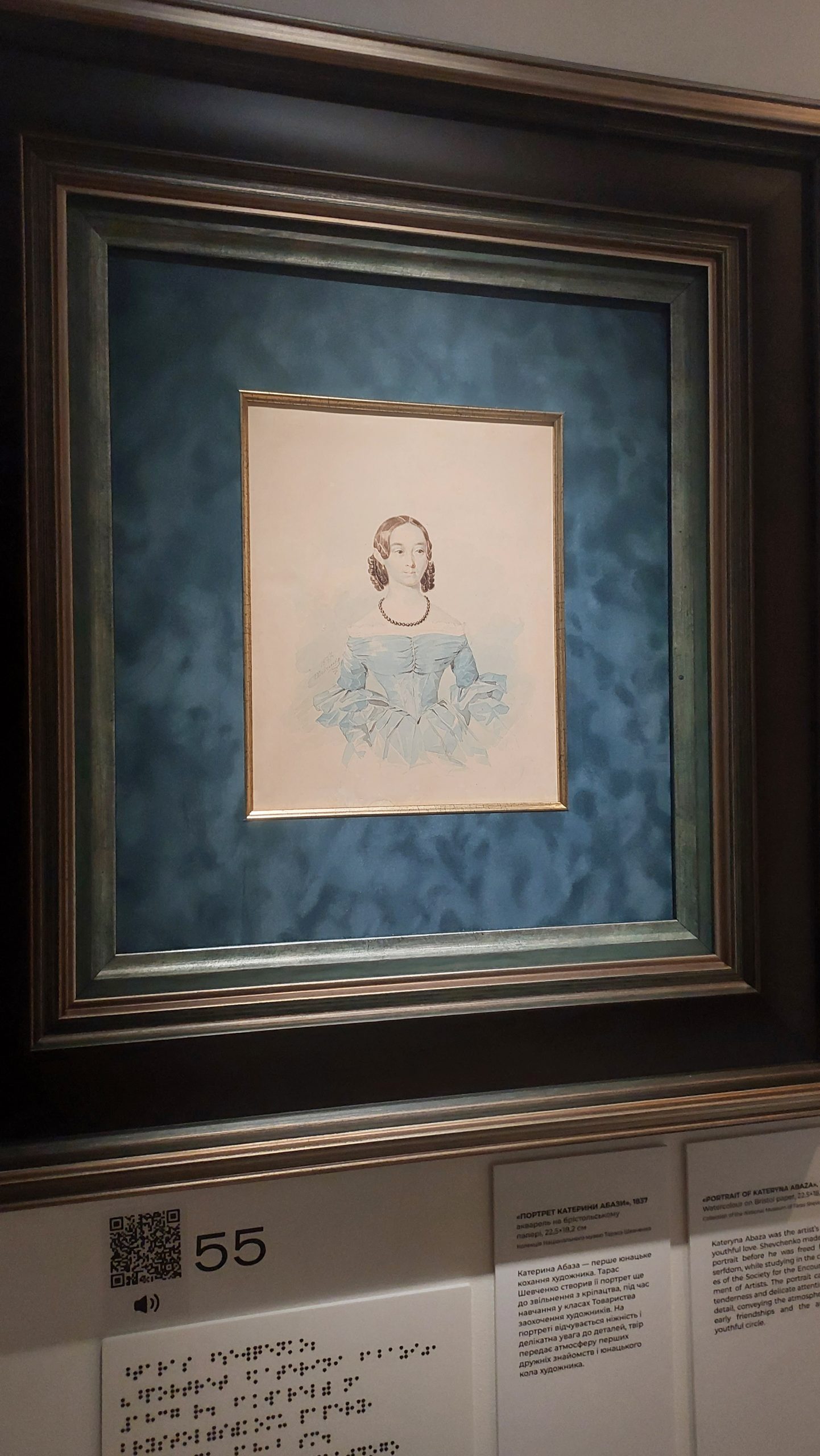
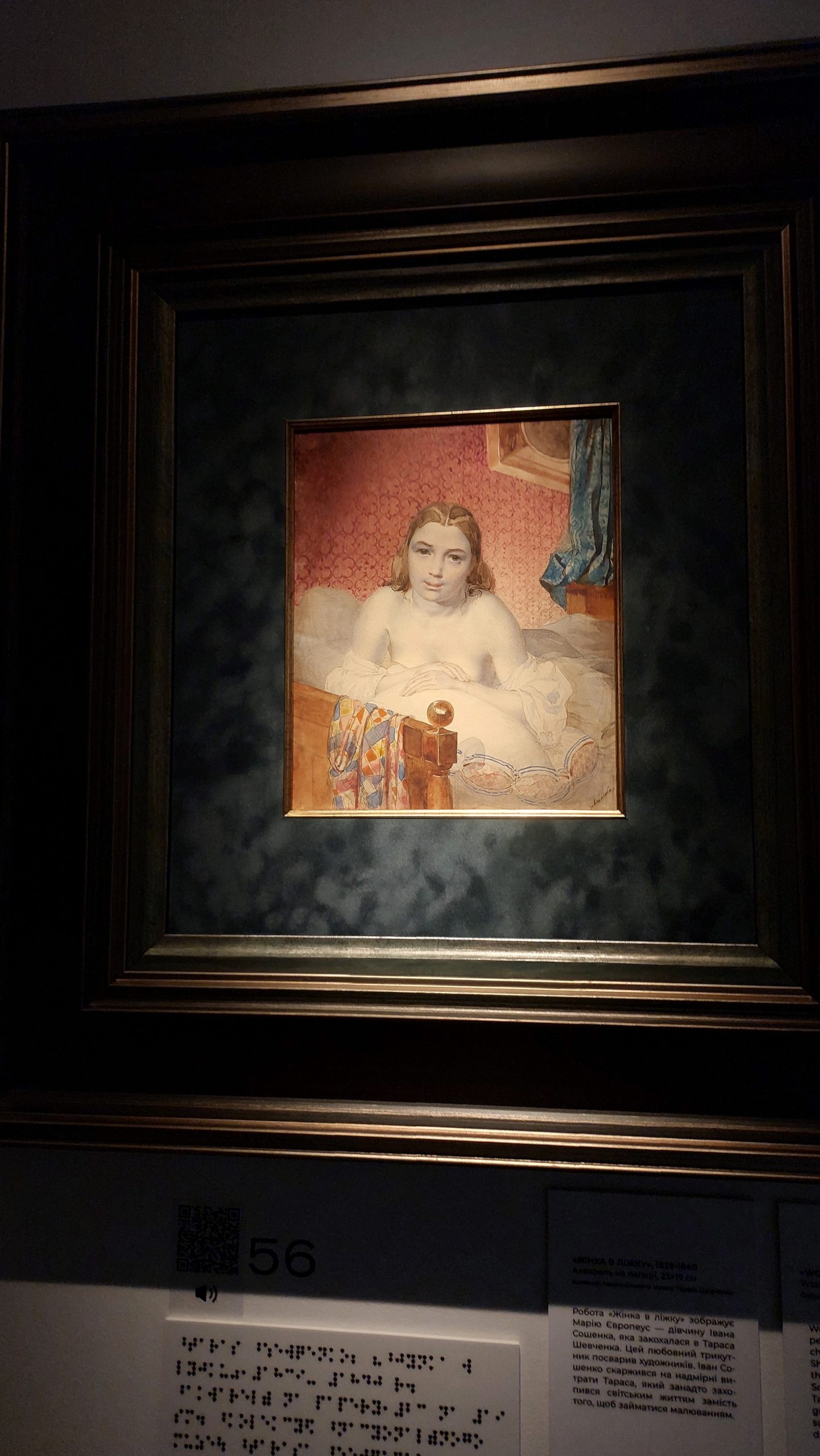
But the exhibition is not centred on Katerynaalone. It also includes portraits of Lykera Polusmakova, Maria Europeus, Kateryna Abazaand other women who inspired the artist and poet.
People come here to overcome their “school trauma”
The exhibition also changes the way art is explained to visitors. Its curators have clearly tried to make the material accessible to a wide audience without losing intellectual depth.
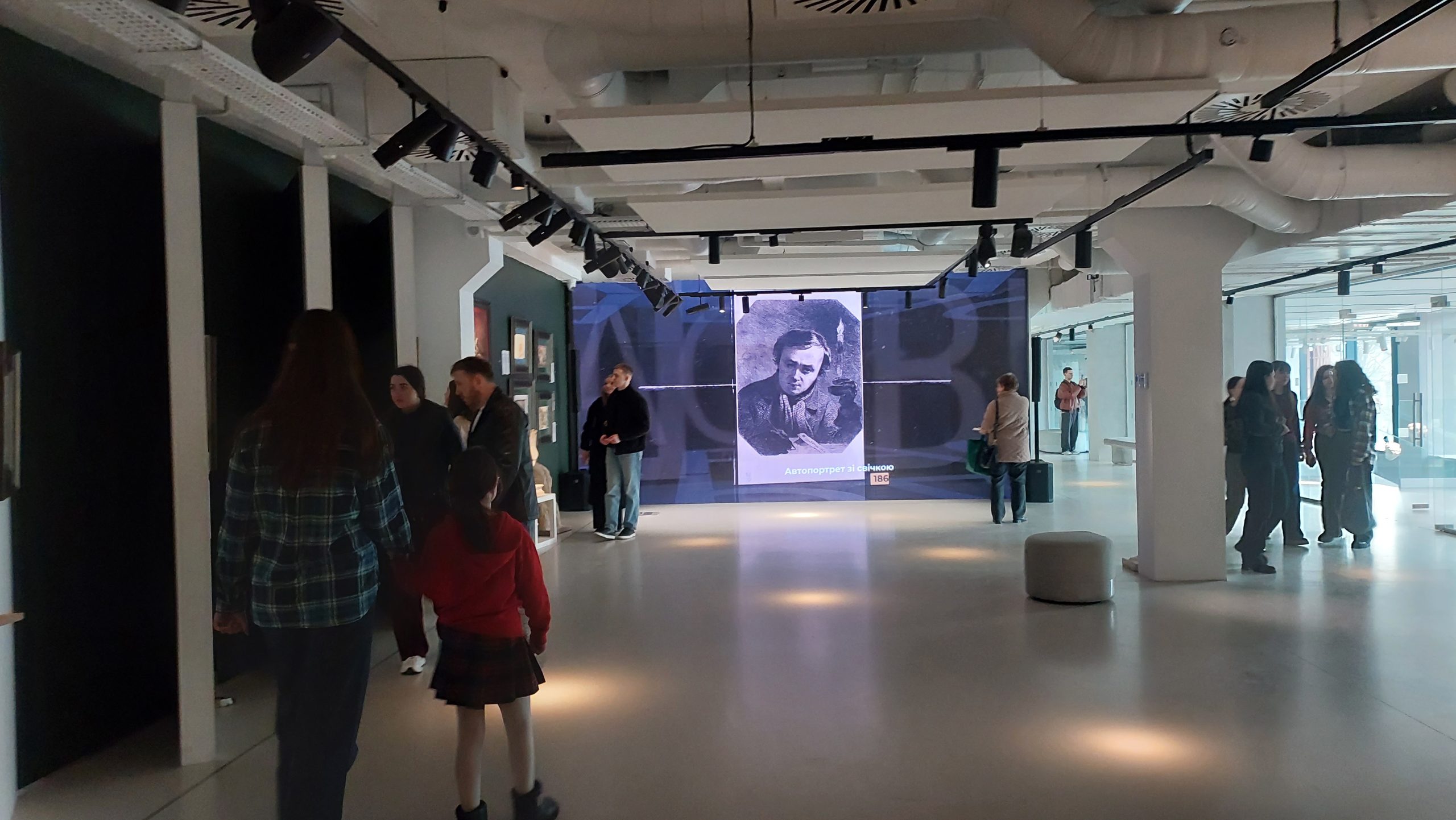
There is an immersive room where visitors are left one-to-one with video art based on Shevchenko’s works. The atmosphere is enriched by sketches by the Ukrainian painter Liubomyr Medvid and music by Volodymyr Syvokhip, People’s Artist of Ukraine.
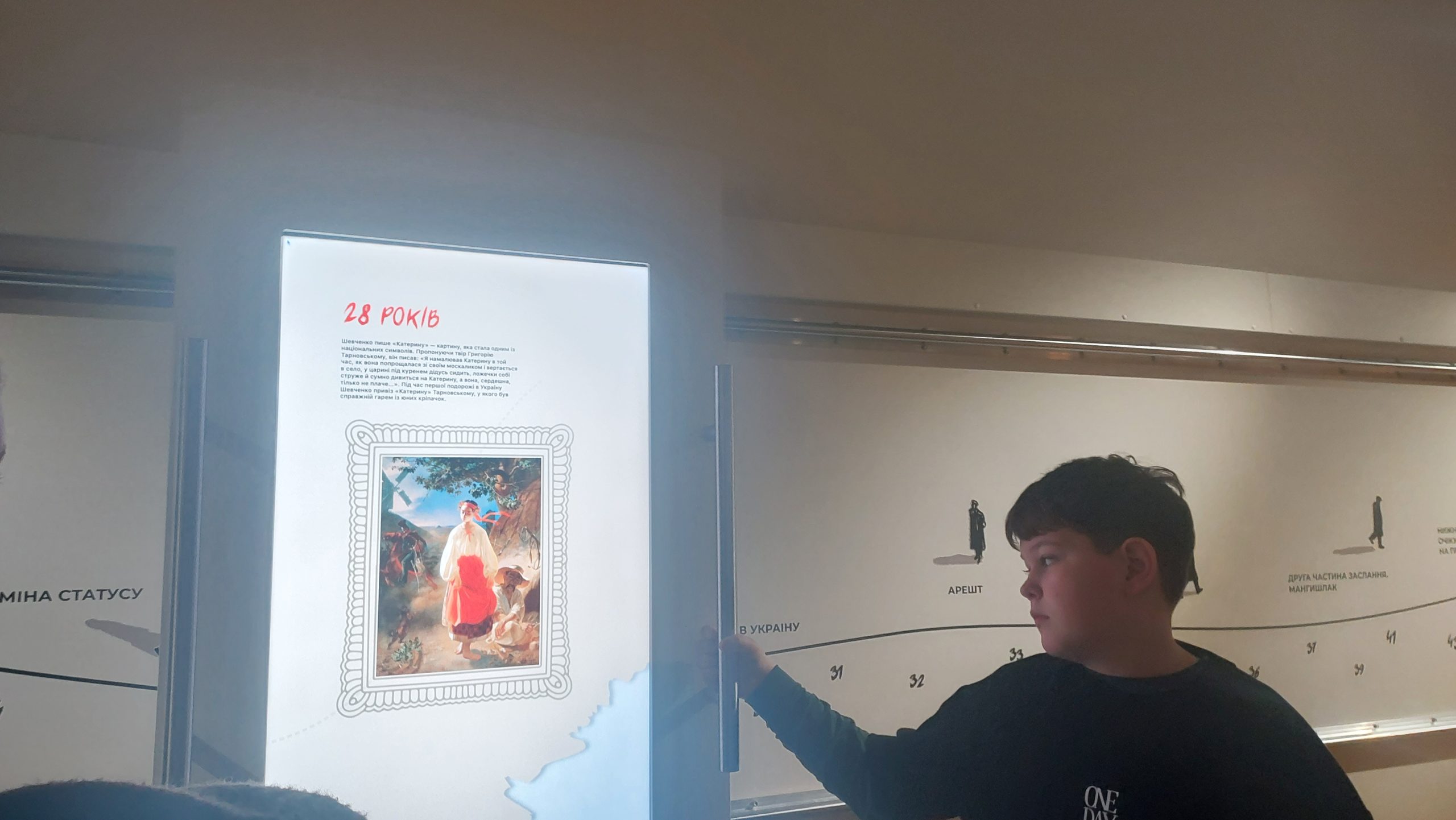
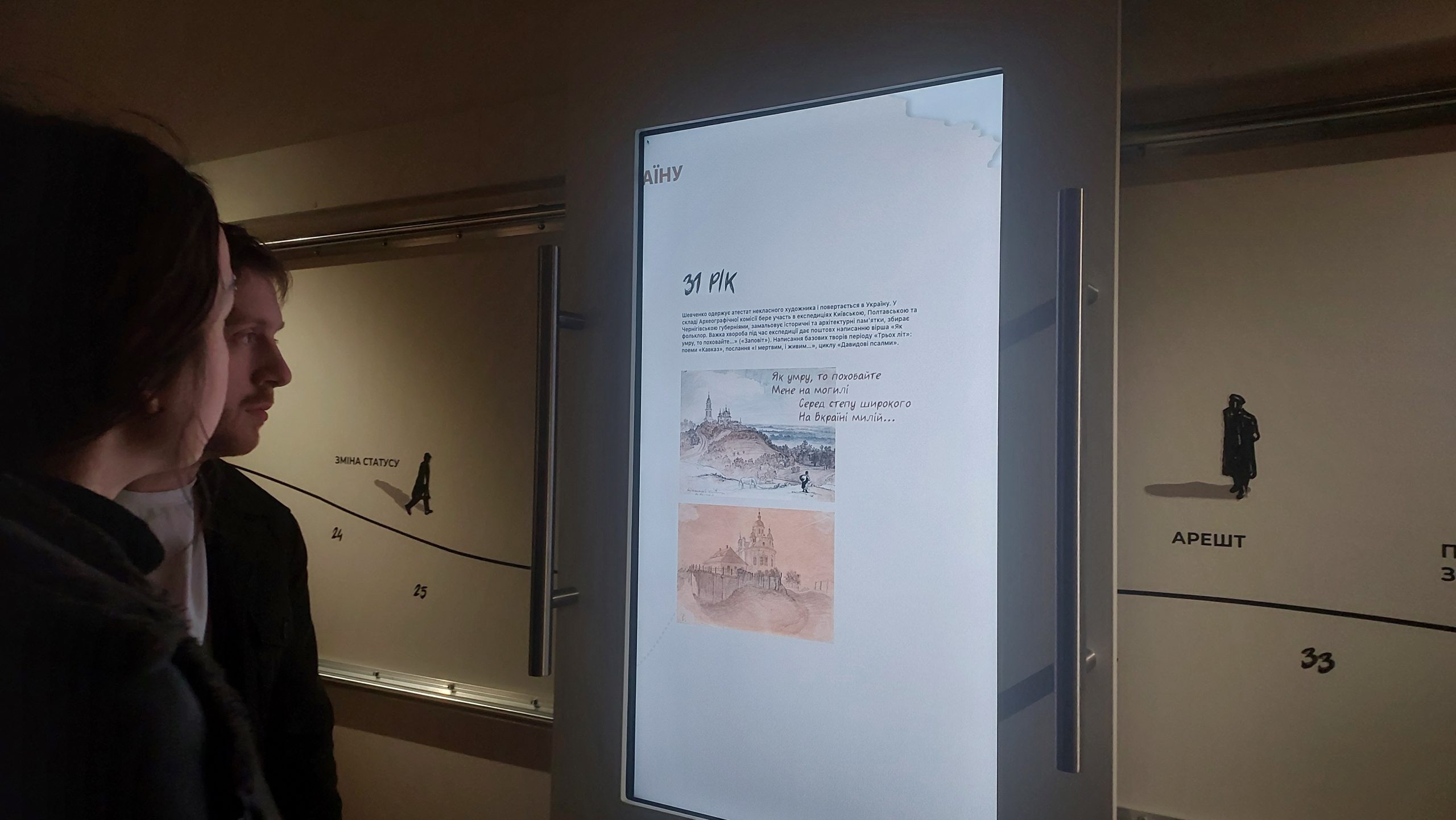
One especially engaging element is the presentation of Shevchenko’s biography. Rather than a dry wall text, it becomes an absorbing journey through his life using contemporary exhibition language — structured not by dates alone, but by stages of age and experience.
Educational programming is an important part of the project. School groups are offered free guided tours, and children can participate in interactive quests and theatrical elements related to the artworks.
“We want to speak about difficult things in simple language,” Berehovska says. “This is normal practice in many parts of the world: if a topic is complex, it should be explained in a way that a person without specialist education can still understand.
We welcome many school groups. Thanks to a charitable initiative launched by Zinoviy Kozytskyi, ninth-form pupils from communities across the Lviv region can visit the exhibition free of charge at more than a thousand schools. Why the ninth form? Because this is often when pupils study Shevchenko most closely. But if children from other year groups want to come, of course, we will not refuse.
There are interactive activities, quests, and opportunities for children to step into the characters from the paintings. And what is especially interesting is that many visitors tell us they came here above all to overcome their school trauma, because at school, Shevchenko seemed boring to them. In the first six days alone, more than ten thousand people visited the exhibition. That shows this new reading of Shevchenko is genuinely needed.”
That phrase — “school trauma” — is not accidental or exaggerated. In the Ukrainian context, it often refers to a very real experience of being introduced to major national writers through rigid, ideologised teaching that left little room for curiosity, contradiction, sensuality, humour or artistic complexity. This exhibition quietly does the opposite. It returns Shevchenko to viewers not as a compulsory symbol, but as a human being and a daring artist.
In this way, HE: Taras Shevchenko. The Artist at Zenyk Art Gallery offers a different view of a figure many think they already know. It moves beyond bronze clichés and canonical stiffness, presenting Shevchenko as a modern, experimental and deeply European artist who was far ahead of his time.
The exhibition runs until 20 June.
Opening hours: 10:00 am to 7:00 pm, closed on Mondays.
Author of the text and photographs: Yulianna Kokoshko
Editor of the Ukrainian text: Anastasiia Zanuzdanova
Editor of the English text: Helen Lewis