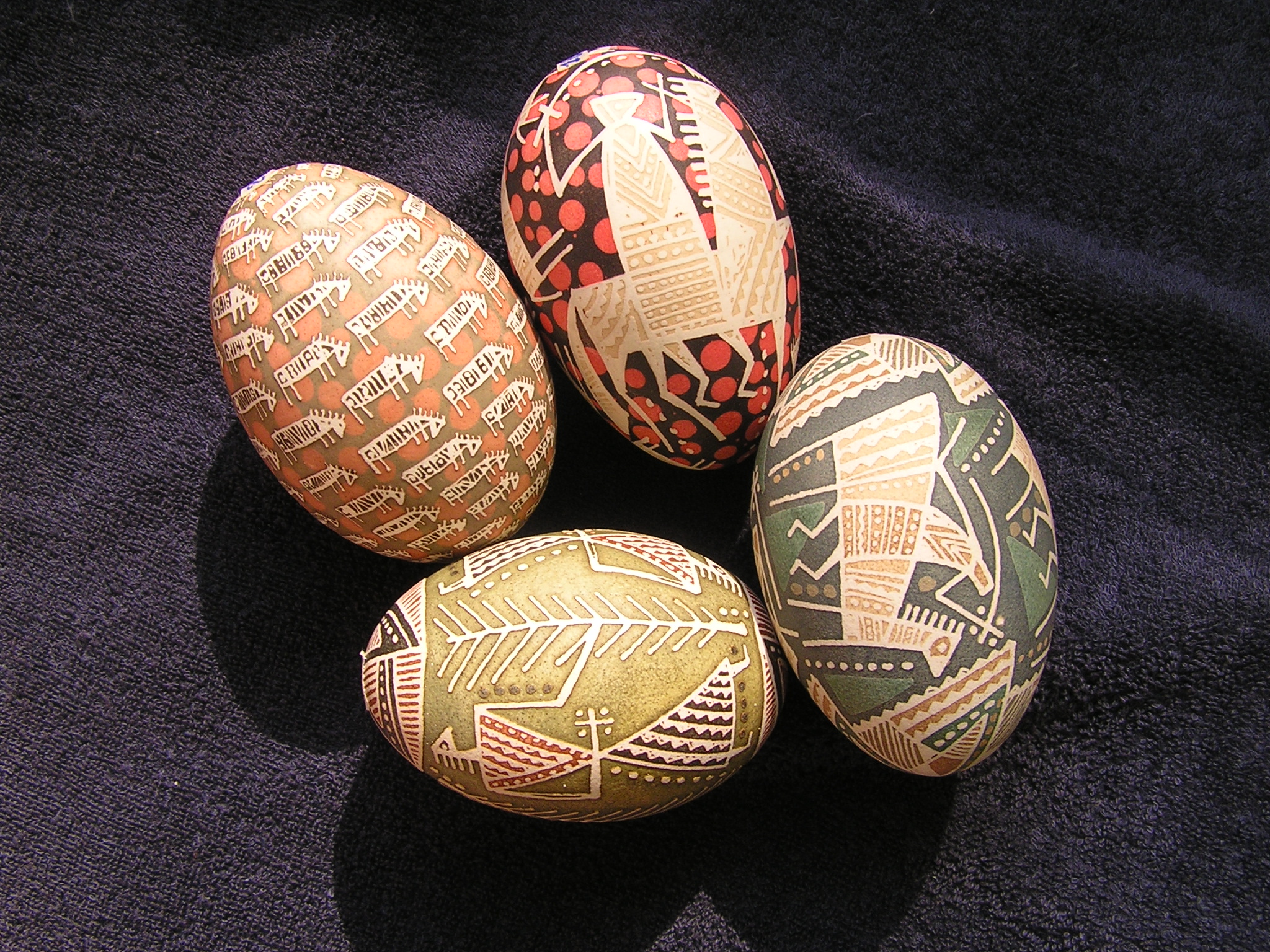
The creation of a pysanka — a decorated Easter egg — has long been more than a tradition in Ukraine; it’s a ritual. Families would gather to decorate chicken or goose eggs with wax and natural dyes, typically on the Thursday or Friday before Easter Sunday. These eggs were then placed in woven willow baskets alongside cheese, ham, fresh horseradish and butter — everything provided by nature or earned through careful labour — and taken to be blessed. Each colour and symbol carried meaning. Unlike simple dyed eggs, krashanky and pysanky were made on raw eggs and treated as protective talismans — symbols of life, the sun and spring renewal, believed to guard the home, bring a good harvest and express love.
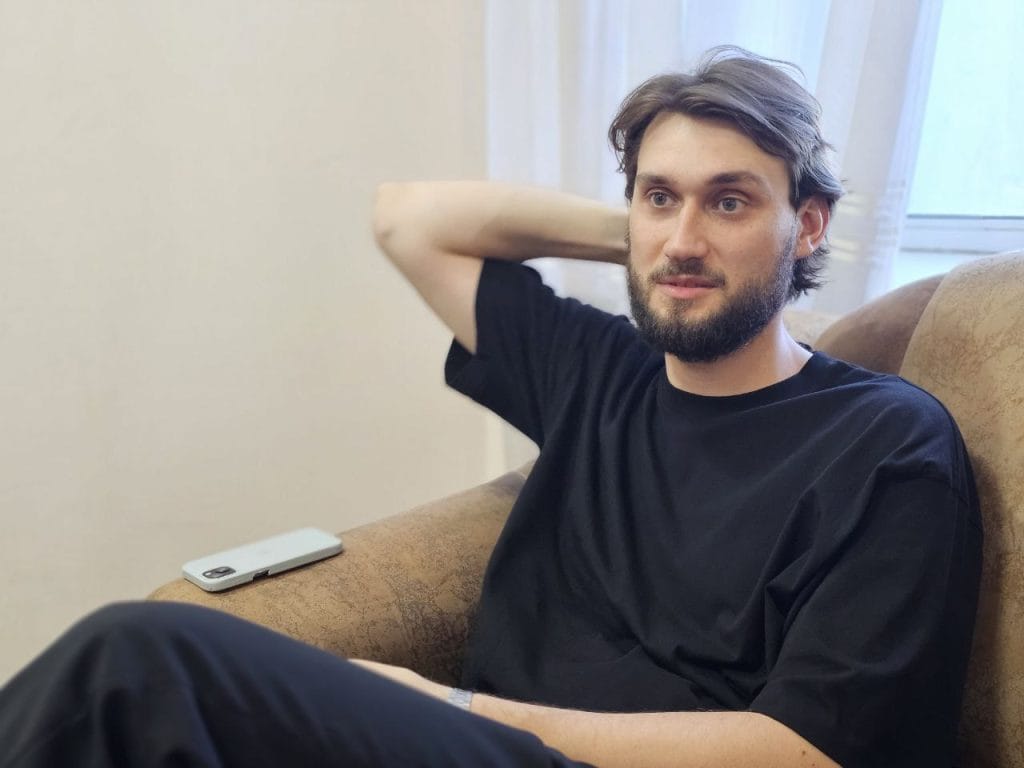
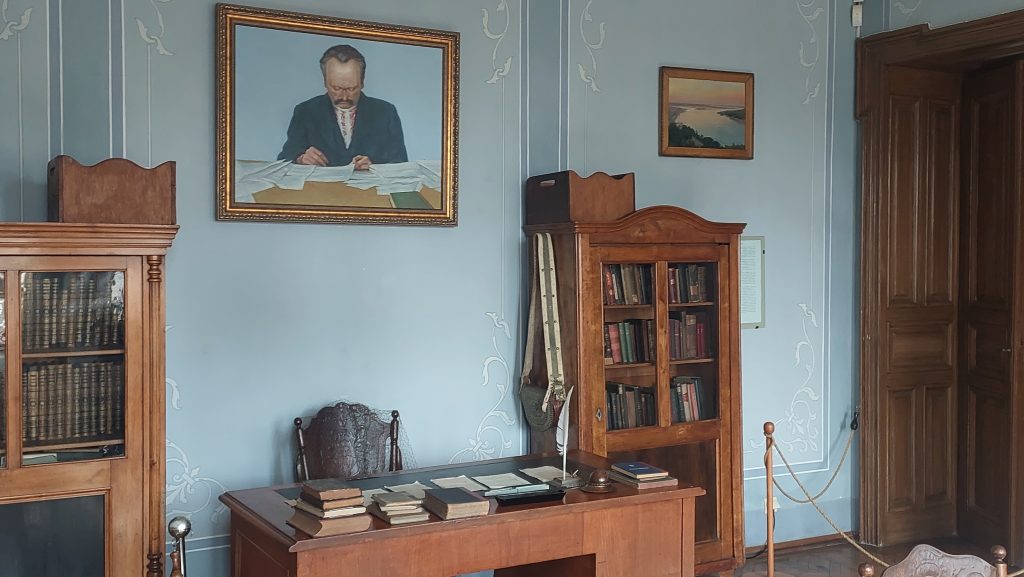
In a flat in central Dnipro, where one room has been turned into a workshop and another into a kind of miniature museum, Ukrainian artist Andrii Pushkarov works with materials that do not tolerate haste. Paper, wax, paint, egg: all are simple, almost archaic; yet in his hands, they become a complex system of signs, symbols and lived experience shaped over decades. Today, that experience continues to breathe new life into traditional art through bold experimentation.
His first pysanka came from breaking a gift
Andrii Pushkarov is one of those artists for whom folk decorative art is no less significant than academic practice. His vytynanky (paper cuttings), and pysanky (decorated eggs) are not crafts in the conventional sense, but a way of thinking. He is well known beyond Ukraine. His works are held in museums and private collections, and as far back as the 1980s, his name has been discussed in academic circles as representing a distinct artistic direction.
“My training is in architecture. I was meant to work in teams, developing projects, but I never did,” Pushkarov says. “Architecture operates within strict frameworks, standards, and limitations. I’m an individualist. I was born in Kryvyi Rih, but at six months old, I was brought to Dnipro. This is my city, this is where I formed as an artist, where I work best. I began by writing and illustrating short stories. At thirteen, my mother took me to the Honoured Artist of Ukraine Yevhen Leshchenko. He was my first teacher. Then there was artist and educator Feodosii Humeniuk, a man with a very difficult fate. He was persecuted by the KGB in Soviet times. I would visit him, show my work, and he would give advice. Later, there was a Ukrainian artist, graphic artist, sculptor and poet, Volodymyr Loboda. We had bonfires and long conversations. Those were my ‘universities’.”
The techniques now closely associated with Pushkarov came to him – or perhaps he came to them – by different paths. Vytynanka arrived by chance, while pysanka came through what he describes as an almost ritual experience. If paper cutting immediately became a space for experimentation, the pysanka was, at first, a territory governed by strict canon.
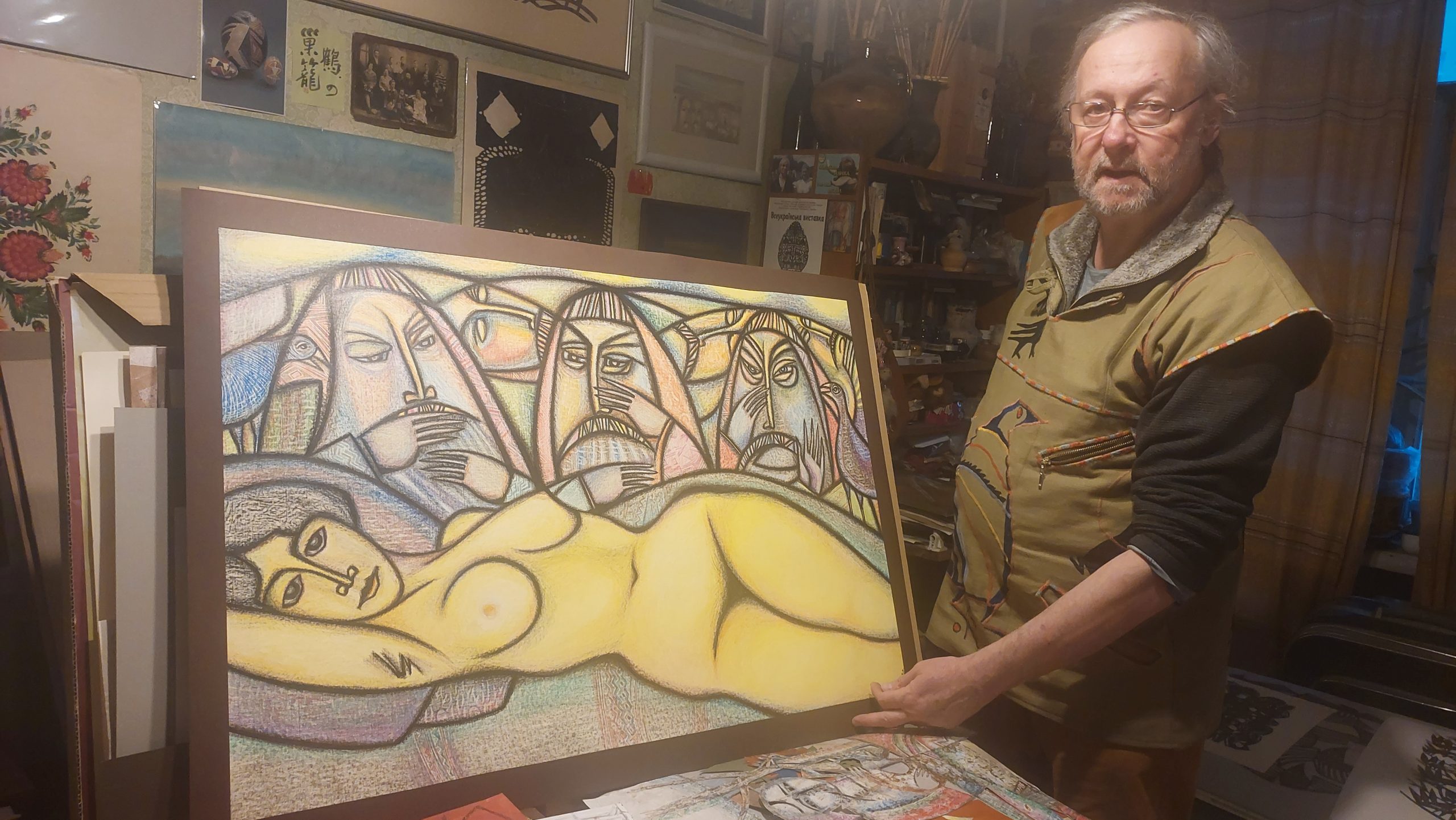
“The pysanka entered my life when I was about twenty-three,” he recalls. “It all began with chicken eggs. Once, my teacher Feodosii Humeniuk wrote me a letter: ‘Create a celebration for yourself – decorate pysanky.’ I didn’t understand — why? Then I went to Lviv and saw masters at work. I was given a pysanka as a gift, but on the way home, it broke. So, I decided: I will recreate it until I can make it exactly as it was. I painted one egg ten times, twenty times, thirty times. At some point, it came out right.”
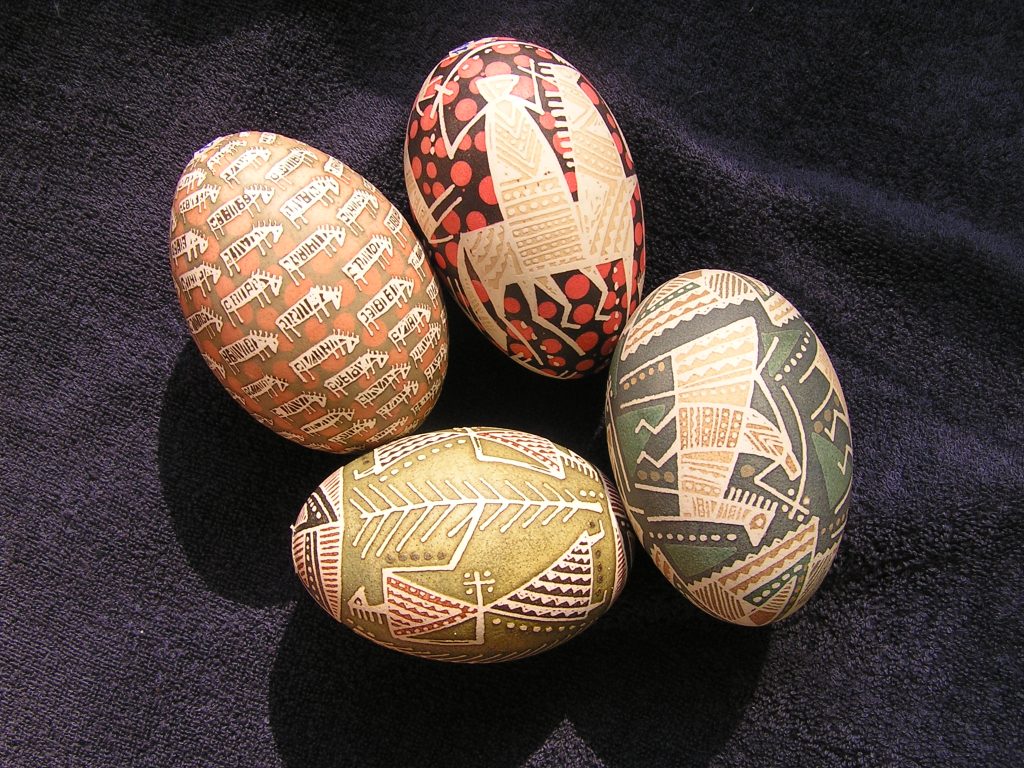
For Pushkarov, the pysanka is not simply an ornament. It is a complex system that begins with geometry and develops through a particular state of inner concentration. The egg is, on the one hand, a perfect form – and on the other, the most difficult. Unlike a flat surface, it cannot be divided with straight lines. Every movement carries the risk of a mistake that cannot be corrected.
“It’s very difficult to divide an egg into proper sections,” he explains. “It’s not a flat surface — it’s an ovoid. Traditionally, our ancestors began with forty segments — though in fact there are forty-eight, and you have to calculate everything, to distribute it. That’s the foundation. Only then come the ornamentation — at first simple, then closer to Easter, more complex, vegetal, solar. It’s a system that has evolved over centuries.”
Ostriches have almost stopped laying because of explosions
His technique is the classic wax-resist method, also known as batik. The process itself, he describes, is almost an intimate interaction with the material. Wax behaves differently depending on the season: in winter, it hardens quickly, while in summer heat, it remains on the hands, making it difficult for dyes to adhere properly. Spring is therefore the ideal time for decorating eggs — and this is no coincidence, since it coincides with the Easter cycle. Makers work in rhythm with nature, which is essential.
Most often, pysanky are made on goose eggs, but ostrich eggs — something Pushkarov has worked with since the early 2000s — are a different story entirely: a different scale, thickness, and level of complexity.
“Over twenty-five years, I’ve made 114 ostrich pysanky; some works sold for 300 to 700 dollars,” he says. “One Ukrainian collector owns around 150 of my works. In the Dnipropetrovsk region, there are several ostrich farms, but unfortunately, because of the war and the explosions, the birds have almost stopped laying, so now I mostly work with goose eggs.
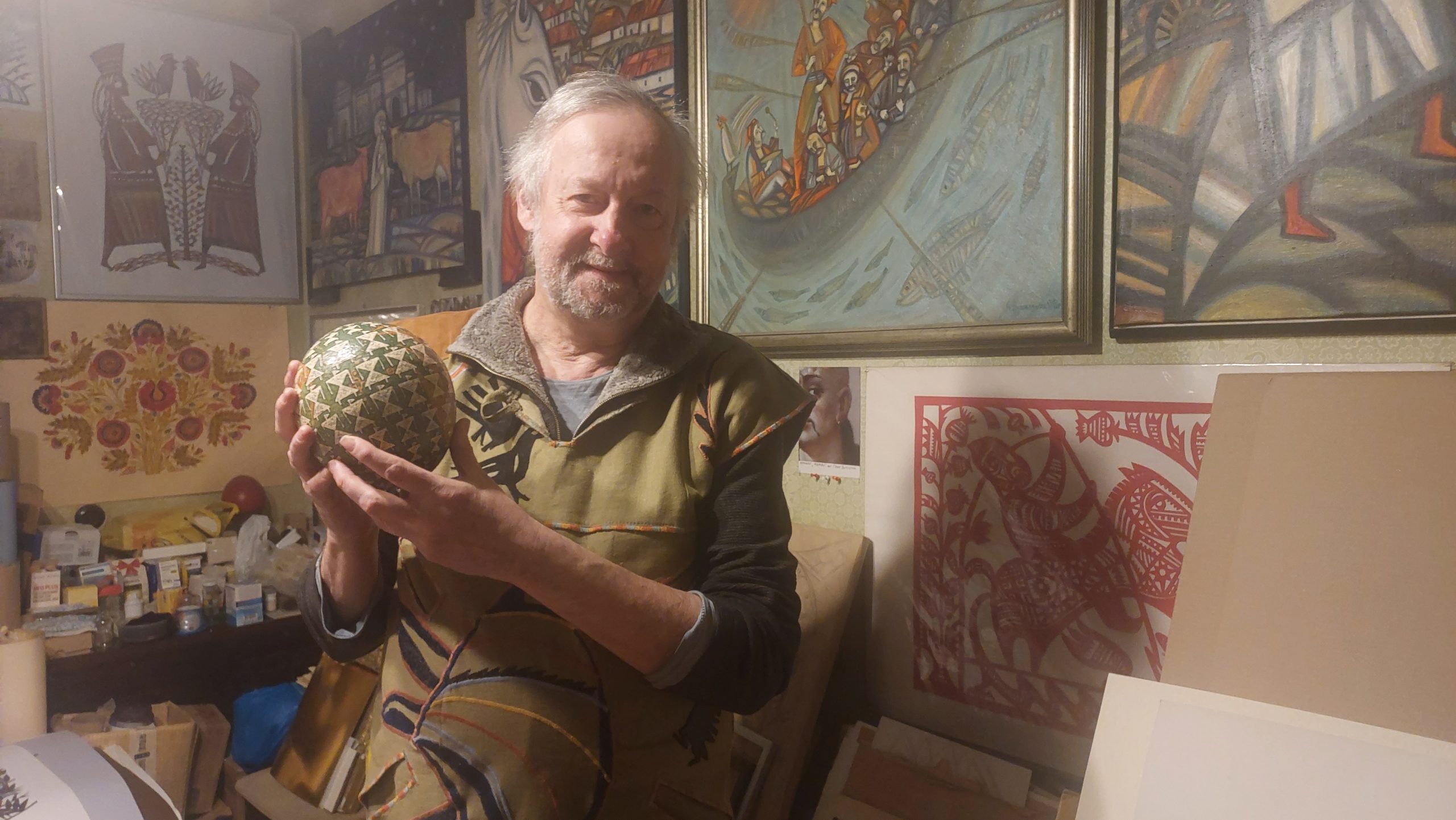
In Ukraine, there are several pysanka traditions — Hutsul, Polissian, and Dnipro regions. They differ greatly. For instance, Hutsul makers work very differently from those in Dnipro — they rotate the egg while holding the stylus still, rather than drawing along a fixed egg. It’s a different logic. Each school has its own features. But they don’t compete — they respect one another. It’s like different tributaries of the same river.”
Paper cuttings began as snowflakes, and then became something more
For Pushkarov, the river is Ukrainian culture as a whole. He cannot imagine himself outside it. Even now, during the ongoing war, he remains in Dnipro. He admits it is difficult to work on pysanky without inner balance, yet he continues to create, producing paper cuttings and paintings. His workshop today is a space of accumulated energy: hundreds of vytynanky, dozens of pysanky, archives, photographs, catalogues, a recently published calendar of his works, and plans for new exhibitions.
“I started making vytynanky by accident — I was ill at home, cutting paper just to occupy myself,” he says. “At first, they were simple ‘snowflakes’, like many of us made as children in winter. Then I began to experiment with colour and paper. I realised I wanted to do it my own way. Traditional vytynanka are symmetrical, like a pot with two sides, but when you move beyond that, it becomes something else. I have worked like that, too. I hold a vast amount of knowledge, and I’d like to record lectures to preserve it.”
Students carry the art across the world
Pushkarov’s school of pysanka and vytynanka did not emerge as a formal institution with programmes and diplomas, but as a natural extension of his practice. It grew out of his workshop — a small space where the first works appeared, followed by the first people who wanted to learn, to absorb this knowledge. Interest gradually increased: from occasional visitors to a sustained demand for deeper engagement with traditional art.
Teaching has always taken place in his studio in Dnipro. Pushkarov did not construct an academic system; he passed on knowledge as he himself received it — through practice, observation and repetition. It’s not only about mastering technique, but understanding the logic of form: how to organise the surface of the egg, how the ornamentation works, how to avoid irreversible mistakes. Students begin with the basics — dividing the egg into segments, mastering wax technique, controlling the line — before moving on to more complex patterns and colour compositions. For many, it becomes not just a craft, but a way of thinking.
Dozens of students have passed through his workshop. Some stayed briefly; others remained for years, continuing to work independently. Some have gone on to teach themselves, developing pysanka within their own practices. In this sense, Pushkarov’s school exists as a living transmission of knowledge, without rigid boundaries, but with a strong sense of continuity.
One notable example is his student Anna Podzharenko. After attending pysanka classes, she radically changed her educational path, leaving an economics faculty at a technical university to pursue art. She later became a recognised decorative painter, with pysanka remaining a key part of her professional development. Stories like hers are not unusual – they reflect the depth of influence this practice holds.
In his school, vytynanka is not only decorative, but a way of understanding composition, rhythm, and the relationship between form and space. Students move from simple “snowflakes” to complex, multi-layered works, sometimes incorporating original techniques – layering, colour spraying, combining materials.

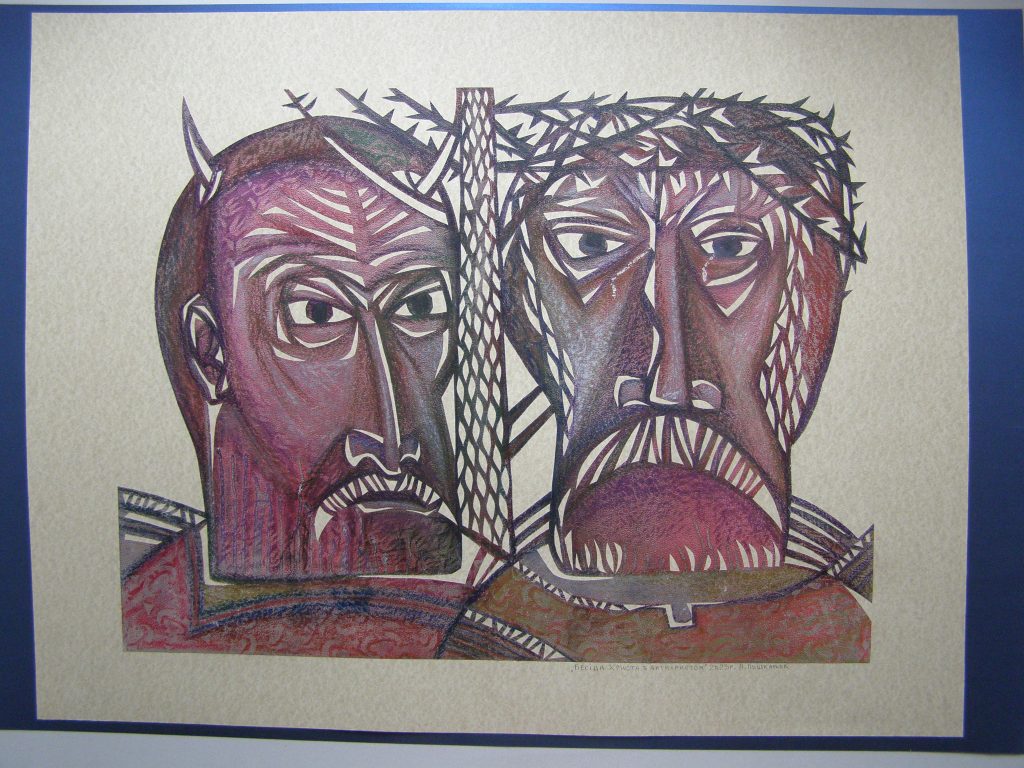
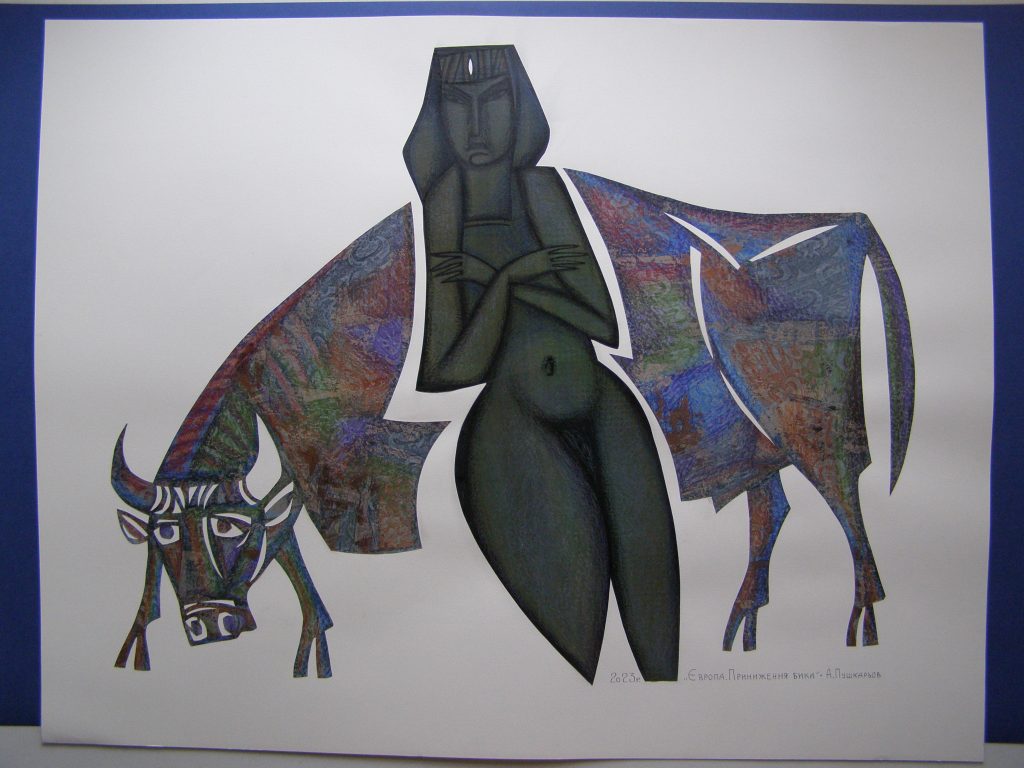
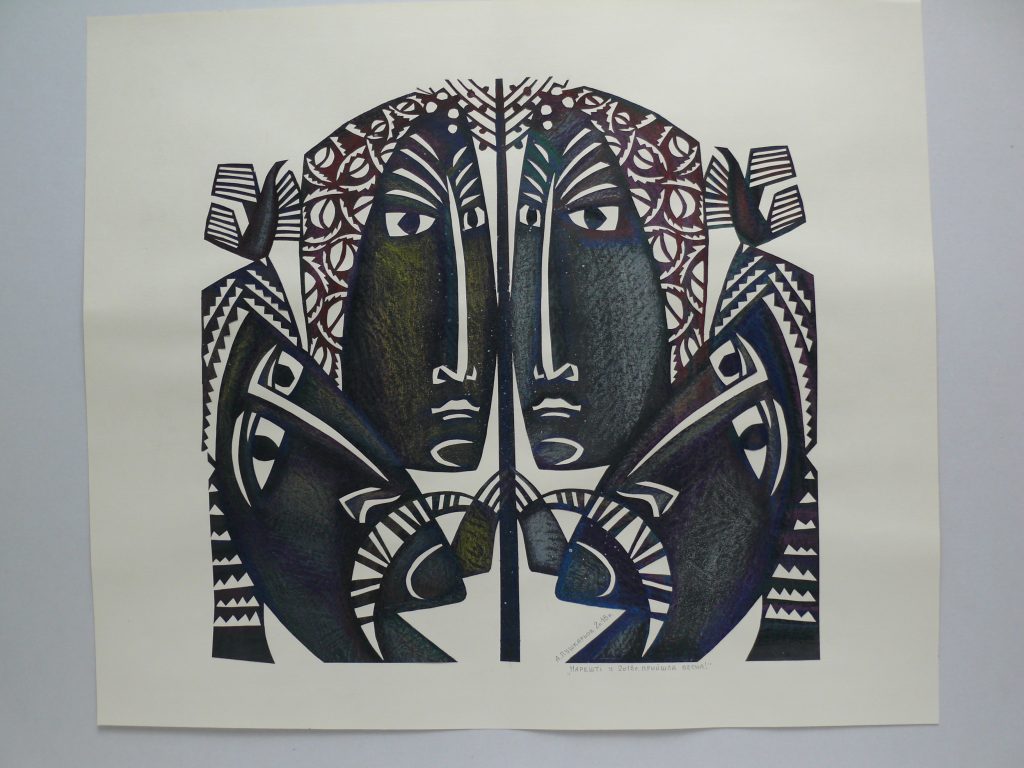

Yet, tradition remains the foundation to which Pushkarov continually returns. One of his most well-known students, Yuliia Datchenko, now lives in Poland and regularly leads workshops across Europe, promoting Ukrainian art.
“I couldn’t work like this anywhere else except at home”
As a master of decorative art, Pushkarov has long received international recognition. His solo exhibitions have taken place in Poland, Switzerland and China. In Warsaw, he exhibited Ukrainian pysanka and vytynanka, allowing audiences to see traditional art within the context of contemporary decorative design. In Switzerland, his works were shown in Lenzburg, a historic cultural centre that attracted visitors from Austria, Germany and beyond. In Shanghai, he exhibited his work on a larger scale in the Ukrainian pavilion, where both local audiences and international collectors engaged with his art.


“I’m happy to travel abroad for exhibitions or lectures, but I don’t want to live there,” he says. “My school, my workshop, my students – all of these are here, in Dnipro. This is my cultural space, my tradition, my roots. Without this environment, no real pysanka or vytynanka can be created. I love Ukraine for its birds, for its ethnography, its history, its culture – for everything I continue to study and be inspired by. I’m certain that, despite the shelling, I could not work as effectively abroad as I do at home.”
Text by: Yulianna Kokoshko
Photos: by the author and from the archive of Andrii Pushkarov
Ukrainian editor: Anastasiia Zanuzdanova
English language editor: Helen Lewis