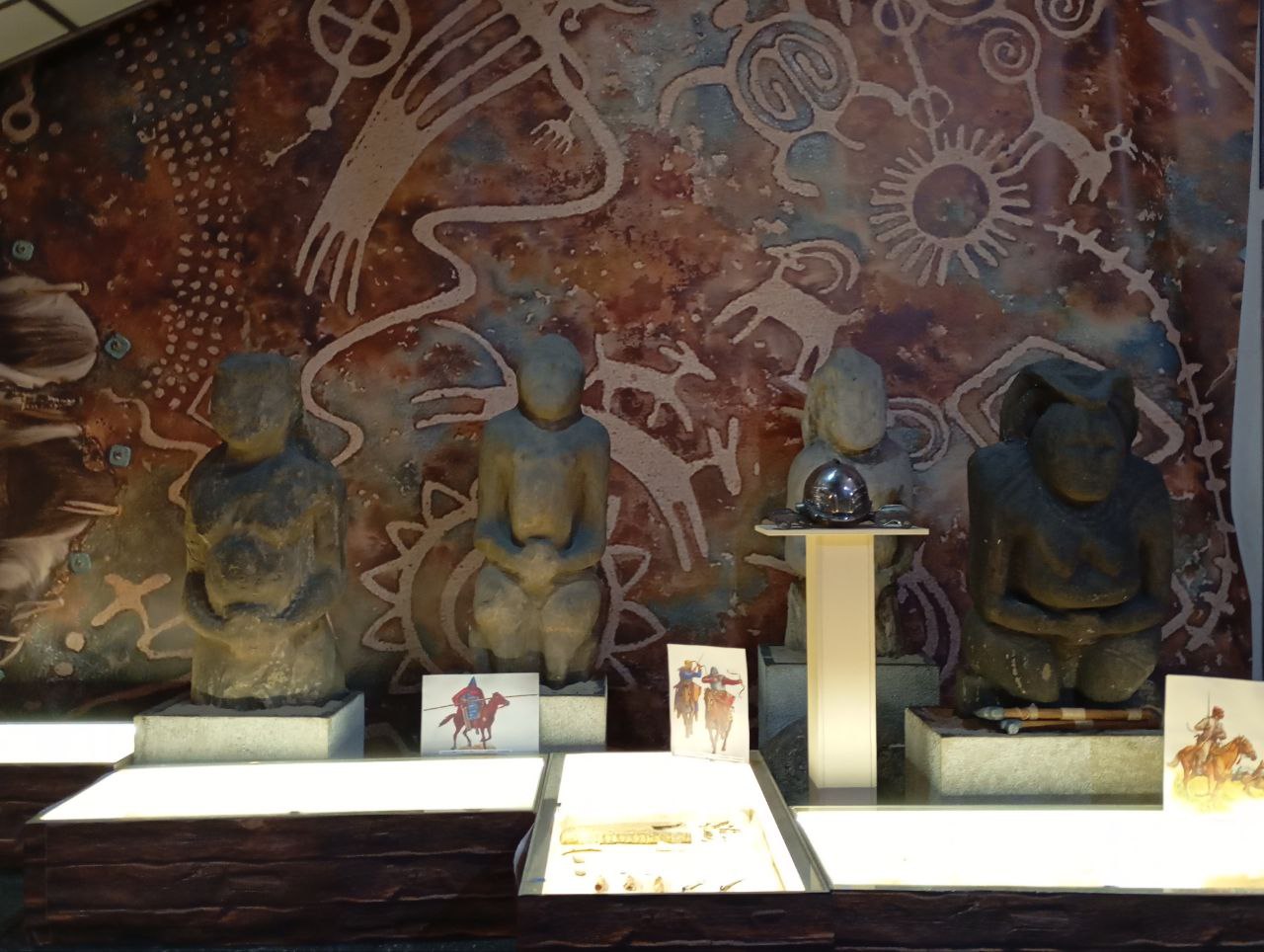
Europe’s largest collection of stone monoliths created by the nomadic peoples of the steppe is housed at the Dmytro Yavornytskyi Dnipro National Historical Museum. The collection includes artefacts from the Neolithic and Bronze Ages, as well as from the eras when the Scythians and Polovtsians lived in the Dnipro region. For thousands of years, these silent guardians of eternity stood watch over the steppe. Today, volunteers and Ukrainian soldiers from Dnipro are rescuing this unique cultural heritage. Nearly thirty Polovtsian stone statues, around 900 years old, have already been evacuated from frontline areas.
Stone statues as a link to ancestors
“Statues created by nomadic peoples first appeared in the Neolithic period,” explains Oleksandr Starik, Director of the Dnipro Historical Museum. “It was during this era that the tradition of burial mounds, or kurgans, began. Statues were placed on these mounds and were associated with ancestor worship. This tradition, characteristic of the steppe nomads, continued during the Scythian period and later in the Middle Ages, when the Polovtsians arrived in our lands.”
According to Mr Starik, the museum currently holds eight Scythian statues, while the number of Polovtsian ones is many times greater — over a hundred. They are easy to tell apart. Scythian craftsmen carved only male warriors, identifiable by their distinctive attributes: a torc-like neck ring, a drinking horn, and a belt. Polovtsian statues, by contrast, reflect what could be called gender balance. They depict both men in military attire and women adorned with distinctive jewellery. Polovtsian idols can also be recognised by their strong hips, prominent bellies, and a bowl held beneath the abdomen. These stone sculptures, created by people who arrived in the Dnipro region around the 11th-12th centuries, usually marked the boundaries of seasonal migration routes belonging to individual tribes or entire confederations.
“For the nomadic peoples of the steppe, stone statues were living beings,” says Oleksandr Starik. “People spoke to them, prayed to them, asked for help, and brought offerings. If the statues did not respond to prayers, there were cases when they were punished, destroyed or buried face down.”
Our ancestors: Slavs and Polovtsians
Dnipro is a city located very close to the frontline. At the beginning of Russia’s full-scale invasion, the open-air sculptures of nomadic peoples from the museum’s collection were covered with Kevlar ‘body armour’ to protect them from shrapnel during missile attacks. Later, the decision was made to paint these protective structures.
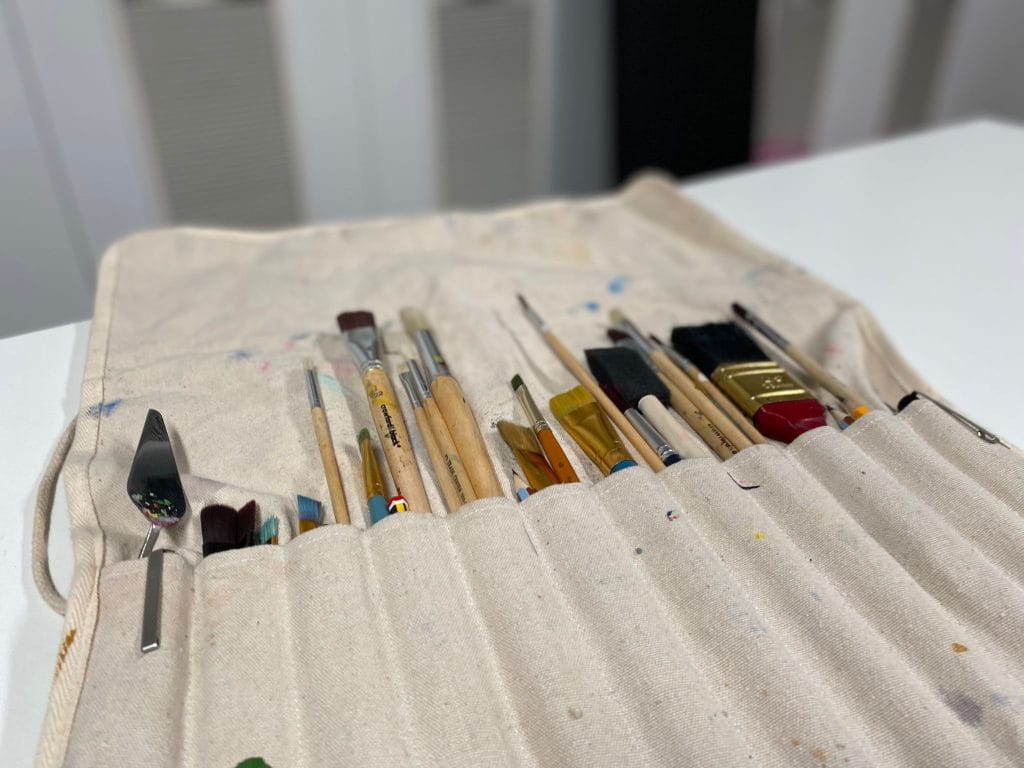
“These grey constructions around the city started being called ‘beehives’,” recalls the museum director. “We wanted to change that and invited artists to paint them. We accepted proposals from both established artists and amateurs. One structure was painted by scouts, several others depict Polovtsian and Slavic women. There are also animal-themed images — archaeological cats, horses.”
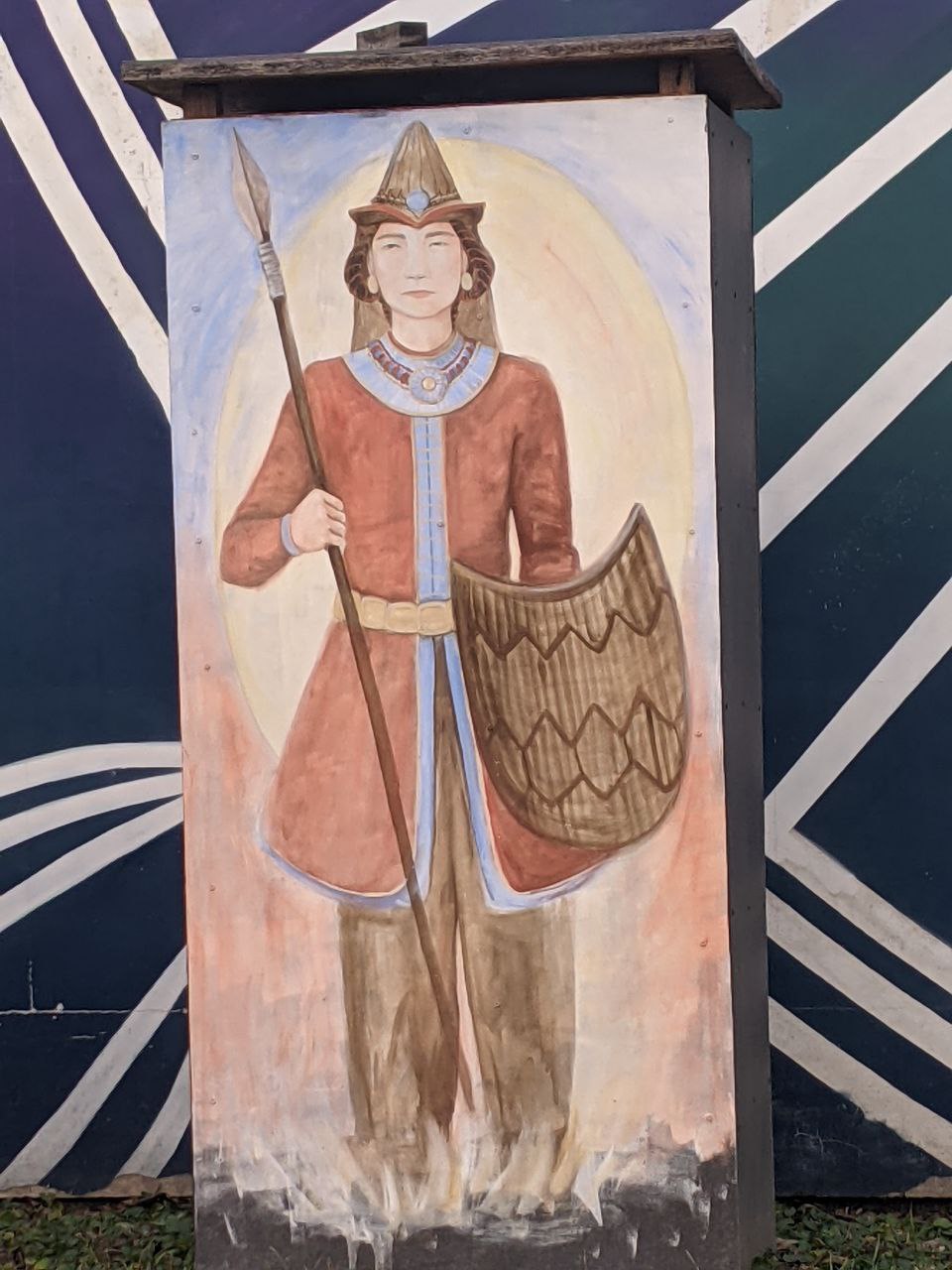
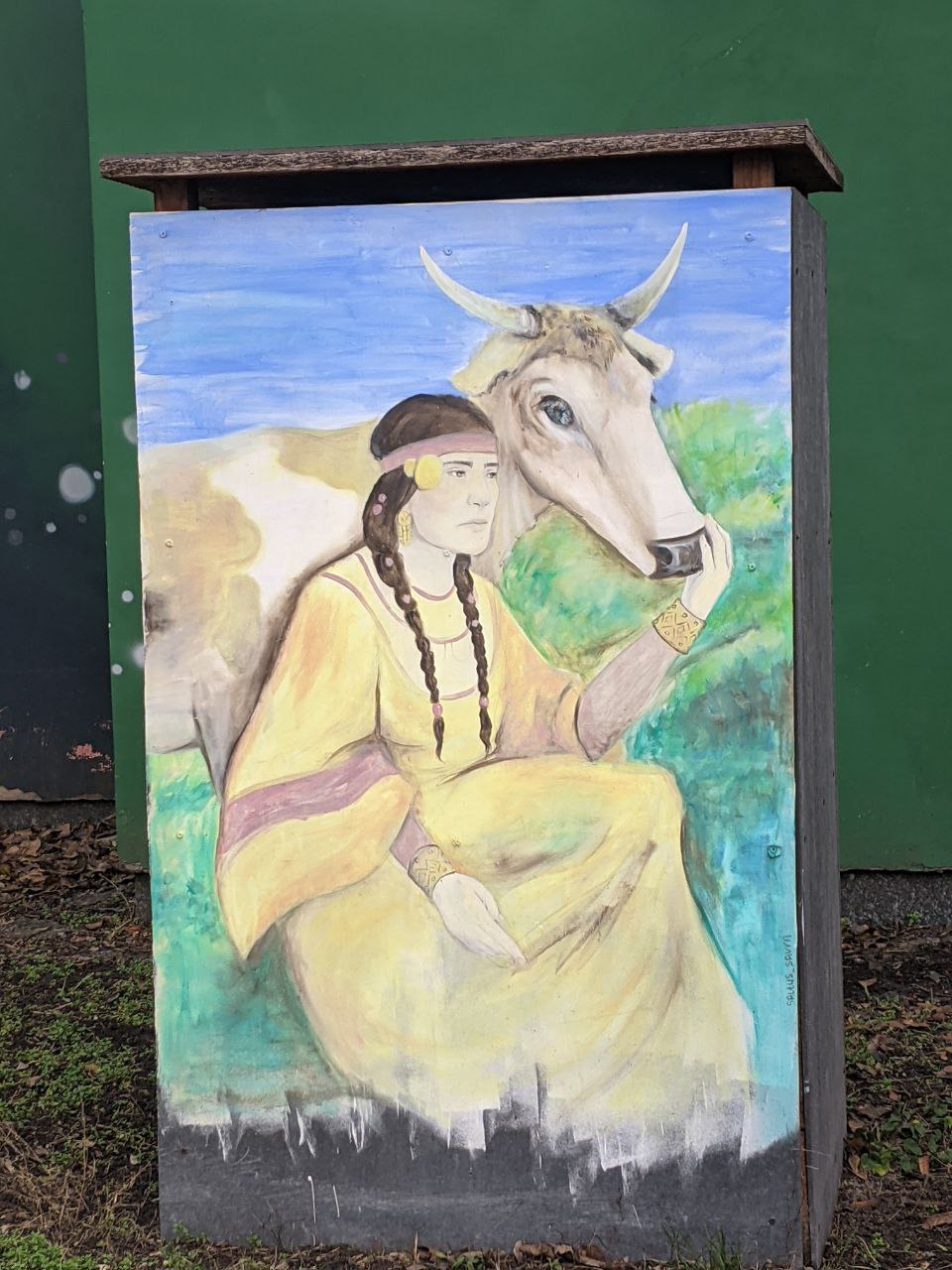
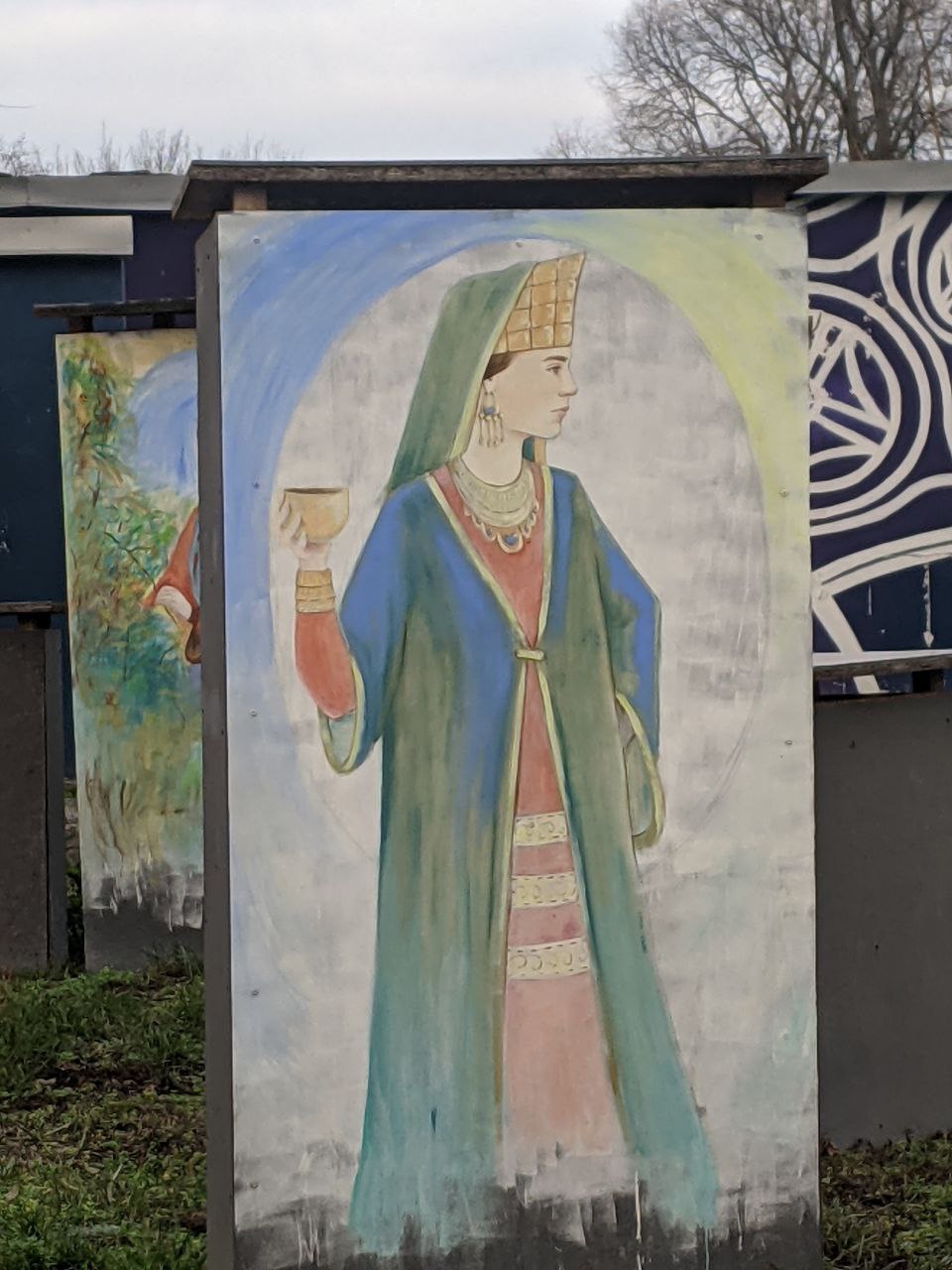
According to Yurii Fanyhin, Deputy Director of the Dmytro Yavornytskyi National Historical Museum, each statue is a unique artefact that must be preserved for future generations as evidence of the shared history between Ukrainians and the Polovtsians — a history that was often silenced during the Russian Empire and the Soviet era.
“In reality, we are very similar to them,” Fanyhin insists. “Polovtsian women wore head coverings and necklaces. Men braided their hair. Many princes of Kyivan Rus did the same, following the fashion of their nomadic allies. The Cossack oseledets hairstyle can be seen as a continuation of this tradition. From the Polovtsians came a love of horses. These steppe traditions are part of our history, and not only Slavic but also Polovtsian blood flows in our veins.”
Evacuation under drones and shelling
As Yurii Fanyhin explains, a century and a half to two centuries ago, thousands of stone statues once stood across the steppe. Today, only hundreds remain. Their numbers are rapidly declining due to Russia’s war against Ukraine: many are now in occupied territories or directly on the front line. Numerous sacred monuments of steppe nomadic art have been destroyed by bombs and shells, while others have been stolen and taken to Russia. To save this unique heritage, volunteers from Dnipro, together with the military, began evacuating stone statues from frontline areas and combat zones.
“At the beginning of 2024, our colleague Dmytro Romanchuk, who was already serving in the Armed Forces of Ukraine at the time, spotted a stone statue standing in the street in the settlement of Velyka Novosilka in the Donetsk region,” Fanyhin recalls. “There had been a strike nearby, and the statue was damaged by shrapnel. Together with his fellow soldiers, he decided to dig it out and transport it to Dnipro. He found sponsors through social media to cover the cost of specialised equipment. The Donetsk Regional Department of Culture approved the transfer to our museum. That’s how Dmytro saved this remarkable sculpture. Later, it turned out that there were several more statues in Velyka Novosilka. The military helped us with transport. We managed to excavate the first two statues ourselves, though it was hard work — they had been set in concrete and had to be prised out with crowbars. We loaded them onto a trailer using a winch. It was far from easy.”
The evacuation of the third statue, the largest one weighing over half a ton, proved even more difficult. It required a crane truck. Sponsors not only provided funding but also found a driver with the necessary equipment.
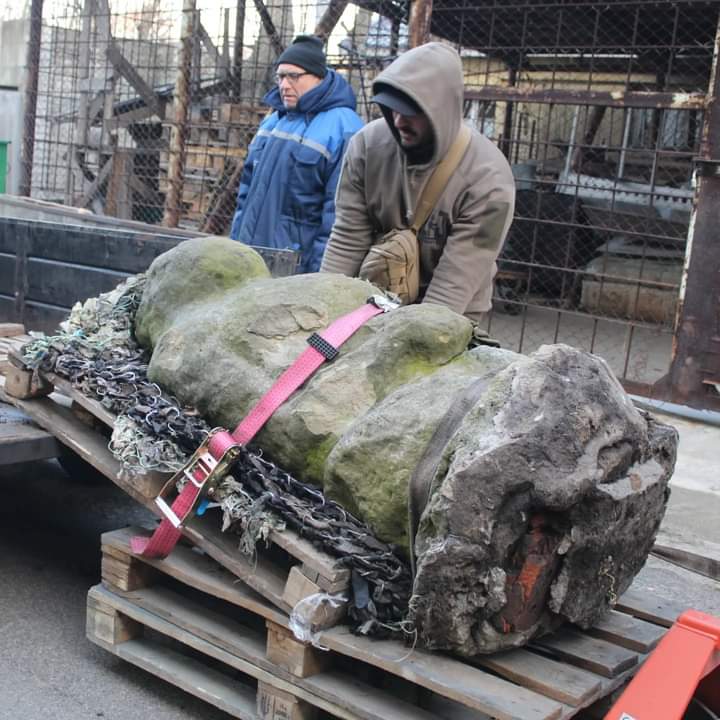
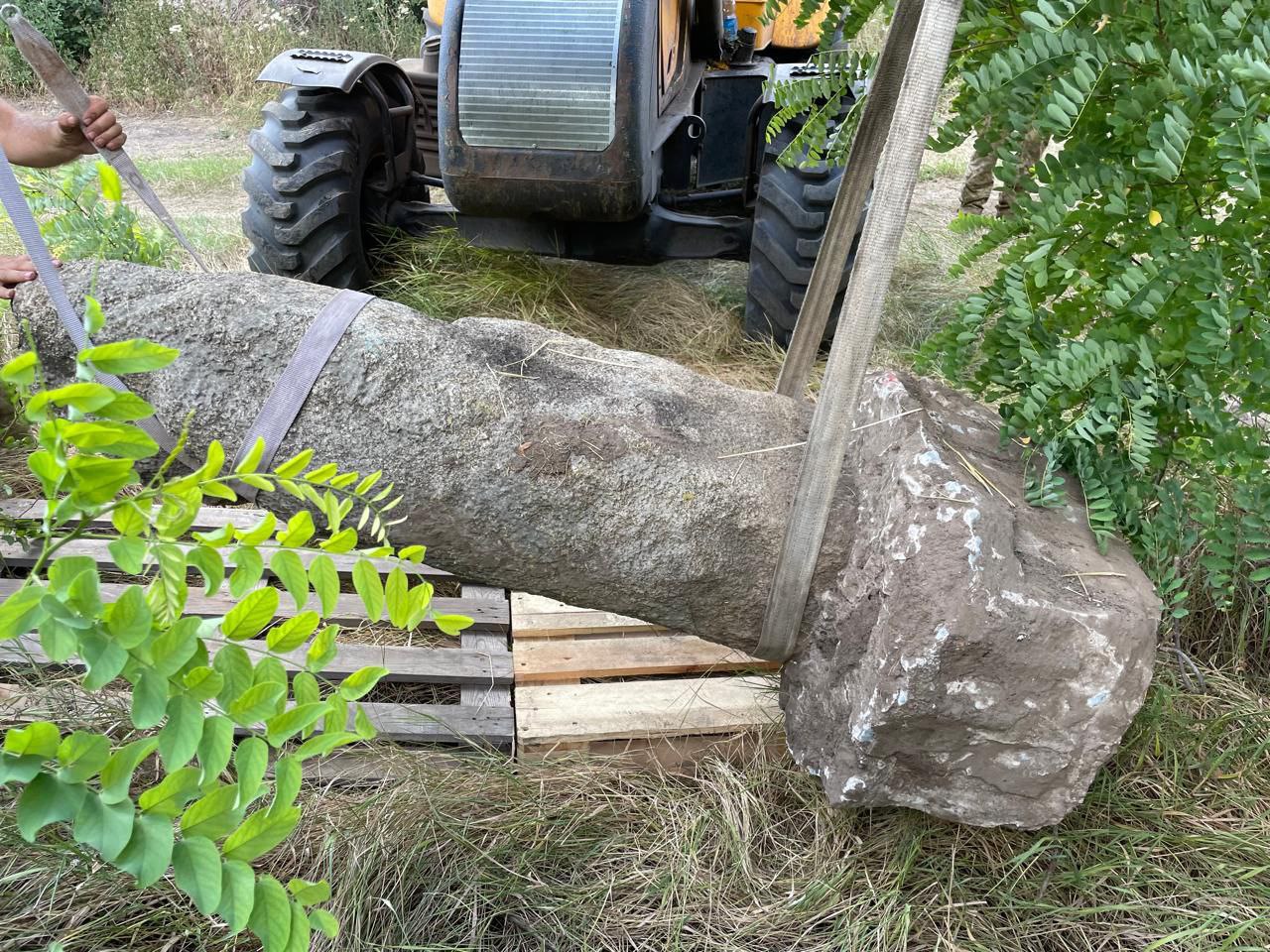
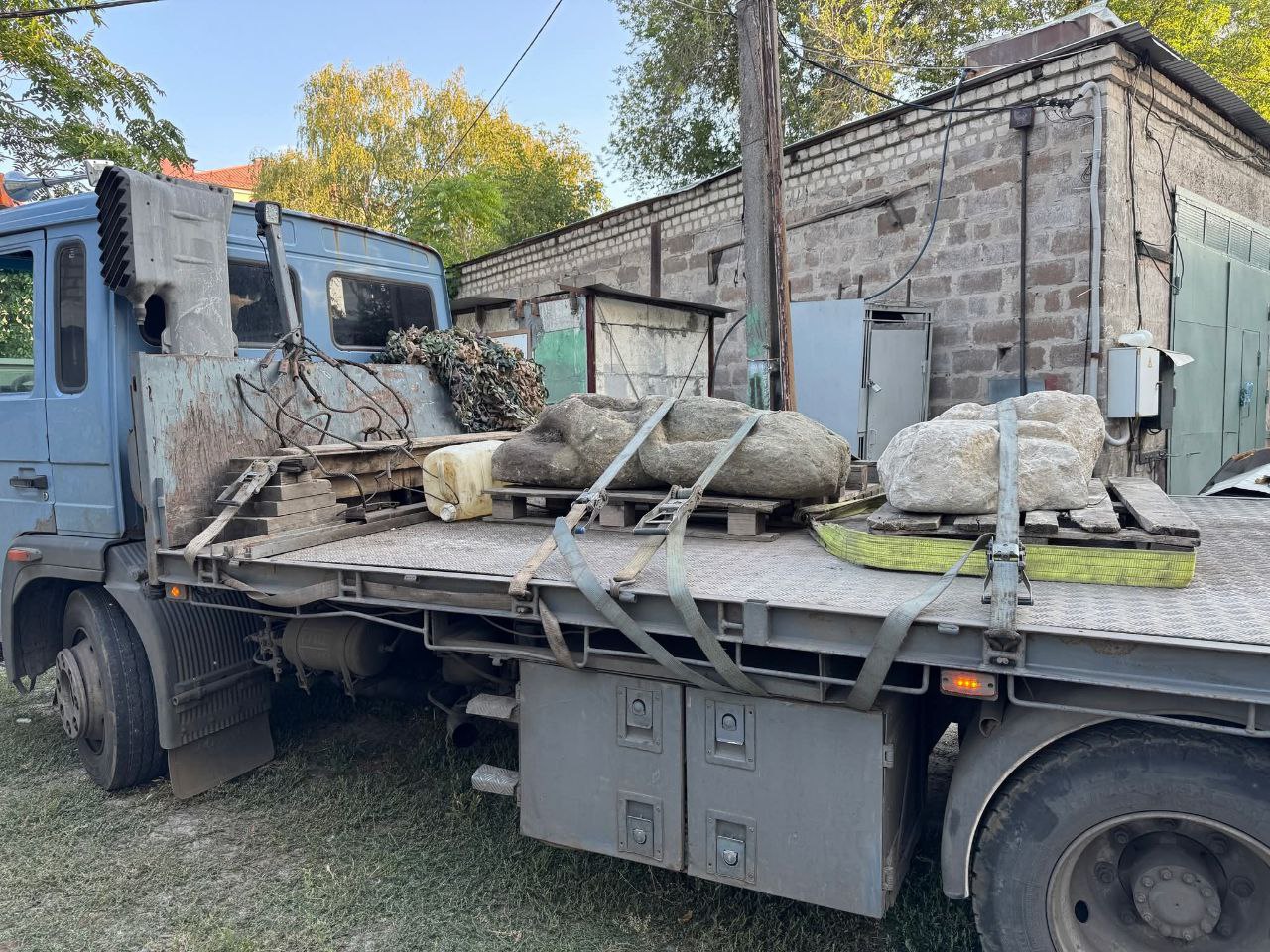
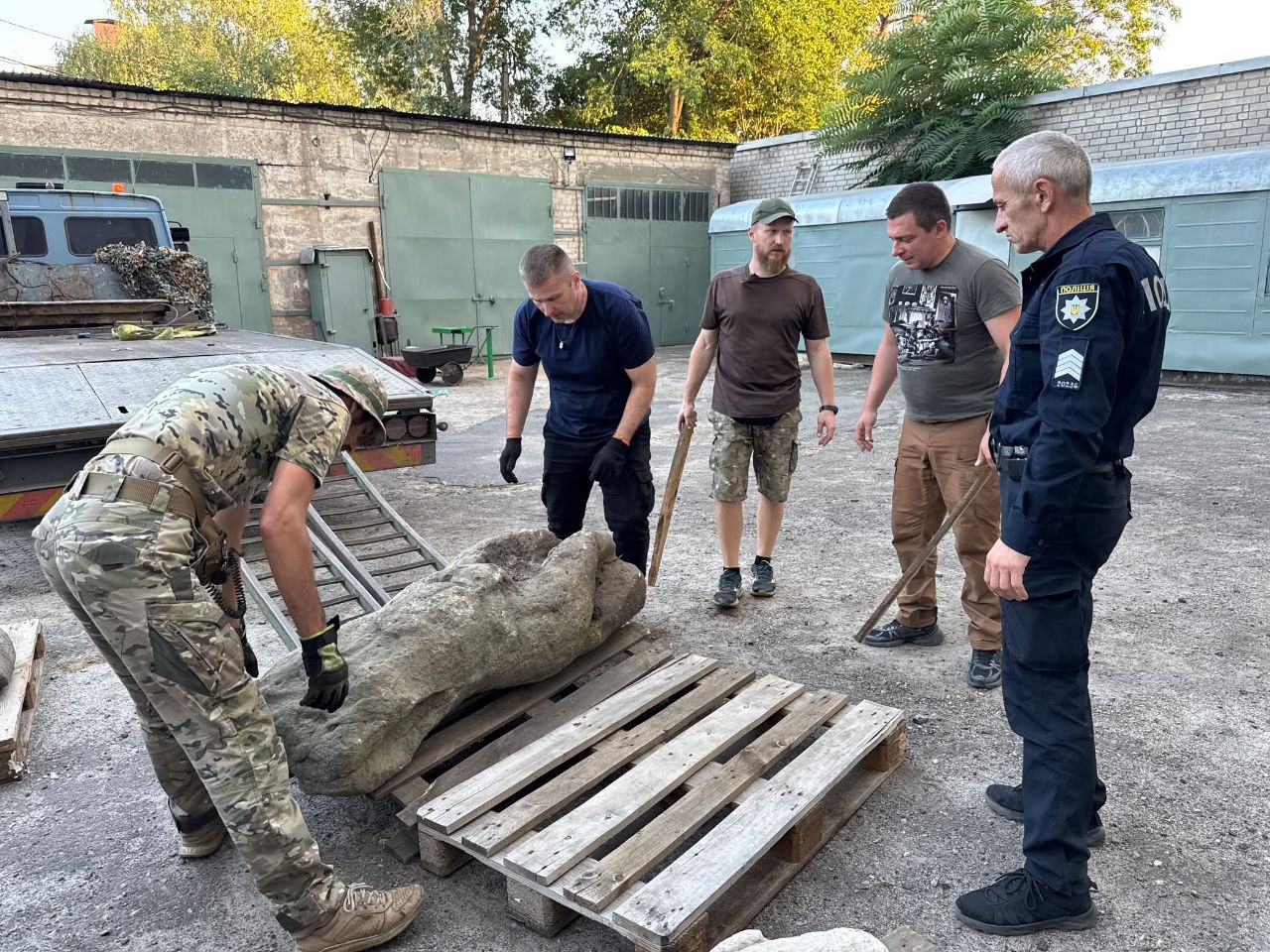
“At that time, the distance from Velyka Novosilka to the frontline was only about five kilometres, so we travelled under military escort and in protective gear,” says Fanyhin. “It was extremely dangerous. Drone sensors constantly warned us of nearby reconnaissance and FPV drones. But we were lucky. We entered the settlement, parked the crane truck in a relatively safe spot, rushed to the statue, broke it free from the concrete, and signalled the driver. Despite the danger, he managed the task. After that, we decided not to take such risks again and evacuated artefacts only using military vehicles.”
Saving artefacts together
According to Yurii Fanyhin, he could tell dozens of stories about how Ukrainian soldiers have helped evacuate stone sculptures. Understanding the importance of saving these 900-year-old Polovtsian statues, civilians across Ukraine and even members of the diaspora support the Dnipro volunteers by funding transport costs. Local residents also play a crucial role by informing historians about previously unknown stone artefacts and helping organise their evacuation.
“In May last year, we travelled to the village of Bilokuzmynivka in Donetsk region to film a report,” recalls Dnipro-based journalist Yuliia Ratsybarska. “It is located in a stunning area at the foot of white limestone cliffs. Sadly, due to its proximity to the frontline, the village suffered heavily from shelling. That was the focus of our report. A clerk from the village council guided us around, and near a school destroyed by aerial bombs, I noticed a stone statue. It turned out that historians were unaware of this Polovtsian statue. We showed it in our report. Knowing that Yurii Fanyhin and his team were evacuating such artefacts, I contacted him, wrote to the Institute of National Memory, and called several brigade press officers asking for help. This effort lasted three months. When Mr Fanyhin finally told me the statue had been transported to Dnipro — and that there were actually two statues, not one — that day felt like a second birthday to me.”
Yurii Fanyhin says that the museum currently holds 26 stone sculptures evacuated under his leadership. Half of the Polovtsian statues came from Donetsk region, the others from frontline areas of Dnipropetrovsk region. Three more artefacts were brought to Dnipro by soldiers on their own initiative.
Some statues are conserved when necessary; others, lacking documentation, are studied and newly introduced into academic circulation.
“These stone sculptures are of exceptional value to researchers of the past and to humanity as a whole,” says Fanyhin. “The enemy aims to destroy our culture and erase the memory of the nomadic peoples altogether. Our task is to preserve every artefact of Ukrainian history for future generations.”