Ukrainian women have never been passive observers of history — they have built communities, safeguarded culture, and fought for dignity and the right to be heard. In the Ukrainian context, feminism has often gone without a loud label, but it has always meant action. One of the most enduring and consistent forms of women’s self-organisation has been the Association of Ukrainian Women in Great Britain (AUWGB), founded in 1948.
For decades, the AUWGB has brought together Ukrainian women in the diaspora, carried out cultural, educational, and charitable work, supported Ukraine in its most difficult times, and advocated for women’s rights.
Maiak spoke with Iryna Terletska, Chair of the Association, about the history of the AUWGB, the women’s movement, the preservation of cultural heritage, and her experience of working within the organisation.

How did the Association of Ukrainian Women come into being? Who was involved at the very beginning, where was the first branch established, and what united these women?
It is a very interesting story. After the Second World War, Ukrainian refugees arrived in England — around 30,000 men and 5,000 women. These were mostly women who had been taken from Ukraine for forced labour in Germany (the so-called Ostarbeiter — Ed.).
In 1946, the first Ukrainian organisation was formed — the Association of Ukrainians in Great Britain (AUGB), and women joined it. But later, as more women arrived, they felt the need to create their own women’s organisation—one that focused on issues closer to their interests.
They approached the leadership of the Association of Ukrainians in Great Britain to request permission to create a women’s organisation. Naturally, there were doubts among the men: were women capable of organising themselves and running their own structure? But the women insisted — and in 1948, the Association of Ukrainian Women was established.

The first branch was founded in Nottingham, although the leadership operated from London. The organisation developed quite rapidly and began to focus on matters close to women’s hearts. They set up nurseries in different locations — by the early 1950s, there were around fifteen.
Women were also actively engaged in charitable work. In those same years, they sent humanitarian aid for the first time to Ukrainians who were still in camps in Germany. And, of course, cultural work was central. They strongly believed that women themselves needed to know and understand their history — the history of Ukrainian women, women political prisoners, and what was happening in Ukraine.
Those first women had an exceptionally strong sense of duty. They knew that Ukraine was under pressure, that the Ukrainian language was being banned, that there were political prisoners, and that women had no opportunity to fight for their rights and dignity. And they felt a responsibility to fight here — to ensure that our language, traditions, and culture would not be forgotten, and to support women in Ukraine.
It sounds as though the organisation has a strong feminist focus and is fundamentally about women and for women. You mentioned that men were initially rather sceptical. How did attitudes towards the women’s organisation develop over time — was there mistrust, condescension, or sexism?
There was no overt mistrust. It quickly became clear that women were an integral part of the Ukrainian community. Nothing in the community happened without women’s hands, without women’s work.
They formed choirs and dance groups, went on stage, and recited poetry. Women never stood still — they were always looking for new ways to act, embracing new ideas, thinking about how to work and what to do next.
For me, it is important to talk about Ukrainian feminism. Our women often do not even realise that they are feminists. No one wants to carry a label, but a woman who thinks, acts, has ideas, and brings them to life despite all difficulties is a feminist.
The Ukrainian women’s movement is also often forgotten. Ukrainian history developed in parallel with European history; we were never in an isolated “bubble”. Women travelled, communicated with politicians, and took part in pan-European processes. We are part of the broader history of the women’s movement.

What values underpin the work of the Association of Ukrainian Women?
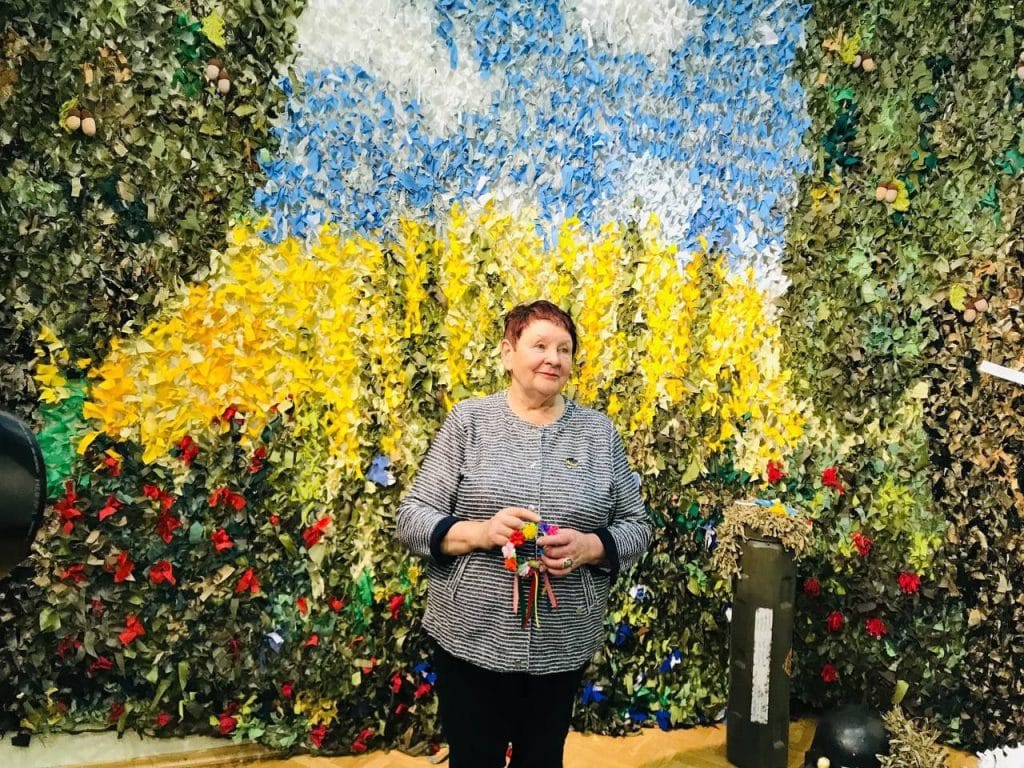
First and foremost, cultural work and the preservation of traditions. In every community, women collected examples of embroidered shirts, ritual cloths (rushnyky), and other forms of folk art. In the 1960s, all of this was brought together to create a folk art museum.
This museum has had its own premises in Manchester for almost 55 years and is the only permanent collection of Ukrainian folk art in Europe.
Can you tell us more about this museum and its exhibits?
We have over 2,000 exhibits: rushnyky, artworks, examples of household tools used in villages, extremely rare embroidered shirts, and complete regional traditional costumes.
The space is small, so we can display only about 10 per cent of the collection. However, the women who understood preservation well continued to develop and care for the museum. Today, it can be visited by appointment, and we are always happy to welcome guests in Manchester.
Do you also see interest in Ukrainian culture among British people and others?
Yes — and a great deal of it. Our folk art is vibrant and expressive, showing that Ukrainians are a cultural nation that values its heritage.
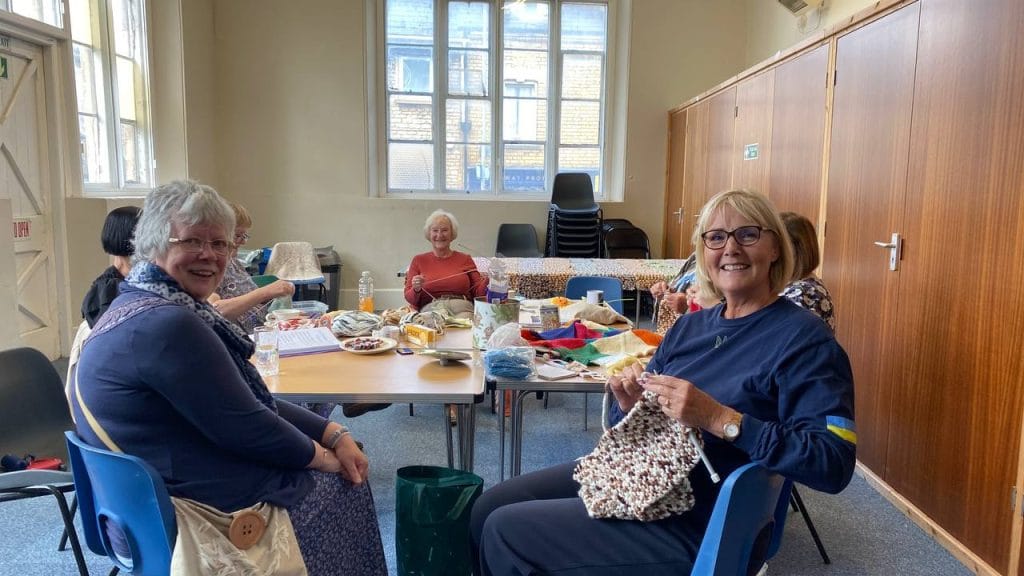
Many AUWGB branches organise exhibitions and collaborate with English women’s organisations, including the Women’s Institute. They host Ukrainian days, discussing Ukraine, its traditions and food, and showcasing art.

It is important to remember that all our members are volunteers. Everything is done in their free time. And we constantly need to remind ourselves how much we have achieved. In the 1980s, we were the first to organise mass letter-writing campaigns to Members of Parliament about Ukrainian women political prisoners. In the 1990s, we were among the first to send humanitarian aid to children affected by the Chornobyl disaster. What seems normal today was completely new then.
Speaking of current work, could you share the projects the Association is currently working on?
At present, we have several important projects. The first is the continuation of our charitable work. For several years now, every November, together with the Association of Ukrainians in Great Britain, we have organised the “Hope” campaign to commemorate the victims of the Holodomor famine. It has two parts.
The first part is local food collection for local food banks. This is extremely important because, in a way, it is our expression of gratitude to the British people for everything they have done for Ukraine and for their continued support. It shows that we understand people in our communities may be struggling and living in difficult economic circumstances. And it demonstrates our humanity — something that strongly distinguishes us from our neighbours.
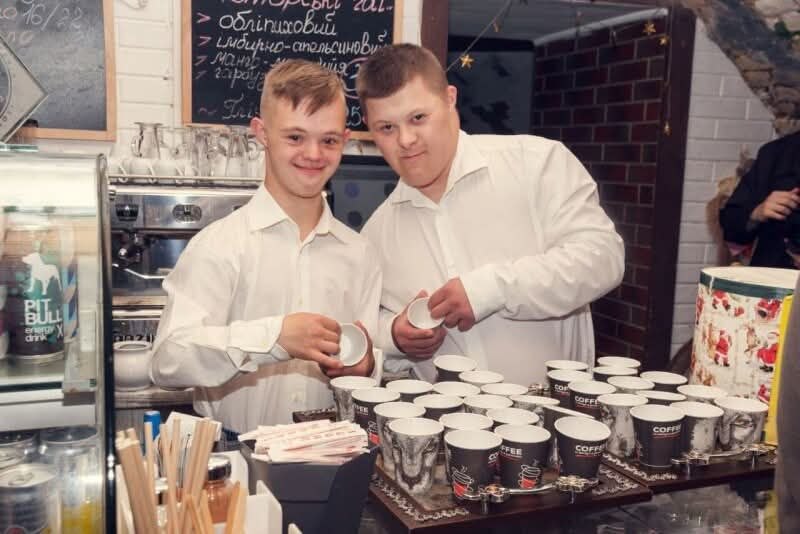
The second part is financial support for a chosen project in Ukraine. In previous years, we supported care homes for the elderly with food and repairs, always choosing projects that do not receive government funding. Depending on the funds raised, we also plan to support the organisation Good Bread. It is a bakery in Kyiv where people with disabilities work, and volunteers also deliver bread to frontline villages. We believe this is an important project because bread is life and hope. For people living in frontline villages, life is extremely hard, and they urgently need support — even a small reminder that the world has not forgotten them.
The second project, dependent on funding, is a virtual museum. We received a small grant from the Ukrainian World Congress and were able to professionally photograph the embroidered shirts from our collection. We are now seeking funding to organise the catalogue, write about these pieces, and create a virtual museum.
For many years now, we have also marked the Day of Women Heroes in February, with events held at each branch. Our founders believed this was extremely important. And who will study this history if not us? I remember that in London, at times, these were literary evenings where different members chose a work or a poet. At other times, they were more expansive events focusing on heroines — women of the Ukrainian Sich Riflemen, women in the UPA, dissidents, political prisoners, women of the Sixtiers movement. Each branch uses its own imagination, has its own plans, and exercises its own creativity, doing what it sees fit.
How does the Association bring together different waves of migration — the long-established diaspora and women who arrived after the start of the full-scale invasion?
Our organisation has always brought together women from different backgrounds. There were non-Ukrainian women married to Ukrainians who became members of the AUWGB — some learned Ukrainian, some did not. But women can always find common ground if there is a desire to do so.
In the 1960s, Ukrainian women arrived from Poland and from what was then Yugoslavia, and we welcomed them too. After Independence, women arrived from Ukraine, and again, if they wanted to join and work within the organisation, they were welcomed. The same applies to the newest wave — in some branches, we already have many new members from this group. And this is incredibly positive.
Our women are talented, highly educated, and full of new ideas. We can use all of this not only to make the organisation stronger, but also to do even more for women, for the community, and for Ukraine.
What has your own journey within the organisation been like?
Wherever I was, there was always a women’s organisation. And you could see what they did — cleaning the premises and cooking dinners for events. Then they would take off their aprons, step onto the stage, sing, and recite. They ran workshops on pysanky painting and embroidery. This organisation has always been part of my life.
When I grew up, finished university, and began living in London, I joined the London community. And again, whatever happened, women were working. They took me by the hand, placed a membership form in front of me, and said, “Sign it and get to work.” And that was that.

What has inspired you most — and continues to inspire you — in the Association?
I learned a great deal through the organisation. There were various literary evenings and other events where women’s history and the outstanding achievements of Ukrainian women were discussed. There was often more information here than in the Ukrainian Saturday school. I developed a strong interest in poets and women figures I had never heard of before.
I am also inspired by how open the women’s organisation is to new ideas. The first women who founded the organisation were always ready to support them. It is thanks to those women that we were able to organise the first humanitarian aid to Ukraine and then expand that charitable work.
It was never “we’ve never done this and never will,” or “we’ve always done it this way and won’t do it differently”. They always supported new ideas. We try to uphold that principle today. We must be open to new ideas and new ways of working.
We also strive to make all our communication bilingual, because girls growing up in the diaspora may not fully understand Ukrainian, and we do not want to exclude anyone from participation. We want every woman to feel she has a place in this organisation and is welcome.
I believe this is particularly important for women. Our organisation aims to create a safe space where women can come together, meet one another — because connection is incredibly important — find like-minded people, and develop activities for themselves, and then for the community and for Ukraine.
Where can people learn more about your work, and how can they get involved?
We have a Facebook page through which it is easy to contact us. We can advise on where the nearest branch is and how to join.
You are warmly invited to visit the Association of Ukrainian Women in Great Britain on Facebook. We are always happy to welcome new members, ideas, and talents.

Author: Kaleriia Andriienko
Ukrainian-language Editor: Anastasiia Zanuzdanova
English-language Editor: Helen Lewis
Photos: AUWGB